Colombia to Ecuador – January 2019
I wasn’t worried about the overland border crossing from Colombia to Ecuador until I started researching how to travel from Cali to Quito. Then, I read countless stories about armed robbers and hijacked busses along the route. I knew that the situation has improved greatly over the decade since when most of the posts were published. However, when I was talking to locals and bus companies in Colombia, many of them advised against taking night busses between Cali and Ipiales due to safety reasons as well. But then again, I just didn’t want to waste a whole day on a bus, while I could do soo many other things. Of course, I could have taken a plane, which would have been more time-efficient and probably not even much more expensive. But I was determined to make it to Argentina overland. And so I went for the following option:
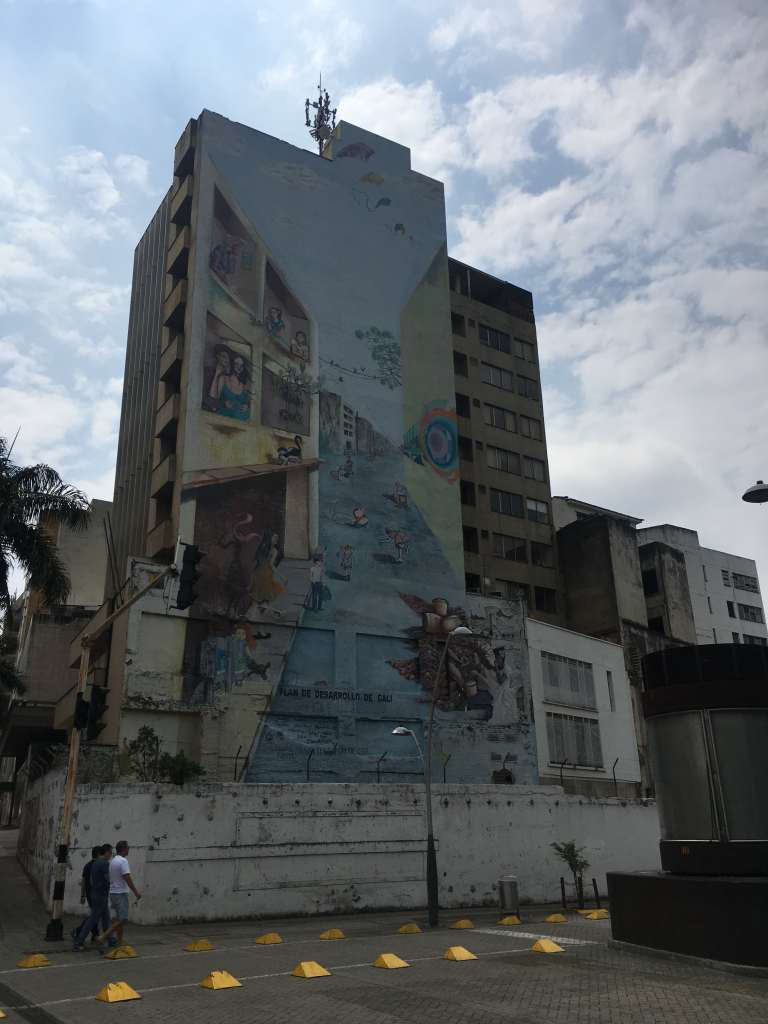
Collectivo minibus from Cali to Popayán (3 hours)
I head to the bus terminal in Cali around 11 am with a plan. I am on the hunt for any company that offers transfers to Popayán. On the first floor, I find one, but their earliest departure leaves at night. That’s too late for me as I want to catch a night bus in Popayán at 11 pm. After asking a few more people, I finally find a guy who says he has a minibus leaving in 20 minutes. This gives me just enough time to buy some snacks and head to the departure platform. I spend the 3-hour ride listening to an audiobook and chatting to Sophie from Canada and Emma from England. Sophie is going to Ecuador as well and we decide to take the night bus together. Once we arrive we buy the tickets for the next leg of the journey and store our bags at the brand new bus terminal. During our 8-hour layover, we walk around the white city of Popayán, visit the market and relax at Emma’s hostel.
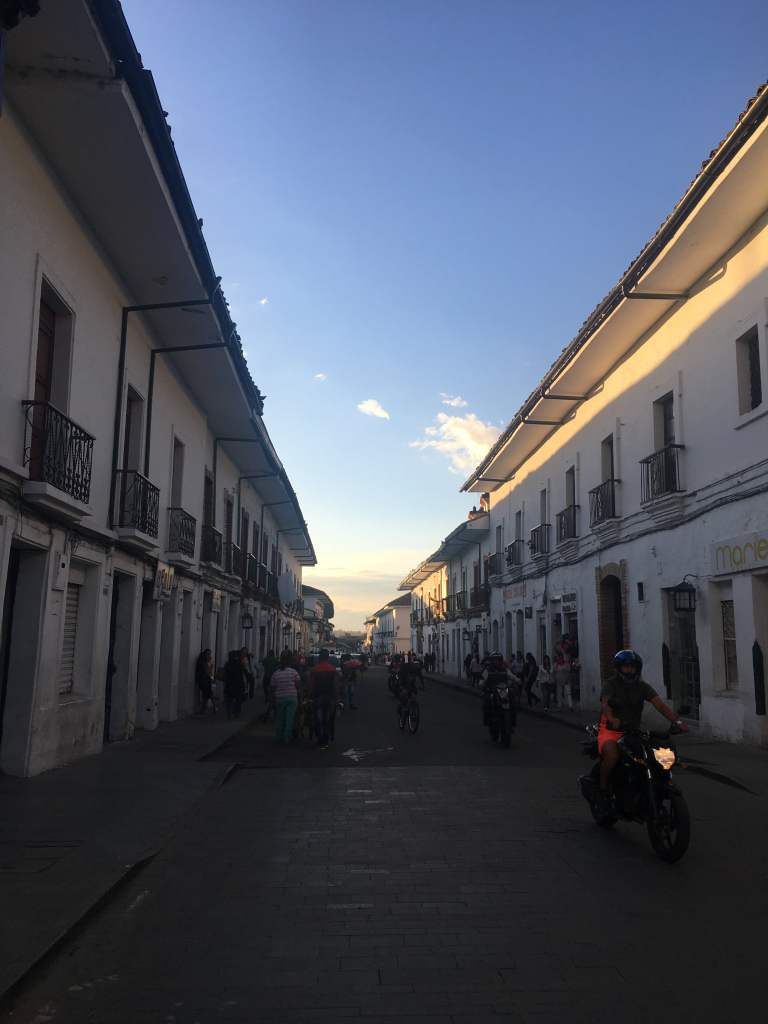
Night bus from Popayán to Ipiales (8 hours)
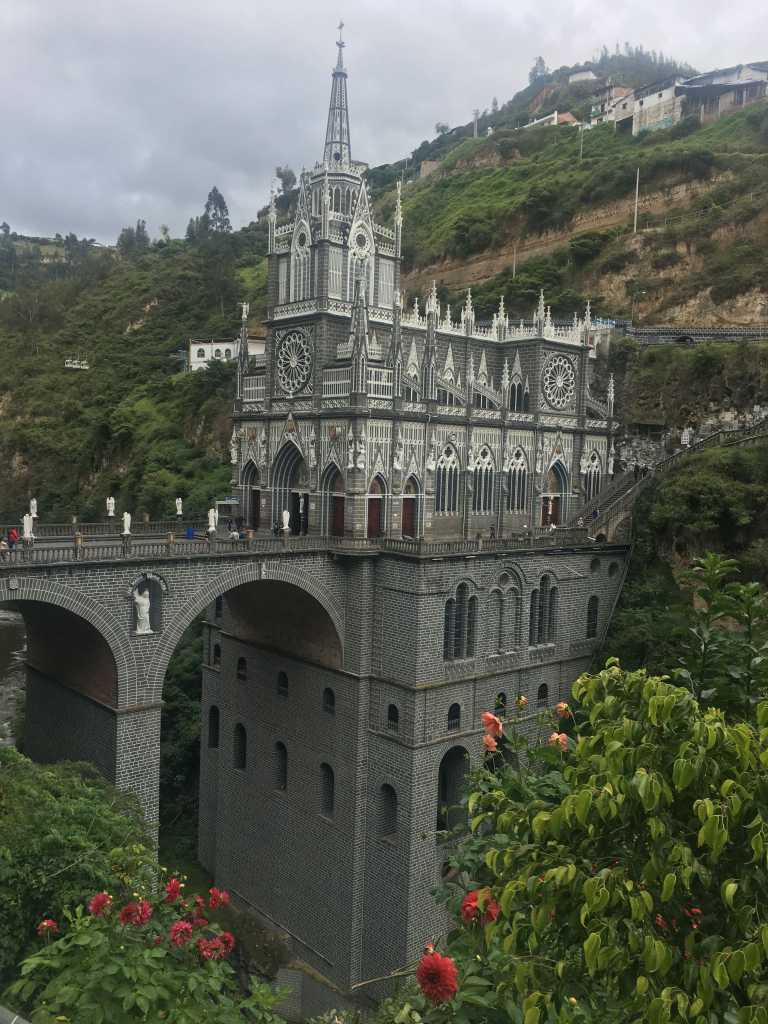
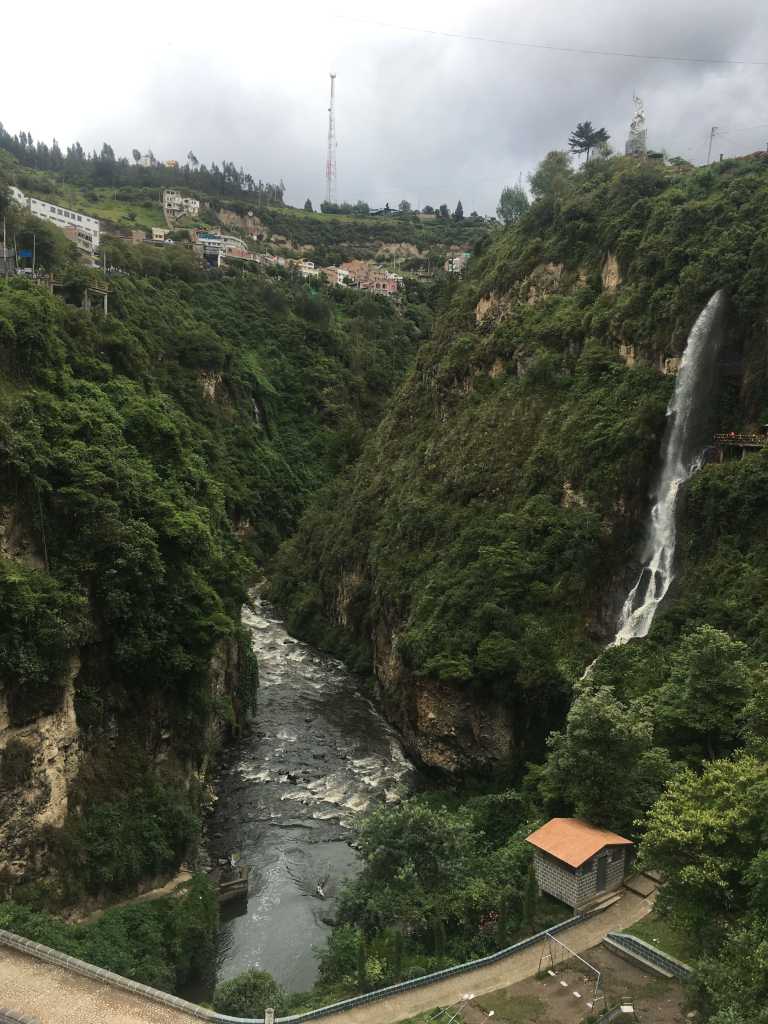
As expected our bus is late. Sophie and I spend the extra hour watching a telenovela on the flatscreen TV at the departure platform. Then finally the noticeably new bus arrives and we take our seats. Every single seat is occupied and the air-con turns the vehicle into a driving freezer. Still, I get a couple of hours of sleep and awake shortly after dawn, when we arrive in Ipiales. Here we meet 3 girls from Scotland who Sophie knows from their trip to the San Blas Islands. We store our backpacks at the girls’ hostel and take a taxi to the famous Santuario de Nuestra Señora de Las Lajas. The gothic church is popular with pilgrims and tourists alike and I highly recommend visiting this impressive landmark.
Taxi to the border (15 minutes)
We return to Ipiales and as we expect a long day ahead of us go for breakfast, before making our way to the border. The owner of the hostel says she can organize someone to drive us to the customs office. We gladly accept and wait in front of the entrance with our backpacks. When a red car, the size of a VW Gold, turns around the corner we think she must be joking. There is no way the 5 of us with our huge backpacks can fit into this tiny car. But of course, it works. 3 bags shoved into the trunk, Sophie on the passenger seat with 1 bag between her legs and 1 on her lap and the 4 of us sharing the backseat we drive the 15 minutes to the Colombian-Ecuadorian border.
Collectivo to Tulcán (15 minutes)
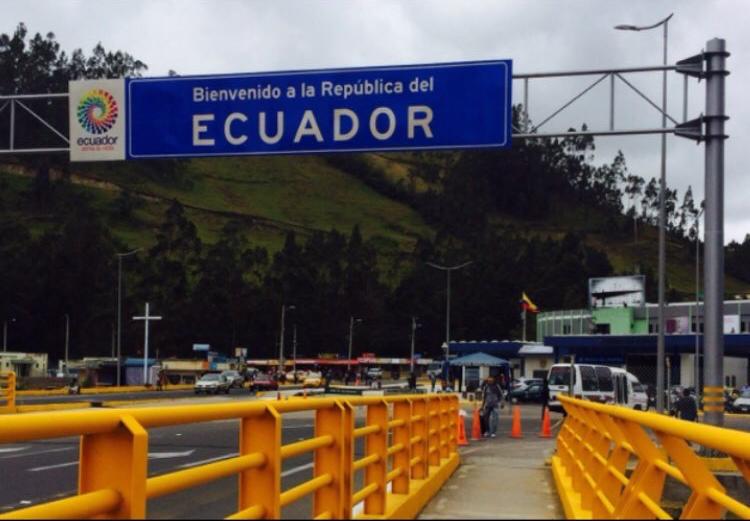
Before we can cross the Puente Internacional de Rumichaca, we have to get our departure stamp from the Colombian customs office. It is here that I first learn about the wave of refugees from Venezuela, travelling south in hopes of a better future. There are 3 lanes leading to the building. One for Colombian and Ecuadorian citizens with no queue. One for foreign tourists with a short queue. And one is covered with a canvas with the UNICEF logo, fenced with iron gates and has about 300 people queueing – some standing, some sitting on the floor. Our collective mood drastically changes when we walk past the Venezuelan immigrants and up the stairs to get our passport stamps. We knew about the crisis in the inflation struck country, but we did not realize just how bad the situation for the people was.
10 minutes later we exit the Colombian customs and walk across the bridge to the Ecuadorian office. Here the queues are even longer and there is a seperate area where children can get vaccines. A little after an hour later we finally have our entry stamps and can continue to Tulcán where we will catch a bus to Quito.
Bus to Quito (6 hours)
We make it to the tiny bus terminal in Tulcán just in time. We get our tickets to Quito, buy some snacks and run to the bus. As there are plenty of free seats in the back, all of us spread out in seperate rows. It’s now 4pm and we haven’t eaten since breakfst so we enjoy our snacks and try to nap a little. However, the latter is a little difficult because of the Mexican movie blasting on full volume. Early on we also realize why our tickets were as cheap as they were. We caught the local coach, stopping in every village on the way and even on the highway, if people would flag it down. Sometimes the people getting on are not even passengers, but vendors selling fruit, ice cream, gelatina and drinks. And like that the journey takes far longer that the usual 4 hours needed to travel to the capital. We arrive around 10 pm and say good bye at the bus terminal, as the other girls are staying at another hostel than me.
Read more about how my stay in Ecuador continued here and here.
 thattravelstory
One thought on “A 36-hour bus journey”