Iquitos – February 2019
I’ve been dreaming about visiting the Amazonas rainforest and riding a boat alongside pink river dolphins ever since my first-grade teacher showed us photos of his trip to Perú. And during my language course in Lima, this dream finally comes true. Together with the 2 US-American girls Melanie and Sarah, I hop into an Uber to Lima International Airport one early Friday morning. We all carry only 1 small backpack each. Mine contains the one light long-sleeve shirt I own, 1 pair of leggings, 1 pair of shorts, a couple of tank tops and underwear, very basic toiletries, my travel documents and my wallet. But the most important thing is heavy-duty insect repellent.
Once we arrive at Iquitos airport, we are met by a representative of the tour company we booked our jungle stay with. He takes us to their office in the town centre, where we meet our guide for the next few days. Davis is a man of the Amazonas – born and raised in a small jungle village deep in the Peruvian rainforest. He now makes a living off his immense knowledge of the rainforest’s flora and fauna. The first step we take into the jungle world is putting on rain boots. Wearing the appropriate footwear, we three girls, Davis and our driver get back into the car and head to the river town’s jetty. On the walk to our long tail boat, Davis tells us all about the different fruits, vegetables and fish on sale at the small market stalls.

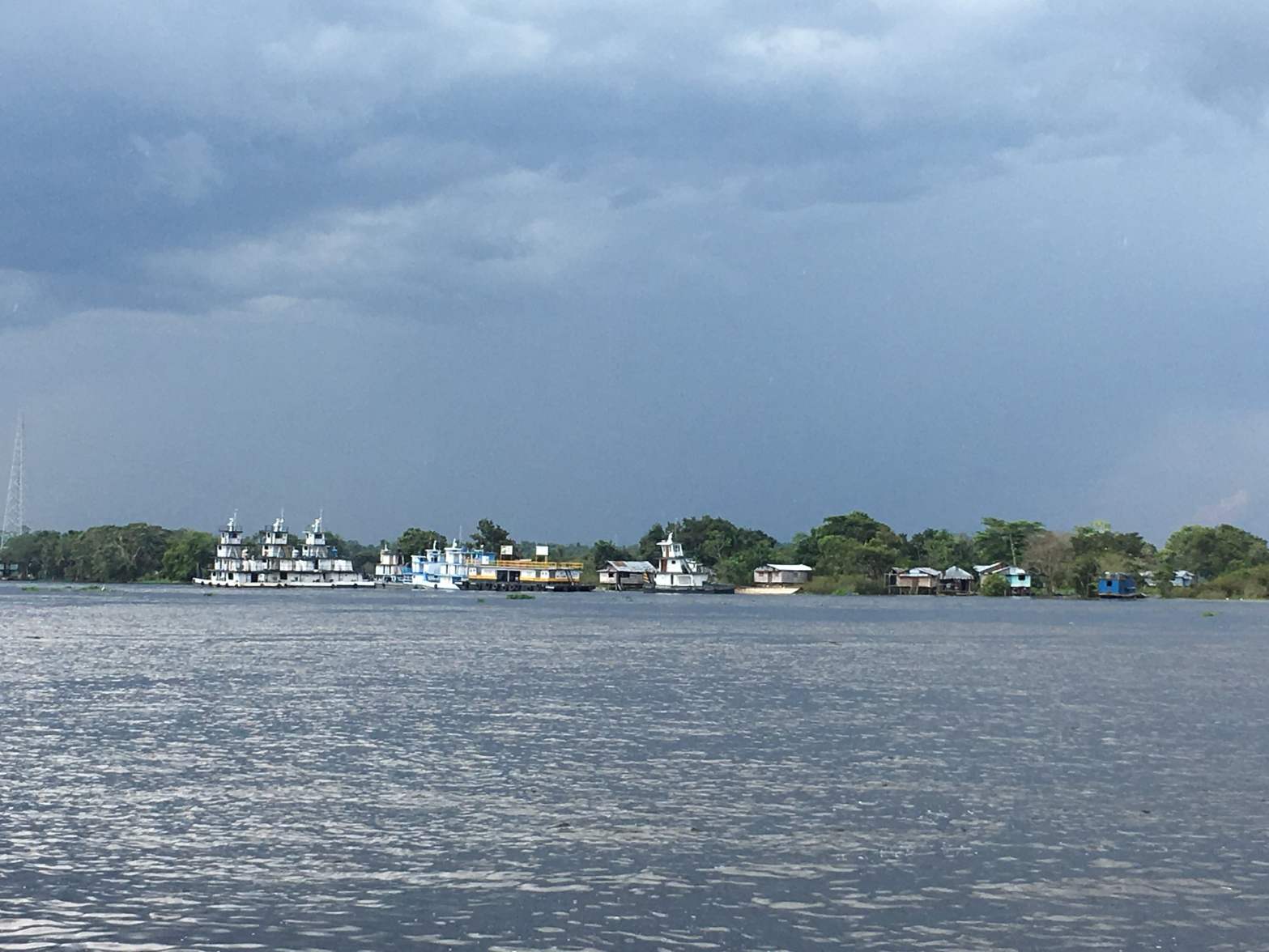
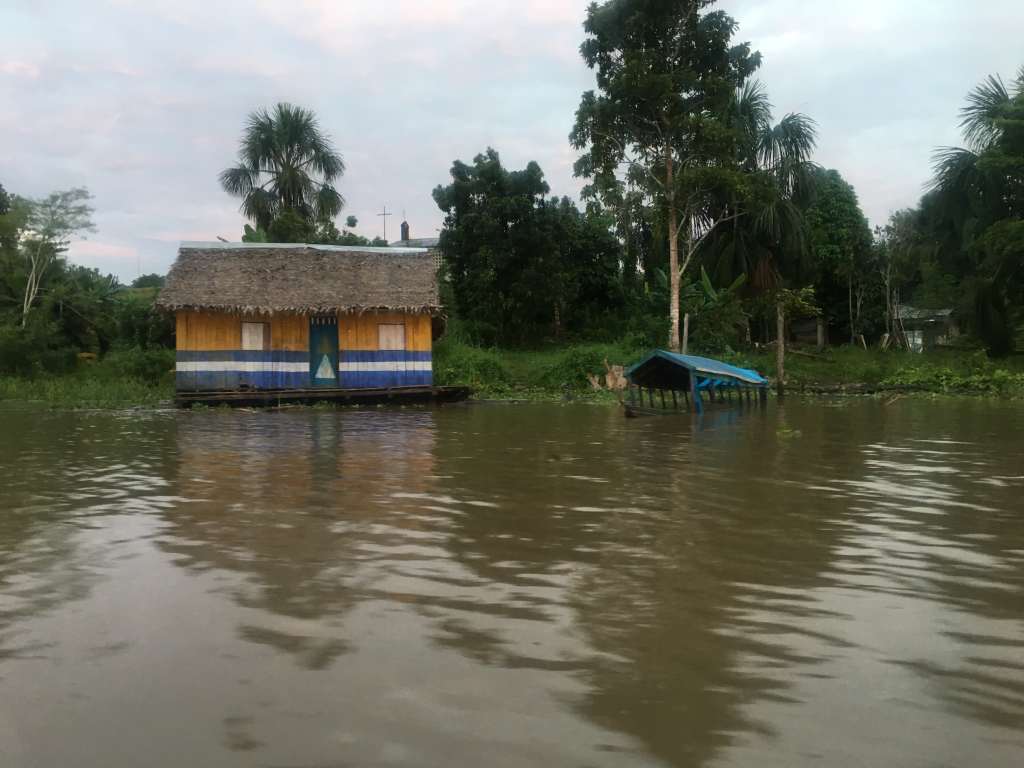
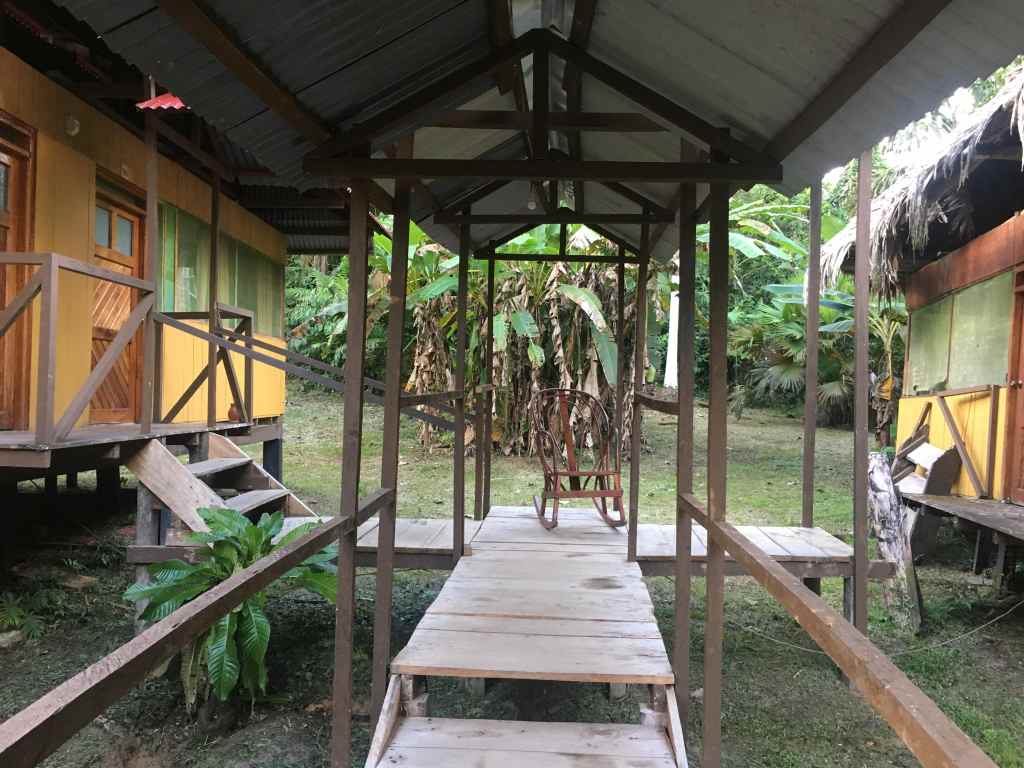
The ride out of the port of Iquitos and into the vastness of the Amazonas Delta for us is a farewell from civilisation for a few days. The rainforest and adventures await. We pass other tour boats crowded with day-trippers and a few long-distance double-deck river boats. Here and there, small islands of tree branches and flowerless lily pads float in the brown, muddy water around us. I enjoy every minute of the upstream ride and am almost a bit sad when we finally reach our lodge’s jetty after 1 hour. Davis shows us to our room (read: our own wooden jungle hut) and kindly asks us to be back in the lobby hut in 30 minutes for our first walk into the rainforest. After claiming our beds, we gear up by spraying several layers of heavy-duty mosquito repellent on each other. Smelling like a chemical factory, we report for the jungle walk in the lodge’s backyard.
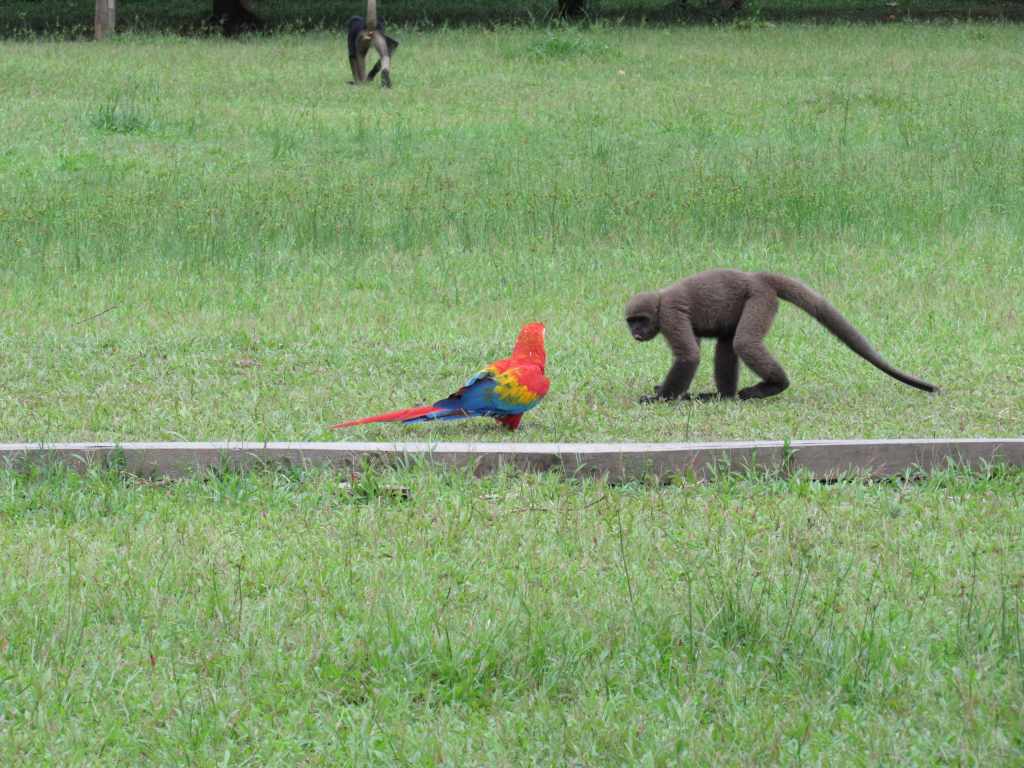
We get a first taste of the Amazonas wildlife: Davis shows us a giant centipede, birds and a snake. By now, we’re already up for a few hours and our tummies start to grumble. Fortunately, it’s lunchtime at the lodge, and we dig into the buffet with fried plantains, Amazon fish, a fruit plate and more. Knocked out by a full-on food coma, we have a little siesta in the hammocks on the stilt path to the jetty. It’s only Davis’ announcement that we’re going to see monkeys that finally gets us into the boat again in the afternoon. “Monkey Island” is a wildlife reserve dedicated to rescuing, rehabilitating and releasing monkeys and other sick or injured animals of the surrounding rainforest. There are small monkeys playing with Macaws (parrots) on the lawn, and we also spot some recovering sloths and toucans in their respective quarters. On the way back to the lodge, we enjoy the view of a beautiful sunset. But the day isn’t over yet!
After another delicious meal (to the dislike of the other guests, we bunker the plate of fried plantains), it’s time for the night safari. Reassured by the fact that we didn’t see as many wild animals as we expected in the plain jungle, we cover ourselves in yet another layer of mosquito repellent and grab our torches. The clear night sky is full of twinkling stars. But as soon as we set foot into the lush jungle, the canopy of trees envelops us in darkness. While we mostly use our torches to see where we put our feet, Davis expertly points his torch up the trees and lianes. He introduces us to frogs, snakes and even a tarantula running about in the bushes. Though the walking itself isn’t very physically demanding, the complete darkness combined with the intense sounds of the jungle take their toll on us. And after an hour Melanie, Sarah and I are ready for a good night’s sleep.
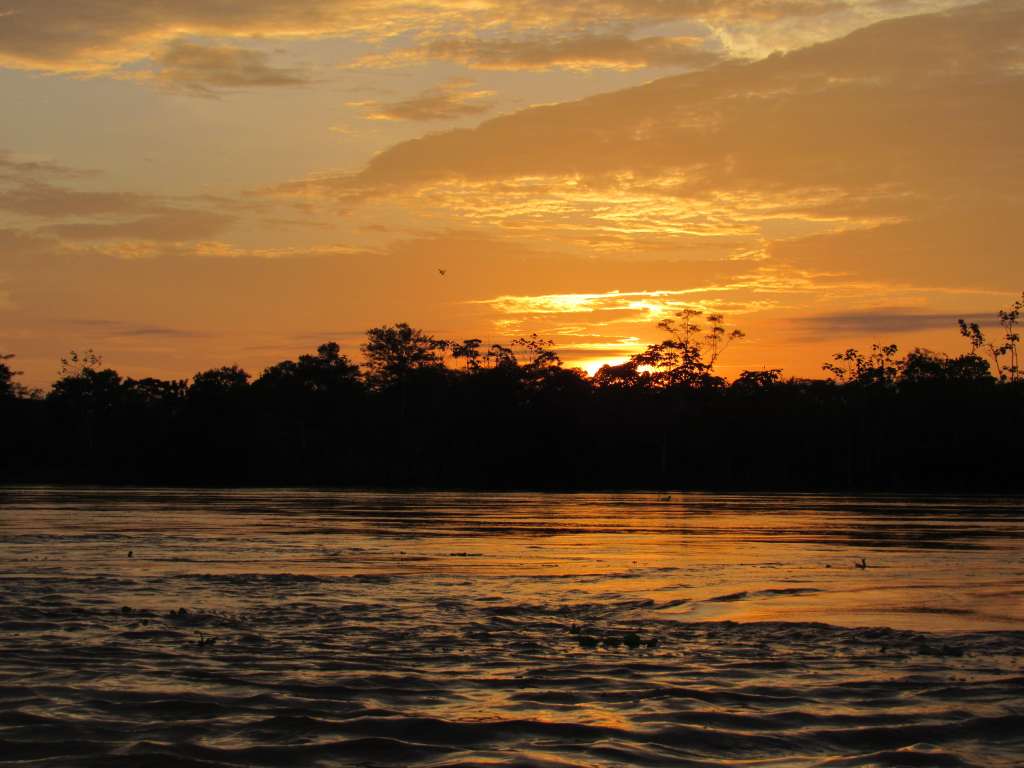
It’s also the one I am most excited about. Today’s schedule starts with a sunrise cruise to a spot where the Pink River Dolphins play at that time of the day. Davis explains that in Spanish, they’re called “Bufeos” due to the sound they make when exhaling (Buh) and because they’re quite ugly (feo). He also apologizes before asking us about our menstrual cycle. Fortunately, none of us is on our period. Because apparently, the animals can sense that from quite a distance. Sometimes it makes the Bufeos get quite aggressive and even hit the boat. But this morning, they are very tame and only play among themselves. Whenever their weirdly shaped heads emerge from the water, we hear the “Buh”-sound Davis mentioned before. Once the dolphins disappear, we head back to the lodge for a nice breakfast.
After the hearty meal follows the real jungle hike. All the walks we did before were basically training for this exploration of the untouched rainforest. As always, the trip begins with a cruise to the entrance of the reserve. We get off and walk a few hundred meters across a banana plantation. On the other side, a small kayak is waiting. It takes us across the flooded area next to the river. Apparently, during the rainy season, you can’t tell where the river stops and the plantation begins. After the short kayak ride, the hike begins. Armed with his Machete, Davis takes us on a path only visible to him. For about 30 minutes, we silently walk past high trees with thick trunks, wrapped in criss-crossing lianes. And then we arrive at the swamp. Here, Davis shows us how to make fans from palm leaves to fight the humid heat and the mosquitos.
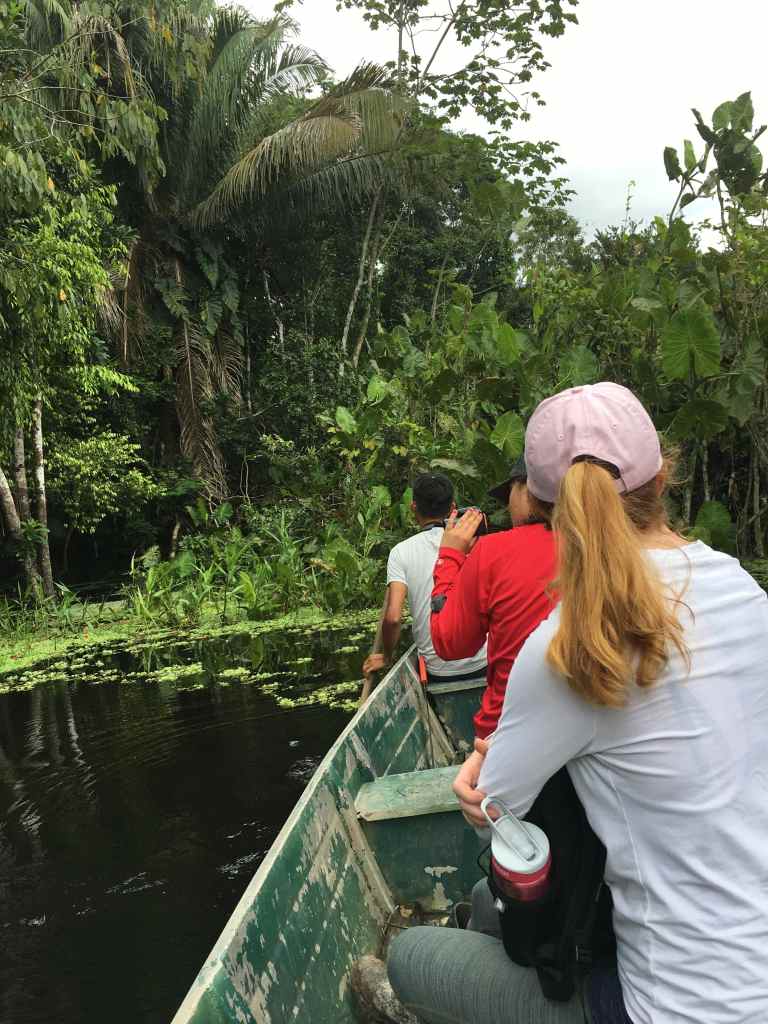
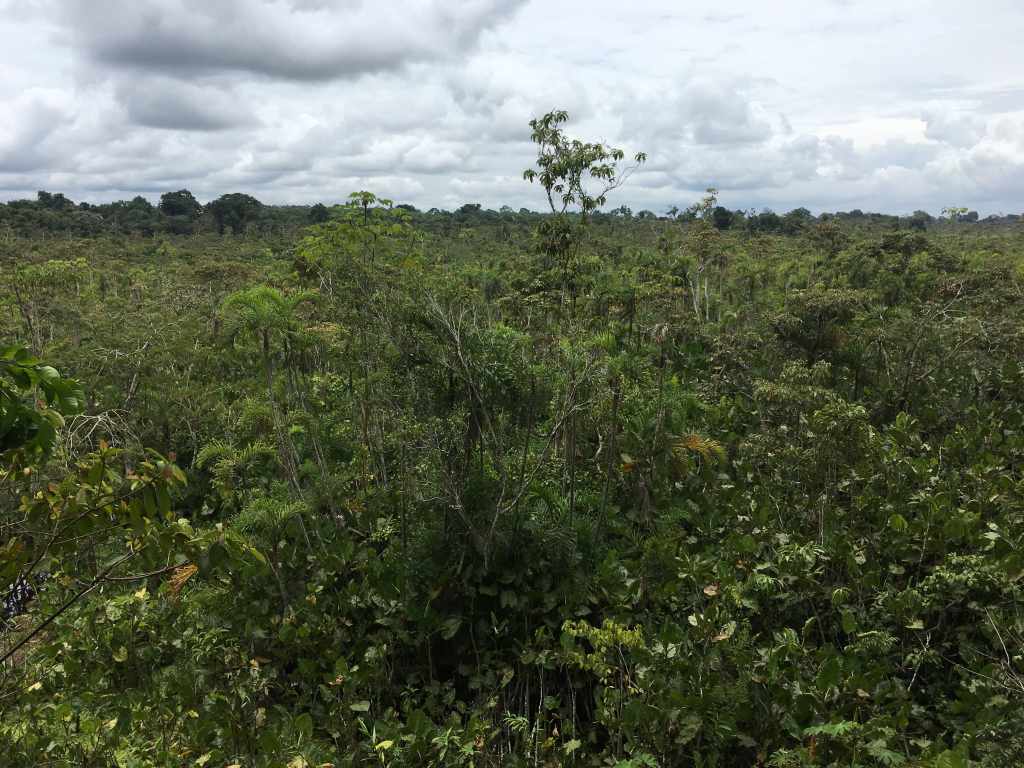
The next thing we know, the four of us board a small wooden rowing boat tied up at the swamp‘s edge. We‘re in the middle of the flooded area when Davis explains that there are alligators and anacondas silently swimming here right now. And 5 minutes later, he makes us step out of the boat, and into the same swamp to cover the last couple of meters to shore! Praying to the Pachamama that A: the anacondas & alligators are having lunch now somewhere else and B: Davis Machetes would protect us if they weren‘t, I step off the boat and in my rain boats quickly ran to the shore. I don‘t remember much of the following walk, except for Davis poking his Machete at a huge hole in the ground stating „hm, seems like the anaconda isn‘t home“. I‘m beyond relieved when we reach the goal of our little excursion: a 25-meter-high view tower. Though a lot of the surrounding trees still tower above us, we get a look at the impressive canopy of the rainforest. And a fresh mango, straight from the tree, as a snack.
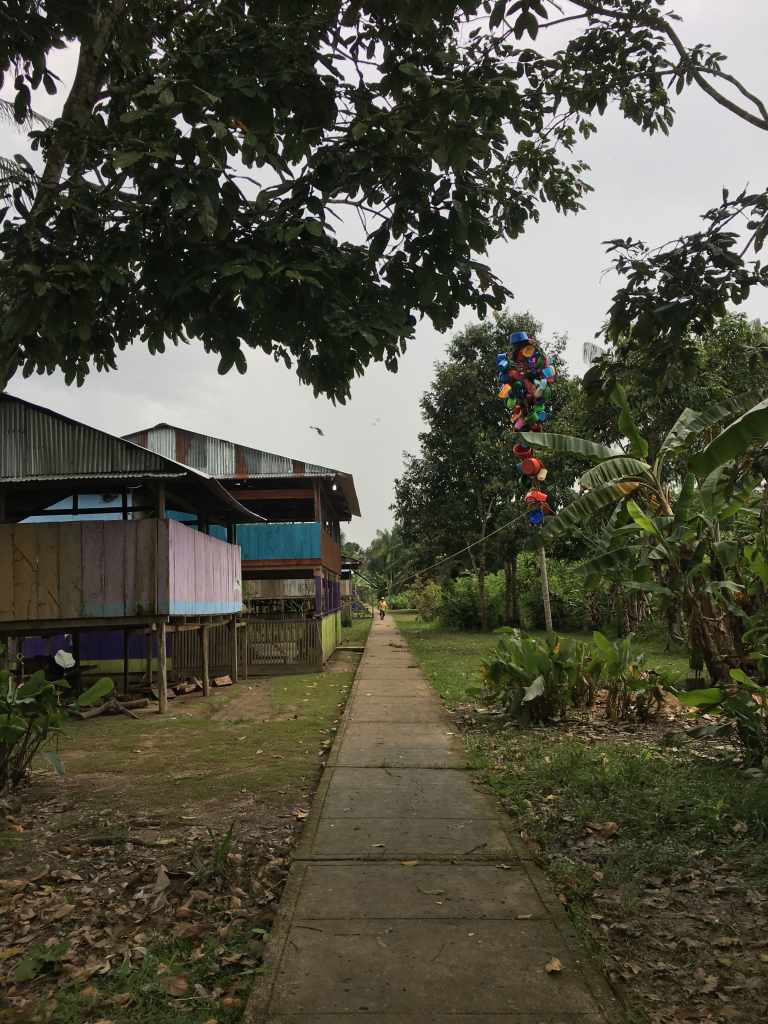
On the way back to the boat, we visit the community of Santa Maria de Fátima. It‘s a small village of stilt houses, located on the bank of the Amazonas. As it‘s carnival time in Perú, they have set up their traditional tree, decorated with plastic toys, on the „main square“. From somewhere in the distance, we hear the sound of drums and trumpets, but we cannot see a single soul (apart from some chickens and ducks picking under one of the houses). Once again crossing the plantation in the kayak, we make it back to our boat, where a delicious late lunch is waiting for us. It’s followed by a lazy afternoon in the hammocks before another gourmet dinner. We go to bed as the sun sets and for a while listen to the sounds of the jungle before drifting off to the land of dreams.
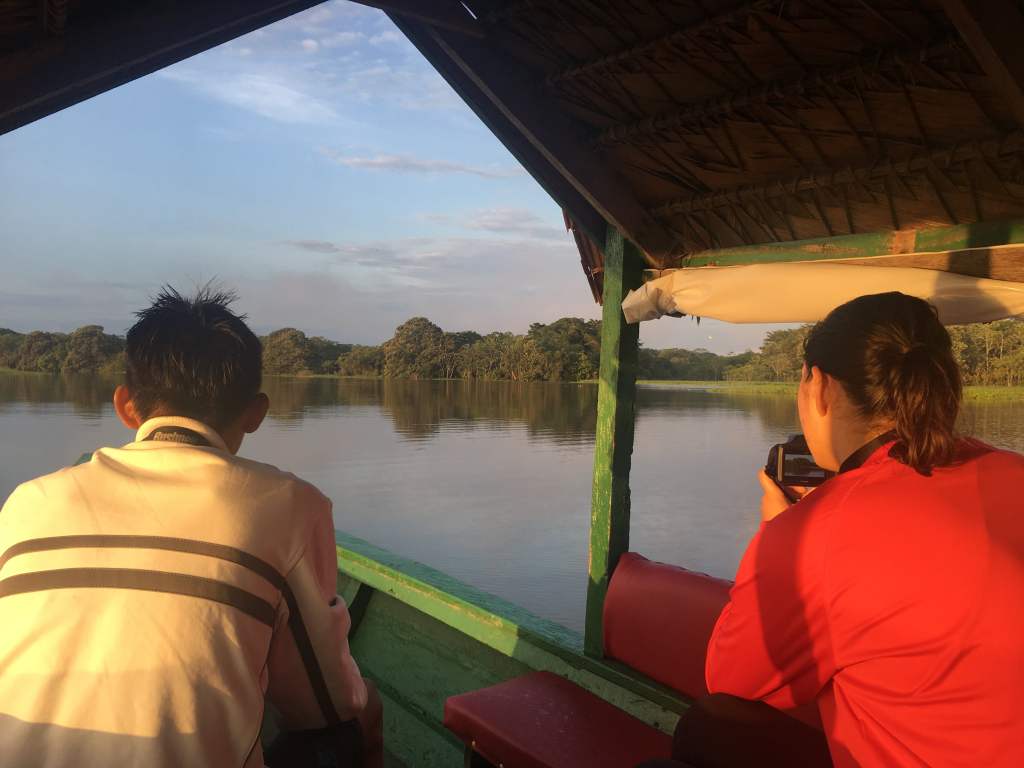
The next day is our last one in the jungle. We pack our small bags before breakfast and then wait for Davis to tell us about the day‘s schedule. First, we visit the Amazon tribe of the Yunhas a few miles upstream. I have to admit that this is the only time during this whole trip that I feel quite uncomfortable. Having seen the indigenous people in Iquitos and the surrounding area during the past few days, it‘s quite obvious that they are dressing up for us tourists. The little bamboo hut where they hold the staged ceremonial dance seems to be set up for this only purpose too. Of course, this is an important source of income for them, but I still feel conflicted about the way this is conducted. I‘m glad when Davis tells us it‘s time for our last activity, and we have to get back to the boat.
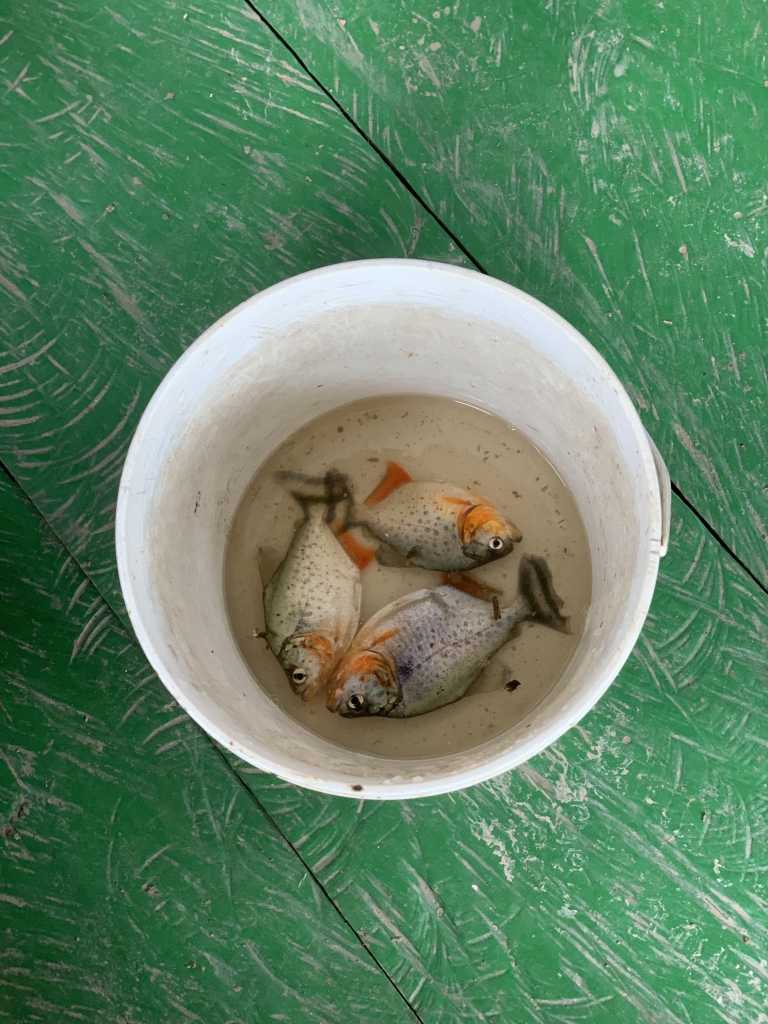
A quick drive later, we‘re in a quiet lagoon and do our best at fishing our lunch: Piranhas! The bait to catch the small fish with humungous jaws and sharp teeth is a small piece of chicken. However, it‘s not as easy as just putting the meat on the hook, waiting for a Piranha to bite and pull the stick back out. The tiny predators are quick and more often than not, the hook is empty when we pull it out of the water. Just a few times, there is a fish dangling at the end of the line. Finally, we give up and, after Davis‘ reassurance that the Piranhas will not try to eat us alive, go for a swim a few hundred meters upstream. Fortunately, the lunch buffet is fully stocked when we turn up for our final meal. Our contribution is a mere 5 small fish.
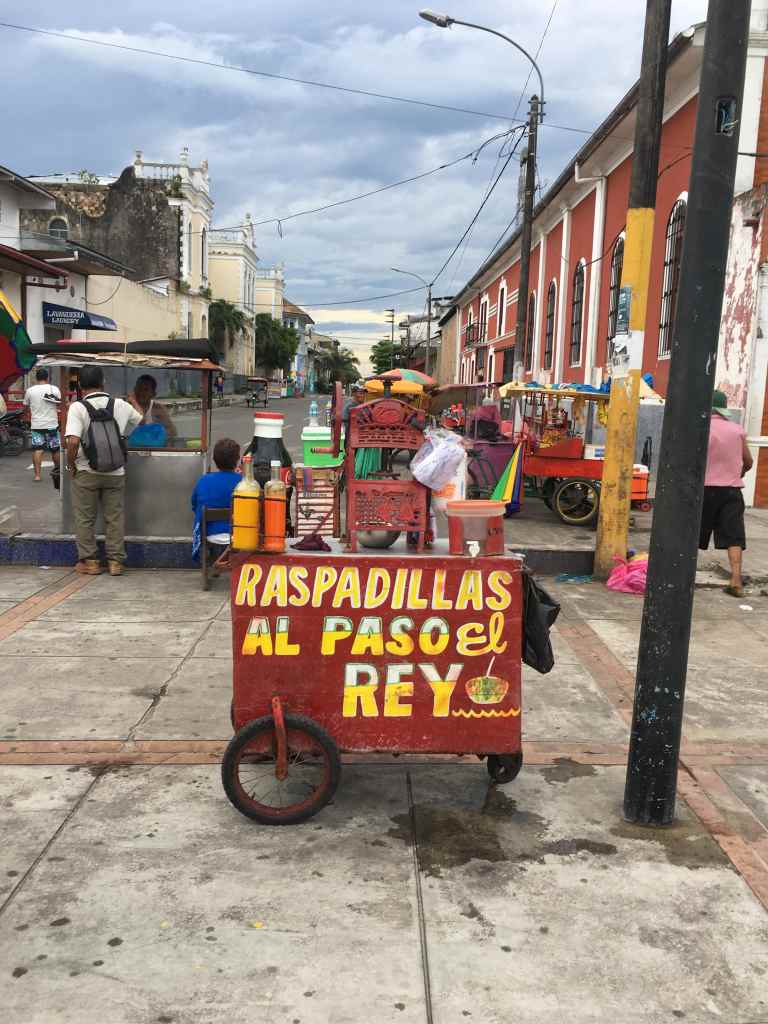
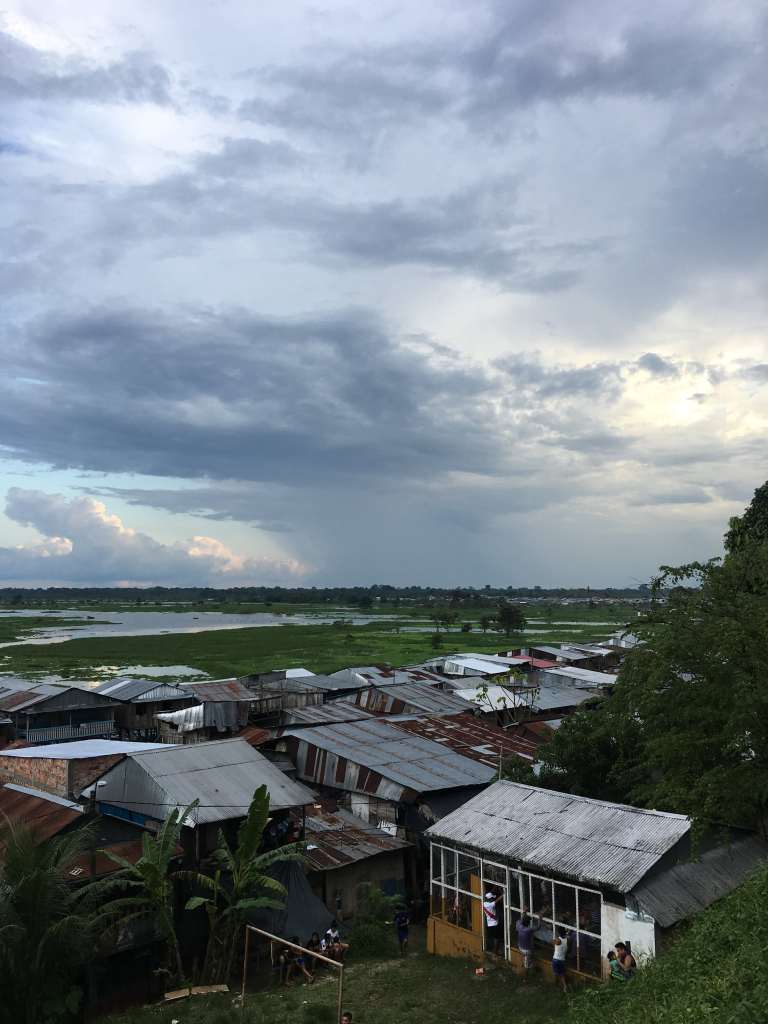
On our last boat ride back to Iquitos, we make the sky above us breaks, and we get soaked. But as soon as we arrive in the Peruvian Amazonas hub, the sun comes out and allows us to go for a walk around town before our transfer to the airport. We marvel at the view of the river basin, stain our teeth with Raspadilla and dig into delicious cakes at a local café to celebrate this trip of a lifetime. If you want to experience the Peruvian jungle at its core, book your trip to Iquitos with Davis now at https://www.amazontahuaritours.com/.
 thattravelstory
Great, Quality Content for The Ultimate Guide, A lot of thanks for sharing, kindly keep with continue !!
LikeLike
thank you for the kind feedback ✨
LikeLike