
Alicante – June 2022
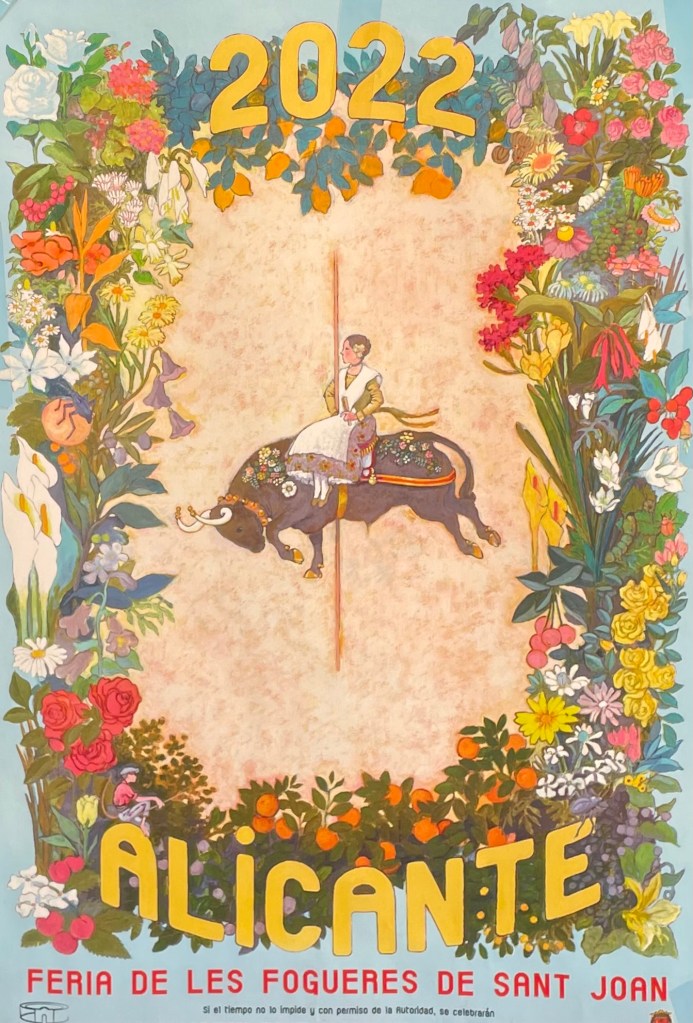
I arrive in Alicante on the day after the San Juan celebrations, which take place around the midsummer day all around Spain. I just spent a week in a slow beach town halfway between Valencia and Alicante and am ready to socialize again. The hostel which I booked seemed like the perfect place to do that. However, it’s quite dead in the early evening hours. So, I decide to go on a little walk, maybe buy some beer and sit on the rooftop terrace before heading out to dinner When I step outside, the “Hogueras” are still going strong. The small street where my hostel is located at is closed to cars and inside the metal fence, the residents set up plastic tables and chairs. In the evening they all come together to eat, drink, and of course dance.
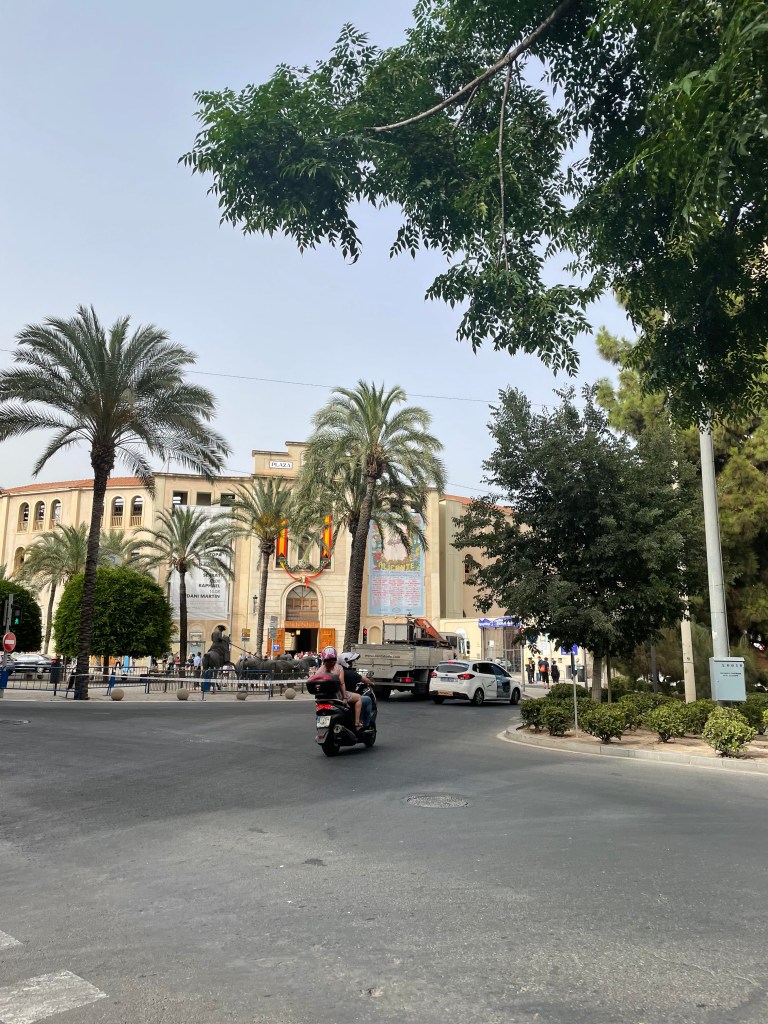
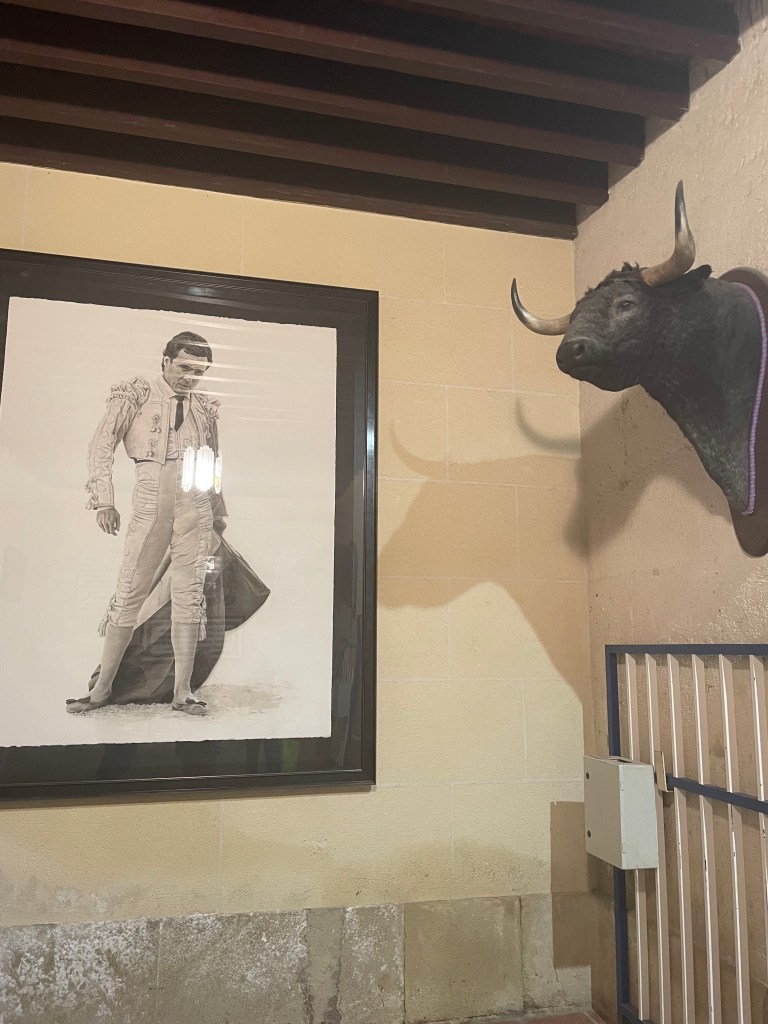
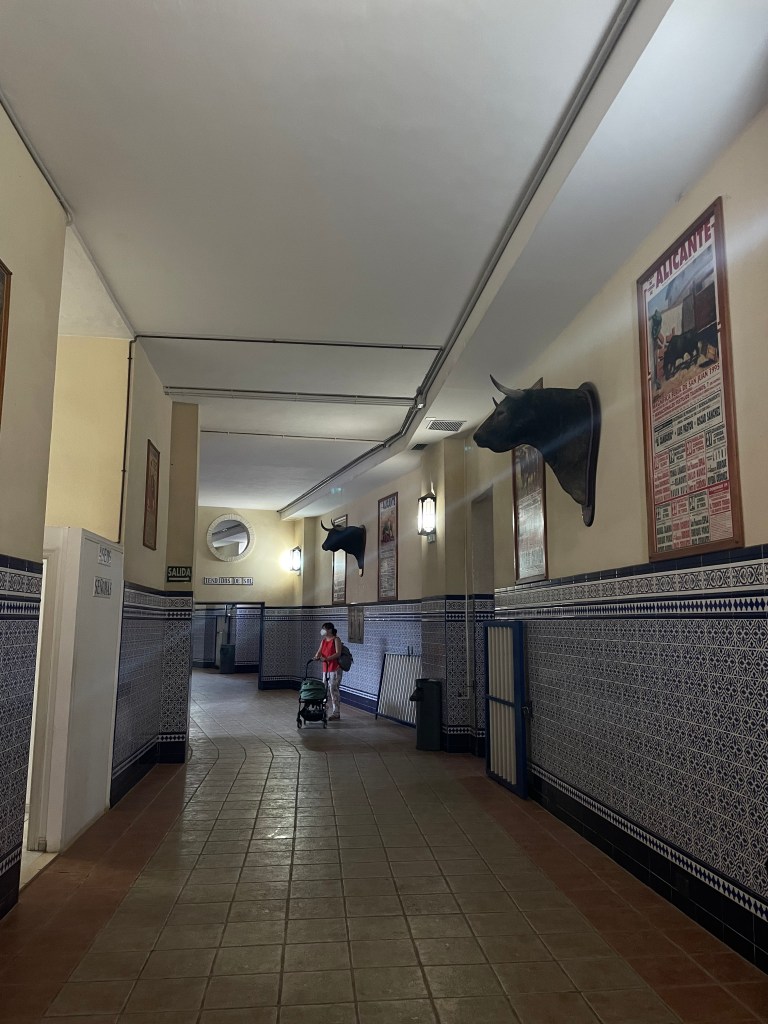
I walk past the celebrating crowd and onto the main road. I pass a couple of convenience stores and make a mental note to stop at one of them on the way back to buy some beers. At a big crossing a few blocks down the road, I notice a beautiful building. Its rounded walls are made of bricks and there is a giant gate with wide open wooden doors. There are some people going in and out of the building and as I’m always intrigued by beautiful architecture and historical buildings, I reckon I can have a look too. As I step inside, the first thing I see is the statue of a Torero and a big bull’s head mounted on the wall. I figure it might be a museum. As I continue walking into the catacomb-like corridor, I hear screaming and cheering coming from inside the building. I follow a lady and her child and walk up some stone steps which seem to lead toward the crowd.
And suddenly, I am in the middle of the spectacle. A bull running across the sandy arena, followed by a Torero, and cheered on by the Spanish audience. I’m not sure what I expected, but it certainly wasn’t this. I just stand at the edge of the stairs and watch for a few minutes. I hear an old Spanish lady scream “estoy abburdia” and “mátalo”. This translates to “I’m bored” and “kill him”. Others shout “Olé”. There is a lot of whistling going on and people shushing other spectators when the matador steps onto the sand. And then everything happens quite quickly, and the bull is laying on the ground with a sword in his spine. I am a little grossed out, but also want to know more about this very controversial tradition I’ve so far only heard non-Spanish people’s opinions about. As the event doesn’t seem to have ended yet (and I see a chance to practice my Spanish), I sit down next to an old man.
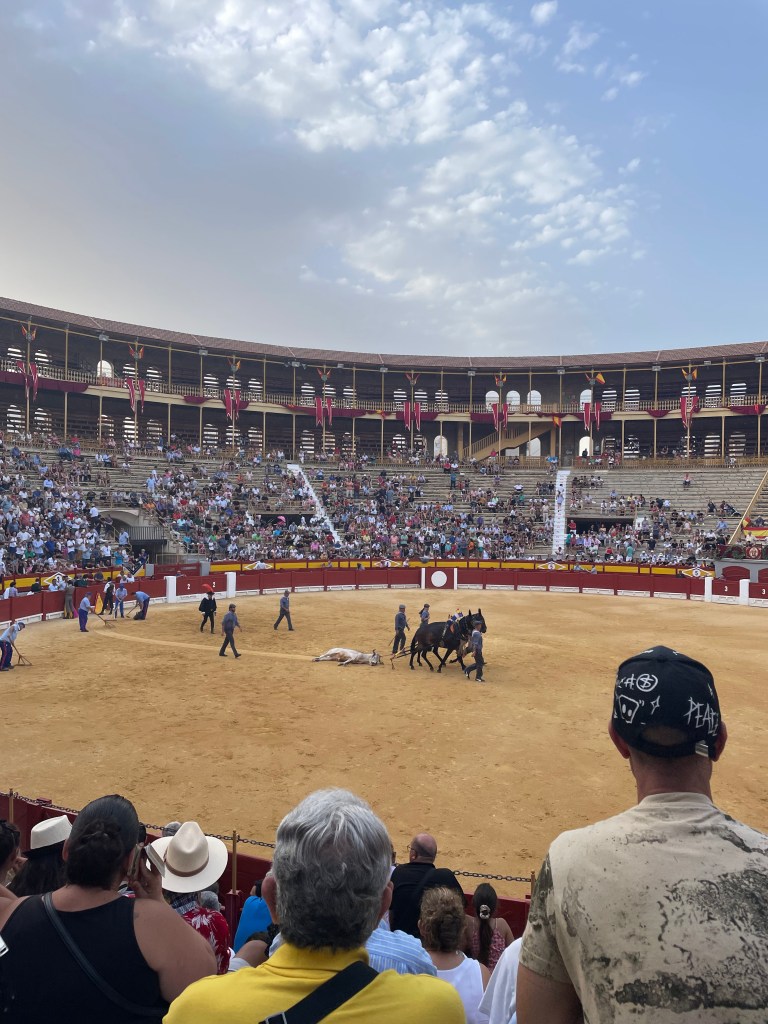
While the matador goes on his round around the arena to collect roses and other presents thrown at him, I ask the old man in Spanish to kindly explain to me what just happened. He tells me, that the matador (killer) did a very good job at killing the bull and therefore has received both of the animal’s ears as a trophy. That was decided by the crowd (the pueblo) who followed the opinion of a famous matador who is present that evening. As he doesn’t seem to mind talking to me, I continue my interrogation. As the bead bull is being dragged out of the arena by 2 horses, I ask Antonio what will happen to the animal now. He laughs and says: “If you want to see it again, you should go to the market tomorrow. They will sell the bull’s meat there.” He also tells me, that there will be 4 more bulls running that night. So, I decide to stay a little longer to find out more.

The next round begins with the matador throwing his hat in the air. It lands with the rim touching the ground, which means good luck. Then, 4 young Toreros holding bright pink curtains take their place behind the wooden shields placed around the arena. Then the gate opposite where I’m sitting is opened, and the young bull runs onto the sand. The audience is shouting once again, and the poor animal seems to be quite confused. Antonio explains to me that the bull is no more than one year old and that the Toreros who are chasing him around right now are all teenagers. This is their training, which is why the event is free of charge. Two days later it will be the big matadors playing. Then the arena will be sold out and a ticket in the back rows will cost around 25 Euros. I naively ask him if the matadors can live off the few tournaments there are nowadays. He laughs. “Of course, they can. They all have huge Fincas in the south.”
Then, one of the Toreros successfully places the spikes close to the bull’s spine, which causes bleeding and slows down the animal. Now it’s time for the Matador to step on the scene. After a few rounds of provoking the bull with his red curtain, the animal attacks and one of the horns punctures the young man’s arm. There is a collective gasp, the matador is rushed behind the closest wooden shield and his arm is quickly bandaged. He takes a few sips of water and is back out in the arena in no time. It’s now Antonio’s turn to ask questions: “This is a little different from what you see on TV, huh?”. I am confused. “What do you mean? I’ve never seen a bullfight on TV. In Switzerland, this is considered a very controversial tradition. And a lot of my friends will judge me by my decision to attend this event.” I will later find out that I was very right about this when I talk about my day with other people at the hostel.
In this round, the Matador only manages to kill the bull on the second attempt. After a long debate among the spectators, they decide to give him 1 ear for his efforts. I decide to go back to my hostel and say bye to Antonio. He tells me that there is another free event the next day and I should come again. Back at the hostel, my experience stirs up a big discussion among us foreigners. The key concerns that come up are animal abuse and torture, using animals for entertainment, making fun of them and generating a lot of money through ticket sales. I agree with the latter and wouldn’t want to go to another bullfight. However, I also have to say that in my opinion, this way of killing the animal isn’t worse than if it’s done in a slaughterhouse. The only difference is that you now make the active connection between the living animal and the meat you put on your plate. Ah, and most of y fellow travellers end up going to the next day’s Corrida…
 thattravelstory
2 thoughts on “¡Mátalo! – Bull fights in Spain”