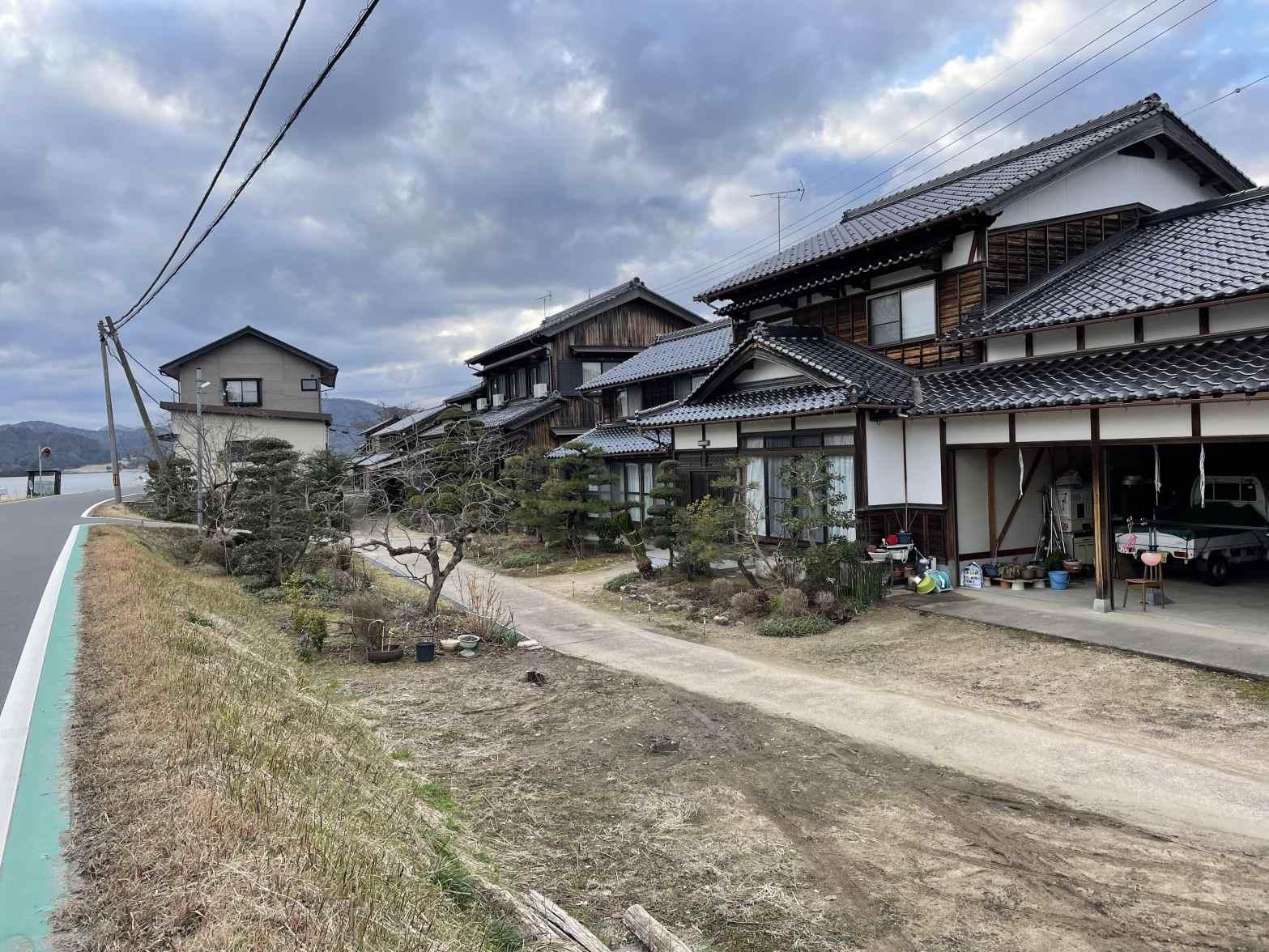
Kyōtango, Japan – February 2023
I first stumble across the oyster farm in Kumihama during my quest to find a fulfilling volunteering opportunity on HelpX. Atsushi‘s listing grabs my attention for several reasons: I don‘t know anything about oysters, I love the Japanese countryside and I‘ve always wanted to live by the water. So I message him in April 2022, but with the Japanese borders still closed for individual travellers due to Covid restrictions, it‘s not until late autumn that I can finally plan my stay in Kyōtango. Atsushi and I agree for me to stay at his family‘s house in February, during peak oyster harvesting season.
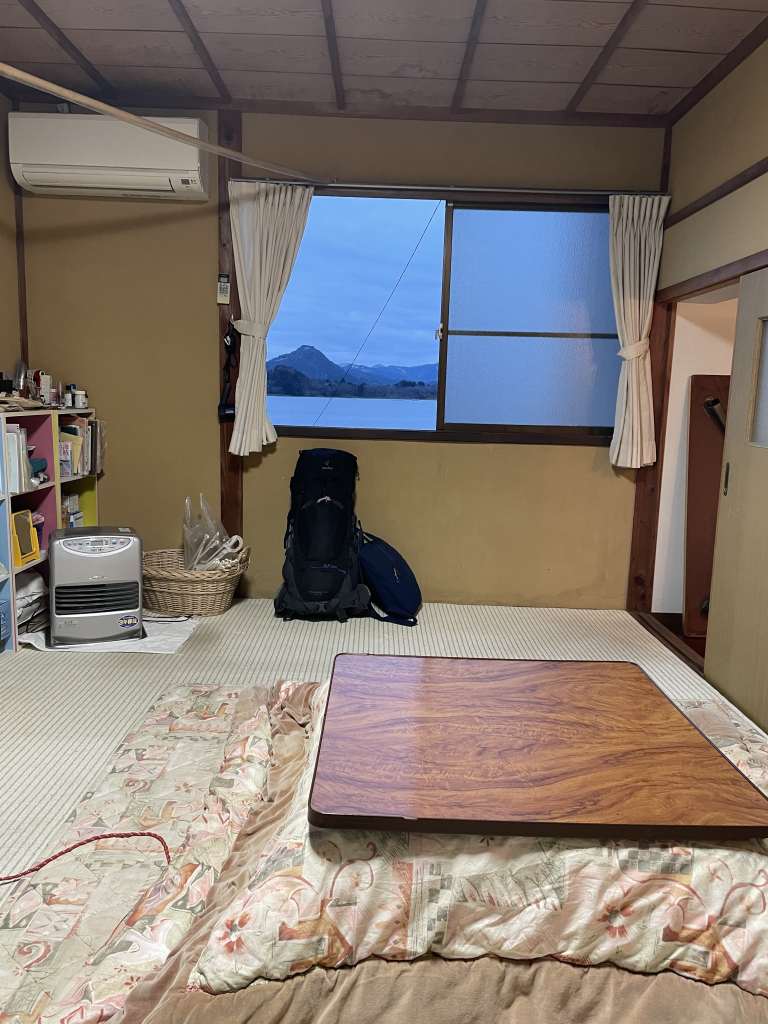
Having anticipated this moment for several months, it‘s not until I get off the highway bus at Amino station that I can truly believe it‘s happening. Atsushi picks me up in a small truck, which is the most commonly used vehicle in the area. We head to 2 grocery stores, where I can choose all the products I require for the next few days. And then we finally drive down the road leading to Shōtenkyo Beach. I immediately feel at home and even more so when I settle in my room with a view of Kumihama Bay. Just like in Kusatsu Onsen, the Kotatsu and gas heater are absolutely necessary to make the room cosy in early February.
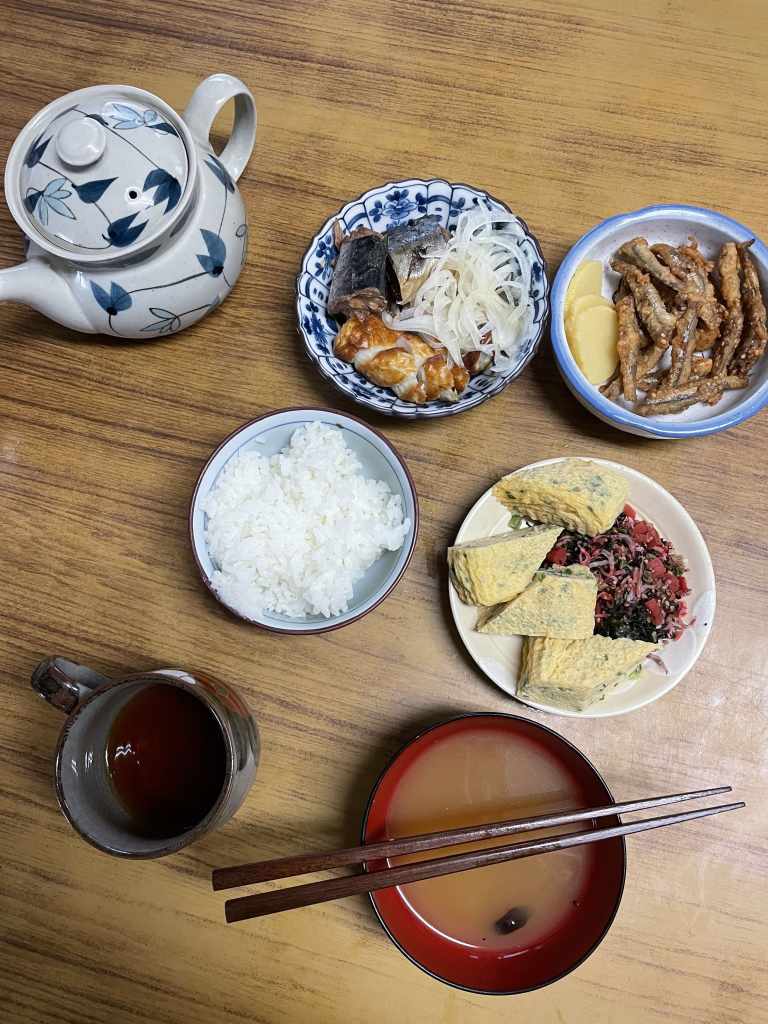
My first day in Kumihama is a day off for me, as Atsushi has to run some errands. I am introduced to his local friends and associates Yushi and Miho who invite me for a chat at Miho‘s bakery. I spend the rainy afternoon under the Kotatsu and am excited about the next day while hoping for better weather. My first oyster harvesting session begins in the kitchen. I am given rubber boots, which undergo the waterproof test in the shower, a set of padded trousers and jacket, rubber gloves, and finally white fishermen‘s rain clothes. I add my own hat and scarf and am ready to jump on the boat.
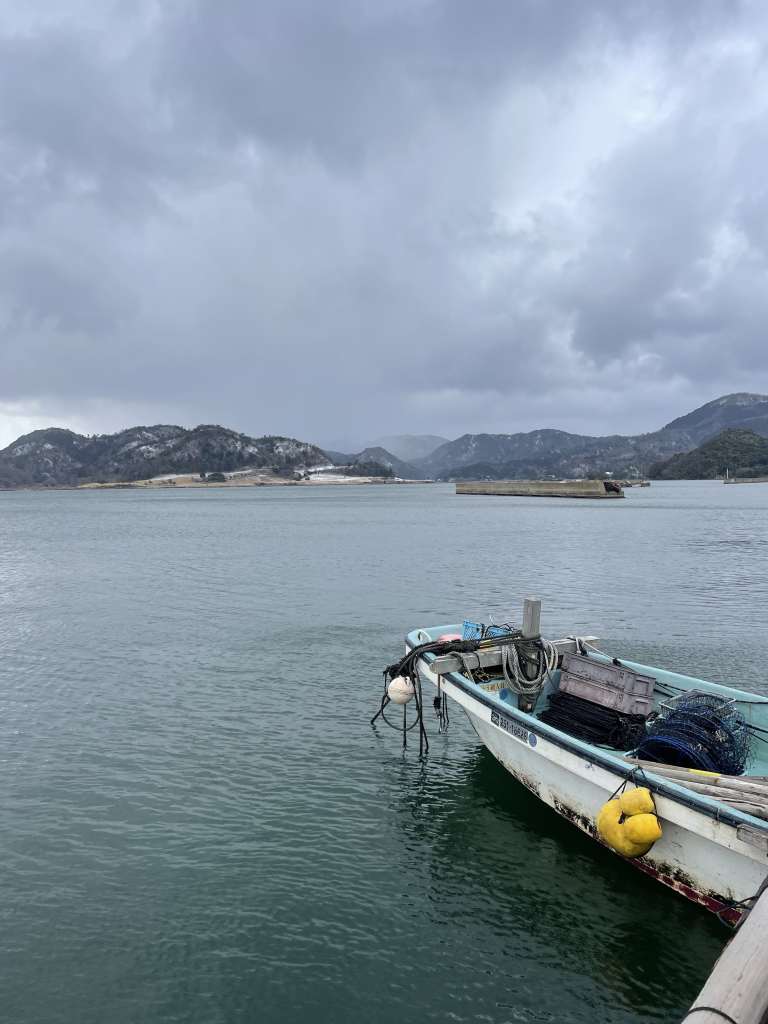
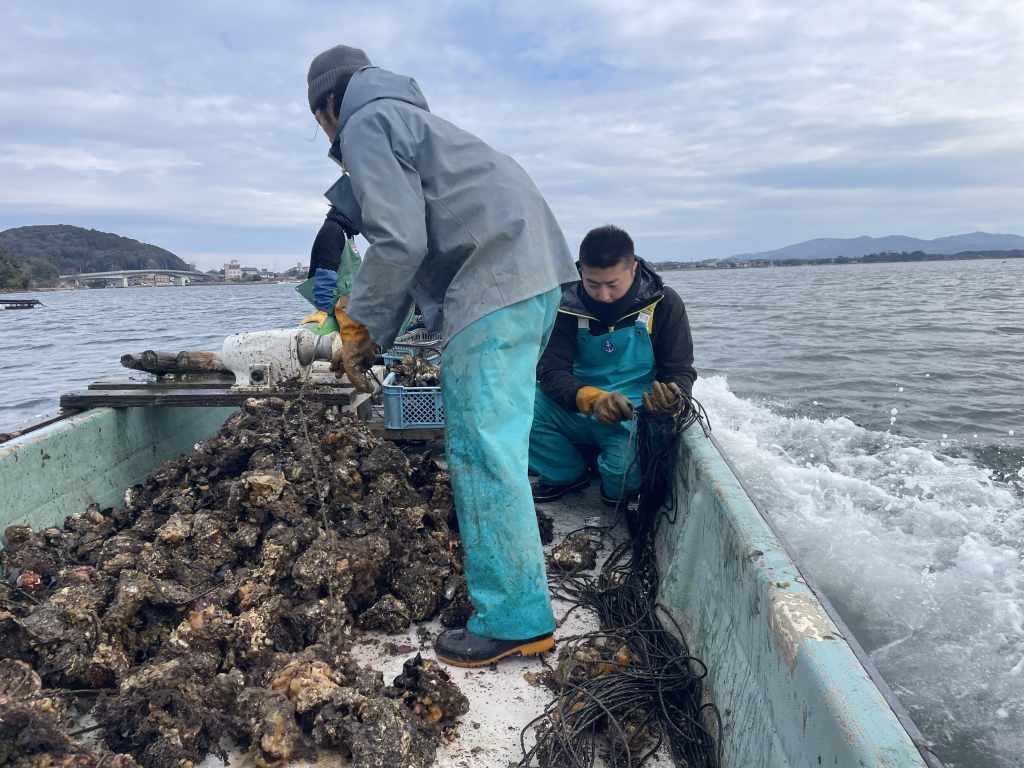
Together with Atsushi, Yushi, and his dad, we head out to the platforms. I make sure to observe every move and am eager to help. Atsushi stops the boat and ties it to the bamboo frame. Yushi expertly balances on the grid-like structure and collects the ends of the ropes on which the oysters cling to. Then he brings the hook with 7 ropes to the boat and Atsushi tells me it‘s my job to pull the oysters out of the water. To do this, I am making sure my right foot is firmly placed inside the boat and then step onto the closest bamboo stem floating in the bay with my left foot. Yushi hands me the first rope and I begin to pull it up between my legs.
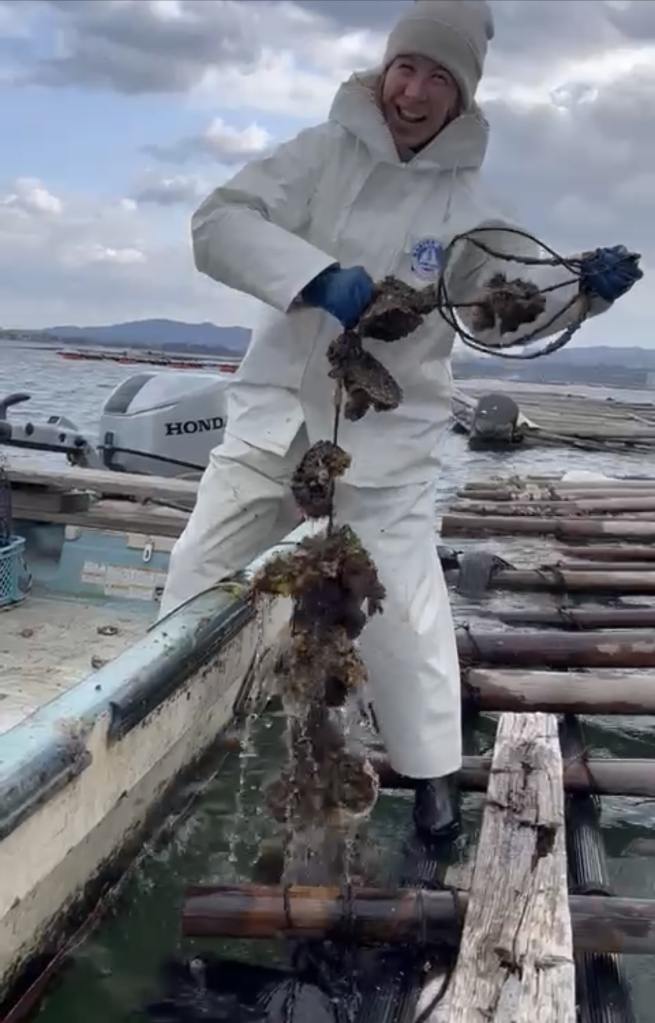
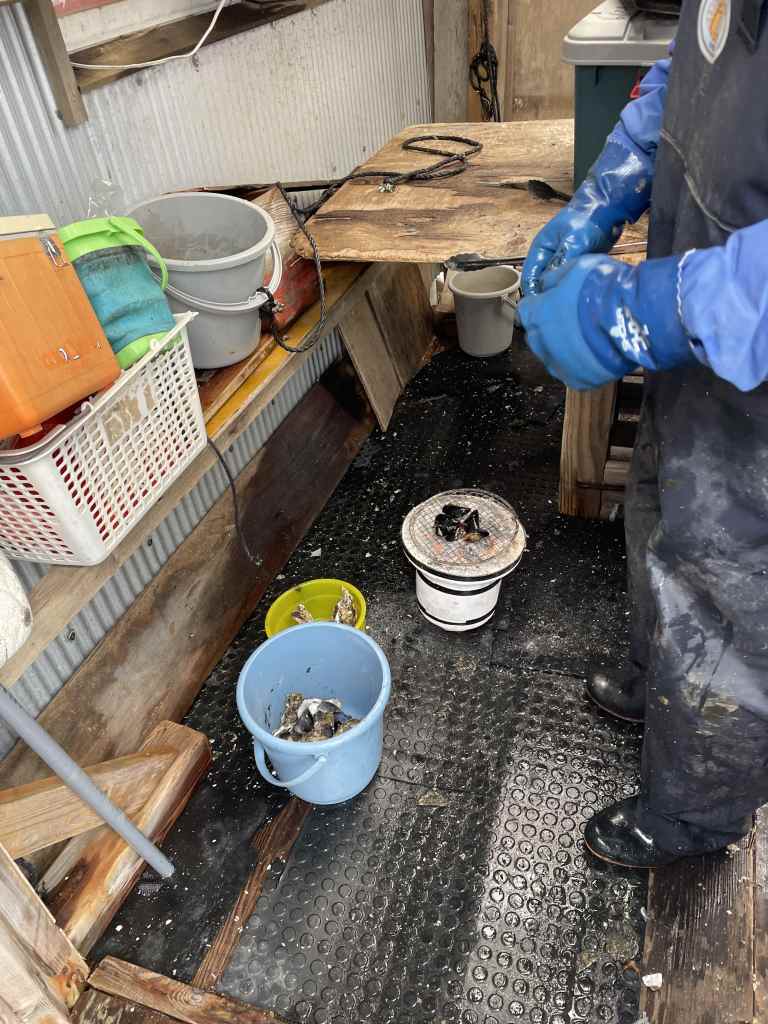
At first, the rope seems very light, even though there are around 35 oysters hanging onto it. But with each bunch that comes out of the water, my arms get heavier. I carefully put one rope after the other in the boat until Atsushi tells me we have enough. While he stirs the boat back to the pier, Yushi and I separate the oysters from Atsushi‘s ropes with a machine. As Yushi wants to reuse his own ropes, we separate the oysters from them by hand. Some are already open, and therefore dead, those are thrown back into the water. All in all, this is very dirty work, and I am covered in mud afterward. Once I even get sea creature blood on my face because I‘m not careful with my knife.
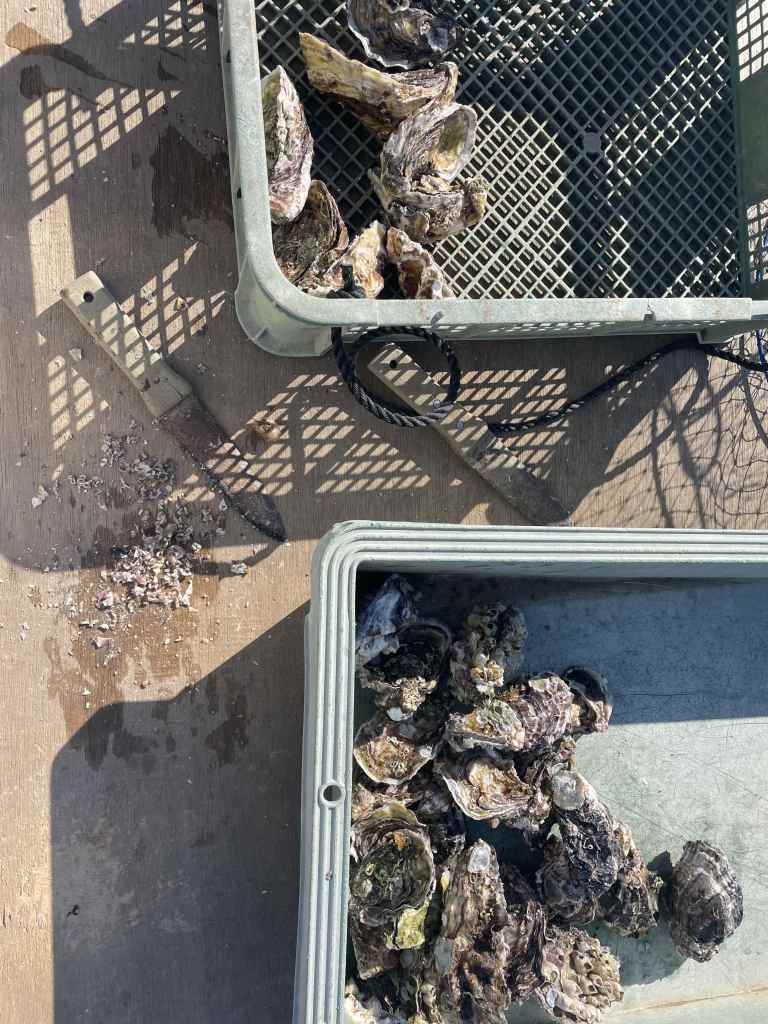
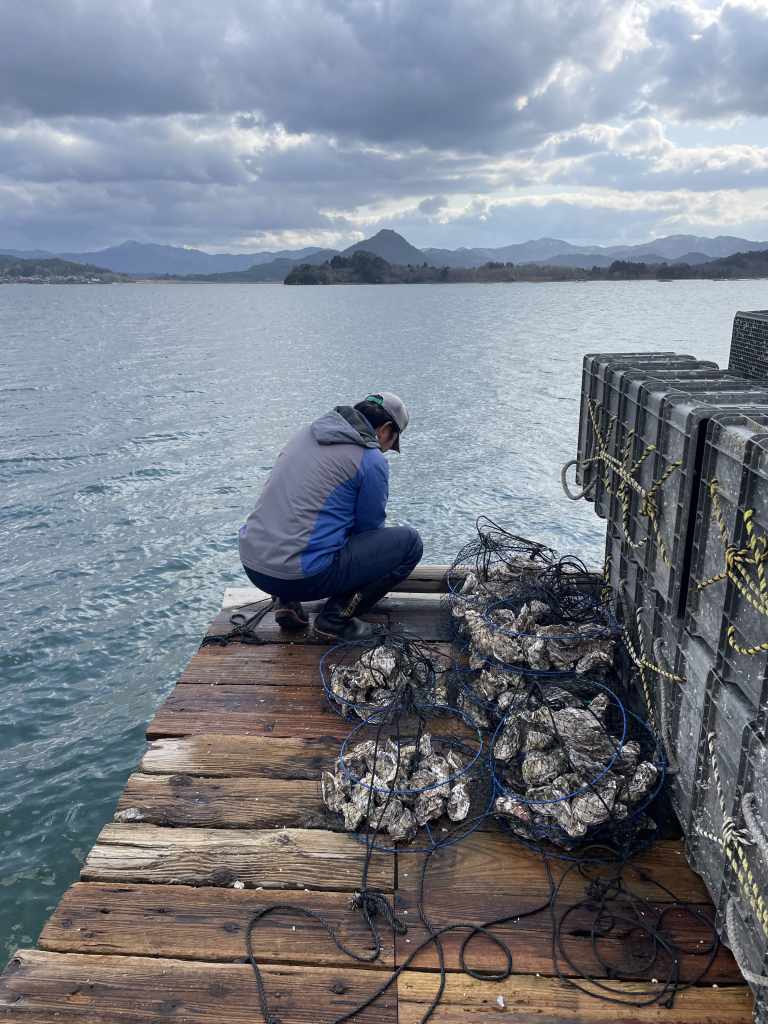
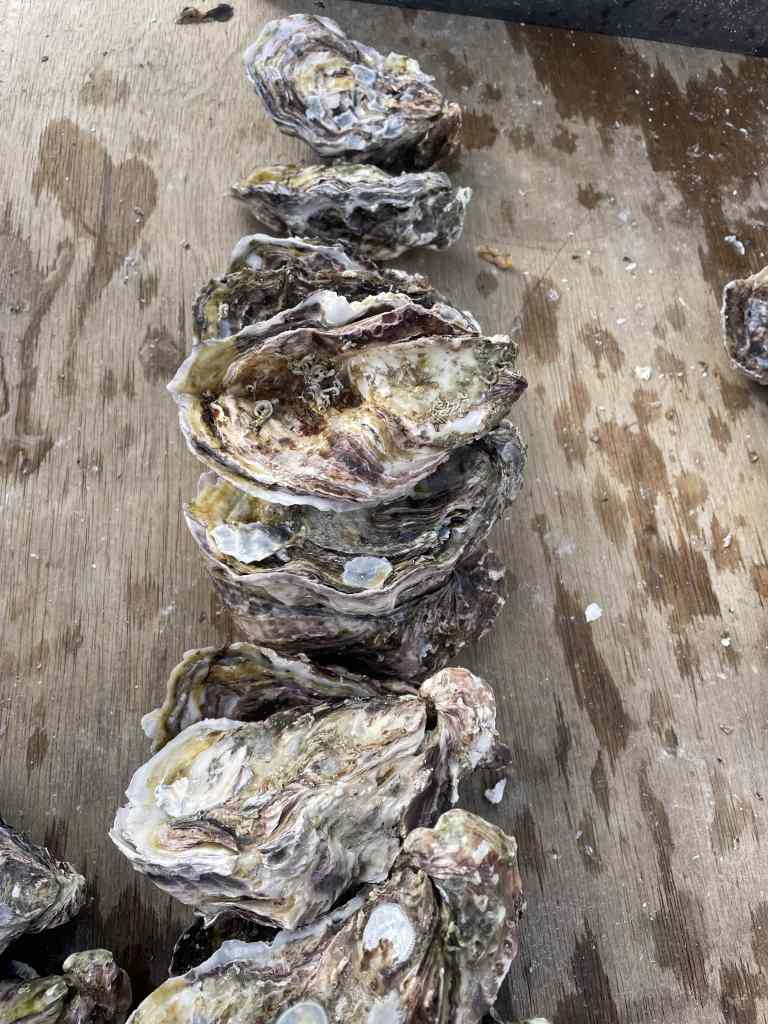
Just when all oysters are separated, the town jingle announces it‘s 11am. We continue working (cleaning the boat with seawater and gathering the separated oysters in nets) until noon. After lunch, it‘s time to polish the oysters, which until now look very different from the delicacies you are served in a high-end seafood restaurant. The first step is to wash the shells in the nets with a pressure hose. Next, each one of the oysters has any barnacles and mussels growing on its shell removed manually with a scraping knife. The much cleaner oysters are collected in nets once again and undergo a second round of pressure washing.
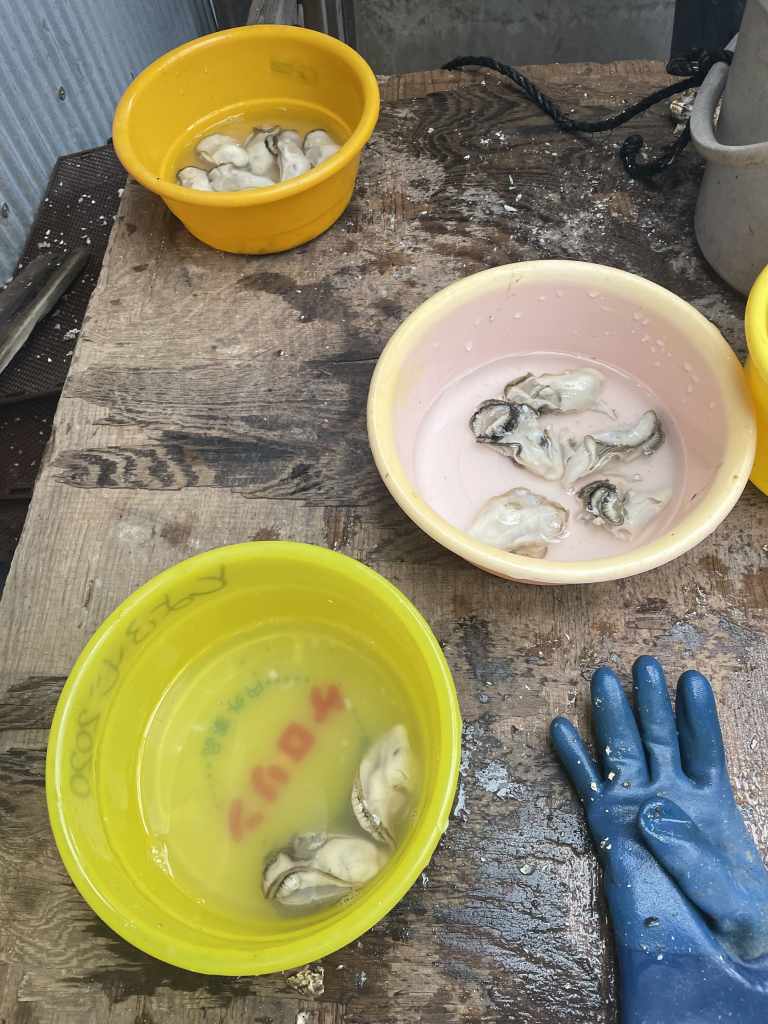
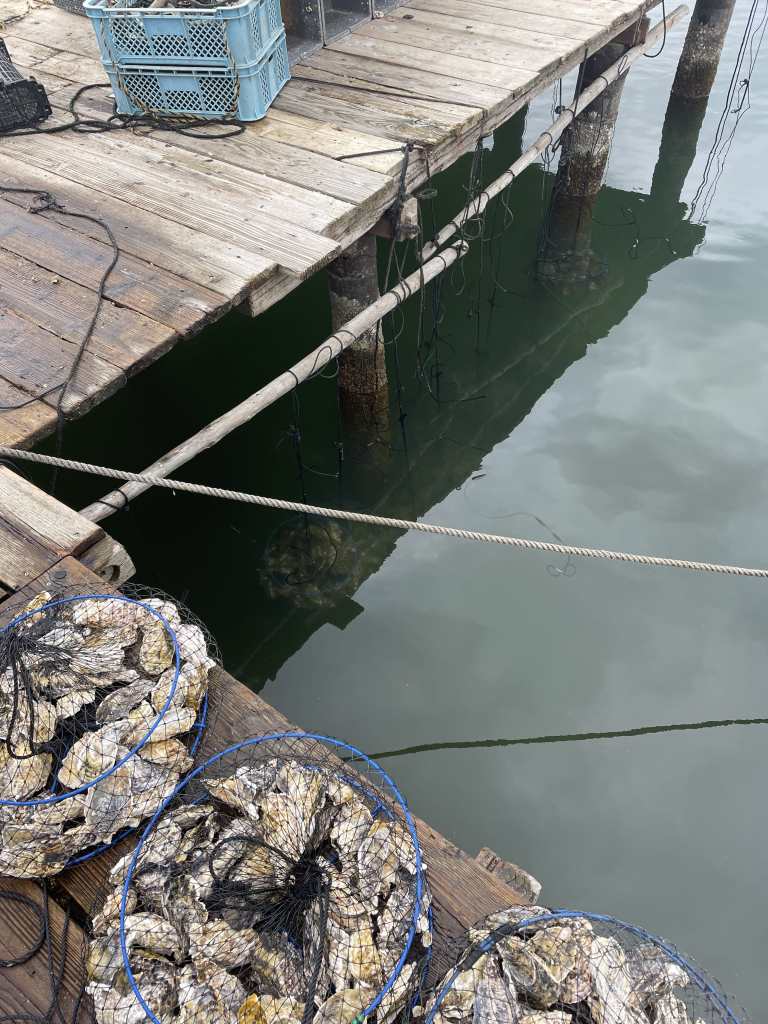
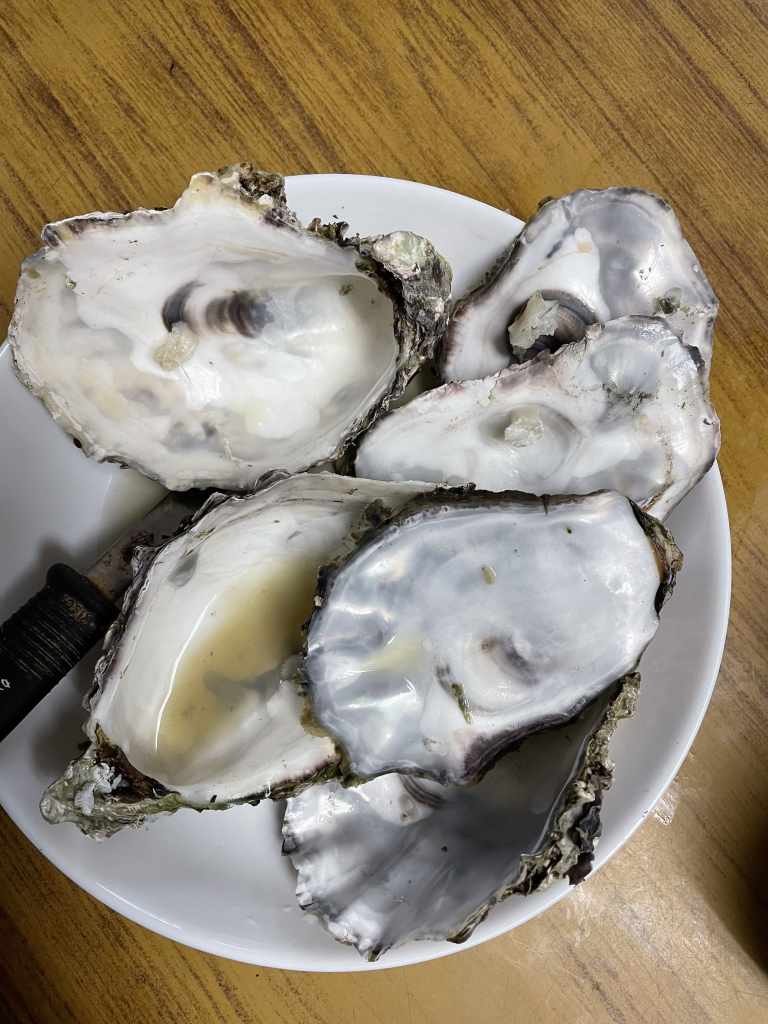
Finally, Atsushi lines up the spotlessly clean (& still closed) oysters by size. My job then is to gather them in groups of 25 and put them back into the nets. Some of them are not shipped or sold right away. To store those for a few days, the guys submerge them in the water and tie the nets to the pier. For orders, oysters may be sent out with the shell or without. If the clients don‘t want to (or can‘t) open the shells on their own, the fishermen take over this demanding task. The key is to place the tip of the knife on the left side and point it up, to only cut the muscle connecting the oyster to its shell. However, this is easier said than done and I too try and fail miserably.
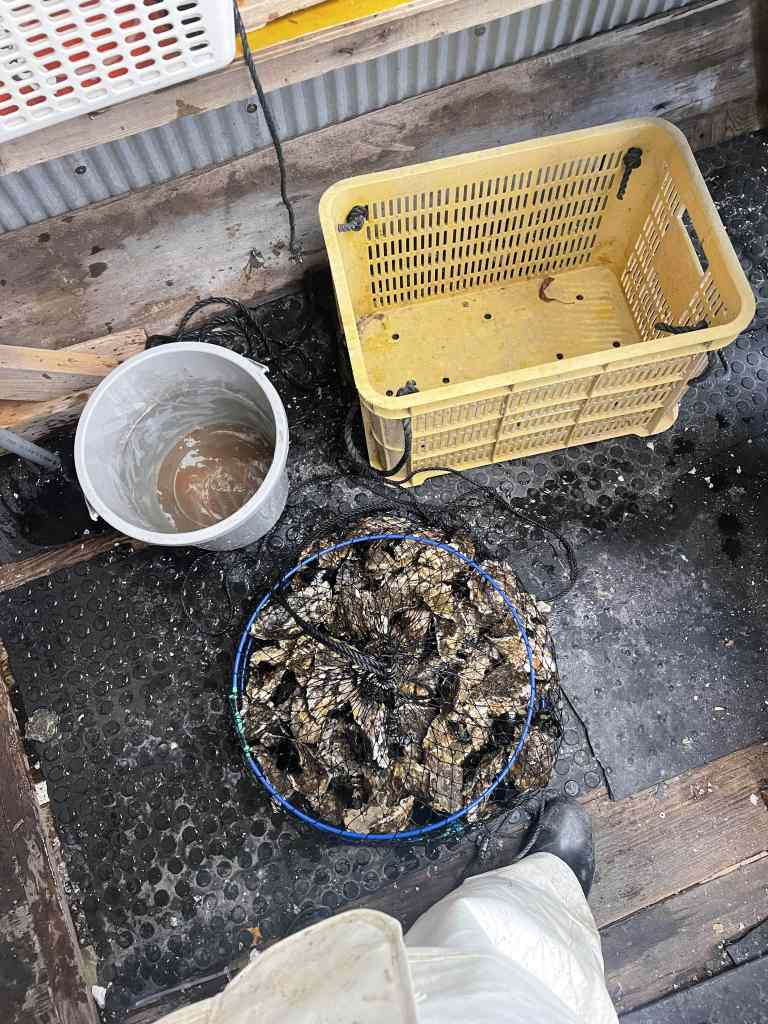
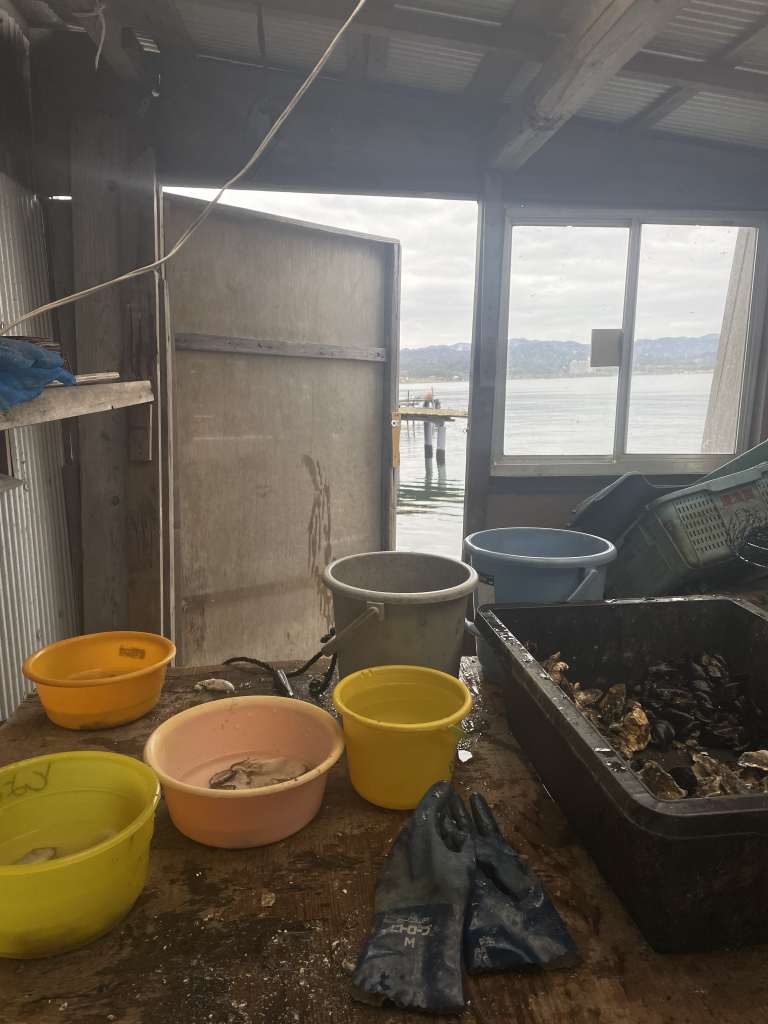
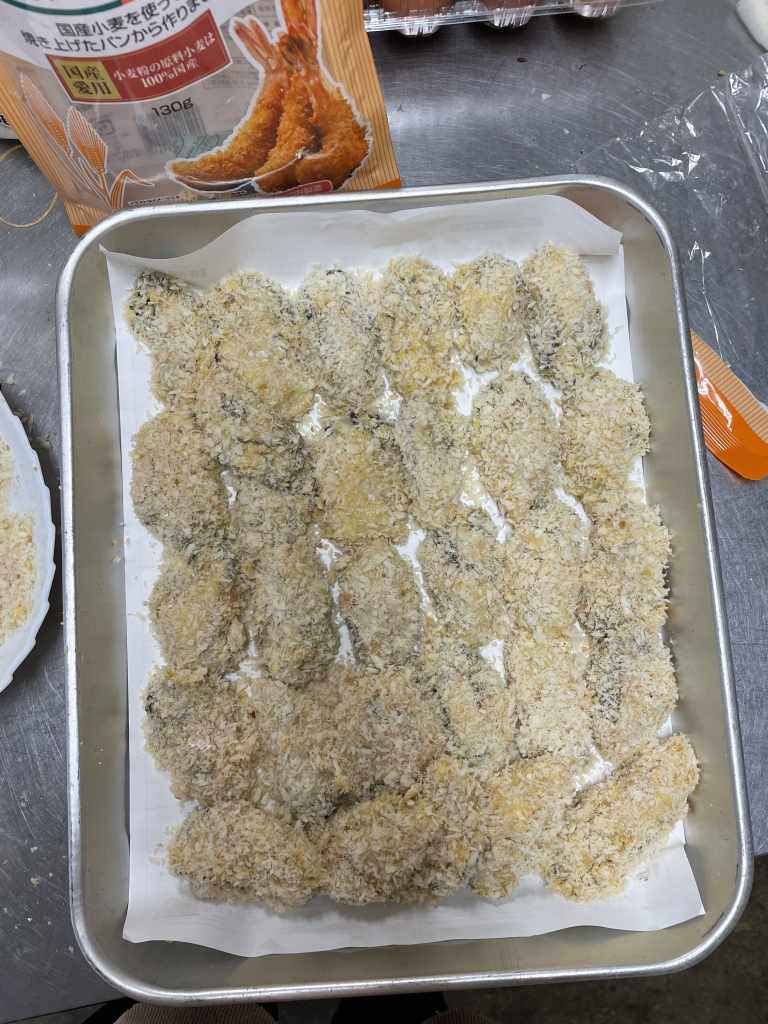
Now that I‘ve covered the long process the oysters go through from growing peacefully in Kumihama Bay until they‘re ready to be sold, let‘s take them to the table. While the most popular way to enjoy oysters in the west is eating them raw, they are almost always served cooked in Japan. This is due to Asian people‘s statistically higher risk of contracting norovirus from eating the shell fish raw. The first time I get to enjoy an after work snack is by microwaving them. It seems like a sacrilegious thing to do, they sure taste good. Other versions I try are oyster fried rice, oyster hotpot, and finally the queen herself: deep-fried oysters with a sauce made from Japanese Mayo and ketchup. Devine!
If you want to read more about the beauty of Kumihama and the Kyōtango coast, the delicious food there and some small anecdotes’ about life in rural Japan click here.
 thattravelstory
One thought on “Oysters: steamed, fried and microwaved”