South Korea – March 2023
My Jeju Olle Trail adventure starts in Jeju City. After setting a new speed record for landing, collecting baggage and finding the correct bus stop at Jeju International Airport, I successfully board bus 102 bound for Aewol. 20 minutes later, I am welcomed by EunHa and her husband, who are friends of a friend of a girl I briefly met in Japan. They generously keep half of my clothes while I’m hiking. With my much lighter backpack I return to Jeju City, where a night of Soju and heavy rain awaits me. So I decide to postpone my start on Route 18 for another day and enjoy some street food and sightseeing.
Why the Jeju Olle Trail is a great example of a sustainable tourism practice.
– Boosts emission-free transportation (walking & biking)
– Leads all around Jeju island, taking you to places of historical importance and landmarks
– Options to do individual routes as day trips from Jeju-Si or Seogwipo
– Supports the local economy if you stay at guest houses and homestays
– Diverse scenery with a mix of countryside and seaside trails
– Most trails are doable without any prior (long-distance) hiking experience.
– It’s not too expensive (<30$ per day for single thru-hiker)*
*for a CH budget. even less expensive if you travel in a group or do day trips.
– You get to meet and interact with Koreans who are on vacation and often keen to talk with foreigners.
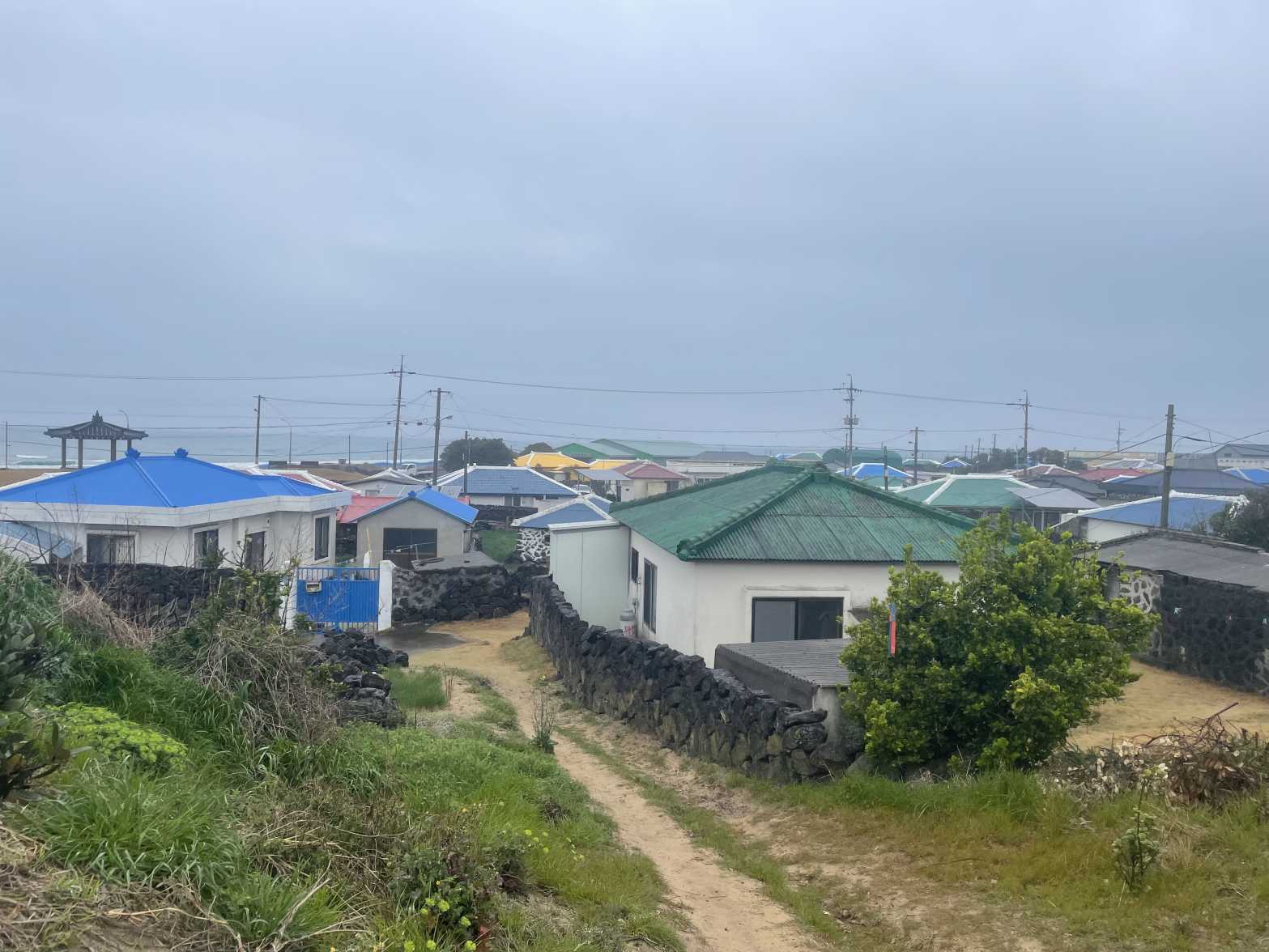
My first hiking day takes me along Route 18. For around an hour I walk through the city and climb to Sarabong Peak where lots of older Koreans enjoy an outdoor workout. Then the coastal trail leads me to the seaside and small port villages. I enjoy my first Gimbap lunch at a lively beach. From here I’m turning landward and into the countryside. I get a first glimpse of traditional, colourful Jeju houses and mighty Hallasan. My backpack is getting heavier by the kilometer and I start to take more frequent breaks. Experiencing one of the many typical natural spring basins close to the ocean is a great excuse to relax my sore feet. After a rest in a small bay watching fishermen, I decide to skip the stamp point and take a shortcut to reach my accommodation for the day: Africa Guesthouse.
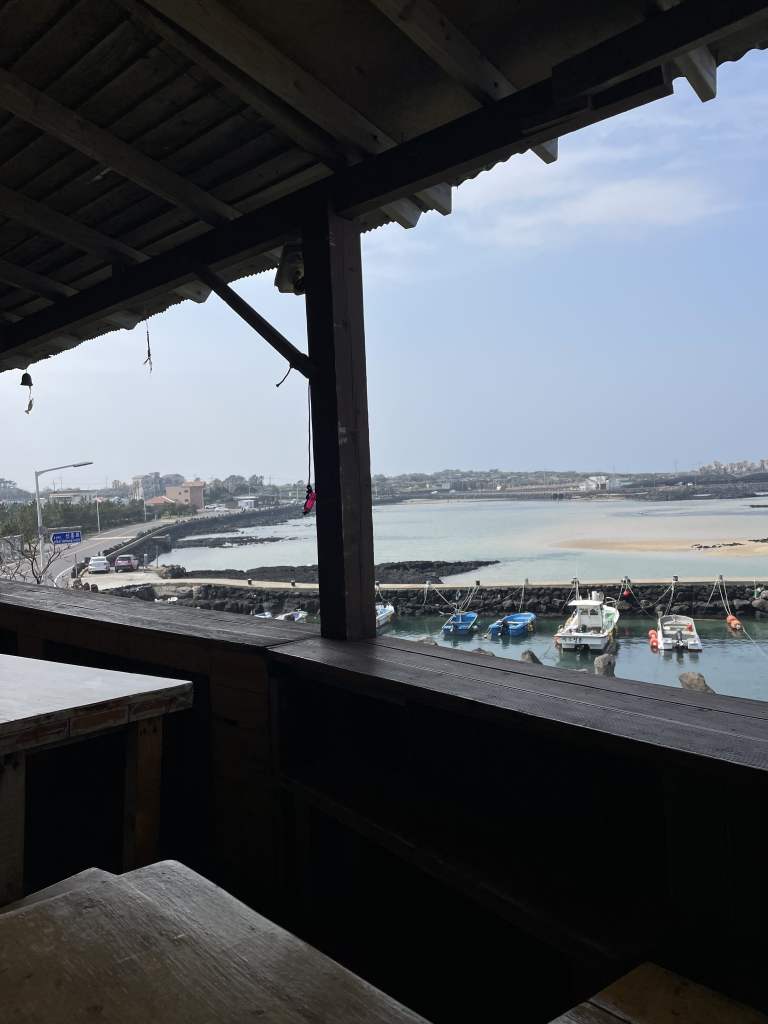
After 20 km of walking, I am warmly greeted with „Hello Jana“, a cup of tea and a delicious doughnut. While I enjoy the view of the bay and the red sun setting in the distance, Hojin (the only other guest) and Su-Bi who works at the guesthouse head out to buy ingredients for dinner. They return with lots of Jeju Makgeolli, fried chicken, leek salad, and steak . With each new bottle of Soju and Makgeolli, the exchange of travel stories, music preferences and traditions in Korean and some English becomes more lively and it’s no surprise that we stay up until the early morning hours.
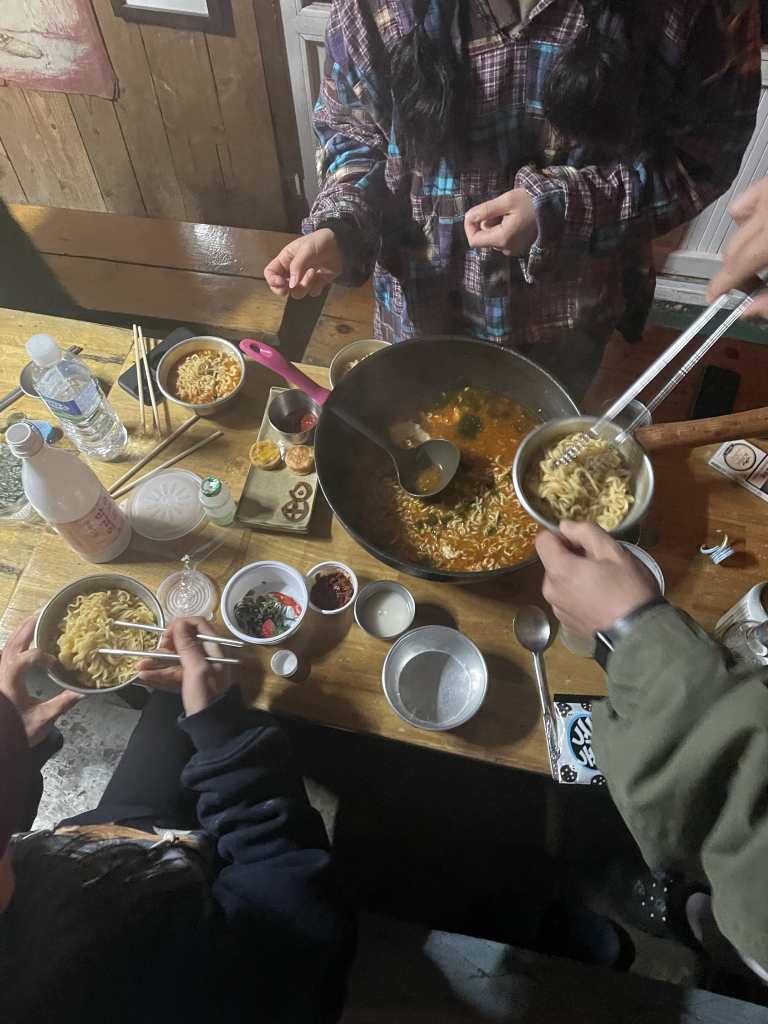
After a long first hiking day and an even longer night, I’m easily convinced by my new Korean friends to join them for Hangover soup and stay another night. In the afternoon, I relax on the porch and at the close by beach. Just before sunset, more Korean guests arrive while Hojin and I enjoy tea time with bread, cheese, prawn & octopus crackers. Once everyone settled in, the kitchen becomes busy. Dish after dish is making its way to the table while more people arrive. I’m served Kimchi fried rice, Kimchi Mandu, Korean Sashimi, midnight Ramyeon and of course, lots of Makgeolli. In exchange for basic language lessons, I teach the young Koreans about Swiss culture and politics. As always, the fact that we have 7 presidents and the story about the Swiss Army “loosing” a tank in the Alps for 50+ years are a hit. At 2am I say goodnight to my new friends to get enough sleep for the next hiking day.
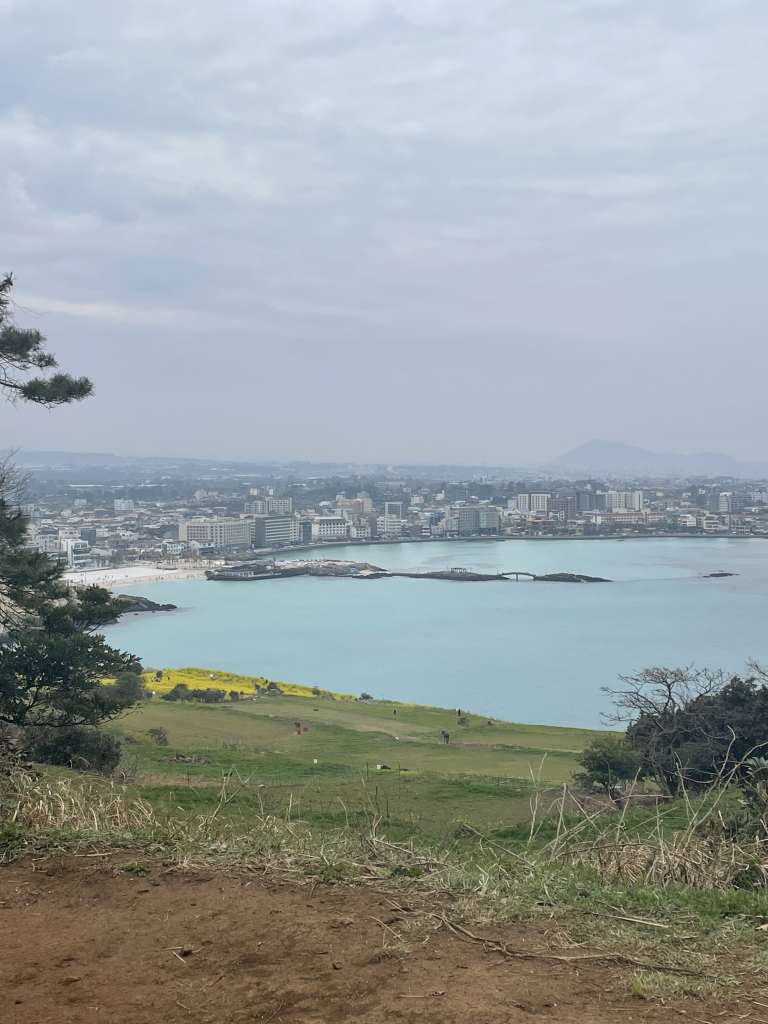
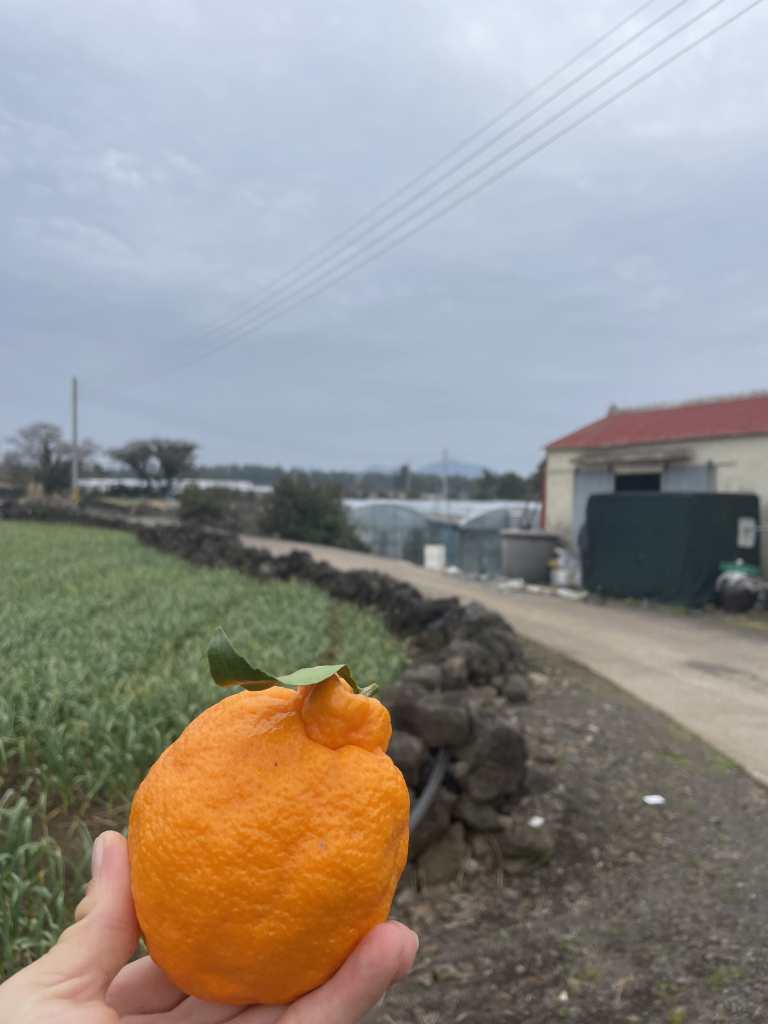
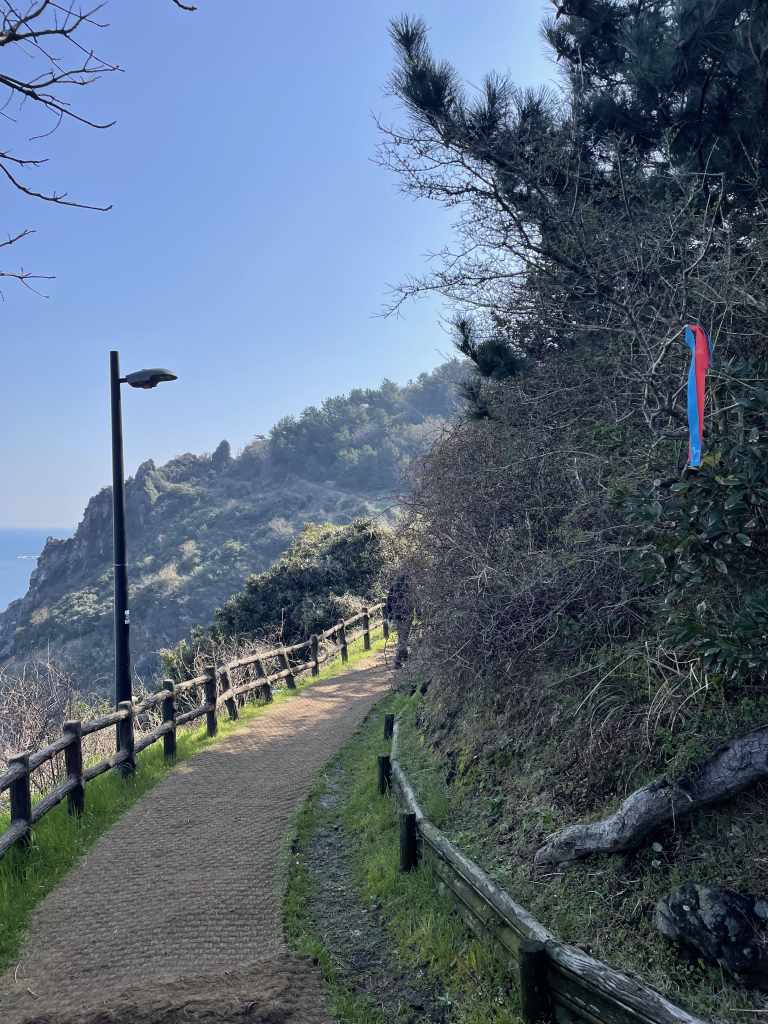
I’m woken up by the owner’s call for “Chai, Chai” and enjoy a delicious cup of Indian milk tea while looking for a guest house at the finish point of Route 19. Then it’s time for the real goodbyes, and I’m off on the trail to Hamdeok beach. It’s a sunny day and the view of the bay from the peak in the east is marvellous. After descending on the other side, I reach Bukchon village. The horrors of the 4.3 incident that happened here are commemorated with a marble sign and a statue of a strong Haenyeo. I sit down at the feet of the Sea woman and eat my lunch consisting of bread, cheese and mandarins. After my meal, an ancient lava tube trail takes me through a forest and across a small hill. I pass a windmill park and a couple of farms. When I greet an old farmer and his wife with “Annyonghasseo”, he stops me to hand out a huge tangerine.
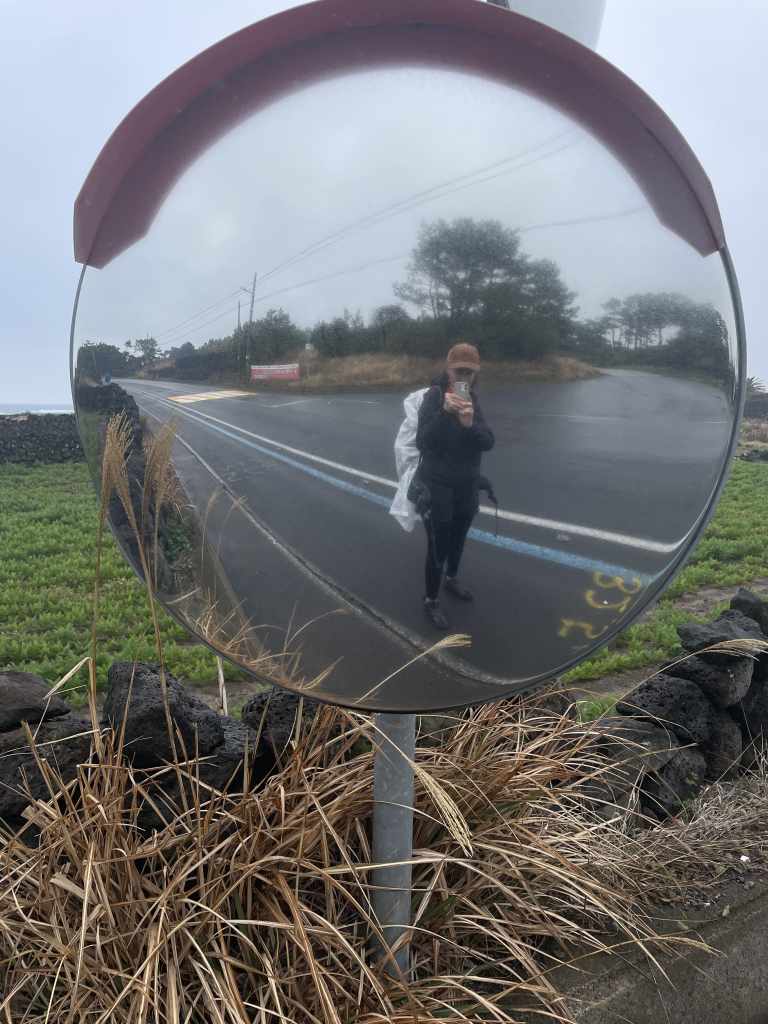
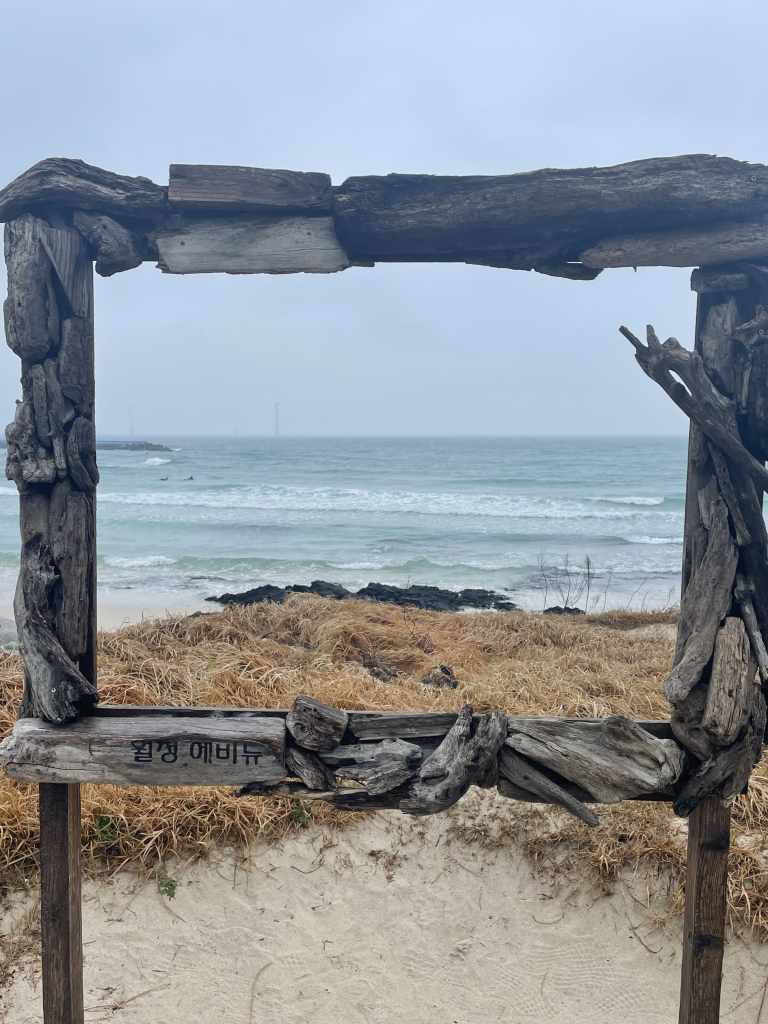
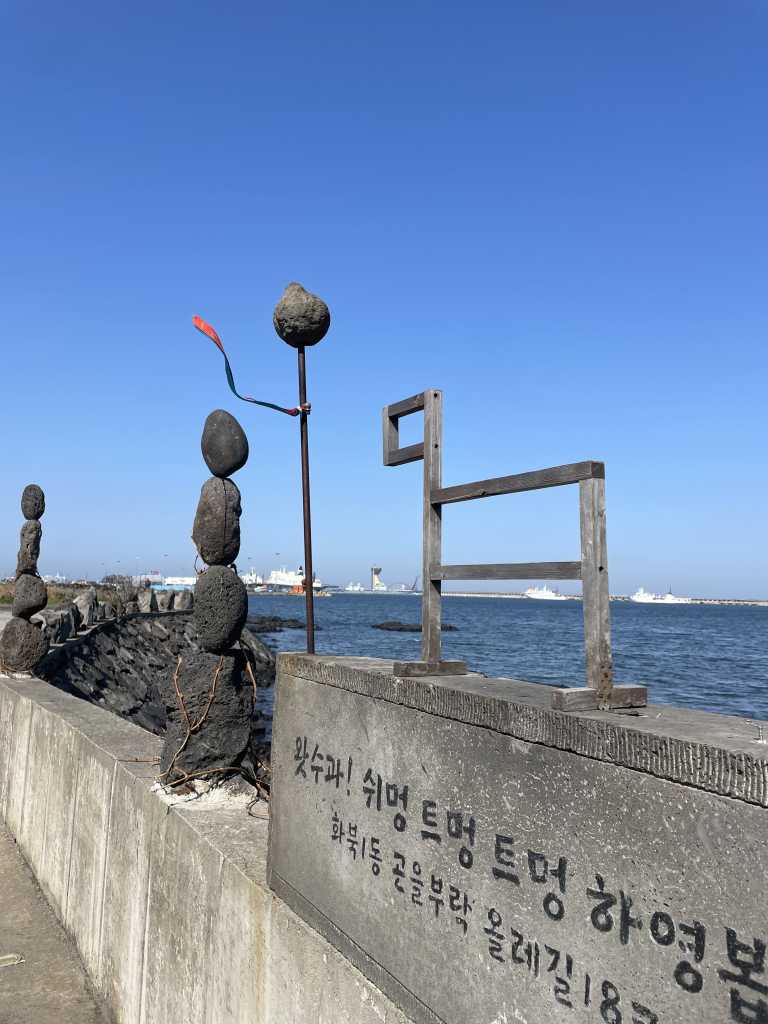
After a “Pachinko“-marathon and a good night’s sleep at the Red Windmill Pension, I start late on Route 20. It’s a rainy day, which isn’t great for the coastal trail I’m taking along Gimnyeong beach. At one point the blue and orange ribbons lead me across a field of black lava rocks. However, the tide is so high, I have to climb through bushes to make it to the other end of the bay. To keep my spirits up, I dig deep into my motivational playlist. To the tunes of a Swiss-German band, I walk past a beach where surfers are chasing waves despite the weather. I grab myself a sandwich from CU and eat it while walking. In the afternoon I pass a bunch of fortresses and during the last hour, excruciating hip pain is making me pay for skipping the lunch break. I don’t even enjoy the colorful village I’m entering after walking down a pretty flower field.
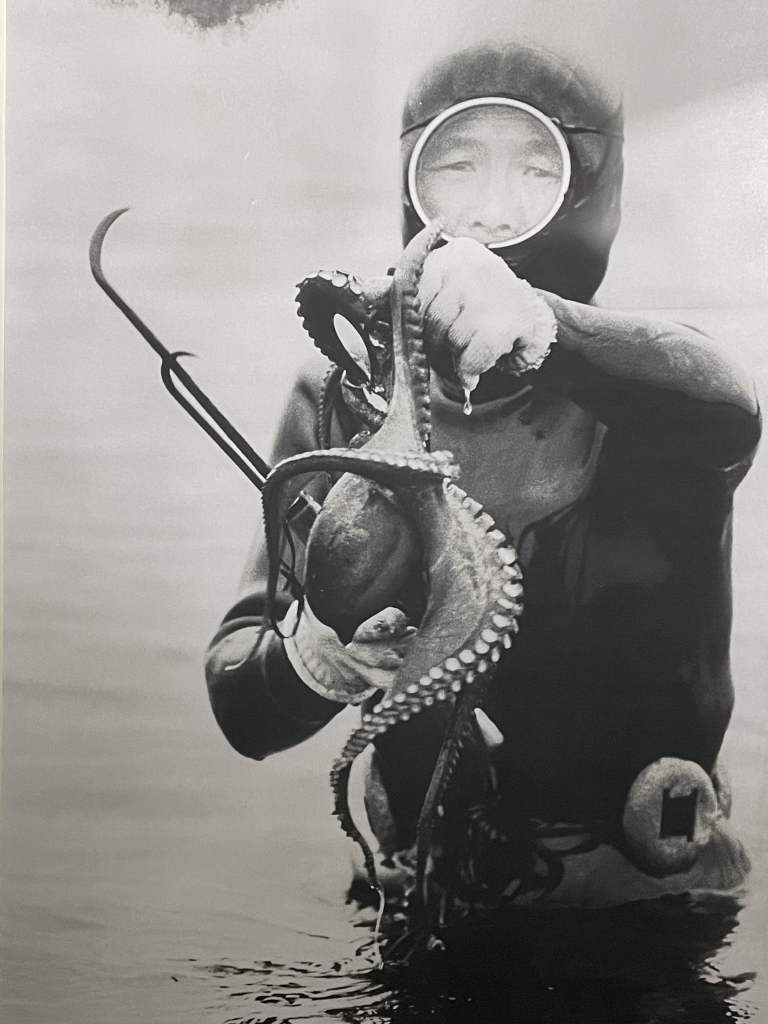
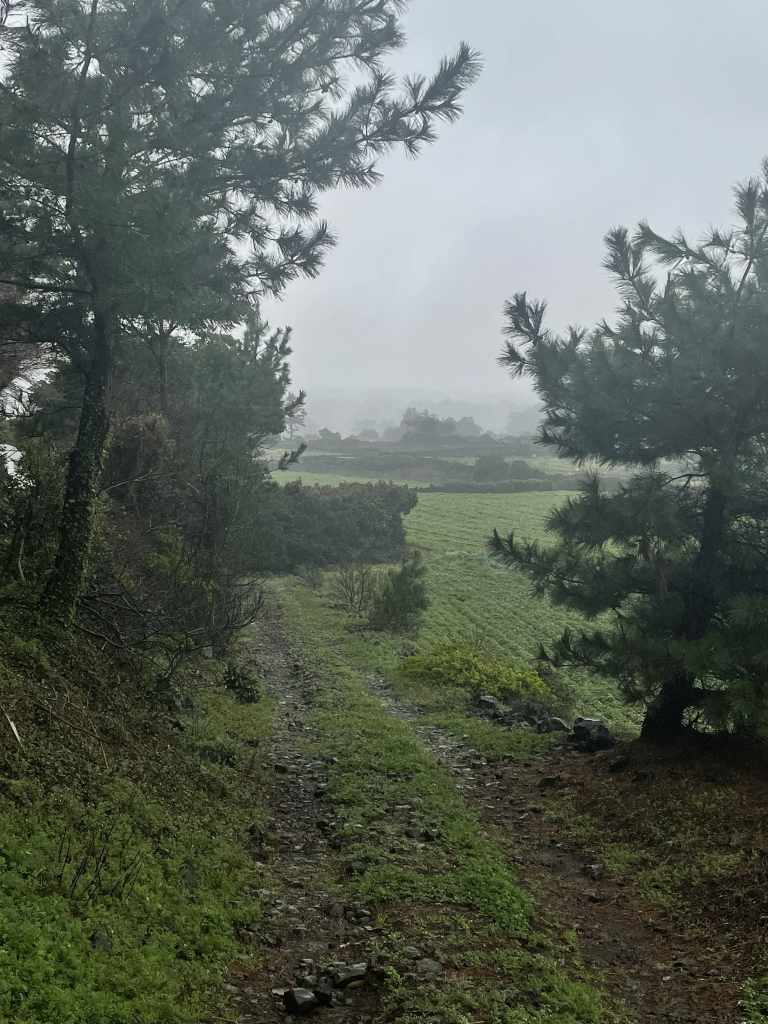
Despite the suffering from the previous day, I continue hiking and takle Route 21 and Route 1. It’s another rainy day, which starts with a visit to the impressive Haenyeo Museum. From there I walk along the coast until noon. Following the lesson from the previous day, I treat myself to a long lunch break at a pizza restaurant and summarize what I learned about the Haenyeo this morning. With a full route still ahead of me, I decide to skip an upcoming Oreum. Oreums are what they call the small extinct volcanoes spread out all over the island in Jeju dialect. Without the uphill detour, I‘m thinking I‘ll arrive at the next stamp spot early. However, here a construction detour adds another kilometer to my walk.

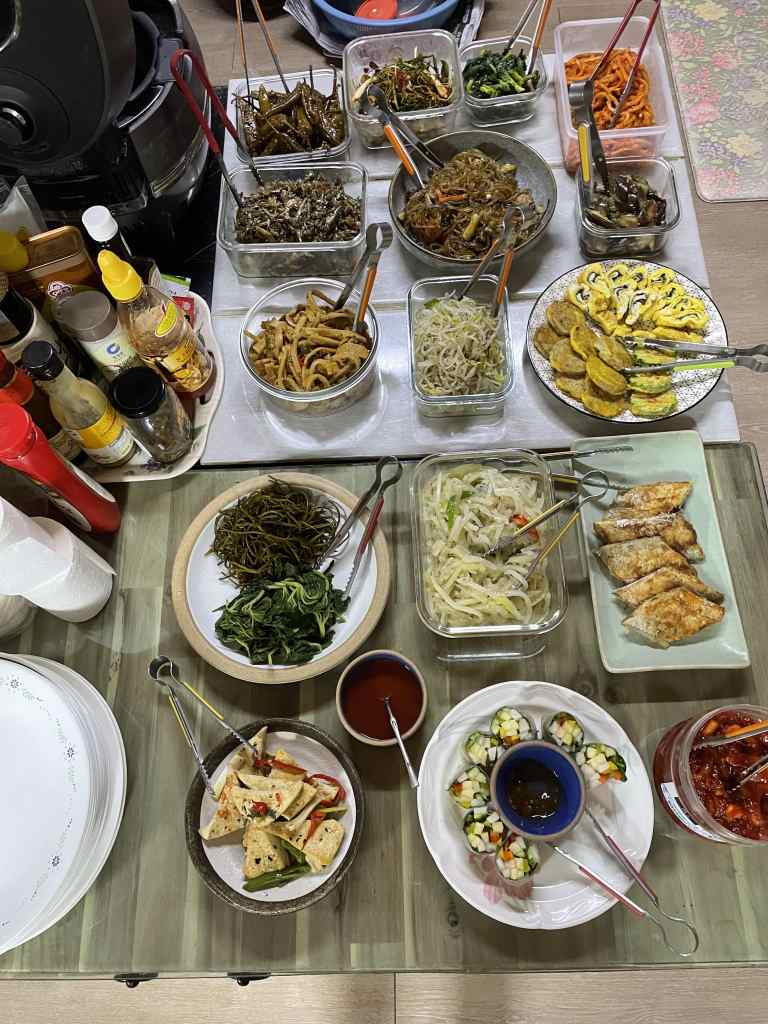
Additionally, the rain starts to turn into a downpour and I‘m not excited about the coastal trail awaiting me. However, I meet a 72-year old Korean lady who – without any English – explains to me, that she and her husband hiked up Mt. Kilimanjaro a few years ago! A bit further, another Korean woman joins our group. At this point, I’m completely exhausted and just want to make it to my accommodation. So I say goodbye to the lovely ladies and take a shortcut to Baengdigareum B&B. I wash out my laundry in the shower, limp to the nearby supermarket to buy a small dinner, and return to the guest house. I’m looking forward to tomorrow’s day off from hiking and the guest house owner’s famous Korean breakfast.
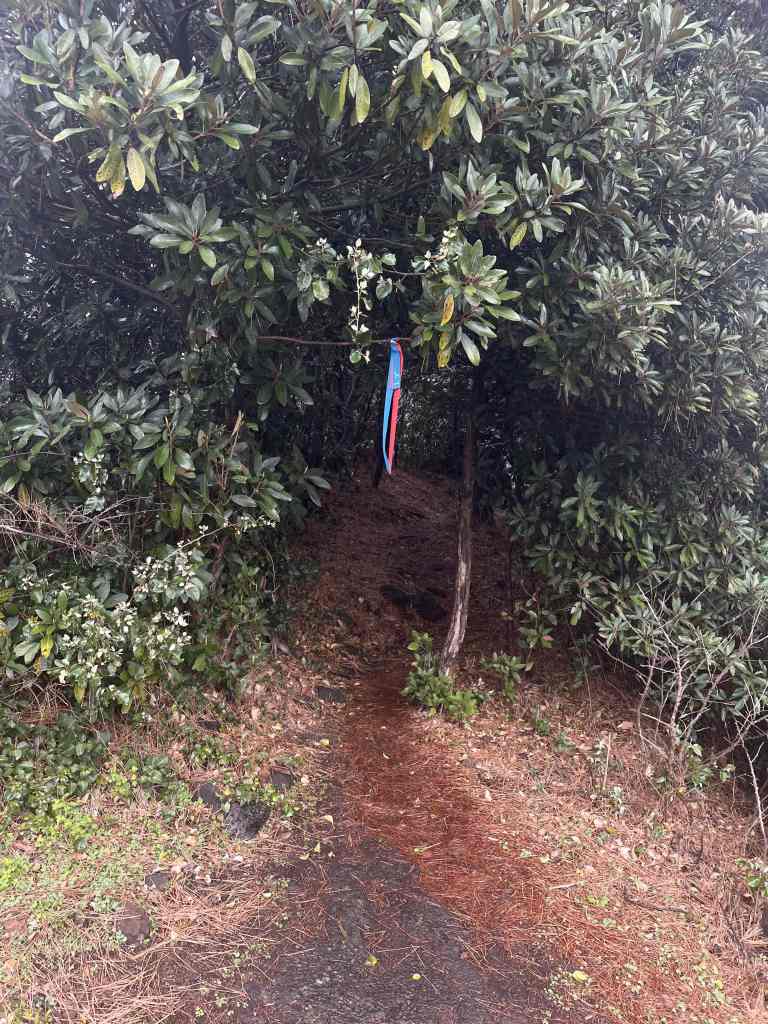

Not having learned much from the last excruciating hiking day and armed with a new pack of bandages, I tackle another double route: Trail 2 &Trail 3A. At least it‘s not raining, and the cherry blossom trees are finally blooming. I walk past trees, bamboo, and chirping birds. A forest trail leads me up an Oreum, from where you have a great view of Seongsan Ilchul Marine Provincial Park. An older Korean man is already sitting on a single bench. He kindly shares his tangerines with me, and we chat for a bit before he heads off down the path. I enjoy the view a little longer before following the blue ribbons down the forest trail on the other side. At the bottom of the Oreum, many farms await me. The field trails bear intense smells like wild garlic, onions, and tangerines as well as the occasional fire on the side of the road.
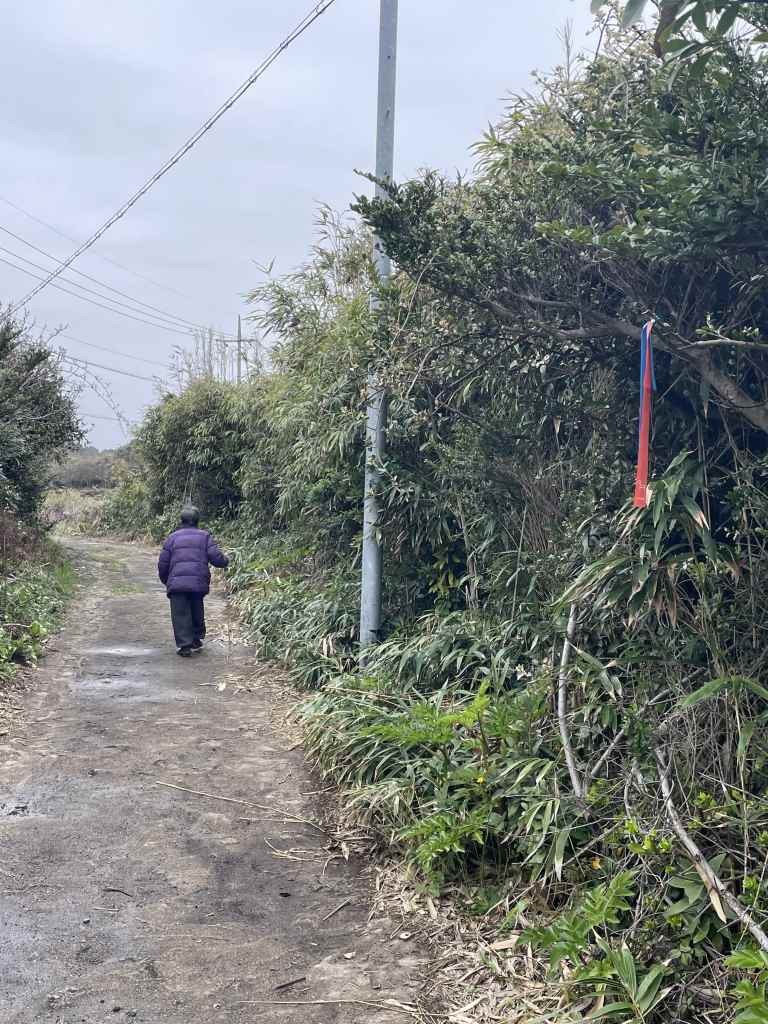

On this particular day, I pass a vegetable patch, where farmers are in the midst of harvesting huge radishes. And then suddenly I turn around the corner and am back at the ocean. I get my finish stamp for trail number 2 and buy Gimbap at 7-11 for lunch. At the beginning of trail 3, I meet an old lady who without any English, but with help of a bamboo stick, warns me not to litter. After this interaction, I listen to a podcast while walking along the seaside. I pass a few tiny fishing villages, Bulteoks (the Haenyeo’s changing room), and a smelly fish factory. Then, an Olle sign tells me that I’m about to “pass a livestock farm set next to the ocean, which makes for a delightful sight”.
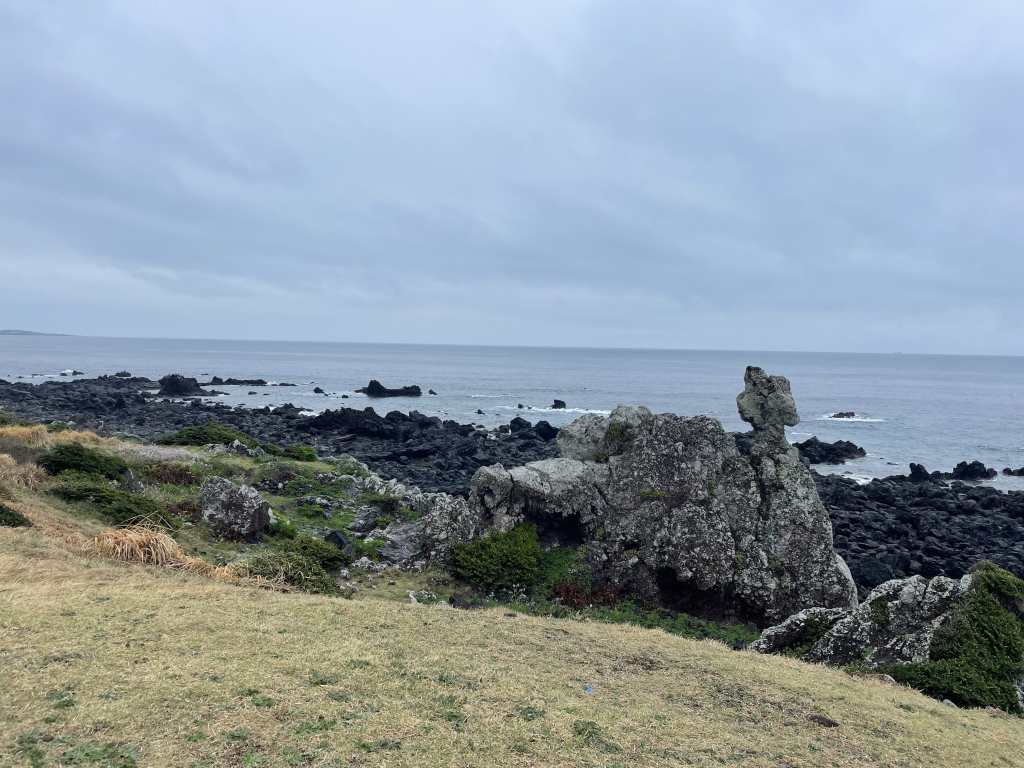
The view of some impressive volcanic rock formations is delightful indeed, so I decide to take a short break to appreciate it. When I check Kakao Map to see how long I have left, I’m pleasantly surprised to see it’s not far till I reach my destination. Only a little while later, I arrive at the Pyoseon Beach, which is over a kilometer wide due to low tide. Unfortunately, I face some issues with my guest house reservation and have to splurge on a little more expensive hotel room. Exhausted and with burning feet, I go buy Ramyeon at the 7-11 located inside the hotel and fall asleep early while watching “The bold type”.
That was it for my first week on the Jeju Olle Trail. Read more tales on the physical and mental struggles’ week 2 and week 3 held for me.
 thattravelstory
6 thoughts on “Hiking the Jeju Olle Trail”