Kyōtango – February 2023
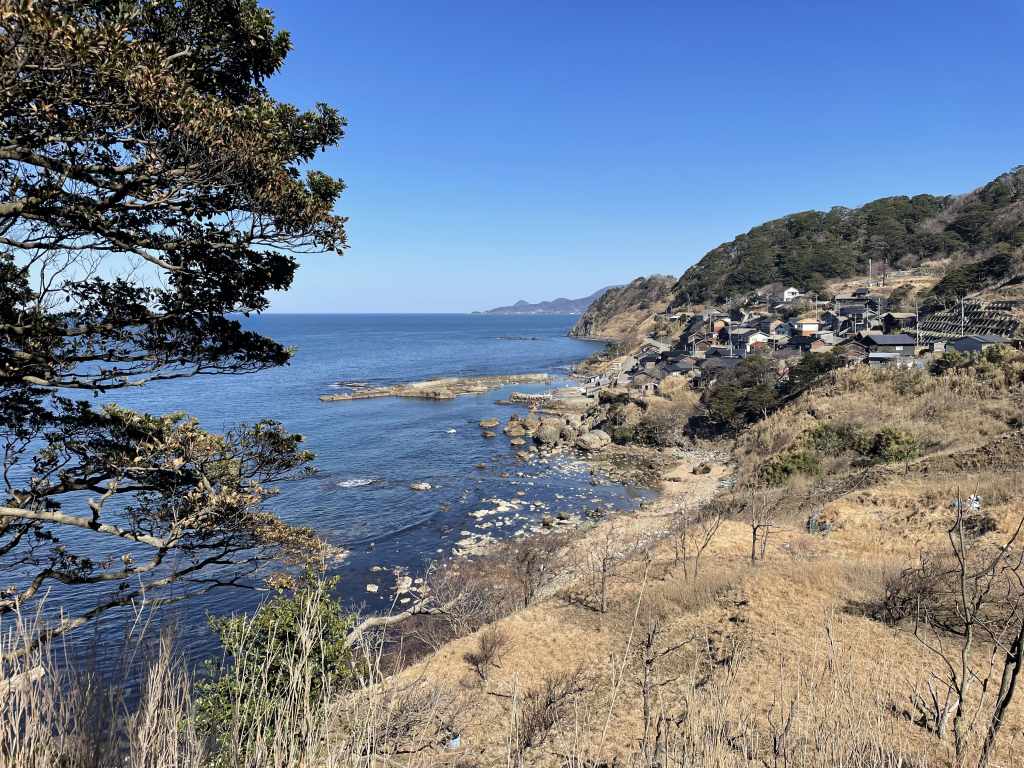
In my opinion, Kyōto is a must for any trip to Japan. Of course because of the multitude of temples and shrines in the city, but also because of the surrounding nature. If you’ve already read the story about my stay on an oyster farm in Kumihama Bay, you know why I’m particularly drawn to the wild north of the prefecture. And if you see this post first, take a moment to read the ode to Kyōtango and come back afterwards. Now you’re curious about what else there is in the Kumihama area besides oysters.

As always when it comes to Japan, the food is not to be neglected. I was of course allowed to benefit from the legendary cooking skills of the Toyoshimas. They are included with every stay at the Minshuku – be it for payment or help on the aqua farm as part of HelpX. In addition, there are countless good restaurants in the area. Special mention should be made of: my friend Miho’s little bakery “Otsuka Mihopan Bakery” where you can find any Japanese bread creation you can imagine. If you are lucky, Miho’s mother-in-law is weaving kimono fabric in the room behind and you can even watch for a short while.

Or then there’s Cafe Koshumaru, with great views of Yuhigaura beach and insanely large portions of typical Japanese lunch food. The second time I was there, for coffee and cake, a lady came by to practice English and we chatted for 20 minutes. One place where I had the extraordinary opportunity to watch a soba master make buckwheat noodles was 郷の里手づくりふじわら. Soba-San told us then about wanting to take a long trip across Japan to learn more local preparation methods (he is over 75 years old). And finally, Urashima Pizza in Amino-cho was recommended to me. I will definitely stop by there on my next visit.

Because public transport in the countryside is a bit poor, I was often on the road by bike. There is so much to see! But beware, every ride involves meters of elevation. Perhaps the flattest is the road around the bay. There is great samurai-style architecture to see in Shōtenkyo. Yuhigaura Beach is the #1 spot for incredible sunsets. Plus, you can watch die-hard surfers surf here even (or even more so) in the winter. On the grounds of Kumihama Country Club there are free-roaming deer (just like in Nara) and at dusk the place is magical.

A not necessarily long, but still quite strenuous ride leads up to the viewing platform on top of Mount Kabuto. From here you have the best view of the entire Kumihama Bay and the small stretch of beach that separates it from the Sea of Japan. Also, from here you can see the Nyoiji-Tempel – one of the most beautiful I visited in Japan. I don’t know if it’s the quiet location in the nature or the small building with lots of colorful folded cranes. In any case, the place has something special. Another temple I visited is the Nyoiji-Tempel where Miho took me for a tea ceremony.

A little further away are 大泊古墳群 and Kamai Swimming Beach. However, riding the routes by bike is well worth it, as the entire Kyōtango coastline is beautiful and you get the rare opportunity to observe slow country life. This also brings us to the most famous place in this list: Funaya in Ine is a small fishing village that became famous because of its extraordinary architecture. Another great day trip from Kyōto has to be Amanohashidate. Here you will find a forested sandbar that is almost 4 kilometers long.

Finally, another of my favorite things about Japan: of course, Kyōtango has various onsen or hot springs where you can relax. The most popular resort is Yuhigaura Onsen Hanayumi. Located not far from Yuhigaura Beach, and featuring a rotenburo, I can heartily recommend an open-air bath after sunset. Kumino Hama Minato Yuyu also has an outdoor area, but is closed on certain days. And finally, it’s worth the drive over the mountains to the west to Hyogo Prefecture. Here is Kinosaki Onsen – a traditional onsen resort with various beautifully landscaped public baths and ryokans.

By the way, Kyōtango is super easy to reach by highway bus from Kyoto Station. Or you can take the longer route by train with a possible change of trains.
 thattravelstory
One thought on “Kyōto‘s best hidden gems”