
Uzbekistan/Kazakhstan – July 2023
As a passionate train traveler, a trip on the Trans-Siberian or Trans-Mongolian Railway has long been at the top of my bucket list. Since the fulfillment of this dream had to be put on hold for the time being for well-known reasons, I was all the happier when I discovered that trains continue to be a popular means of transportation in the ex-Soviet states of Central Asia. And so, in the middle of high summer, I find myself on the sometimes more and sometimes less air-conditioned trains of Uzbekistan and Kazakhstan.
Tashkent — Samarkand
I book my first trip online a week before arriving in Uzbekistan. I decide to spend the almost 5-hour journey from Tashkent to Samarkand in an air-conditioned couchette. The ticket costs me the equivalent of about 9 euros, and I share the compartment with a family from Samarkand with 2 small children and a lady from Nuqqus, who also travels alone. Quite punctually, at 14.10 o’clock we leave. The air conditioning is not working, of course, but the wind blowing through the open windows makes the heat a bit more bearable.
Soon, the mother of the family unpacks a Tupperware with Plov and offers me a generous portion with some meat. At first, I want to refuse, because I have bread with me and I had lunch at the bazaar only a short time before. When I see that a no is not accepted, I offer her some bread in exchange, which finally nobody eats. The Uzbek fellow travelers are soon dozing on their bunks, exhausted by the afternoon heat. Meanwhile I enjoy the view, which slowly changes from green fields and small villages to more and more barren desert landscape.
Shortly before Samarkand, unrest returns to our compartment. The young family awkwardly packs up all their bags and heads for the aisle before the train arrives. When the train stops, I follow them, expecting that we have already arrived in Samarkand. I learn that this is not so from the chief conductor, who invites me to wait in his air-conditioned compartment until we stop at my destination. A few minutes later, he proposes to me via Google Translate. All in all, a hot but successful first train ride in Central Asia.


Samarkand – Tashkent
For the return trip to Uzbekistan’s capital, I grab one of the last seats on the more modern, medium-speed train, which arrives in Tashkent late in the evening. I prepare myself for a somewhat less comfortable ride, as there are no couchettes on the train. At the station in Samarkand (a very modern, air-conditioned building) the employees of the railroad company know that my train will arrive here at exactly 18:34, but not on which track. As I still have a good hour, I first look for the toilet and then buy some snacks at the kiosk.
After an announcement in Russian, suddenly all waiting passengers make their way to the underpass in the direction of the tracks. I show an employee of the railroad my e-ticket and she tells me to follow the crowd. On the platform, I show more train attendants my ticket and am told to keep moving forward. Eventually, however, the train stops and carriage number 4 is still not to be seen. I join the waiting tourists and am curious to see what happens next.
About 5 minutes pass until a loudly panting train slowly rolls up and the cars are coupled with those of the part ready to depart. I get on and quickly find my reserved window seat. The Uzbek man behind me helps me to stow my big backpack in the luggage rack above our heads. We start talking and it turns out that he is on his way to the capital to fly from there to Switzerland for a congress. He is a physics professor and has taught at various universities around the world. Once again, Uzbekistan surprises me.


Astana – Almaty
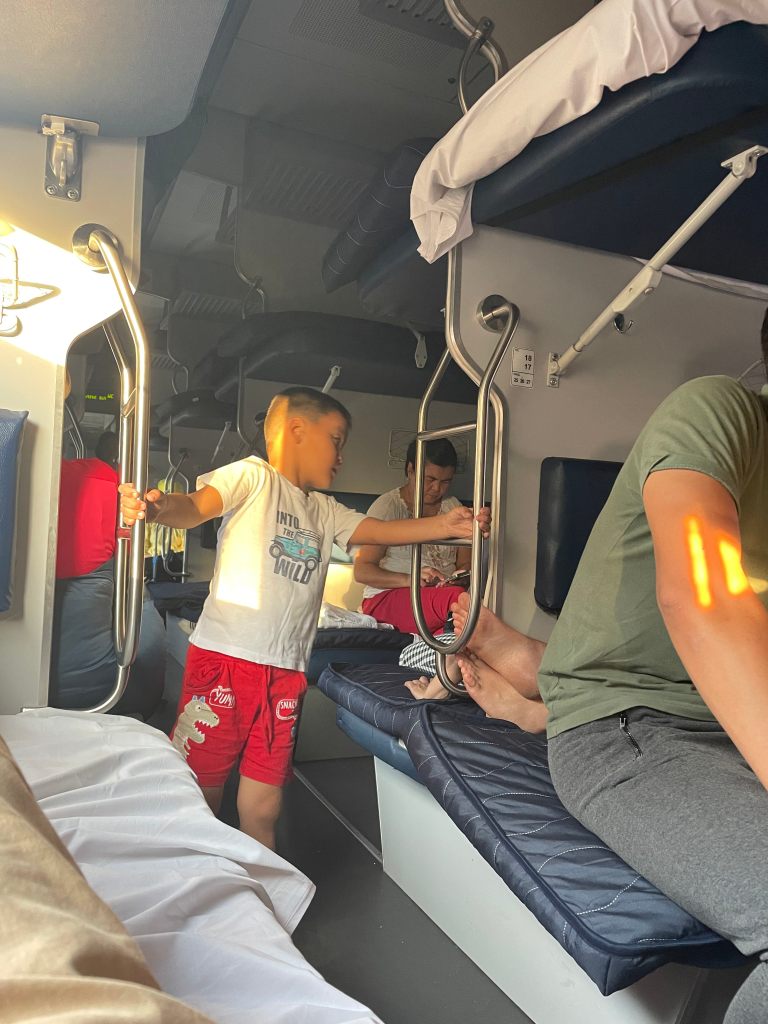
My longest and most exciting train ride so far lasts 24 hours and takes me from Astana to Almaty. All my Kazakh friends say I’m crazy, but I’m looking forward like a little kid to the trip in the Platzkart car. This is a 3rd class couchette car in which the approximately 60 berths are not divided into separate cabins as in the coupe, but all beds are separated only by a corridor without doors. I spend the trip from Astana to Shu in car 16 on seat 23.
Across from me sit Aigul and Serikbai. The elderly couple is traveling from Burabai National Park back to Karaganda. The woman is a geography teacher and wants to know everything about my travels. With the help of Google Translate we talk the whole 4 hours until they reach their destination. Their seats do not remain empty for long. In Karaganda Bibigul gets on and the two Russian girls, who are billeted above us, return from the dining car. I leave them both sitting on my bed while I go exploring and watch the night sky over the steppe for a while. The cool breeze from the open window is a relief.


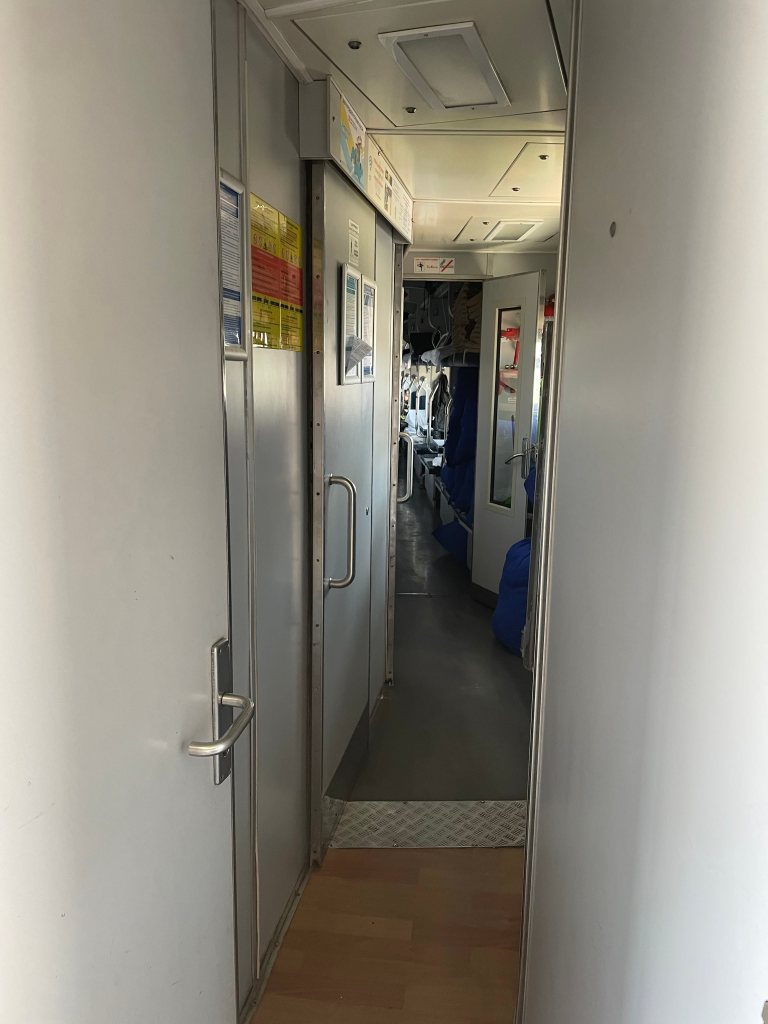
I sleep until late the next day despite the excitement and the hot, noisy, rocking train. Punctually at 13:00 we arrive in Shu, where I have to change into carriage 3 of the same train. In the corridor of the old carriage, the thermometer shows 47 °C by now. On the platform I buy bread from an old lady and then make my way to my new seat. The part of the train going to Almaty is much newer than the one going to Kyrgyzstan. There is even a (weak) air conditioner and a power socket!
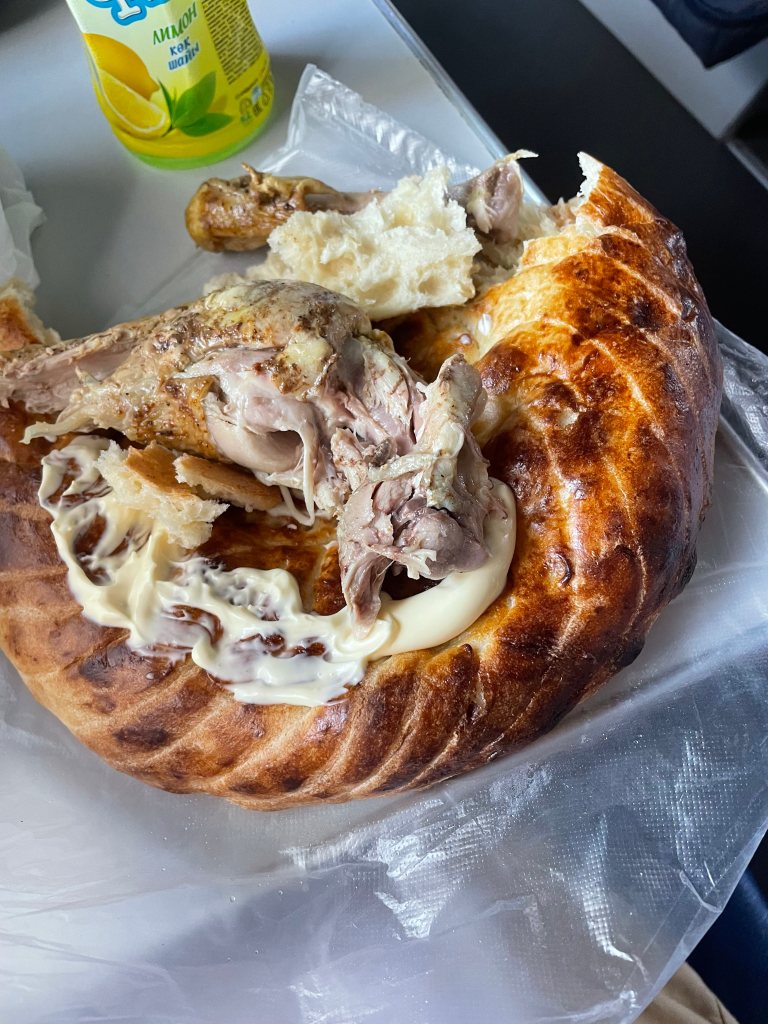
In my compartment I am greeted directly by fellow passengers and a young man offers me a piece of chicken and sauce (mayonnaise). But the afternoon heat and the already 17-hour drive leaves its mark on everyone. Soon we are dozing off. About 1 hour before the expected arrival in Almaty, the anticipation is palpable throughout the train. Children are running around, suitcases are being diligently packed, and Kazakhs and Russians are changing from their comfortable train clothes into chic, presentable outfits before leaving the train.
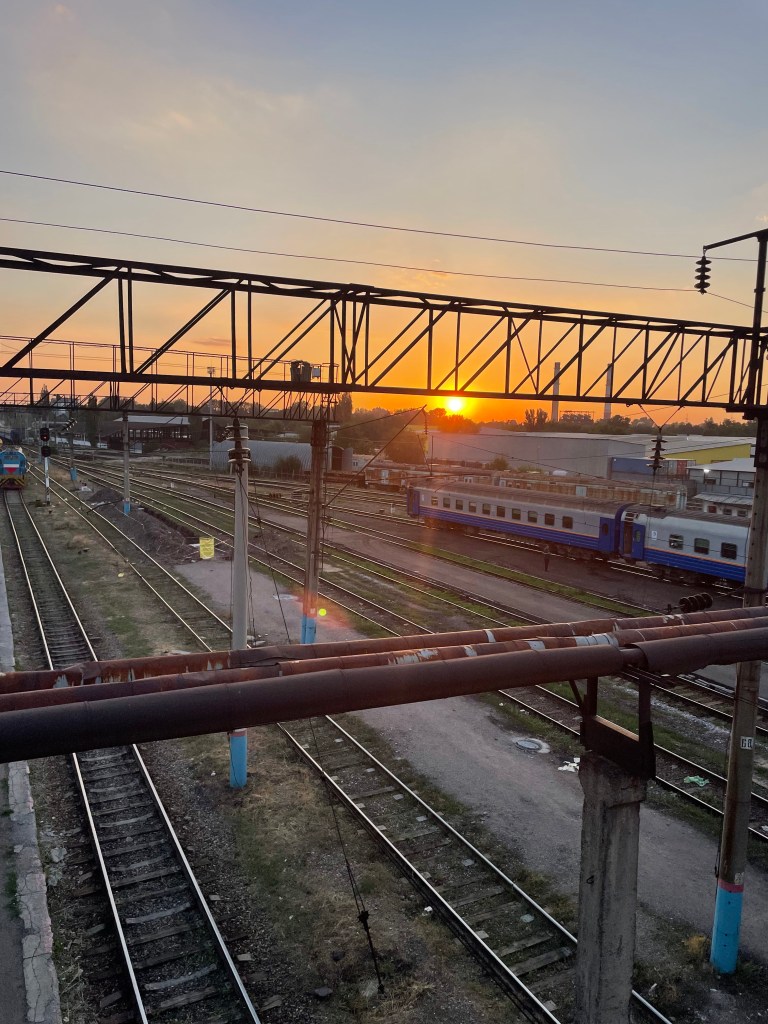
Travelers like me, however, are dirty people. I step out onto the platform in Almaty with dirty hair and in the same clothes I’ve been living in for the past 24 hours as the sun sets beautifully.



 thattravelstory
I hope to visit Uzbekistan next year, and would at least like to take one slow train for the experience!
LikeLiked by 1 person
I definitely recommend! It truly felt like travelling back in time. (However, I was very grateful for being able to use Google Translate to communicate ;))
LikeLiked by 1 person