Europe – since 2015
From Stockholm to Malta and from Lisbon to Budapest, I have visited numerous European countries over the last 8 years. The means of transport chosen for arrival and departure were just as varied as the destinations:
The plane is often used when the length of stay is short and/or the journey is particularly long. Personally, I think that it shouldn’t actually be necessary to get on a plane when traveling within Europe (apart from island states). However, sometimes it is difficult to resist the low-price offers of the notorious budget airlines. I also flew to Spain for 20 euros with one piece of luggage on an orange-covered seat. Even the train ride from Lucerne to the airport in Basel was more expensive.
The train is actually my preferred means of transport. And you can get very comfortable and far ahead in Europe. One of my first long train journeys was the night train with a coupe from Zurich to Budapest for the Sziget Festival. The way back in the seated car was unfortunately a little less comfortable, but still ok. I won’t soon forget the trip to the very south of Italy with the train being shipped to Sicily. With offers like Interrail or the Deutschlandticket, traveling by train is no longer that expensive for travelers.
However, there are also countries in Europe with a less developed rail network. For example, in Spain, Portugal or to Stuttgart and Bologna I have switched to long-distance buses for certain routes in the past. The night buses from providers like Flixbus and Alsa are far less glamorous than the buses in Latin America and Southeast Asia. But because you save the price of an overnight stay, they are perhaps the cheapest alternative to travel. In addition, the motorway network here is very well developed and there are hardly any delays.
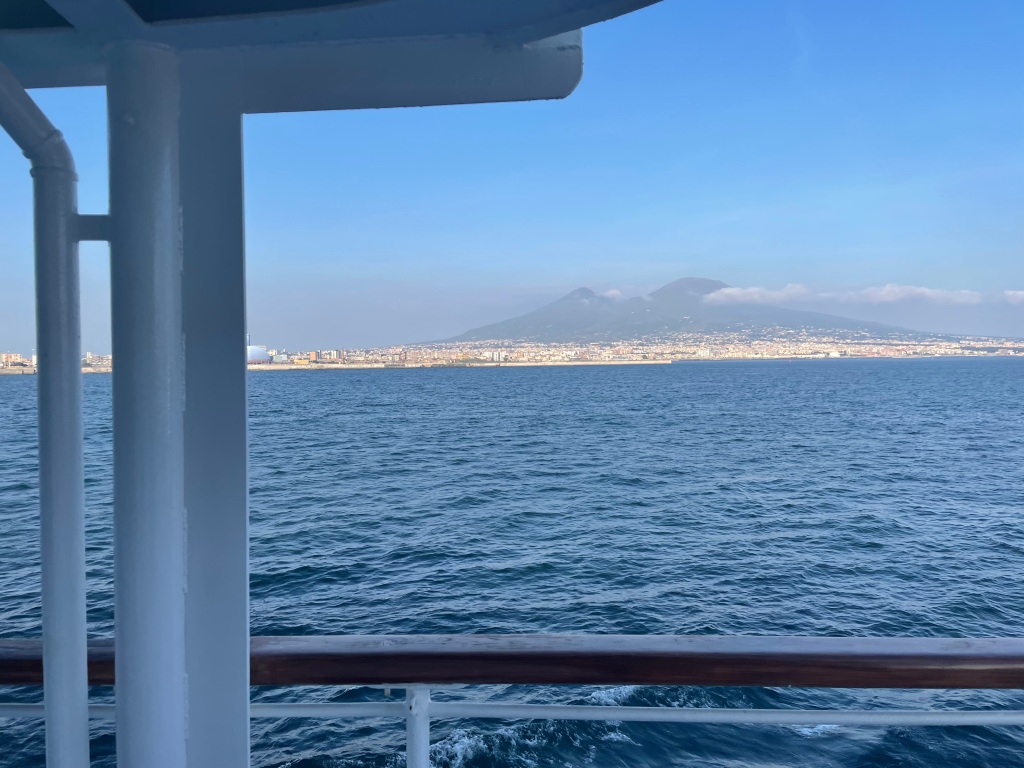
The last form of public transport would then be the ship. This means you can travel in Europe on lakes, rivers and also on the sea. If you’re thinking of cruise ships now, I have to disappoint you. These are rarely the cheapest routes and never the ones I would recommend. I’m referring to regular boat traffic between Italy and its islands, or car ferries from France to England. For example, friends also regularly rent houseboats to travel the rivers and canals of France.
If all else fails – or there are no trains or buses between two places or all seats are fully booked during peak travel times – a look at Blablacar might help. The ridesharing app is my insider tip for frugal backpackers and uncomplicated adventurers. I had great experiences with it both in southern Spain and on the way from Italy to Switzerland and from Zurich to Innsbruck. Depending on the size of the car, the route, and the passengers, unexpected conversations always arise and you never get bored. The low price thanks to shared travel costs is the icing on the cake.
I grew up taking long car trips across Europe on camping holidays. Maybe that’s why road trips continue to be one of my favorite types of vacation. This also makes it easy to reach some of the more remote places and means you don’t have to worry as much about packing. You can influence your own comfort level by staying in hotels, guesthouses, bungalows, caravans, vans, or tents. The latter options in particular also allow you to cook your own meals, saving you a lot of money.
Of course, for the very sporty, getting around by bike, on foot on long-distance hiking trails or in a kayak should not be missed. It is possible to bring camping equipment and even tents with all means of transport. Your wallet will be happy, but your muscles will be less happy. But an adventure is guaranteed either way.
With all the possible options, the question still remains: How do you find the best option for the distance to be covered? I like to consult the website Rome2Rio. With just a few clicks you can get information about all available options and the respective operators.
 thattravelstory
2 thoughts on “Travel Europe: cheaply and without a plane”