Uzbekistan – July 2023
My stay in Tashkent is short but impressive. The Asiana Airlines plane taking me from Korea to Central Asia lands in Uzbekistan’s capital late in the evening. I wait a good hour in the arrivals hall until my rucksack plops onto the baggage carousel between dozens of oversized cardboard boxes with unknown contents. I’m tired and quickly head out into the pleasantly warm summer air. After more than six months in East Asia, I’m back in a region of the world where bargaining and being ripped off are the order of the day for European tourists. And I get to feel this as soon as I start looking for a cab to the city center.


After a half-hearted attempt at negotiation, I get into the car with a friendly middle-aged driver. As we drive along the tree-lined main road, he asks me the 4 usual questions: Where are you from? Do you have children? Are you married? How old are you? I also ask him about his children and, of course, about the best food in Uzbekistan. Then we arrive at my hostel. I check in and immediately fall into bed, tired. I get up early the next morning. After all, I have to check out to catch the train to Samarkand in the afternoon. And I want to try and see some of the city before it gets too hot.

As I leave my rucksack in the lobby, two men are checking in. They speak English, but I can hear a Spanish accent and we quickly strike up a conversation. Javier is from Spain and Nikolasz is Hungarian but grew up in Romania. They have just met on the night bus from Kyrgyzstan to Tashkent. A man working on a laptop listens: Begaly is from Bishkek and is now in Uzbekistan on business. He invites us to join him on a trip to Tajikistan. Of course, we would all like to say yes, but unfortunately, it doesn’t fit in with our travel plans.


Instead, we spontaneously decide to go to the big bazaar together. Javier and Nikolasz are hoping to find a local SIM card there, and I’m on the hunt for bread. On the way, we discover the Soviet-era metro with its beautifully decorated stations. The contrast to the metro in Seoul, which I had used just the day before, is definitely noticeable. My fellow travelers also have to get used to the difference between Kyrgyzstan and Uzbekistan. For my part, I am glad to finally see an alphabet that is a little closer to Latin again. Nevertheless, it is more difficult than expected to remember the foreign-sounding place names. But we just about manage to get off at Chorsu station.


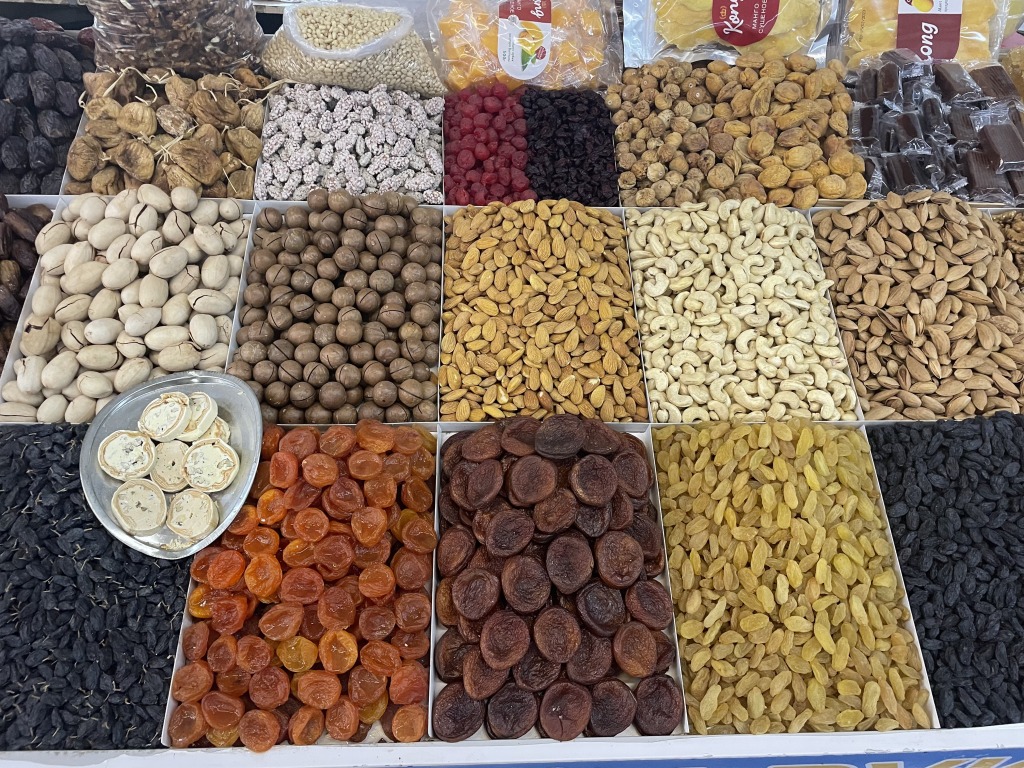
As soon as we step out of the metro, we are already in the middle of the hustle and bustle of the market. Voices talk in Russian and Uzbek (I can’t hear the difference clearly at this point). All kinds of food and clothing are on sale under white pavilions. The market hall with its high dome rises up behind the half-open tents. A woman explains to us that we can find fresh food there. We walk up the steps and find ourselves in a paradise of apples, berries, watermelons and other fruits and vegetables. Javier goes for the nectarines, while I buy some cherries.


We walk on eating and let the smells of the spice stalls take effect on us. I make another stop as we pass the bakery. More than 8 people are busy kneading the dough, shaping the loaves of bread, baking in the igloo-shaped oven and selling them. I buy a loaf for the equivalent of 20 cents and immediately tear off a piece. The still-warm dough is wonderfully buttery and I eat contentedly while we go back outside. Nikolasz asks for SIM cards at several stalls, but no one seems to know where we can buy them. So we just let ourselves drift along and eventually reach a wide corridor through which fragrant clouds of smoke are carried towards us. The open-air cafeteria, the Uzbek food court, the heart of the bazaar.


Nikolasz has so far been reluctant to try the food on offer. He doesn’t trust it all yet and fears the risk of an upset stomach. But now a friendly old woman stands in front of him, happily waving a large bowl of steaming plov. Within seconds, he orders a large portion for all of us and then we are seated at a table with a checkered tablecloth. A young man takes our awkward drink order and soon we are stuffing our bellies with warm rice and boiled chicken. At that moment, the difference between Central and East Asia seems much smaller again.


My time in Tashkent is slowly running out and after a hearty lunch we make our way back to the metro – after all, there don’t seem to be any SIM cards here. As we walk down the steps to buy tickets, a young man suddenly speaks to us in English. He asks where we are from and whether he should help us get the SIM cards. He introduces himself as Akmal and explains that he is half Russian and half Uzbek. Of course we accept his offer and the four of us walk through the bazaar again. Akmal keeps asking at the stalls whether there are any SIM cards for sale. The stall owners send us from one corner of the bazaar to the other like in a movie.


After about 30 minutes, we are finally back in front of the old woman who sold us Plov. Right next to the entrance to the cafeteria is a yellow kiosk with “Beeline” written on it. Akmal takes on the role of translator and with Javier’s passport we buy 2 Internet SIM cards in no time at all. Meanwhile, time is pressing, so we head straight for the metro. We go our separate ways at the Cosmonauts station and the 3 of us tourists change trains. We buy water at a small snack bar before venturing out into the midday heat again.

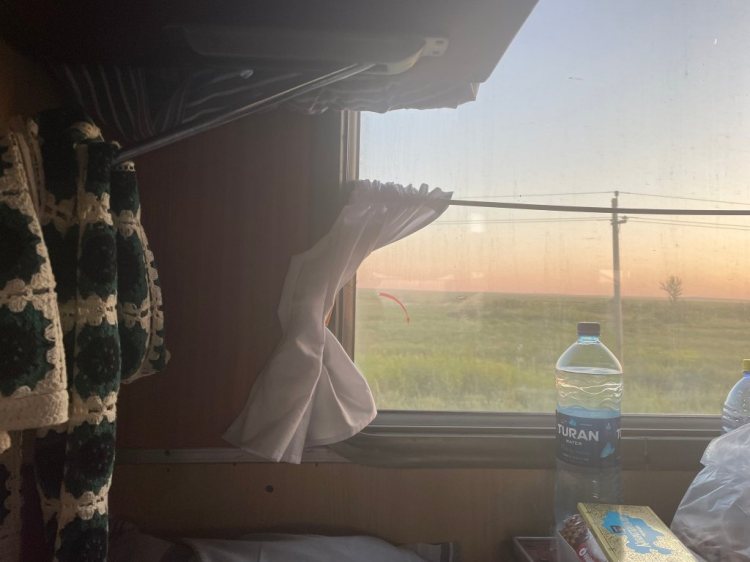
Luckily, it’s not far from the metro to the hostel. Once there, my new friends lie down for a nap while I order a cab to the station from the receptionist. I show him my train ticket so that I am sure to be dropped off at the right stop. The cab arrives a short time later and the driver helps me stow my rucksack in the trunk. Then we set off through the narrow side streets of the embassy district. Somewhere there are roadworks and we have to find another route. The Yandex driver kindly drops me off right in front of the gate where I have to check in. You can find out what the train journey to Samarkand was like in the following blog post.

 thattravelstory
2 thoughts on “Bazaar and culture shock in Tashkent”