Bolivia – March 2019
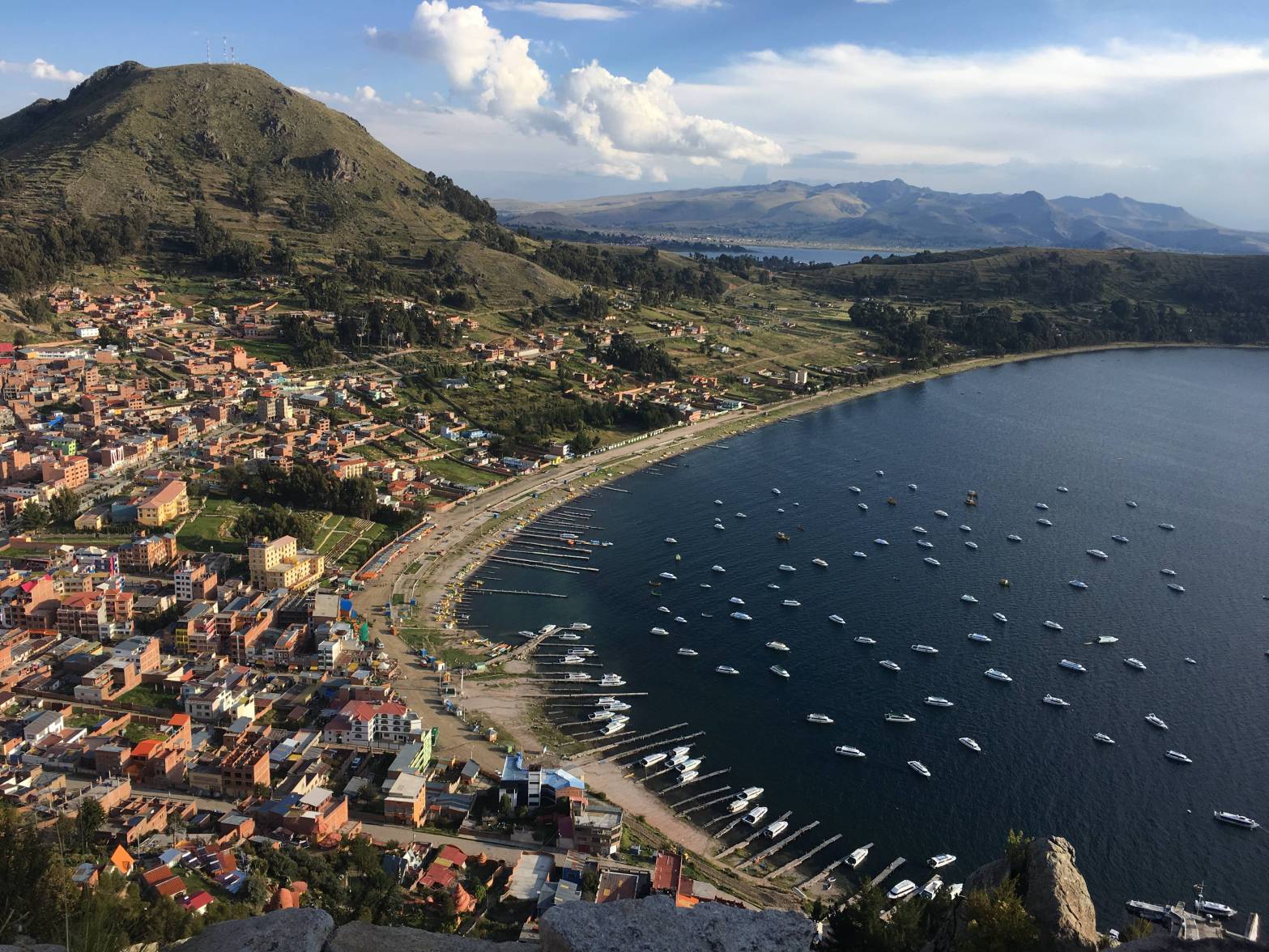
The city which this story takes place in is not to be confused with the beach of Copacabana in Rio de Janeiro. While the sleepy town in Bolivia is also set by the water, it’s not the Atlantic, but Lake Titicaca it overlooks. I travel there by night bus from Cusco, the gateway to Machu Picchu. From the Peruvian/Bolivian border it‘s only around 30 minutes to the small town. After getting off the bus at the main square, I head down the hill towards the lake, where my guesthouse is located.

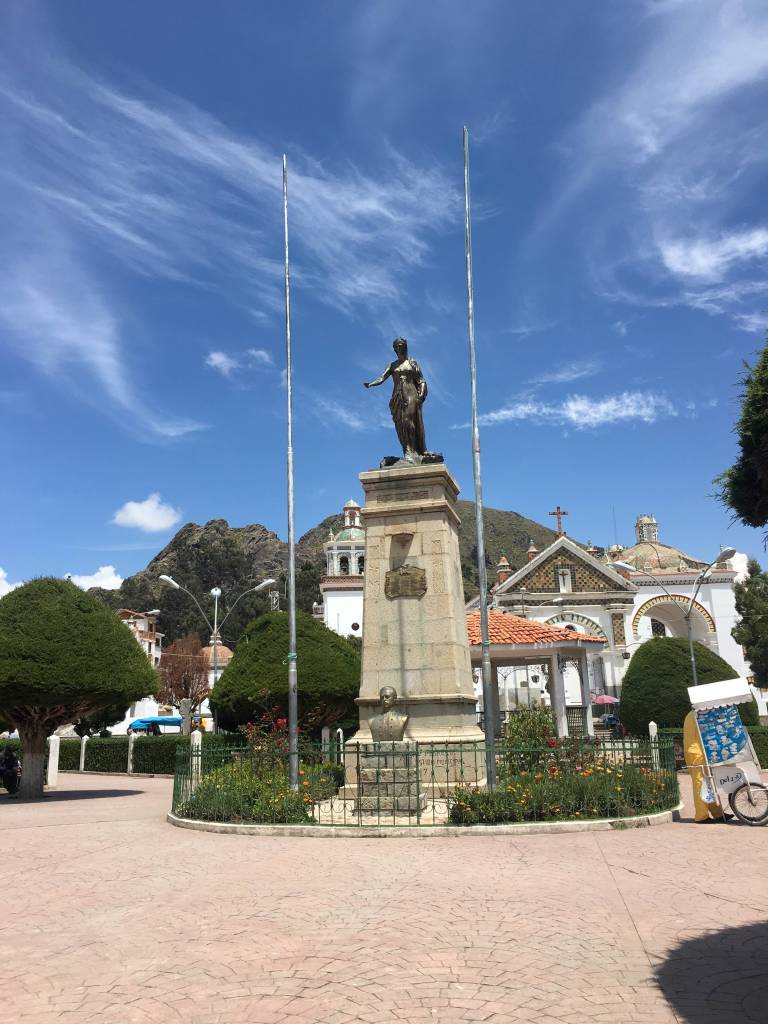
It‘s the off season and in stark comparison to Cusco, which is bustling with tourists all year round, the streets are empty. I check into my private room at the empty guesthouse and drop off my laundry at the front desk. Since I only plan to stay one night, I double check if it will be ready early the next day. „No problemo“ they reply, and I‘m off to explore the city. My first stop is a small stall, where I exchange the rest of my Peruvian Soles into Bolivares.
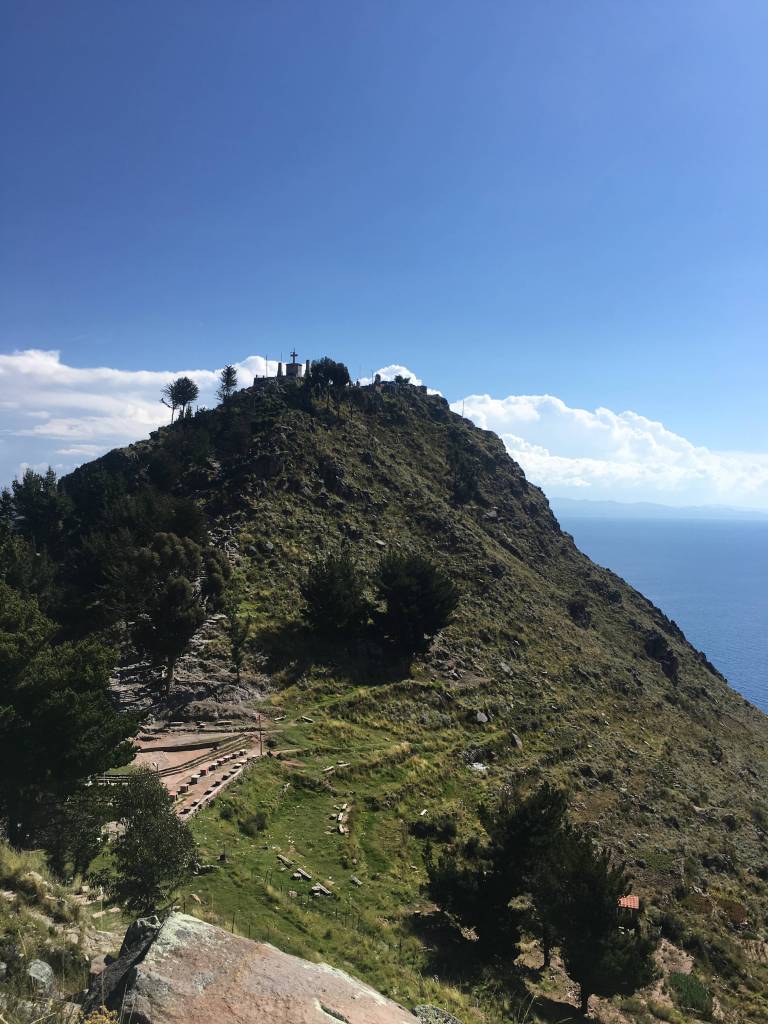

With the new cash I buy some snacks and then venture up to the hill marked as „Descanso y Tradición“ on Google maps, which seems to be overlooking the large lake. The stone steps are steep and I can definitely feel the lack in oxygen in the air due to the high altitude of almost 4000 meters. I take a couple of breaks and spontaneously take a detour to another closeby hill with a chapel at the top. Once I get closer, I realize that Cerro Calvario is actually a cemetery.
From the view point, the 2 Islands called Isla de la Luna and Isla del Sol are clearly visible. During the reign of the Ince they were considered a kind of sacred place. But with the fall of the empire they became just some scarcely inhabited pieces of land. During the 1940s the islands were used to hold prisoners who were opposing the new government. Nowadays, there are mostly indigenous people of the Quechua ana Aimara tribes living there who sell artisan goods to visitors.
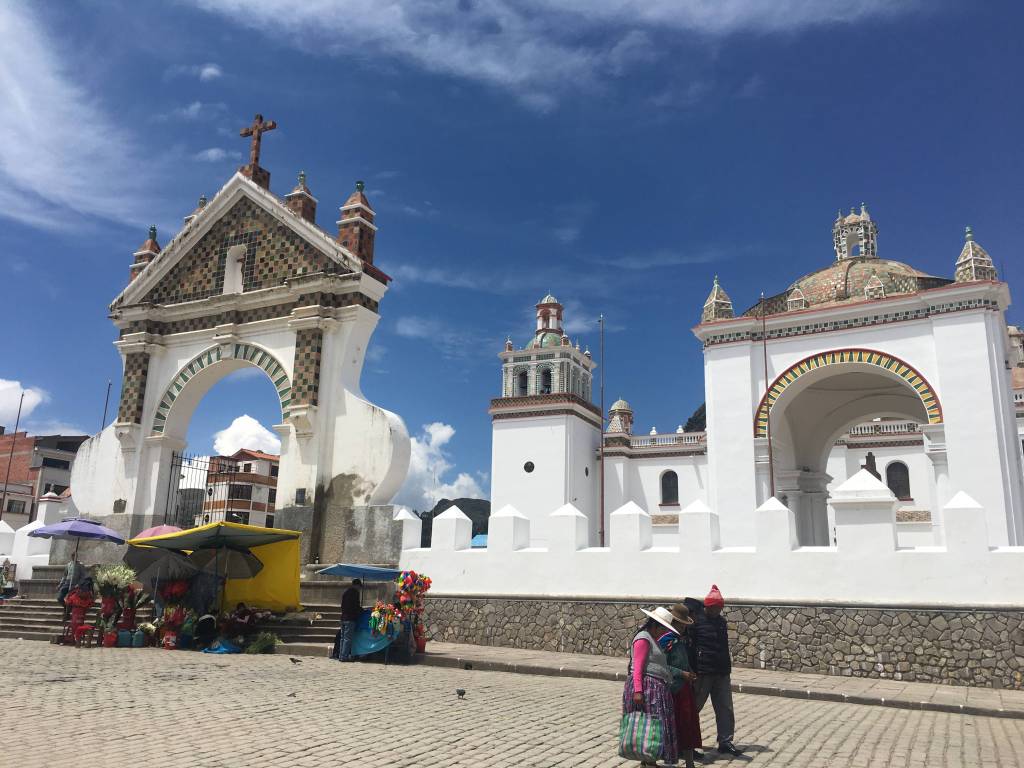
In the afternoon I head back to the town centre, where I suddenly remember the time I have first heard of Lake Titicaca. It was in a Swiss movie playing in the 1950s/1960s, where one of the characters – who portrayed a vagabond – mentioned, that he once crossed the lake in a canoe and was hunting crocodiles in the area. So I double check, but there are no traces to be found which would suggest the existance of crocodiles at Lake Titicaca. Somewhat dissappointed, I take a rest at my guesthouse.
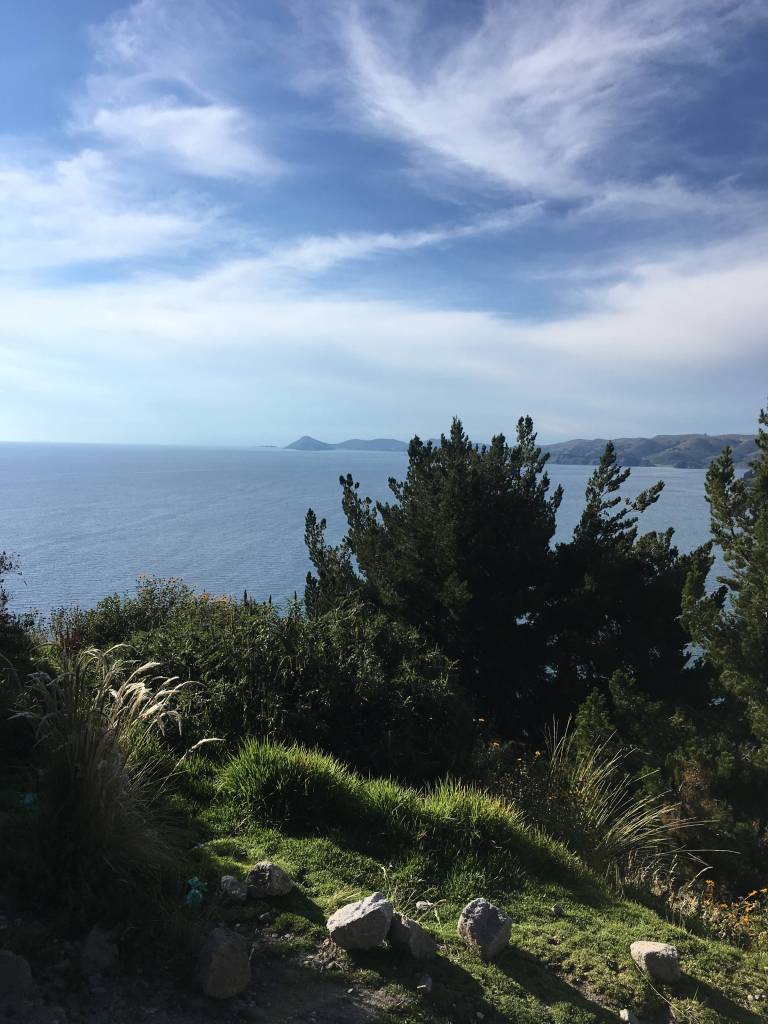
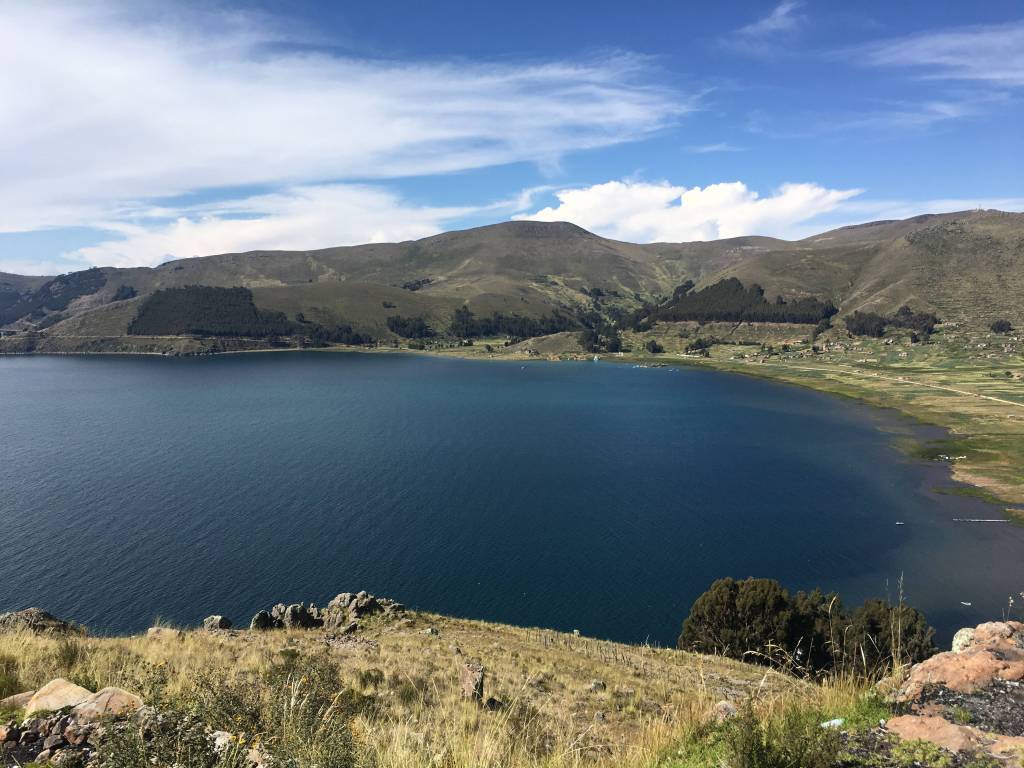
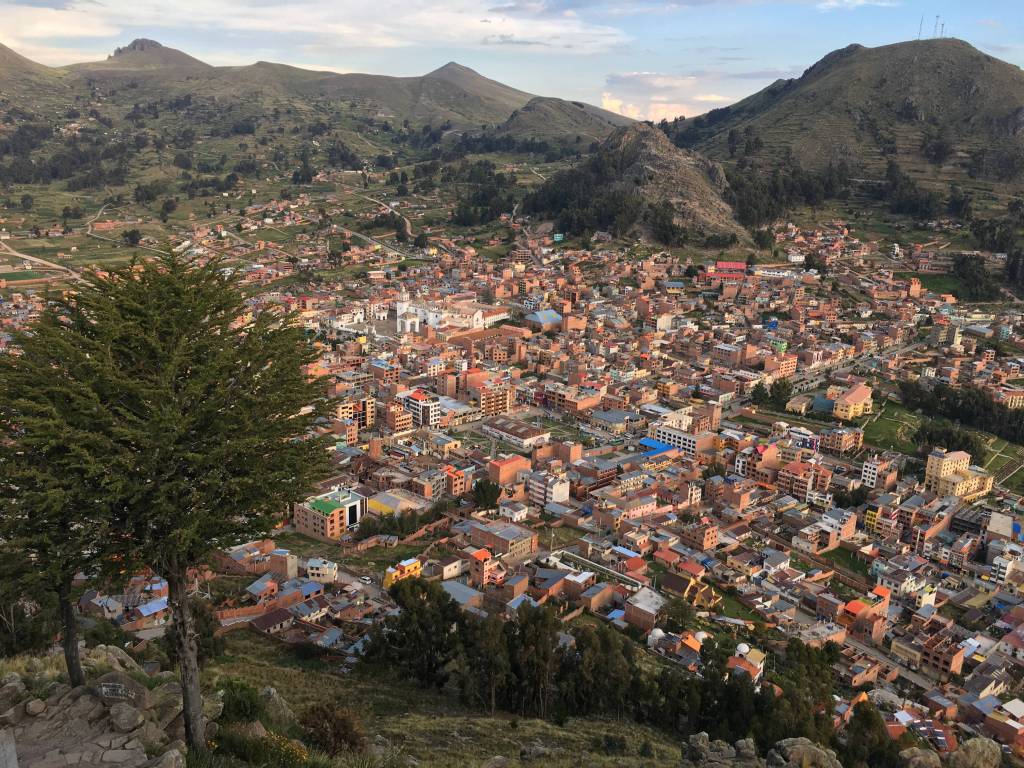
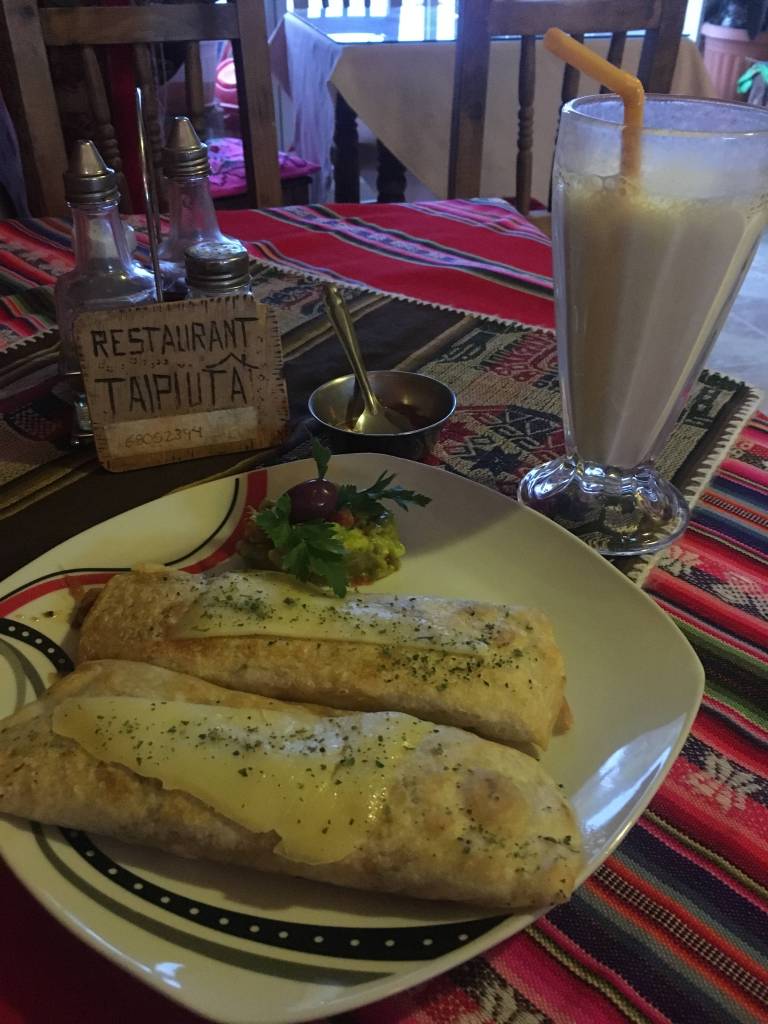
Later in the evening, I decide to go on another hike up to the hills I visited earlier that day. Since it‘s low season and tourism is quite dead, it seems the best thing to do. The sunset makes up for the exhausting hike and once again I marvel at the sheer size of the lake. On the way back to the town, I pass by the beach and drop in at one of the few operating restaurants. The menu convinces me to stay and I order a banana shake and and the enchiladas. The night is cold, and I wish I could wear my new alpaca pullover which is now in the wash.
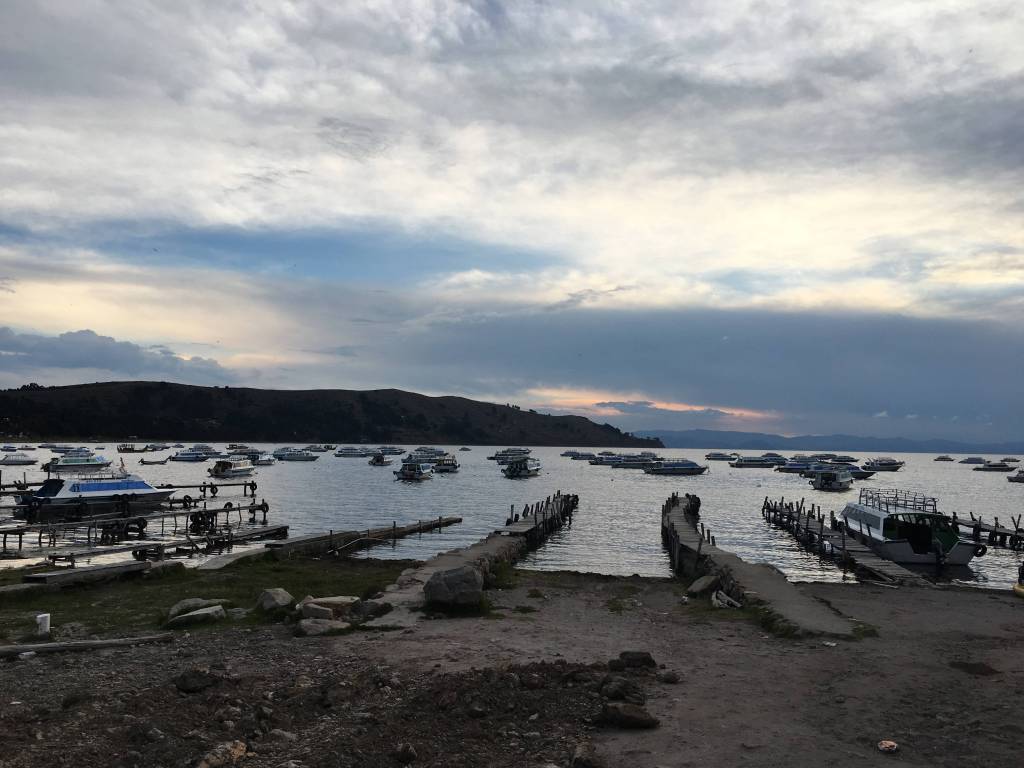
The next morning I wake up early, because I‘m tackling a several hour long journey to La Paz. I heard that at around 8am there are shared minivan taxis leaving for the capital from the main square. I have my backpack ready – only missing the clothes in the laundry. However, when I go downstairs to check out, I‘m told that the laundry will take a bit longer to dry. I give them another 30 minutes while I finish my breakfast, but then I have to leave – with my still wet clothes in tow.
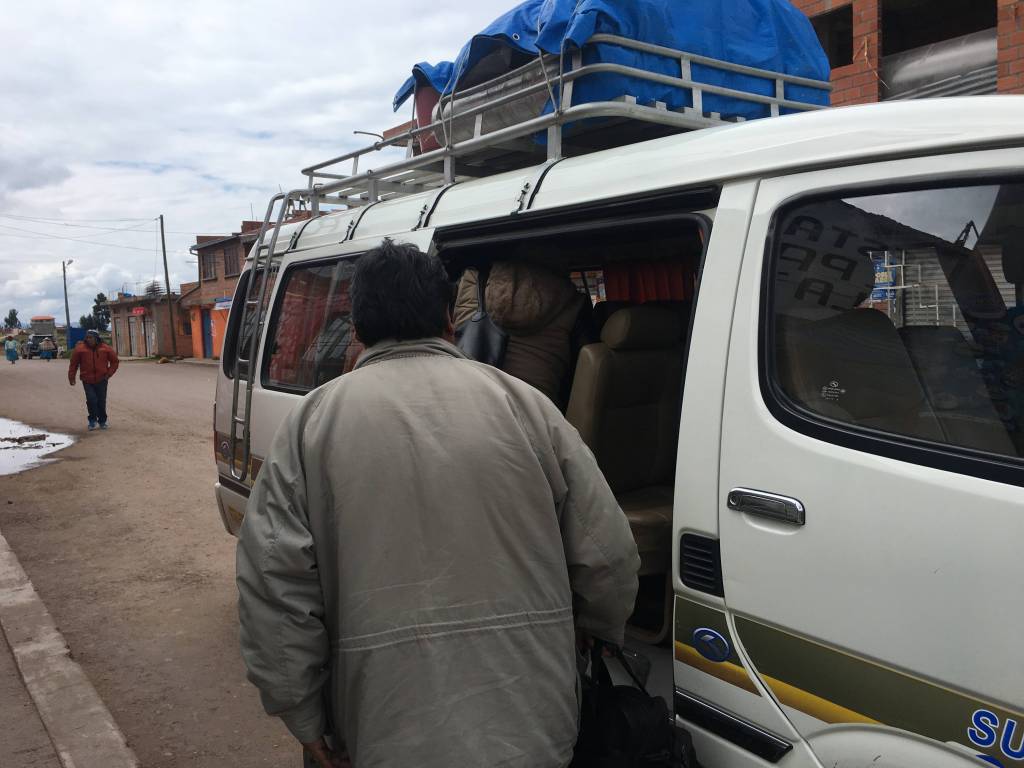
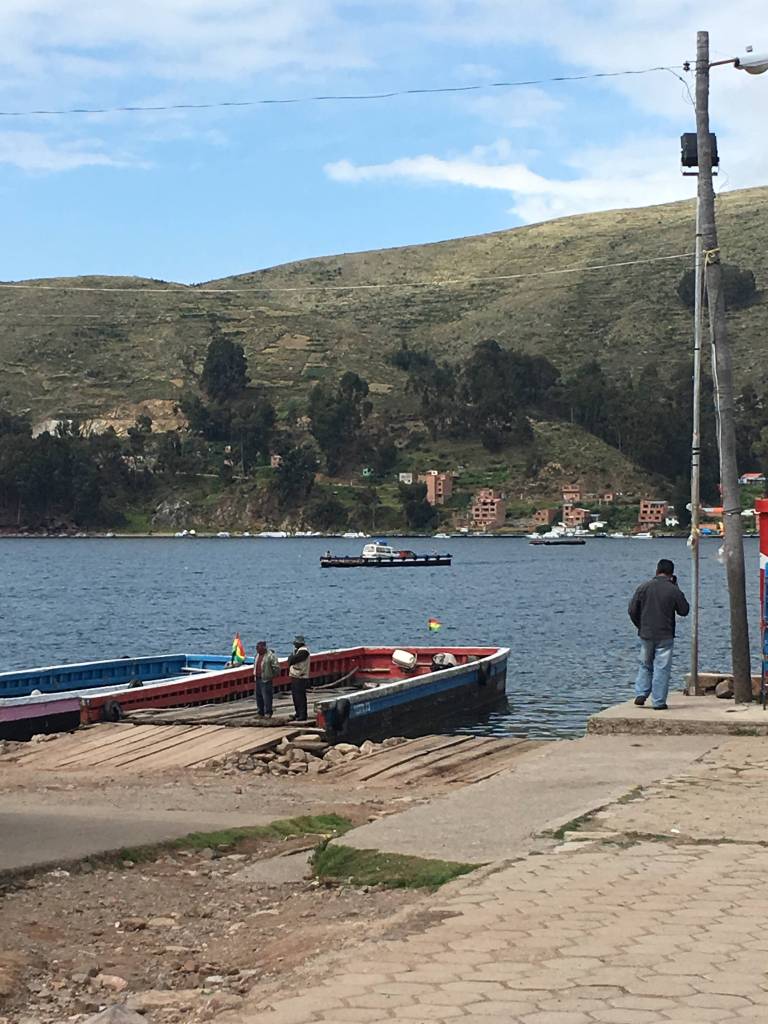
At the main square I find a minivan which is already almost full with a bunch of local people headed to La Paz as well. After only 10 minutes waiting, we drive off with all the luggage fixed on the roof. Around an hour into the ride, we suddenly stopp and all passengers are asked to disembark. In front of us lays the „Strait of Tiquina“ which we – and the van – apparently will be crossing by ferry. However, for safety reasons, we cannot stay in the car during the 20 minute journey. Amazed at how these small boats carry busses filled with up to 40 tourists, I slowly drift to „mainland“ Bolivia.
Read more about my adventures in the Andes country here:


 thattravelstory