India – June 2024
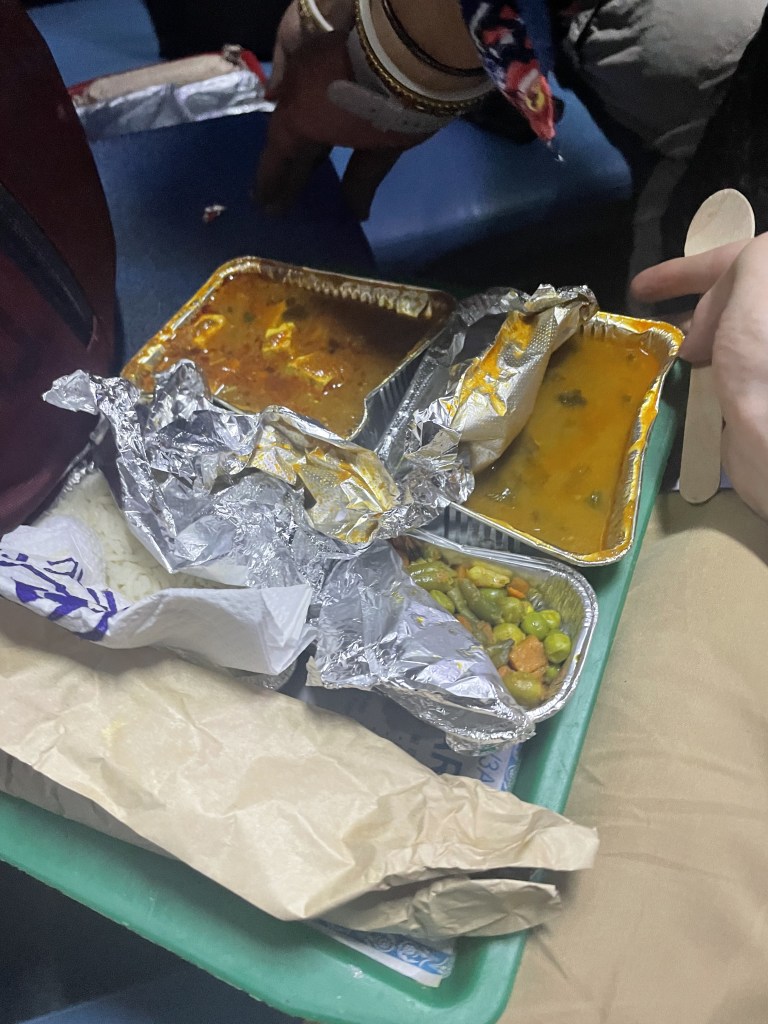
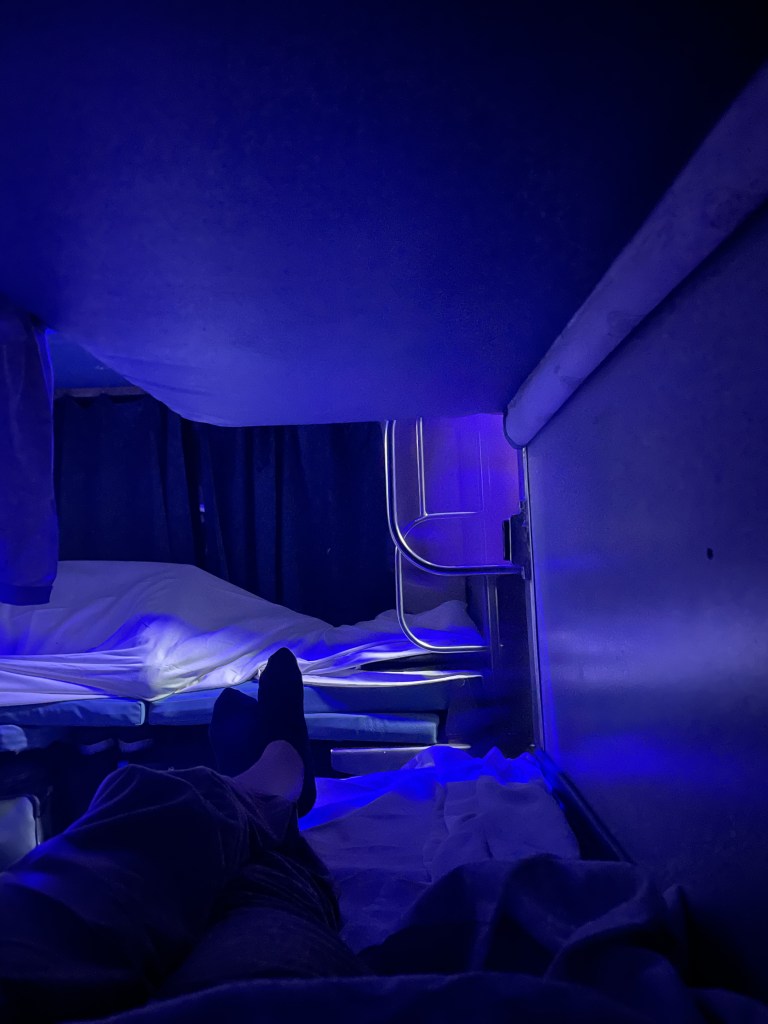
My unplanned detour to Kashmir starts in New Delhi, where I am accompanied to the night train by one of the Tourism Office guides. After taking a selfie with me for his report, he disappears, and I’m making myself comfortable in the 6 bed berth. After a delicious paneer masala dinner, I soon fall asleep and only wake up at 8am the next day. The train is still rolling and Google Maps says it’s another 1 hour to Jammu. Scheduled time of arrival was 5am.
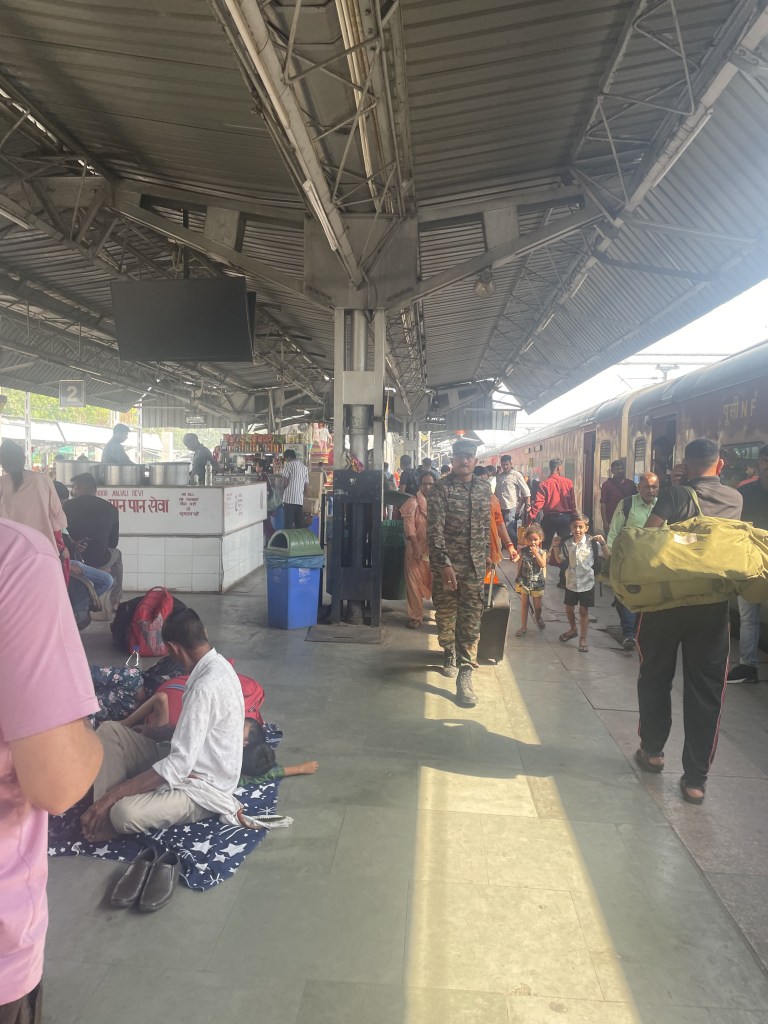
Understandably, the driver who has been waiting for me and 2 South African travelers is not amused about the delay. He asks us to follow him with some distance until we have left the station premises. Once at the main road, we pass a few temples before entering a small travel agency office. While waiting for the driver to return, Dino, John and I take the opportunity to get introduce ourselves to each other.
Just when we finish comparing our planned itineraries in India/Nepal, the driver returns and takes us to the car. Instead of a Jeep, a small Toyota is parked on the side of the road. There is just enough space for all of our backpacks in the trunk. The three men quickly agree that I should be sitting in the front. Happy about the extra legroom, I get into the passenger seat and make myself comfortable. Dino reconfirms the estimated driving time to Srinagar: 5–6 hours, arrival at ca. 3-4pm. A minute later, we finally pull away from the side of the street and into Jammu’s main street.
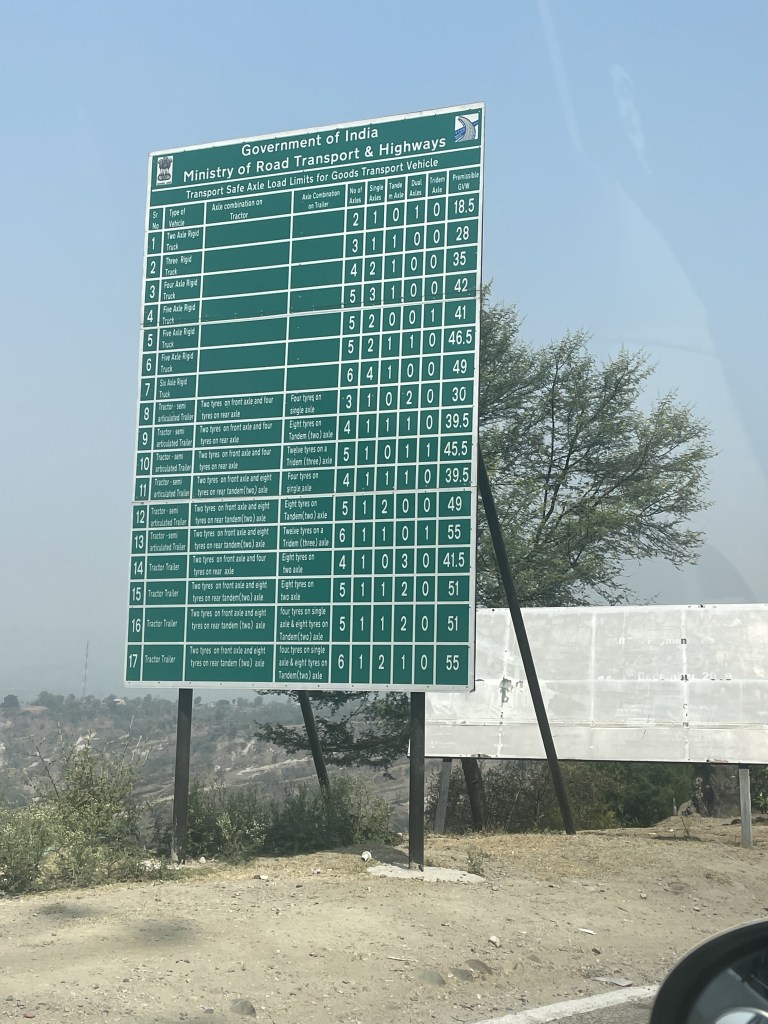
I‘m excited to explore India far from Delhi’s busy traffic and take in the view of colorful temples and single-story shops. Dino comments on how the number of liquor shops seems to have increased since his last visit to Punjab. I start to watch out for them and also notice that they really are numerous. But as we leave the city, the scenery changes to dry rocky hills covered with small trees and only a few houses. The road is wide and in a good state, the driver fills up the tank at a service station, and we seem to be well on our way. Then we arrive the first tollgate of the Jammu-Kashmir Highway.
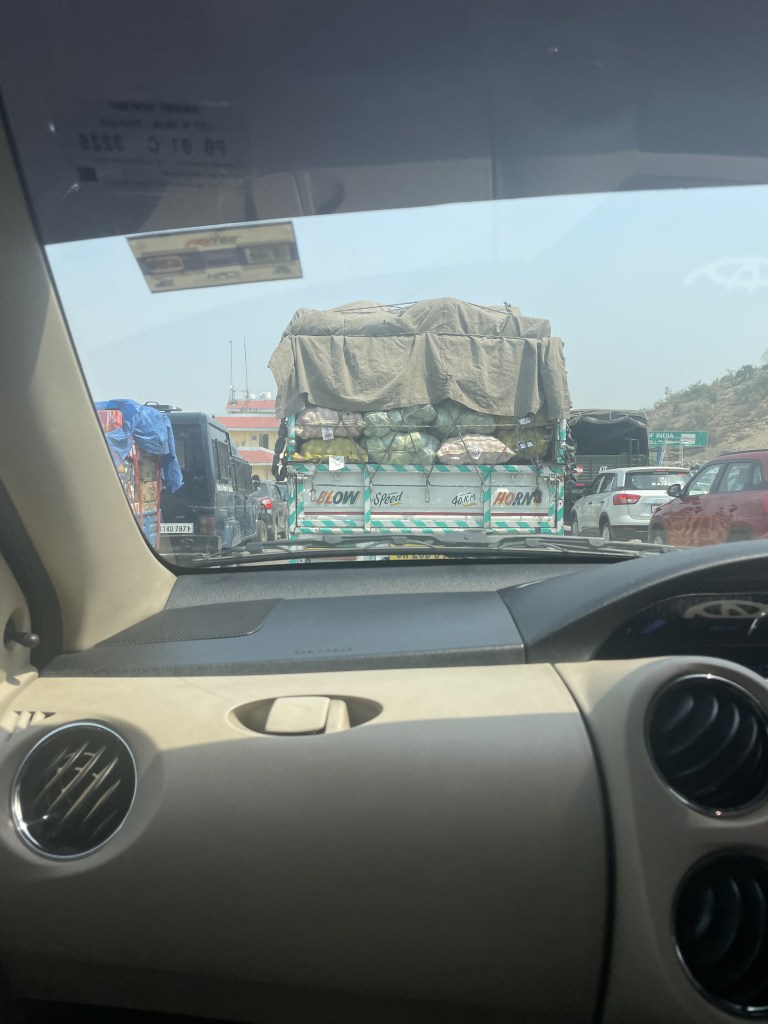
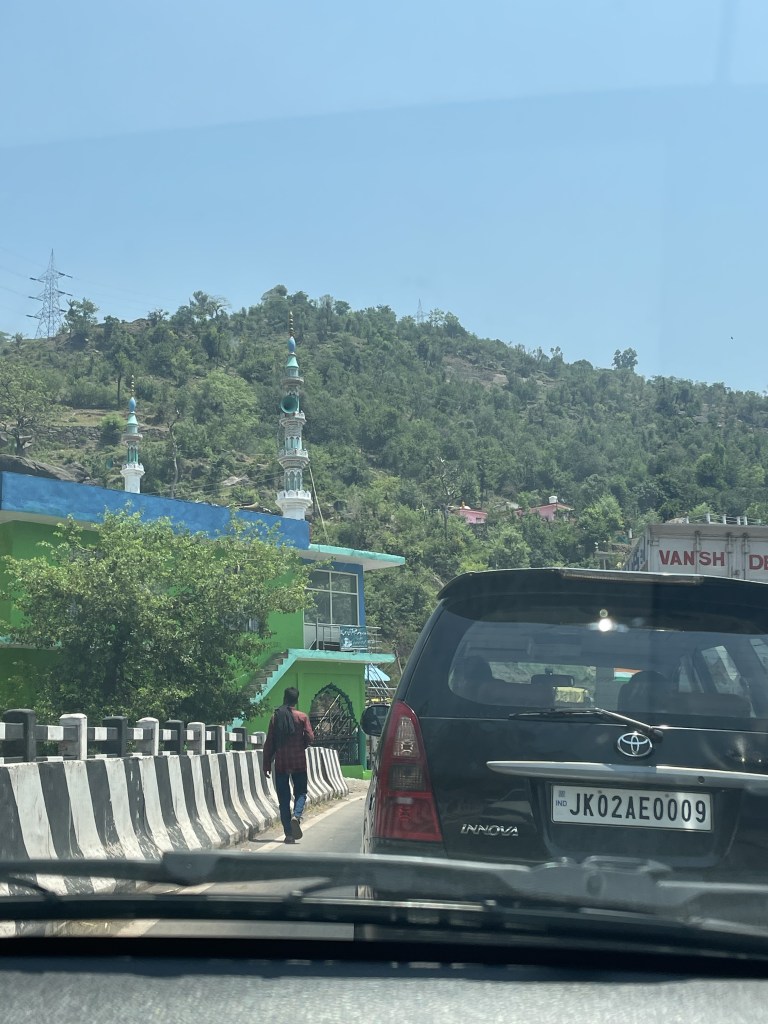
The lines at the several payment booths are long. There are pickup trucks filled with vegetables and construction materials, colourful buses with open doors and windows and lots of trucks with inspirational quotes and the names of the driver painted on them artistically. While we wait for our turn to pay, I notice the price list, which covers all kinds of vehicles and is written in English as well as Hindi and Urdu. This is where I actively realize the geographical transition from one of the countless cultures present in India to another for the first time.
We then follow the curvy road, steadily climbing towards the mountains. Somehow, the 2 South Africans in the back seat are sleeping through the relentless honking from all sides. Our driver seems to want to make up time and is racing between the much larger vehicles. While listening to his very mixed Indian playlist, I ask him about the climate in Srinagar, where he is from. He says that it’s so much better than down in Jammu where the heat at this time of the year is unbearable for him. Looking forward to an occasional breeze, I keep looking out the window to watch the ever-changing scenery now dominated by mosques instead of temples.
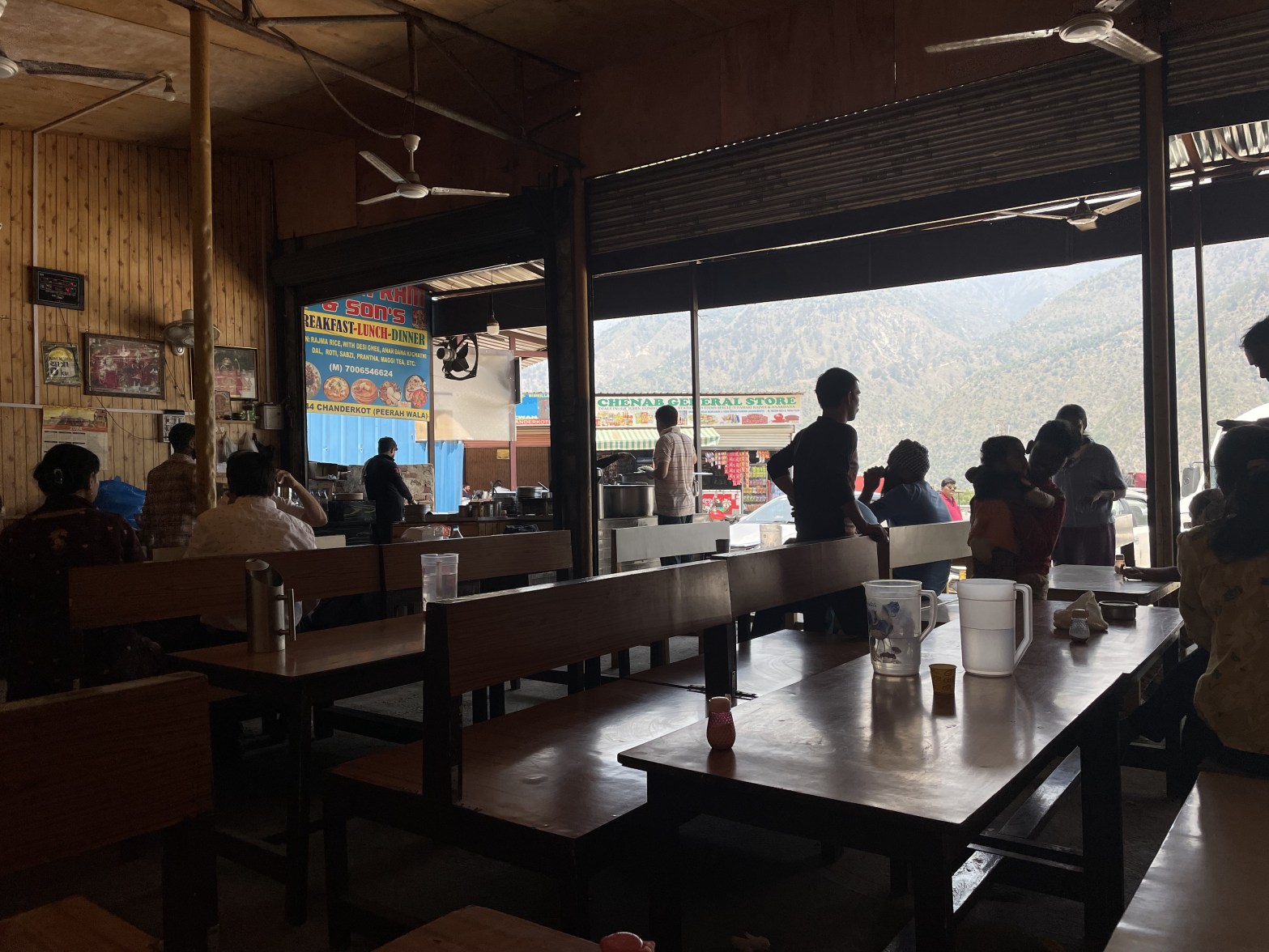
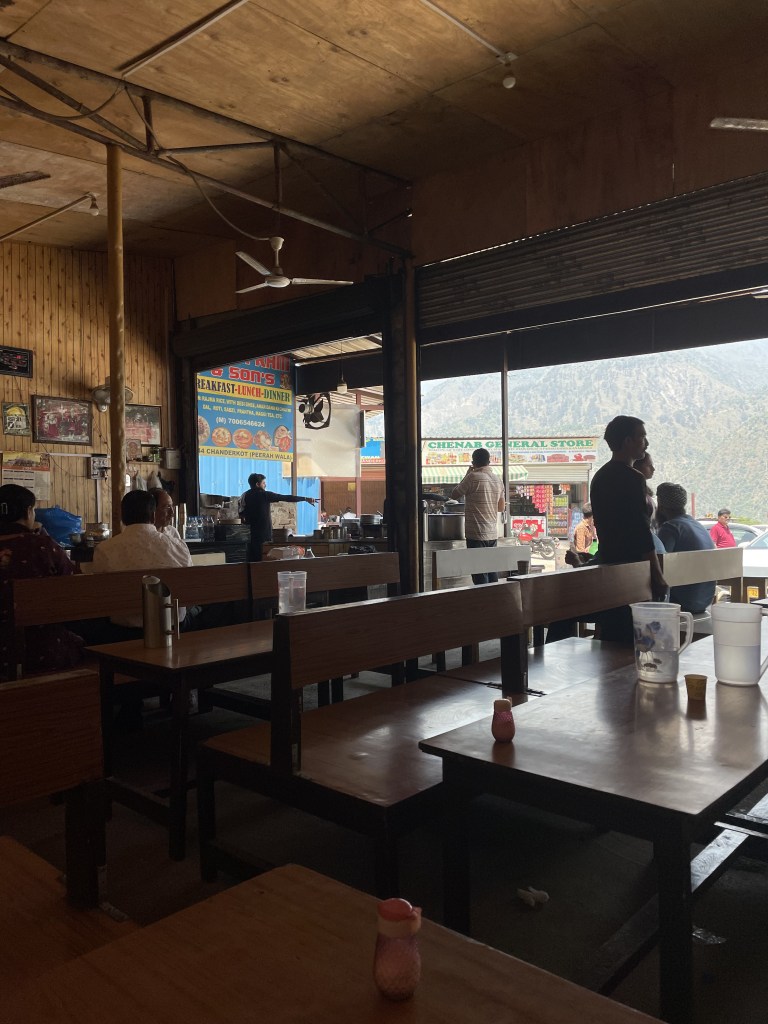
At around noon, we finally take a break. There are lots of rest stops along the highway catering to all kinds of diets. Some serve halal food, some pure vegetarian dishes and others are listed as non-veg. Accommodating the other passenger’s request, the driver pulls up to a vegetarian shop and sits me down at a table inside the shop. He recommends the Dhal and I happily go with his choice. Dino and John first head to the restroom and are then shown to a different table. A bit confused but quickly distracted by the great smell of the hot plate being served, I devour my lunch. *On my journey back to Jammu later in the week, the shared taxi driver chooses a different spot for lunch due to the majority of the passengers being Muslim.

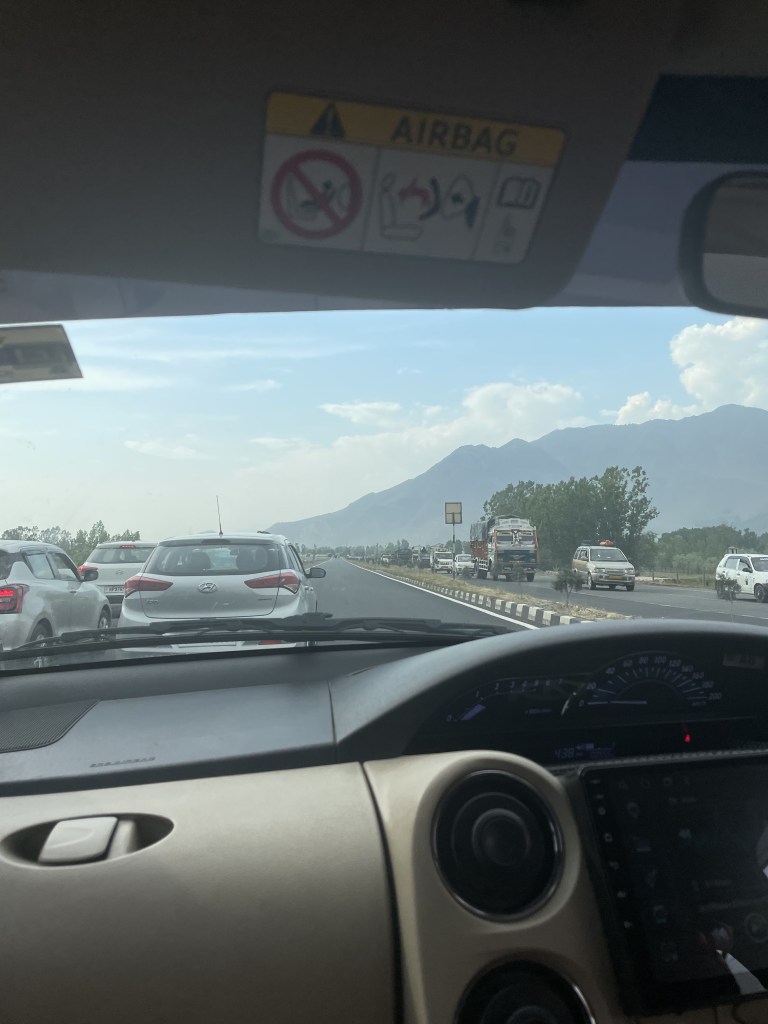
After the lunch break, the state of the road turns increasingly worse. From the original 3 lane asphalt highway, only 1 lane is left. And that one is covered in potholes. Between dodging those and the other cars going north, the driver also has to watch out for the nomads looking to cross the mountains with their herds of cows and sheep. Only when he points out an area covered in ruble from a recent landslide do I really understand how dangerous the only access to Kashmir by land really is. In order to get food, construction materials and any other necessities to the people living at the northern border with Pakistan, the truckers are risking their lives while spending long days on the gravel roads.

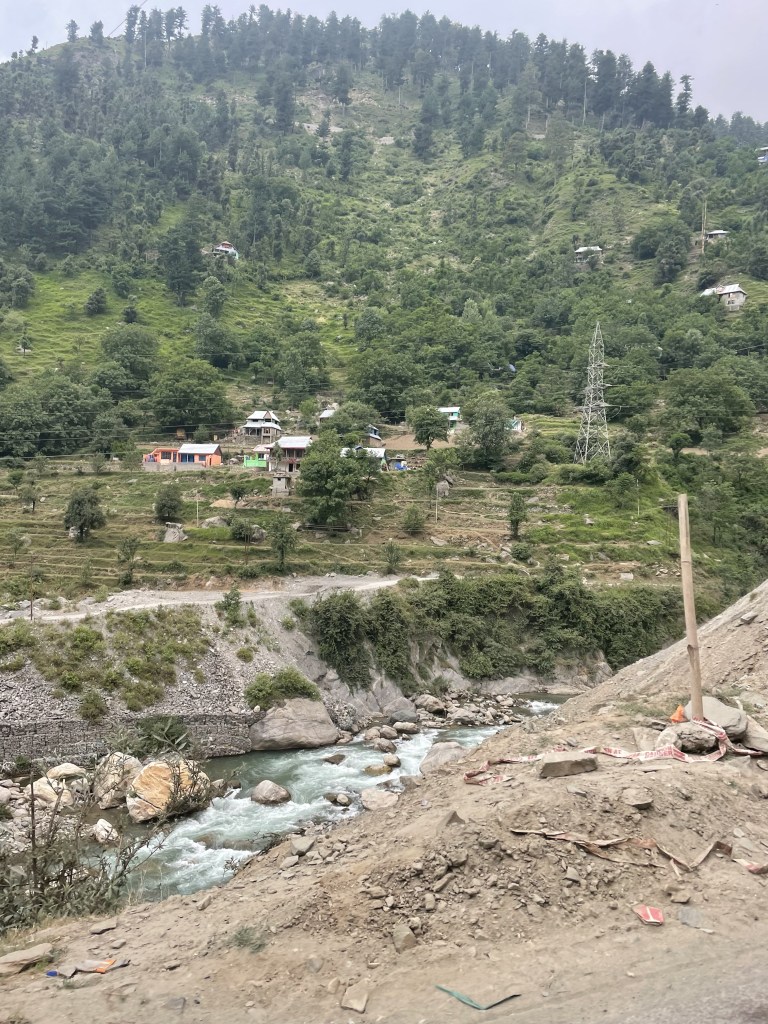
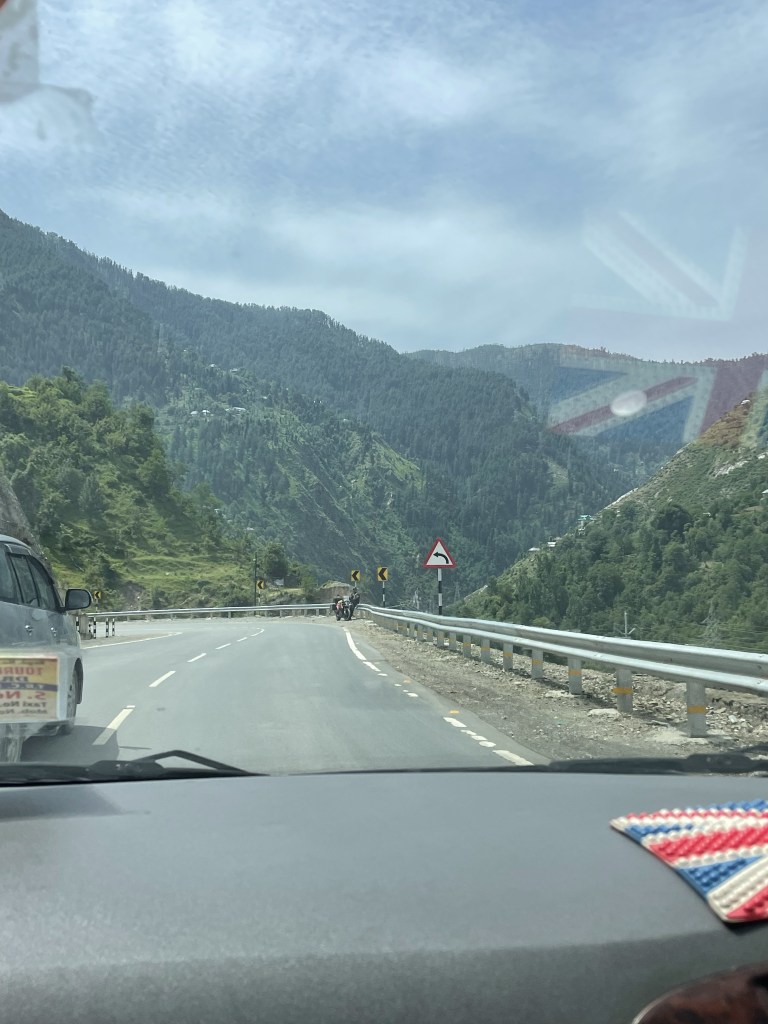
Now officially in the greater Himalayas, the mountain scenery is captivating. We leave the slower trucks behind us, and mostly share the road with jeeps bringing other tourists up to Srinagar. As we turn into another valley, I see people filling their drinking bottles with water from a fresh water source straight out of the mountain. Amazed at this unexpected similarity with Switzerland, my excitement for the next week grows stronger. Then we pass the last settlement before entering Kashmir: cows on the street, curbside bazaar stalls, honking from all sides, people staring into the car and a river covered in plastic trash.

The driver happily announces, that we are getting closer to our destination. But first we have to make it through a number of very dusty tunnels. At some points, I wonder if the driver has some kind of ultrasound vision. All I can see is dust and the headlights of oncoming cars once they pass us. Only when we finally leave the last tunnel behind us, I can breathe again. Arriving in Qazigund feels like arriving in a whole new world. Suddenly the road is in much better shape again, and the driver’s spirits light up significantly. As one last stop before reaching Srinagar, he takes us to a local tea stall where he wants us to try pink Kashmiri tea.


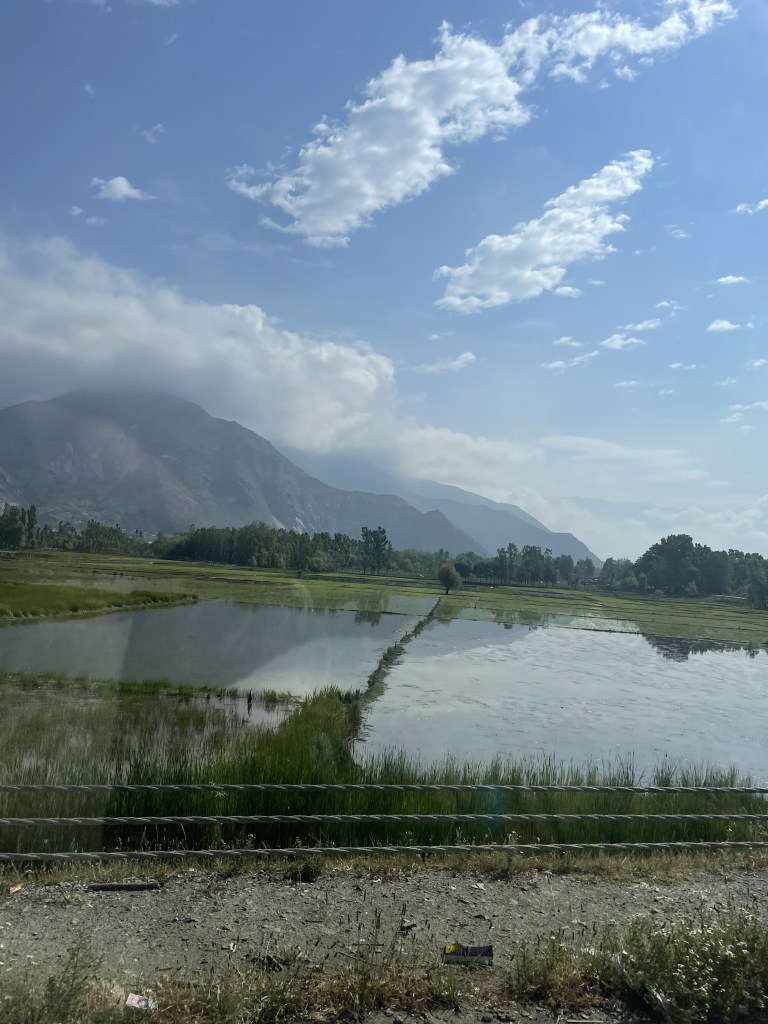
Greeting the shopkeeper with Asalamaleikum, he orders for us, and we do our best to put on happy faces when drinking the strangely salty tea. All other guests here are men, and I notice that English and Hindi have completely disappeared from the menu. Quite tired, and a bit overwhelmed with the many changes of surroundings the day has brought, I’m glad we’re soon back on the road for the last stretch. After hours spent driving through deep valleys, the landscape is opening up and the plains are dominated by rice fields. Just like in Japan a few weeks ago, it’s now planting season. However, here the work is done by hand or sometimes with the help of a buffalo.
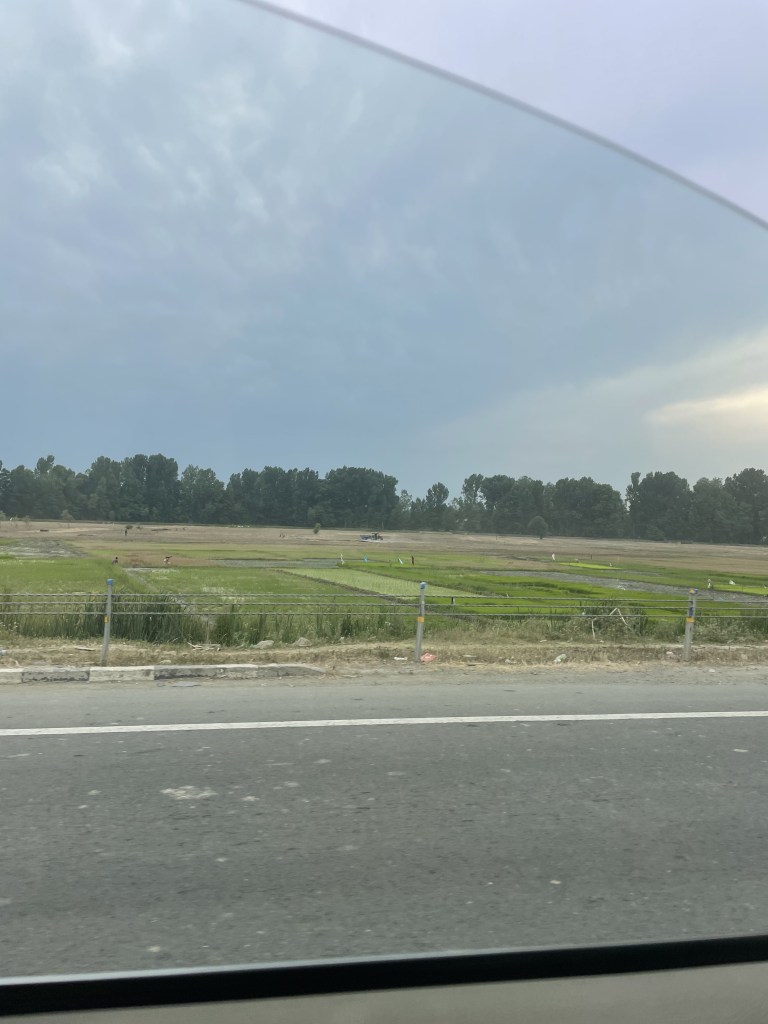
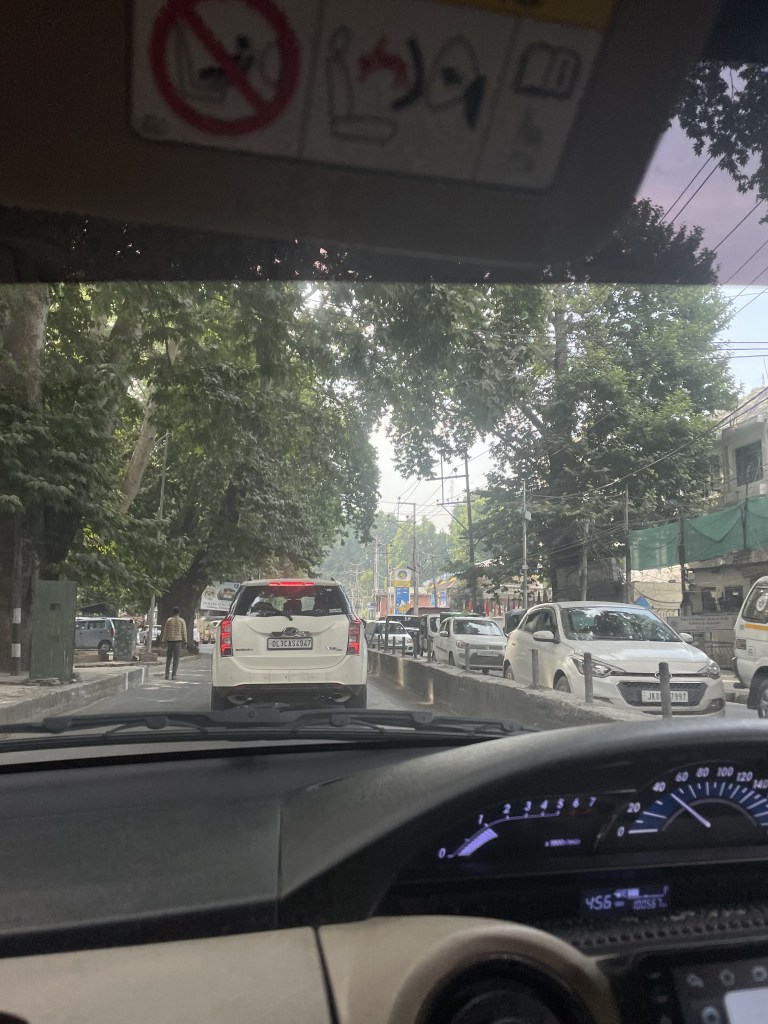
The other major impression left by the drive from Qazigund to Srinagar is the presence of the Indian army. During the hour-long drive, we pass several checkpoints and on various occasions, the armed soldiers in the back of the military trucks use hand gestures to ask the driver to slow down or overtake them. When we inquire about this, the driver says that this is quite normal in Kashmir, but even more noticeable these days because of the ongoing national elections. One reason for this is that the region has been disputed between India and Pakistan since the separation of the two states in 1947/8.
With the Muslim majority of inhabitants in and around Srinagar and the remote location, it seems Kashmiris would prefer an independent state rather than being under Indian rule. At least that is my impression after talking to different people during my stay at Dal Lake. But let’s keep that for another day.
 thattravelstory
4 thoughts on “Road to Kashmir”