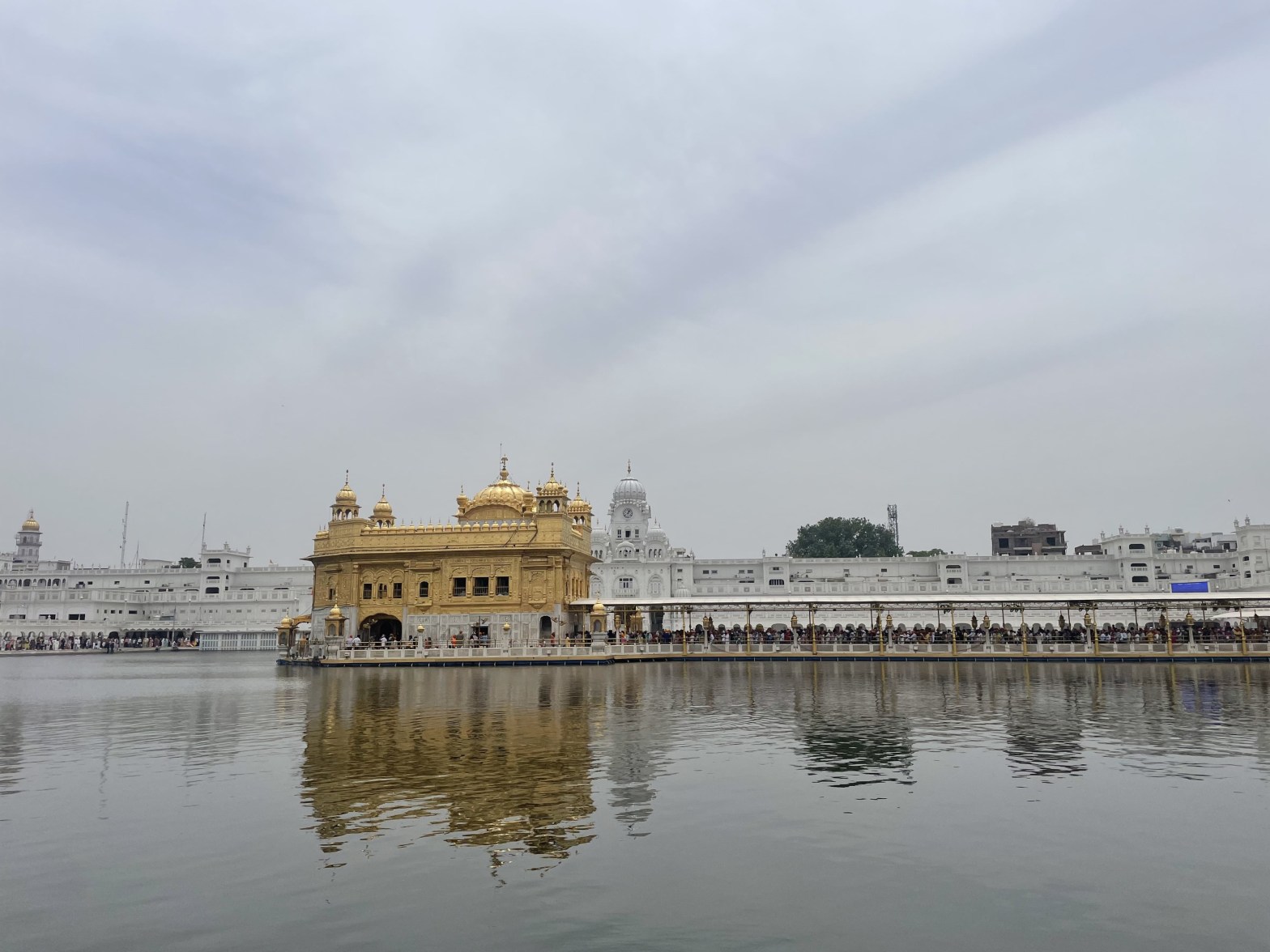
India – June 2024
My exploration of the capital of the Indian part of Punjab starts with a walk from my accommodation close to the train station to the central area around the famous Golden Temple. But before I head to the most important religious site in Sikhism, I stop at a restaurant with a high rating on Google Maps to try the region’s specialty: Kulcha. I order a refreshing Lassi to go with the flatbread stuffed with potatoes. The cold drink is great to combat the heat of the summer day, but the size is much larger than I expected. Somehow I still manage to finish it and then I finally stroll down the small pedestrian alley (might be the only one in all of India) lined with small shops. It’s quite easy to tell apart the temple grounds from the surrounding neighbourhoods. After all, it’s covered in spotless marble tiles set against the mud-coloured streets of the city.

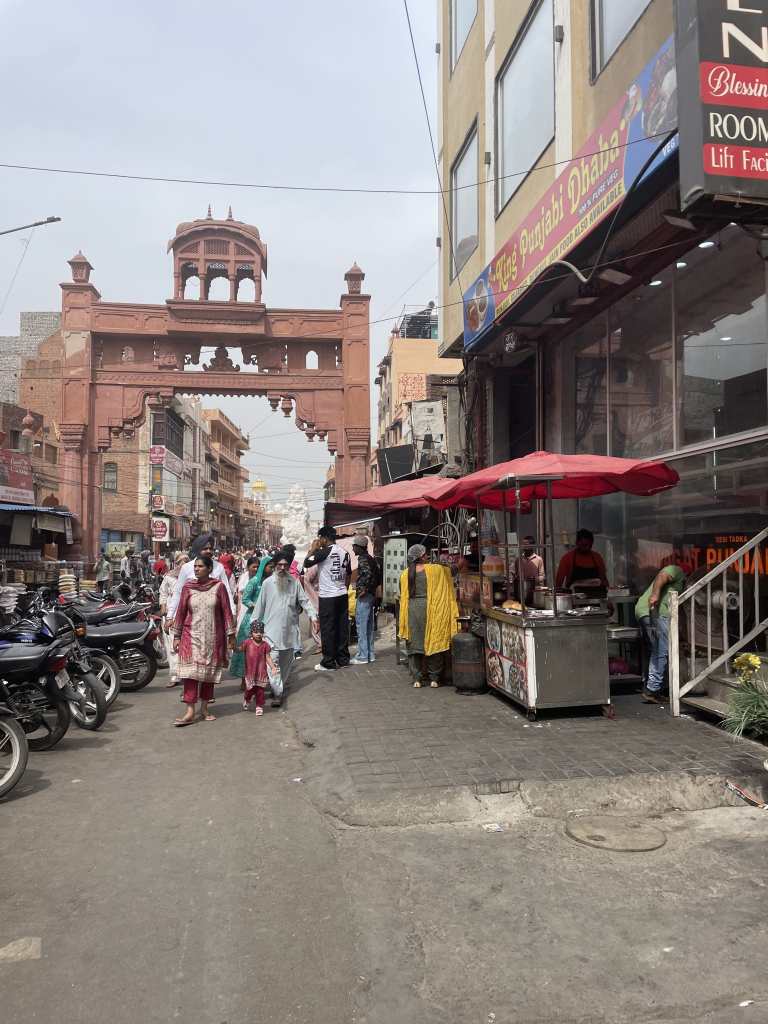
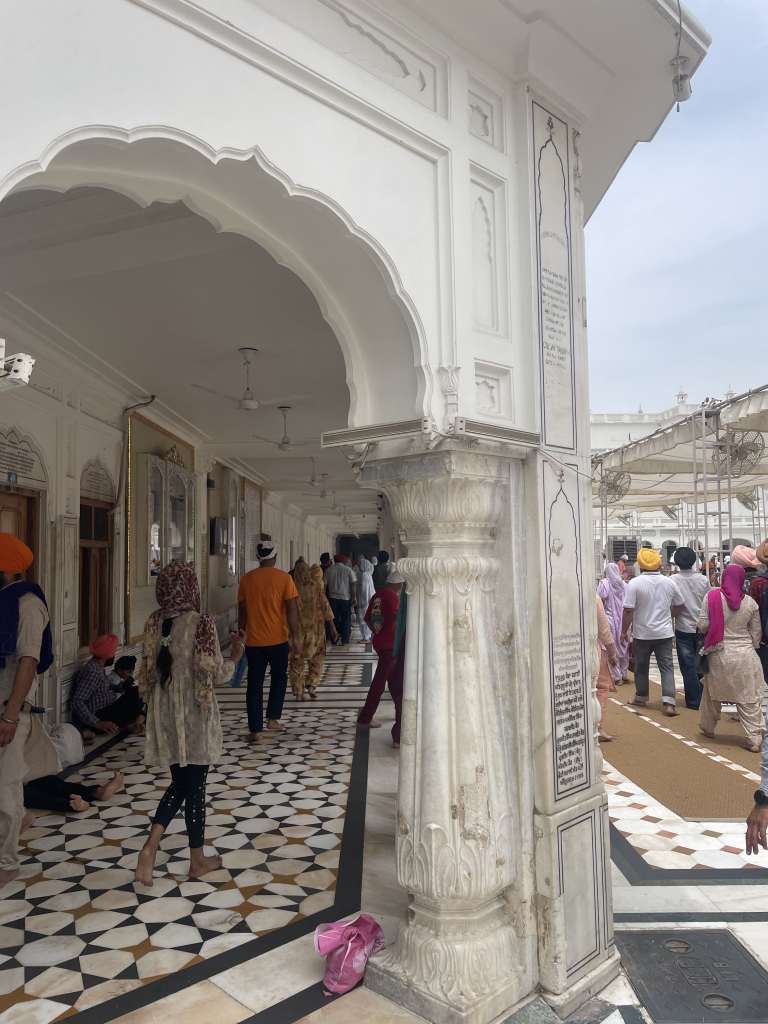
The gate with its golden dome is just a light version of what awaits me inside. But when I get closer to the entrance, I realize that I leave my shoes somewhere and find a piece of fabric to cover my hair with before the guards will let me enter. I quickly find the sign leading to the general shoe storage space. With 20‘000 visitors a day I can only hope that the system works well enough to have the correct shoes returned later. With bare feet I return to the guarded entrance. Before I cross the small stream of water between me and the and the marble stairs, I wrap my own pink bandana around my head. Next to me an Indian family is covering their kids‘ heads in some of the orange ones with the temple’s icon which are available for free. I walk past them through the refreshing water and up the steps where a Sikh guard with a speer inspects my bag. He lets me pass and I finally enter the temple grounds.


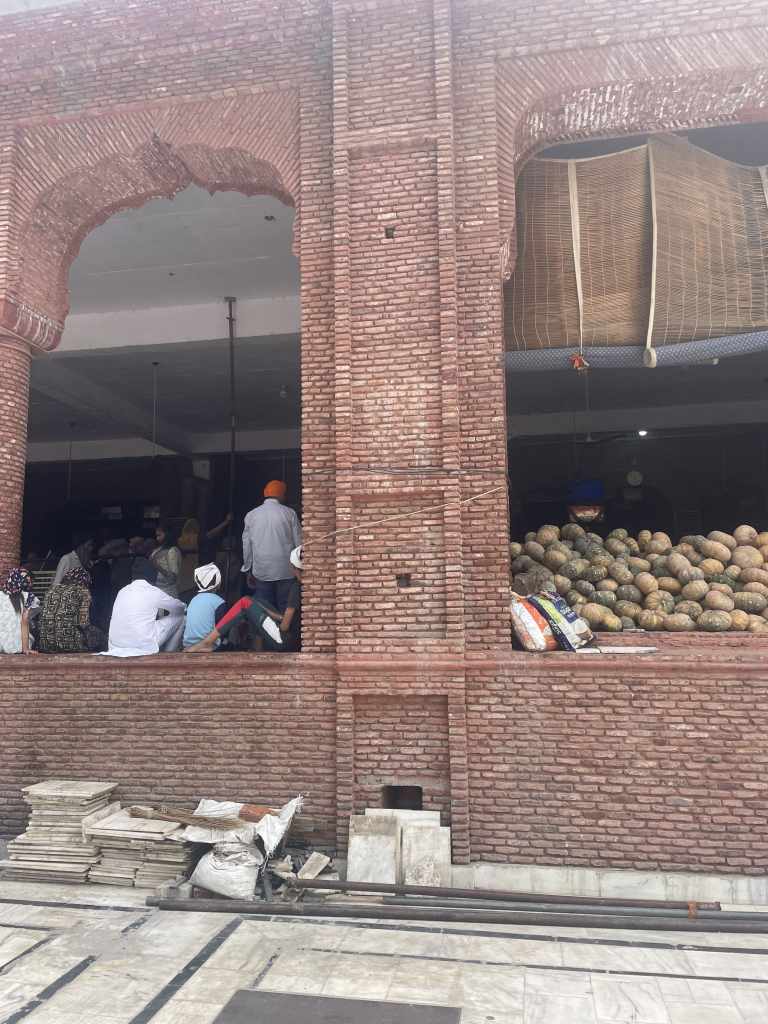
There are few signs suggesting walking slowly and be aware of the people in front of you. For Sikh people this is the holyest place in the world and some may stop aprubtly at the sight of the golden temple and bow down to the floor. In awe of the sparkling marble and architecture, I begin my circuit around the large pond in clockwise direction. I take my time to absorb all that is going on and to figure out the rituals in the Sikh religion, which I don’t know much about. I soon notice the men in turbans undressing at any given place along the water and taking a dip in the holy water. My silent question if women are allowed to bathe too is soon answered. There is a separate area protecting women and girls from other visitor’s view. Judging by the queue outside it, it doesn‘t seem too spacious. While they wait in line, I continue my walk to the Langar. This is deemed the world’s largest community kitchen, serving between 50‘000 and 100‘000 meals a day to any hungry person 24 hours a day. Regardless of religion, caste, gender, or economic status, anyone is welcome, and I briefly regret having eaten just before my visit.
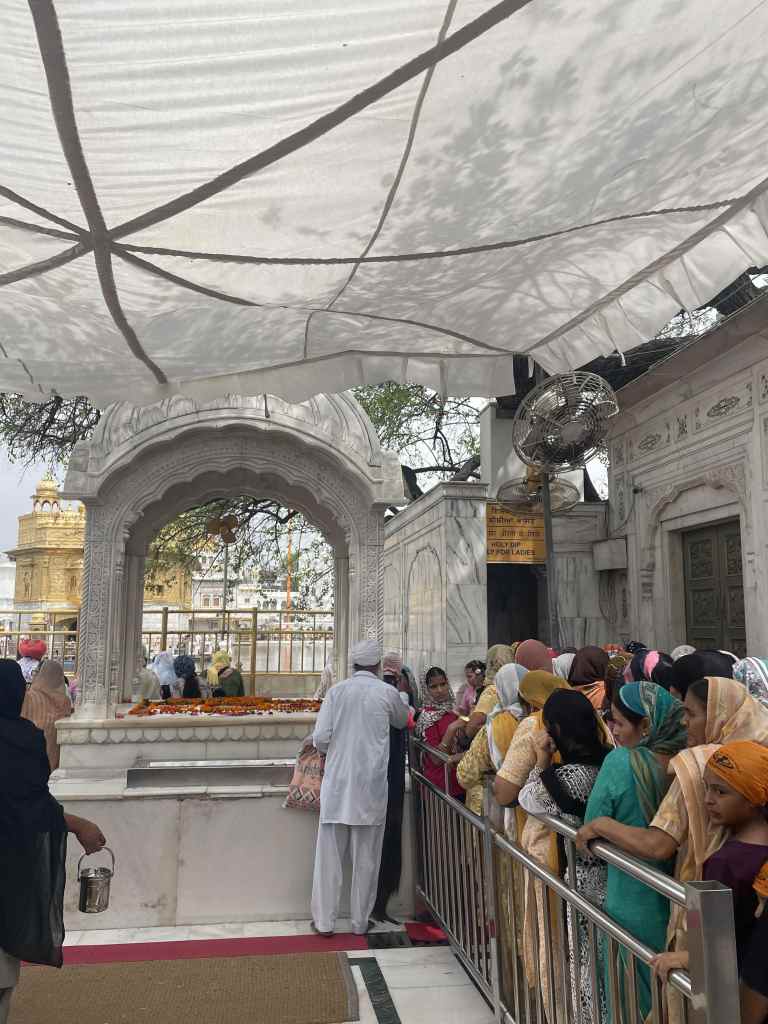
But my stomach is still full, so I continue my circuit of the pond. This time I focus on the general atmosphere and the beautiful music being transmitted throughout the temple by speakers. Since it’s hot, and I don’t have anything else planned for the day, I decide to take a rest in the shade. I read a bit about Sikhism and the temple’s history online and learn that the music is actually recitals of prayers. The musicians are playing live inside the golden hall, the most sacred area of the temple complex. I continue to listen to the Punjabi songs and watch people taking pictures at the pond. Occasionally a guard dressed in blue and yellow uniform walks by with a spear as the only weapon to protect the temple and worshipers. At around lunchtime, I finally gather my strengths and courage to join the queue to enter the innermost hall. It’s surrounded by the “Pond of Nectar” and on this hot (40°C+) Saturday people are waiting well behind the first gate that leads to the narrow bridge.


I notice that there are two queues. One for women only and another one where anyone can wait for their turn. Due to the large number of people and no other foreigners in sight, I choose the women’s lane. In the beginning, I just focus on finding the spots closest to the fans blowing at impressive speed. Everyone around me is happily chattering, despite the heat which feels even more intense due to the many bodies closeby. But suddenly I realize that I seem to have much more space around me than everyone else. This is also when I notice a lot of girls staring at me. Finally, one girl musters up the courage to ask me where I’m from. With the invisible barrier broken, other people start to take turns talking to me and make sure that I always have some water (which is handed out for free too!). As we move forward in the queue, a young Punjabi girl called Jess tells me about her studies and recent trips around northern India. We exchange Instagram info, but then are separated by the people in charge of crowd management.
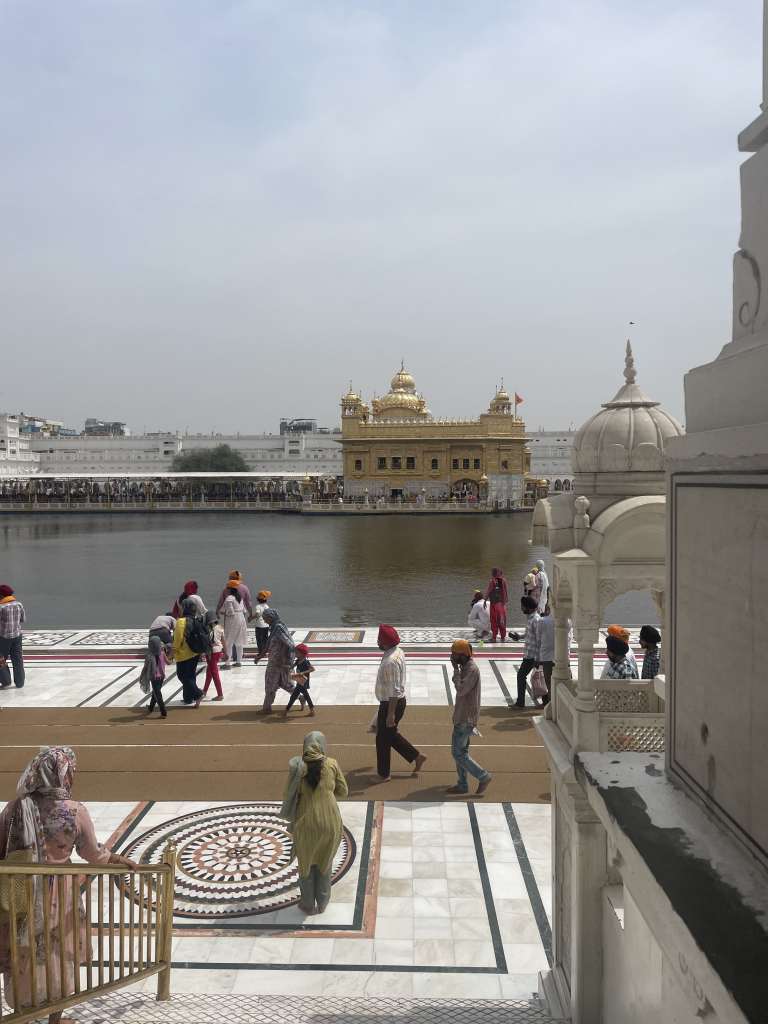
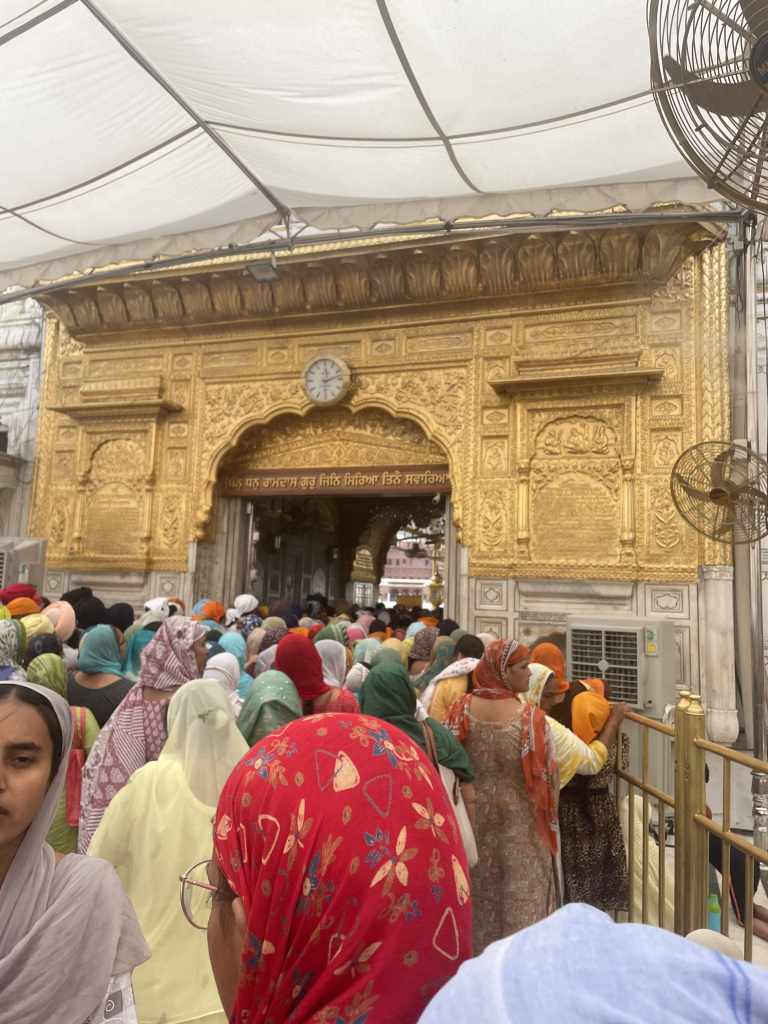
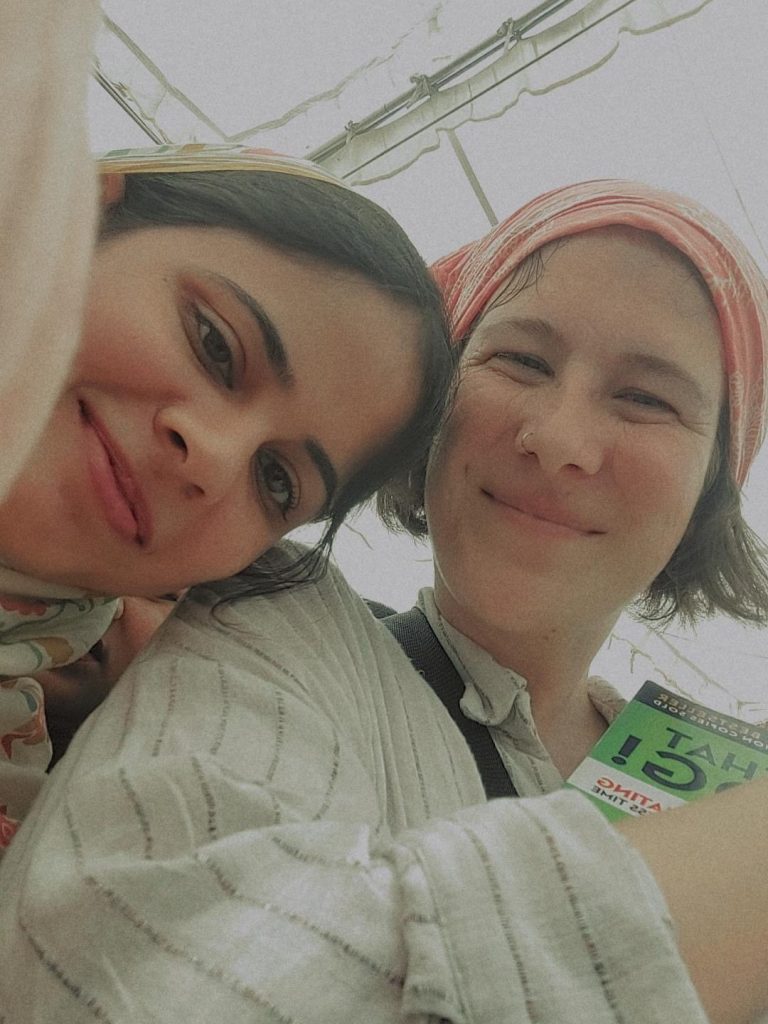
So during the last wait before entering the bridge, 2 other girls start talking to me. The sisters couldn’t be more different, with one dressed in a pretty Dupatta and the other in a more tomboy style with one of the orange bandanas covering her hair. They ask about my family and are very accommodating. The tomboyish girl even tries to get one of the security guards to grant me special treatment as I’m a foreigner. Uncomfortable with that much attention, especially in a place of worship where I’m only a visitor, I decline the offer and join the regular queue on the bridge. While there is a lot of shuffling and pushing in the mixed-gender queue, the women’s line is moving forward smoothly, and we soon arrive at the golden hall. The sisters and I are equally captivated by the sight of the musicians reading from the holy book, and leave a few rupees as a donation. Then we make room for the next visitors and I go up the steps to the roof of the golden structure to finally get some air.
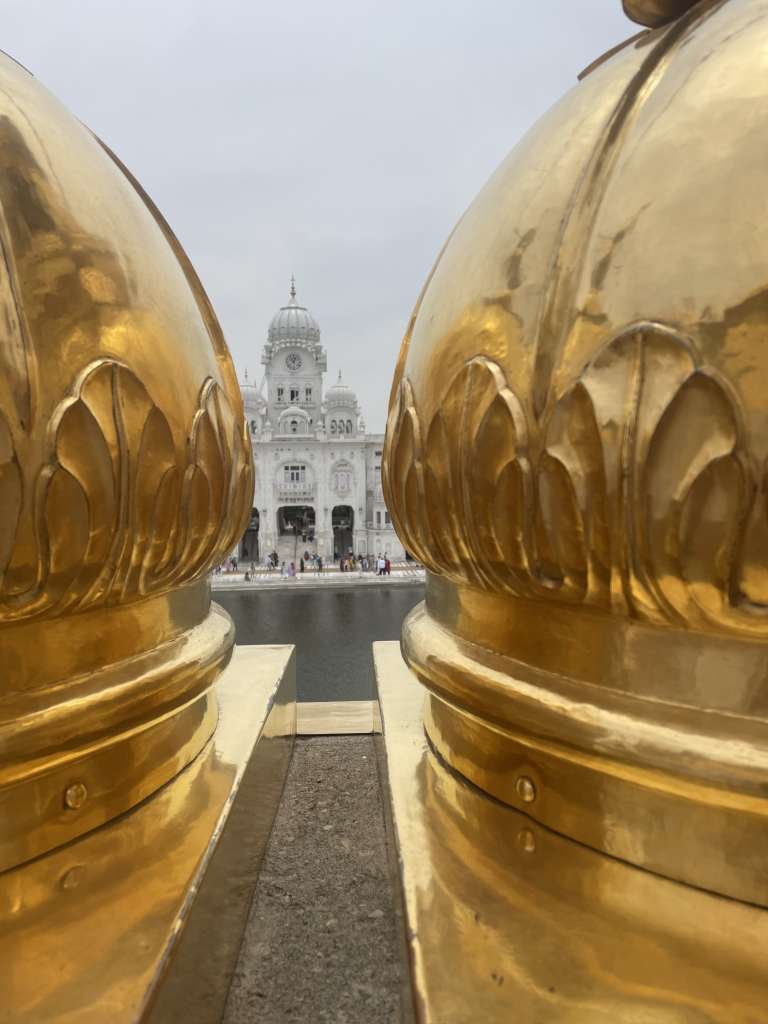
Meanwhile, the 2 girls sat down just outside the musician’s room. I contemplate joining them for a little while but then decide to continue my exploration. So I say goodbye and walk back across the narrow bridge towards the exit. A kind man offers me some of the blessed rice at the gate to the main temple grounds. But again, as a mere visitor, it doesn’t seem right to accept it. Instead, I take another sip of my water bottle and proceed to circumnavigate the pond one more time. After having just experienced so much kindness from the Sikh people in the queue and gotten an image of the musicians, the music feels even more soothing than before. The serenity of the place despite the large number of visitors is truly impressive. Now I can understand the pilgrims who are taking a rest in the shade under the arcades before continuing their prayers. Worshipers may even stay at the temple halls for a few nights for free. It’s open 24 hours a day and several people encourage me to return at different times of the day because the different sunlight changes the atmosphere.
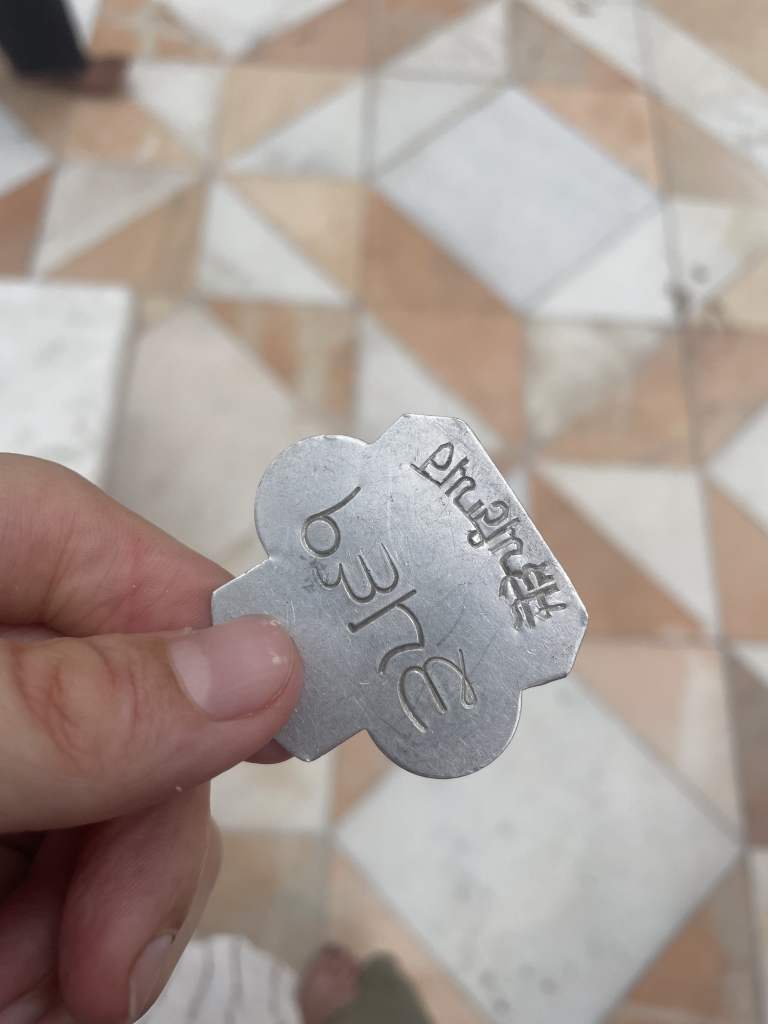
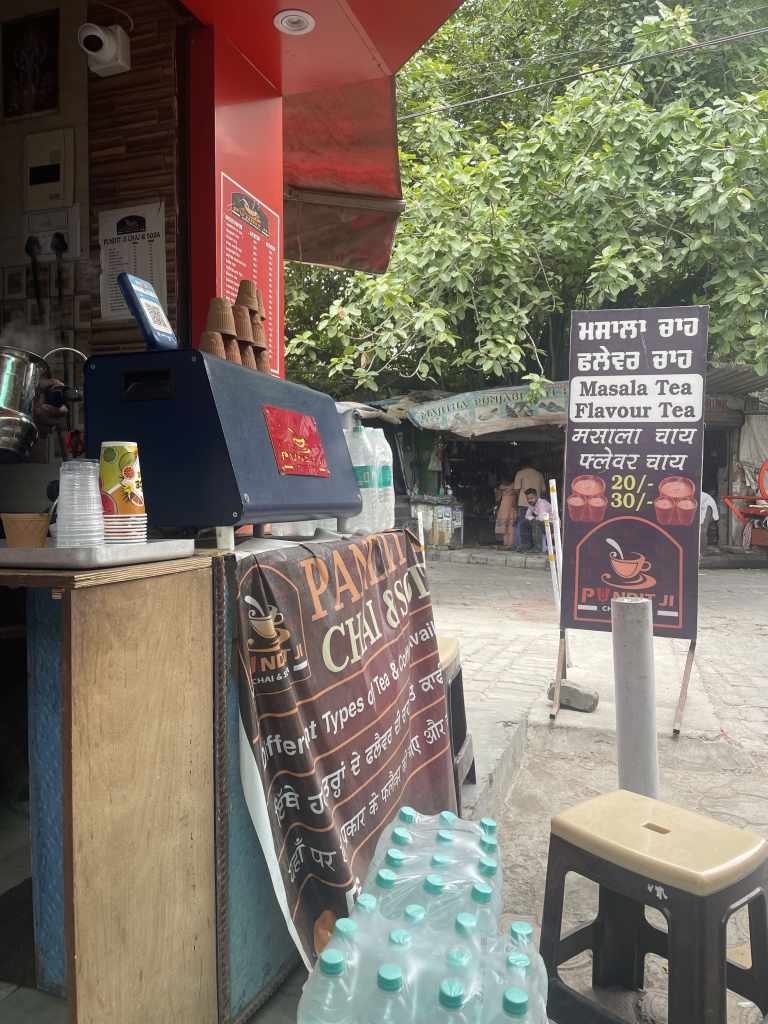
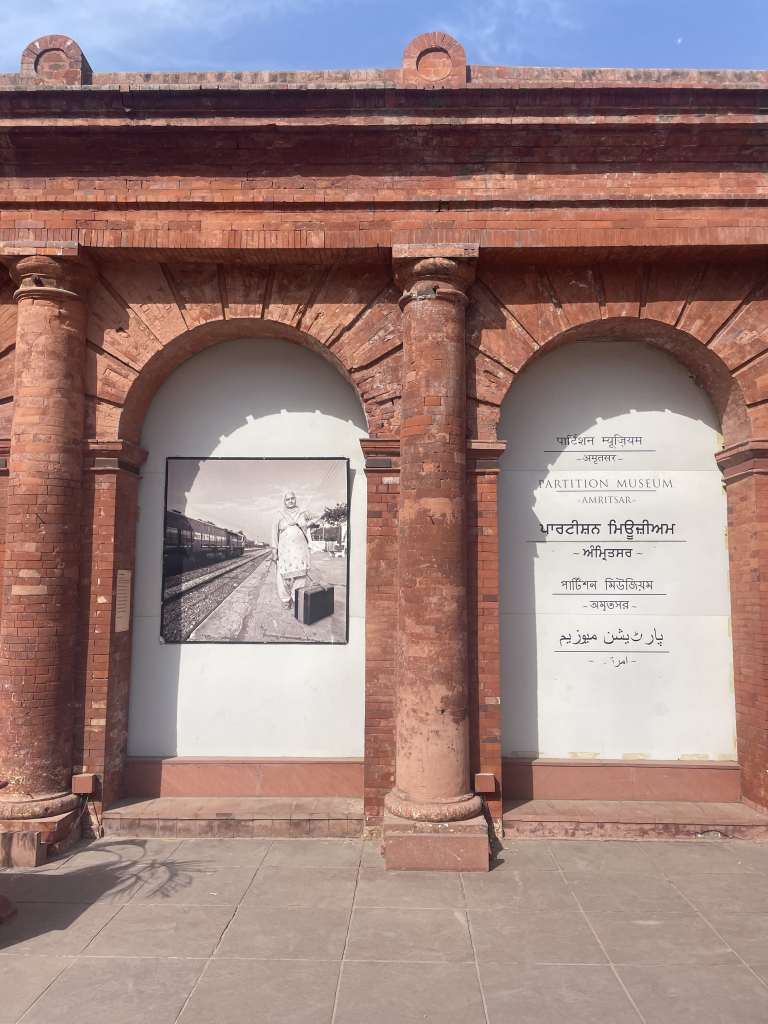
But I only have the afternoon left in Amritsar, and I was also recommended to visit the partition museum. So I pick up my sandals at the shoe stand and head out into the bustling city. Only India is capable of providing such extreme contrasts! I stop at a Chai stall to get some energy and then walk over to the museum dedicated to the partition of India, Pakistan and Bangladesh. While I have of course learned about this in school history classes, that did not prepare me to hear the stories of the deeply affected people on either side of the new borders drawn by the British colonizers. Through its carefully curated exhibits, the museum captures personal stories, photographs, artifacts, and oral histories, painting a vivid picture of one of the largest mass migrations in history. From Amritsar, the capital of Indian Punjab, it’s only 50 kilometers to Lahore on the Pakistani side. To think that no matter the short distance, the border in between keeps families from reuniting since decades is truly heartbreaking.
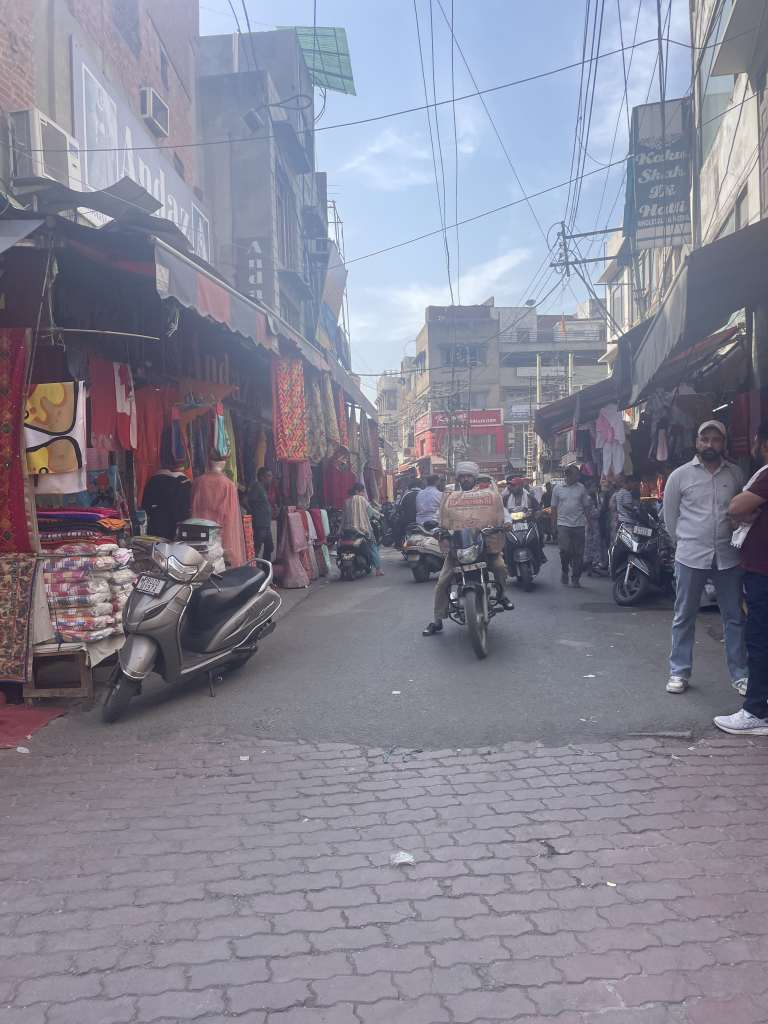
With many mixed emotions, I decide to end the sightseeing for the day. On the way back to my accommodation close to the bus terminal, I wander around the fabric market for a while. I want to buy a scarf, but for the first time during my stay in India, nobody seems to be interested in selling me anything. Actually having to make an effort to get offers and information about products suddenly seems tiring. When I’m almost ready to give up, a man steps out of his shop to show me his – supposedly – authentic Kashmir wool scarfs. I tell him that I prefer light cotton, and he quickly changes his approach. A few moments later, I hand over the 100 rupees he is asking for. That’s probably too much, but I don’t like haggling. Proud of my purchase and happy to have something to protect me from the afternoon sun, I return to my hostel to take a much-needed shower and rest. After all, the next day will be a long travel day to meet my friends for hiking in Dharamshala.

 thattravelstory
The foundation of the Golden Temple was laid in the late 16th century under the leadership of Guru Arjan, the fifth Sikh Guru. The construction began in 1581 and was completed in 1604. Guru Arjan also compiled the Adi Granth, the sacred scripture of Sikhism, and installed it inside the temple. Unlike traditional Hindu temples, which are built on higher platforms, the Golden Temple was constructed at a lower level to emphasize humility and inclusivity.https://www.indianetzone.com/golden_temple_in_amritsar,_punjab
LikeLiked by 1 person