Kanazawa – 2024/2025
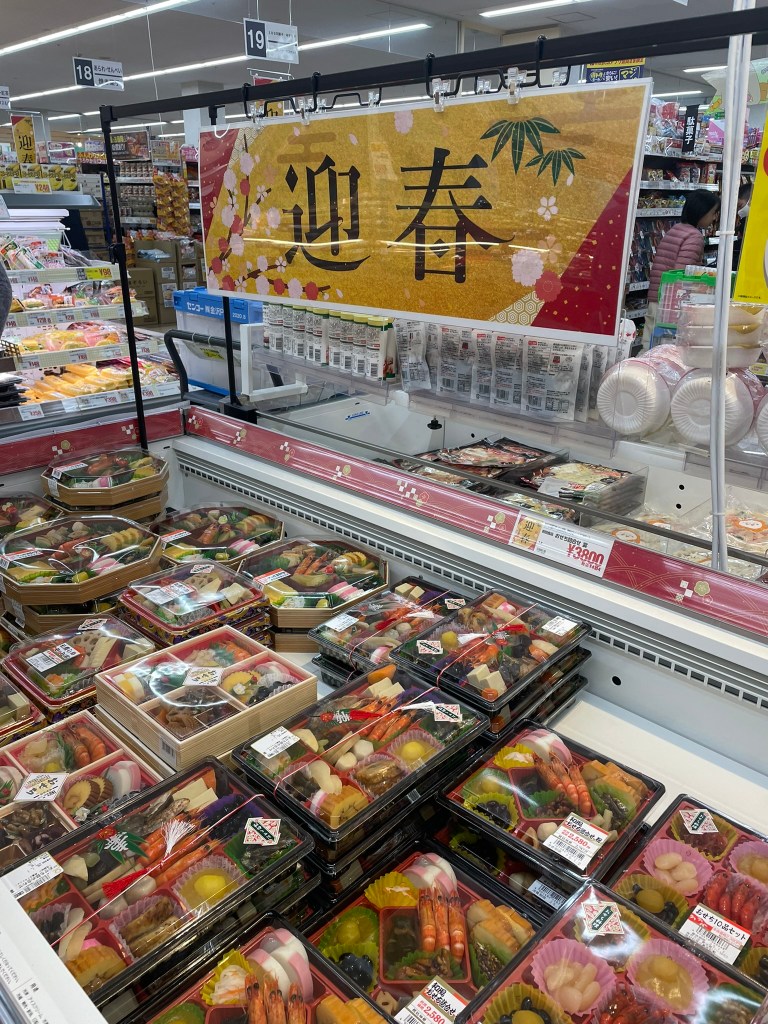
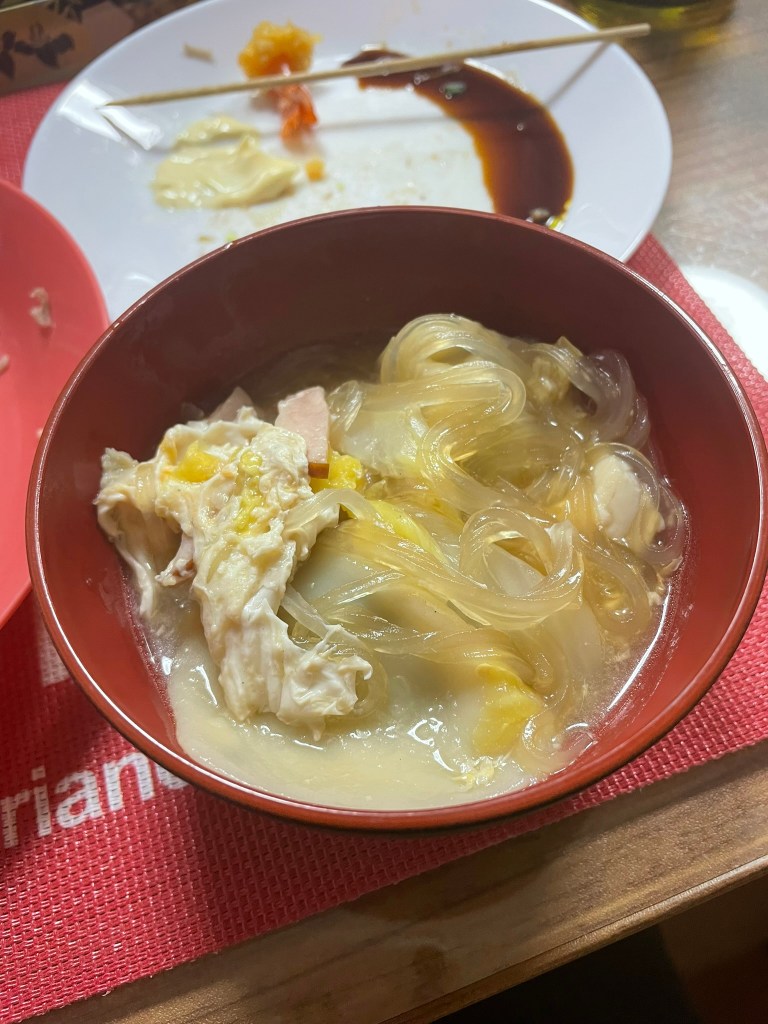
With most of my friends in Kanazawa leaving for trips abroad and to Tokyo, I’m happy when one of my roommates shares her plan to have a typical Soba dinner in the sharehouse group chat. 1 other girl and I accept the invitation to join, and we finally get together in the kitchen at around 6pm. On the TV in the living room, the singing contest “Kōhaku Uta Gassen” is already playing. Kiko just returned with fresh Soba, while Marie brought a big plate of discounted sushi and Shrimp Tempura from the supermarket. I complete the spread with a bottle of sparkling wine when Rin-san, the owner of the house we’re living in, stops by with fried chicken, yakitori, and Chinese oyster pancakes. He’s happy to see we’re celebrating together and tells us to enjoy the extra dishes from his restaurant.
With most dishes pre-cooked and ready to eat, we only have to boil the soba noodles before we can dig in. The buckwheat noodles are traditionally eaten in Japan as the final meal of the year because the long shape of the dish is associated with longevity. Preparing them is pretty straightforward. However, my 2 Japanese roommates do not seem to be the cooking type. So somehow I end up as the head chef. Fortunately, I can recognize the Kanji indicating the amount of time the noodles need to boil in hot water and I can read the rest of the instructions through the Google Translate image. The 2 girls are amazed by the handy tool and while the water is boiling, I show them that it works the other way around too by translating a German book into Japanese.
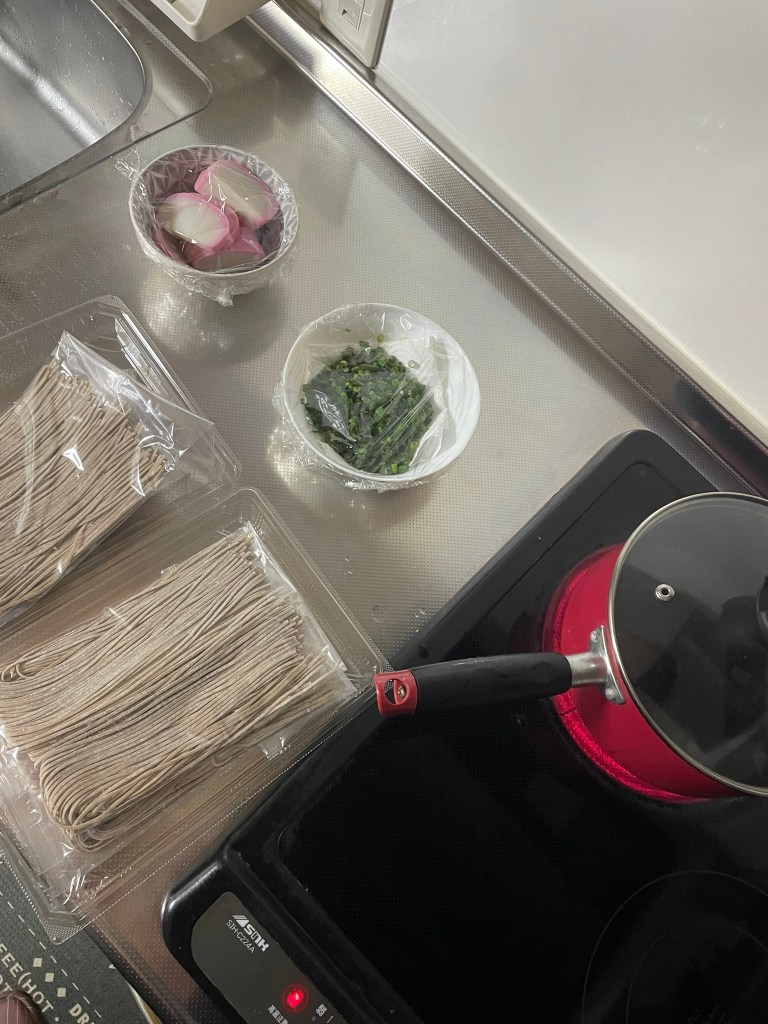
After a while I wonder why the timer hasn’t gone off yet, and I realize that I set it to 1 hour 30 minutes instead of 1.5 minutes. We take the noodles out of the water immediately, but the first batch is rather soggy. Fortunately, we do a better job with round 2 & 3 and I volunteer to eat the first one. We add the dipping sauce mixed with some wasabi and soba water into small bowls, and then it’s time to slurp away. During the meal, we share our respective families New Year’s traditions in a wild mix of Japanese and English. We also take a break occasionally and check the performances of the singing contest. Among current Japanese pop groups, there are also older artist playing classics and even a famous Korean girl group makes an appearance.
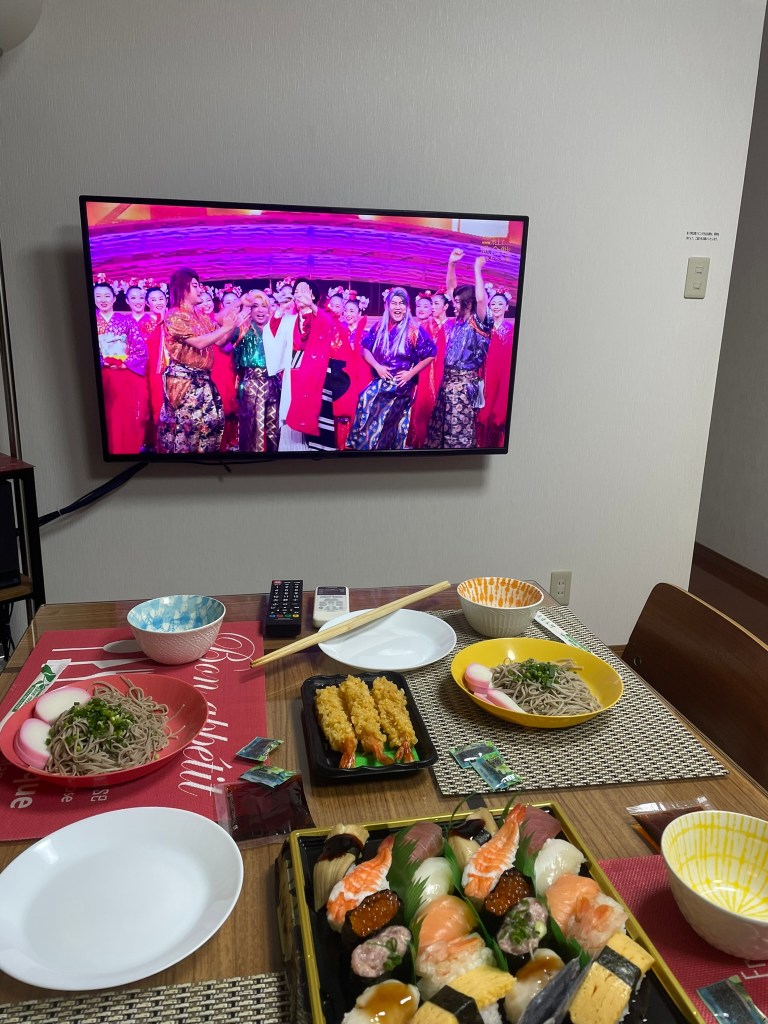
Then another roommate returns home from a day out and get ready to prepare his dinner. Since we still have plenty of food left, we invite him to sit with us, and he offers to add the soup dumplings he already precooked to the potluck. Like that we keep eating until the TV program ends and the channel switches to the countdown shortly before midnight. Like every year, there are TV crews on standby all around the country at popular landmarks or shrines, where they show the local traditions and talk about significant events of the past year. At the strike of 12, the huge bell is rung at a Buddhist temple being broadcasted, and rather than lighting fireworks, a couple of members at a local Dojo give a Kendo performance.
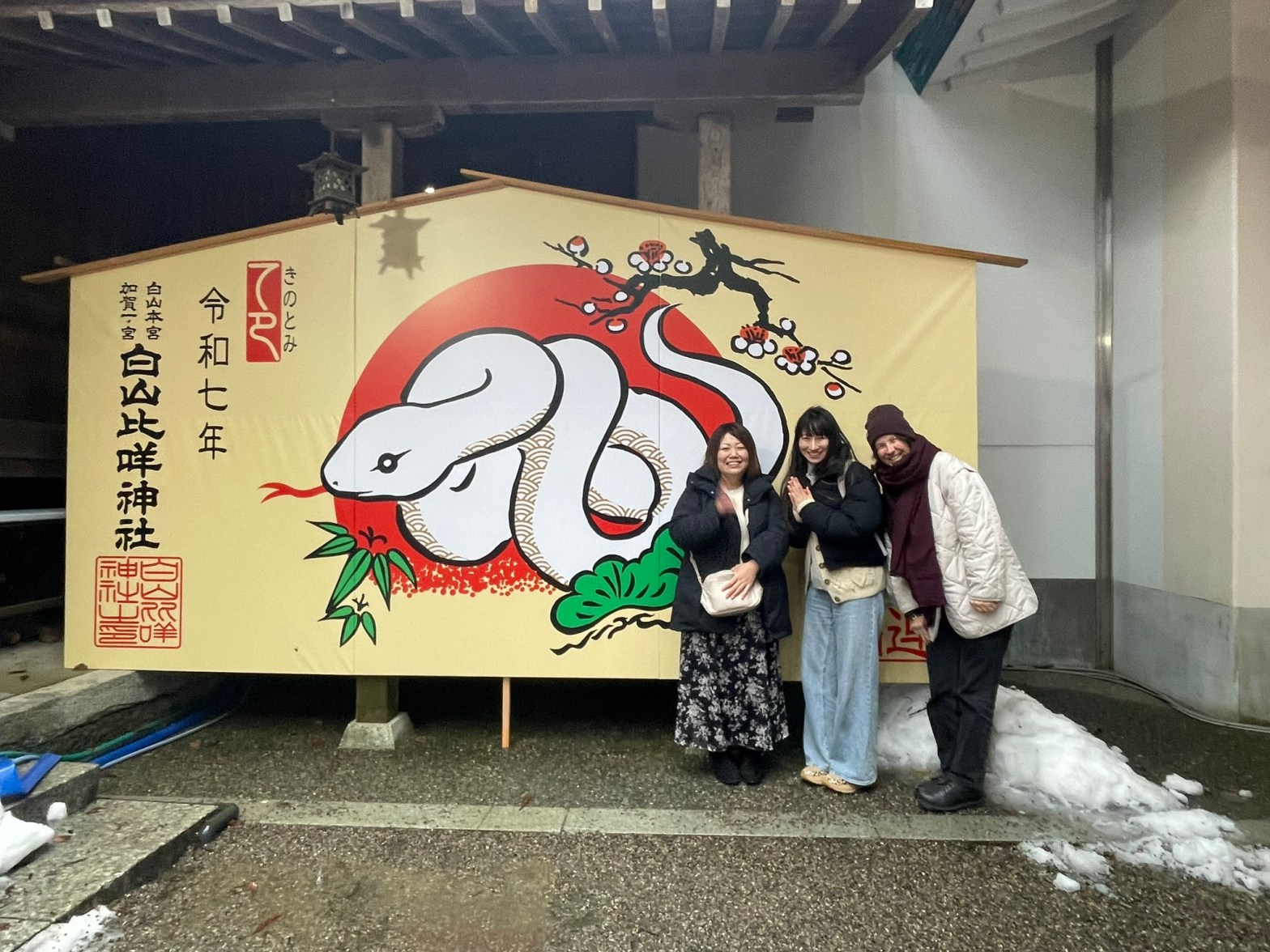
I cheers with my roommates, wishing everyone a Happy New Year or “Akemashita Omedetou” in Japanese. We discuss our respective Chinese zodiac signs and proceed to watch some more late-night TV. The 2 girls and I already discussed going to a popular Shrine in Ishikawa Prefecture on the first of January for Hatsumode – the first prayer of the year, and I wonder when I will have to wake up. Kiko reads my mind and mentions that there is always a lot of traffic on the road to Hakusan on that day, so we should leave early. “How early?”, is Marie’s question, to which Kiko replies with “How about leaving at 6am?”. A quick look at the living room clock tells me that I get 4 hours of sleep if I go to bed now. Marie does the same calculation in her head, but also wants to take a bath before going out in the morning. 3 hours being enough sleep for her, we agree to meet again at 6 o’clock.
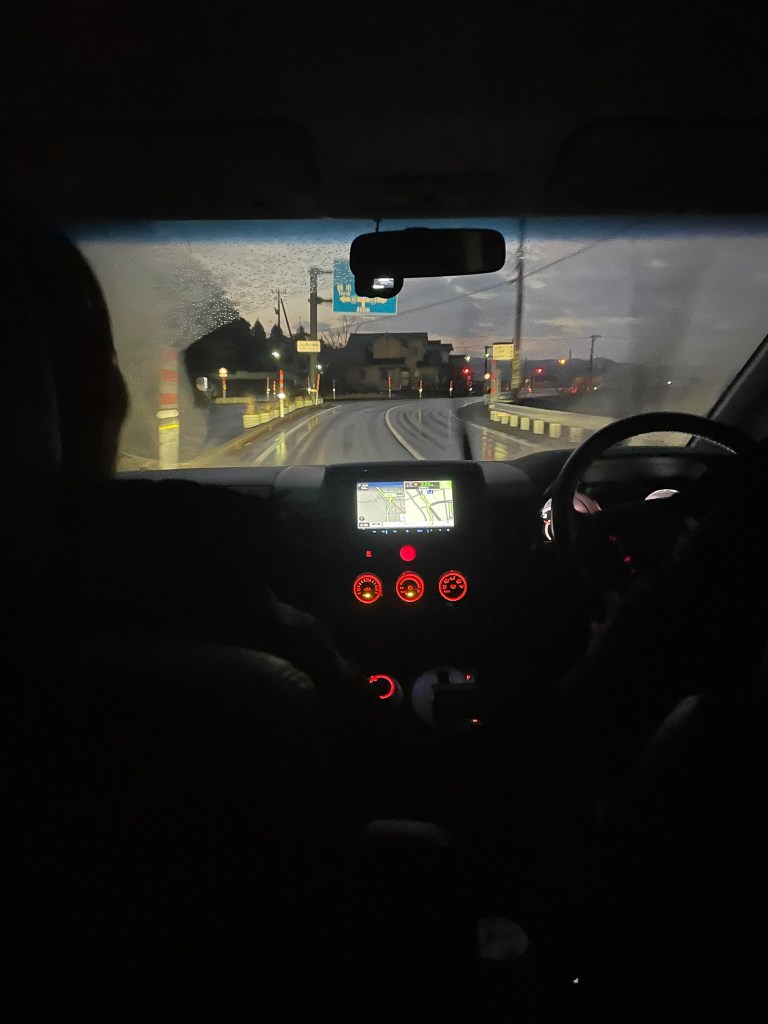
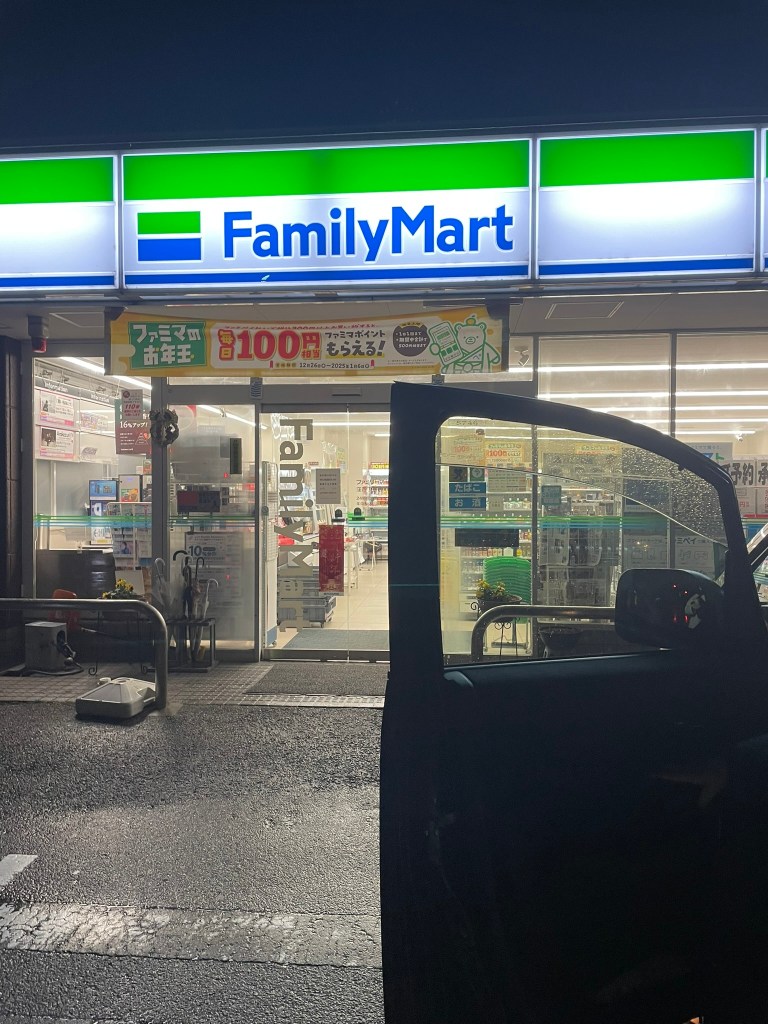
Layered up, we meet outside in the dark and wait for Kiko to maneuver her car out of the garage. We hop inside and I’m glad that both of the girls seem to be morning people. That means they can entertain each other, because I am definitely not talkative at 6am and even less so if the conversation is entirely in Japanese. We stop at a Family Mart to get some coffee and then head out of the city to the west and into Hakusan City. I’m positively surprised at the lack of traffic, and enjoy watching the sun rise behind the alps for the first time this year. We make great progress until about 2 kilometers before reaching the Shrine. Since one lane is completely closed and everyone is going to the same destination, we can only move little by little from here. Marie takes charge of the playlist, and we pass the time showing each other our favourite songs.
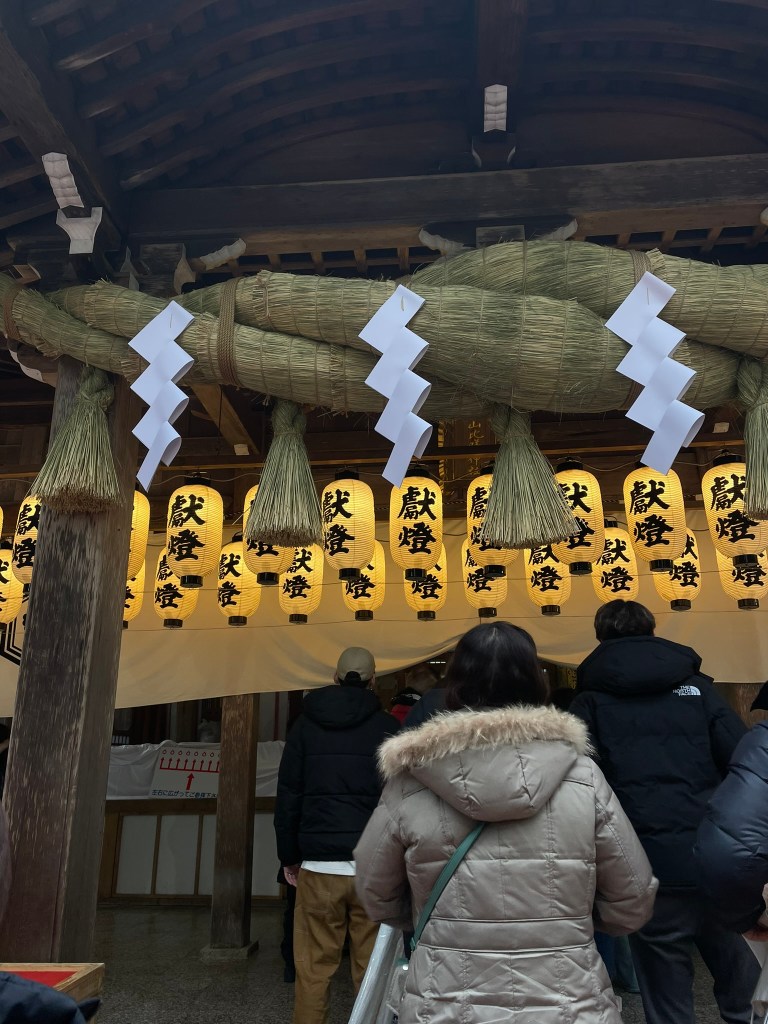
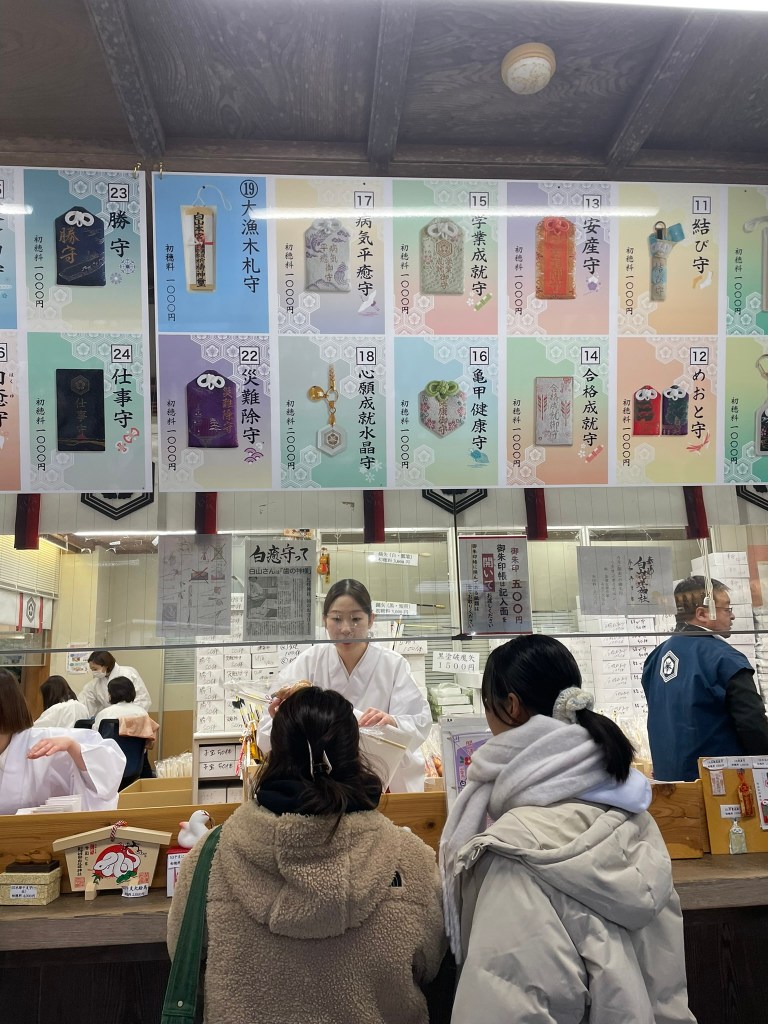
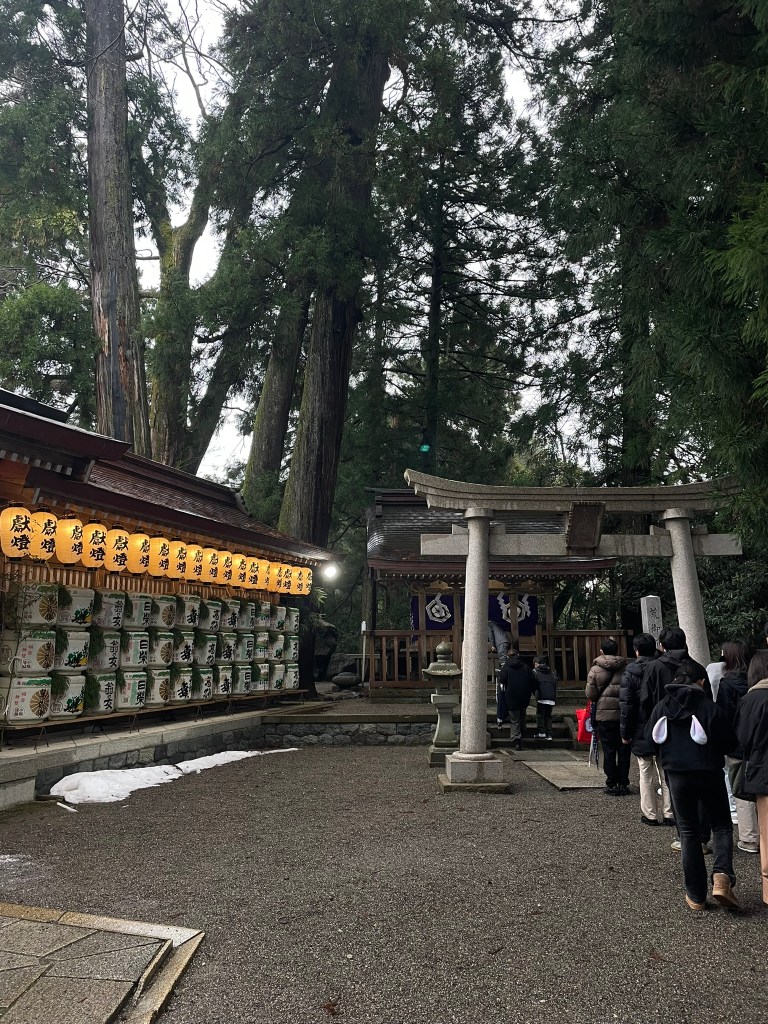
Once we reach the car park, it’s 8 am and the sun is shining onto the snow covered peaks of Mt. Hakusan. We pass the huge wooden torii gate, which marks the entrance to the sacred place and wash our hands at the designated fountain. Despite the number of cars, the Shrine doesn’t feel too crowded, and we don’t have to queue long for the prayer ritual. Then we pick up our Omamori – blessed lucky charms, which may be helpful for specific purposes. Marie and I also want to get an Omikuji, the traditional fortune scrolls that supposedly foretell the future for the coming year. I shake the wooden box strongly and draw a stick with the number 34 engraved on it. So the man behind the counter hands me a paper with number 34 and I am happy to see the characters 大吉 which mean “big luck”.
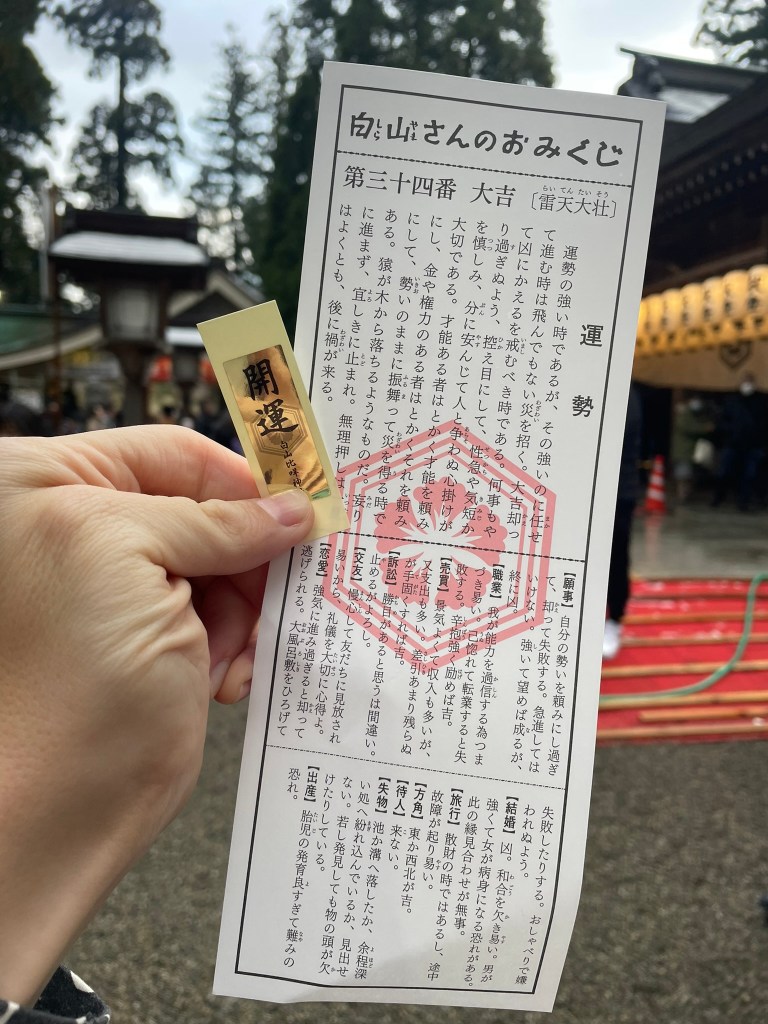
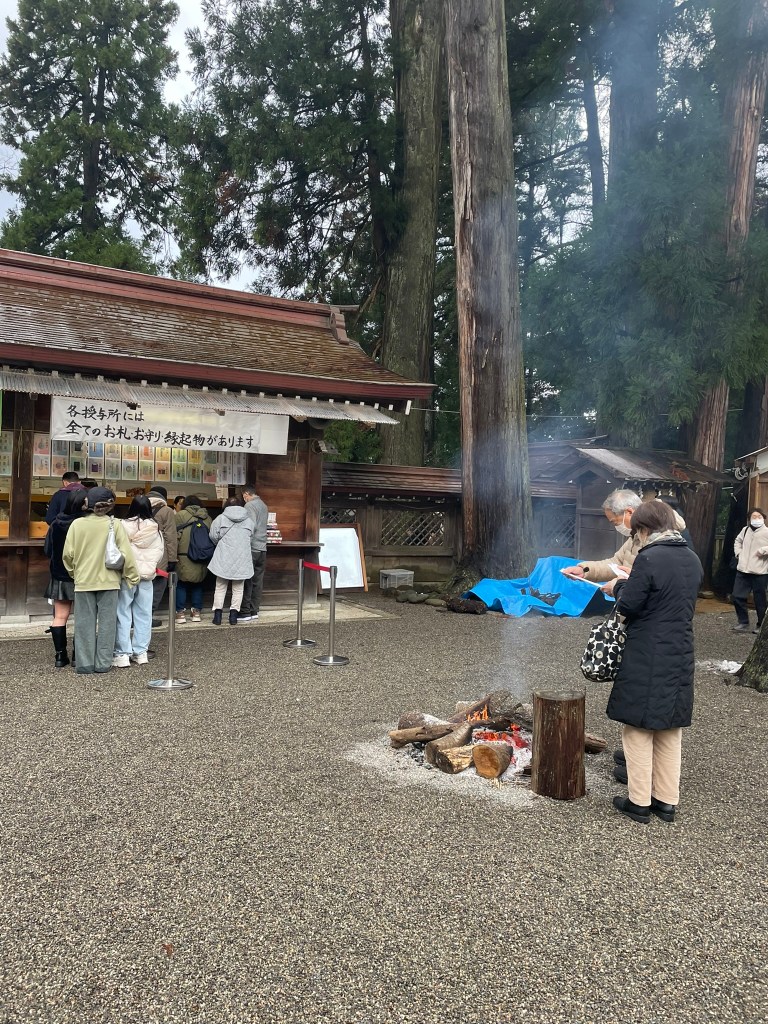
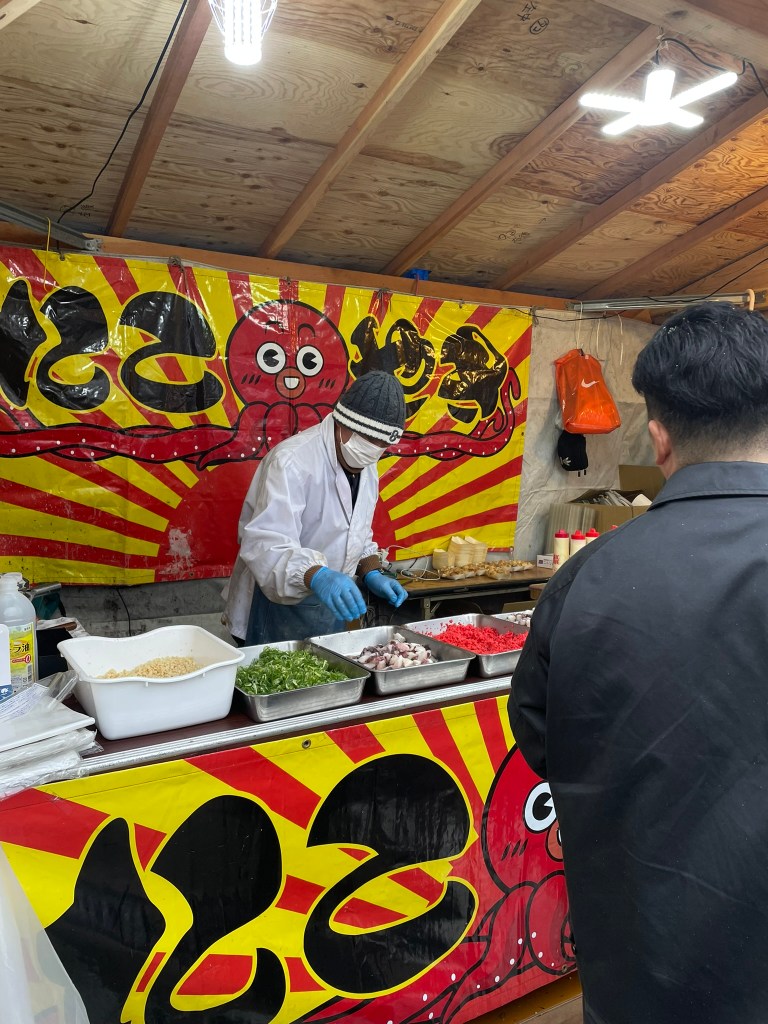
So I keep the fortune in my bag, planning to translate it later on today. Marie isn’t as lucky and after quickly reading through the different sections, ties the unlucky fortune to the designated structure on the temple grounds to leave the bad luck behind. As we wander across the Shrine’s premises, which are covered in high pine trees, snow starts to fall. The scenery looks like it’s straight out of a Christmas movie. In one place they even lit a small bonfire at which people are warming their hands. Having completed all our Shrine duties for today, we return to the car park. But before going home, we HAVE TO stop at the food stalls and buy some typical festival snacks. We opt for 2 portions of Takoyaki – the octopus balls – which we devour for breakfast once back in the warm car. When we finally get back home at around 10 am, I fall straight into bed and sleep until the early afternoon. What a great start into the new year.
Epilogue — Previous New Year’s celebrations in Japan:
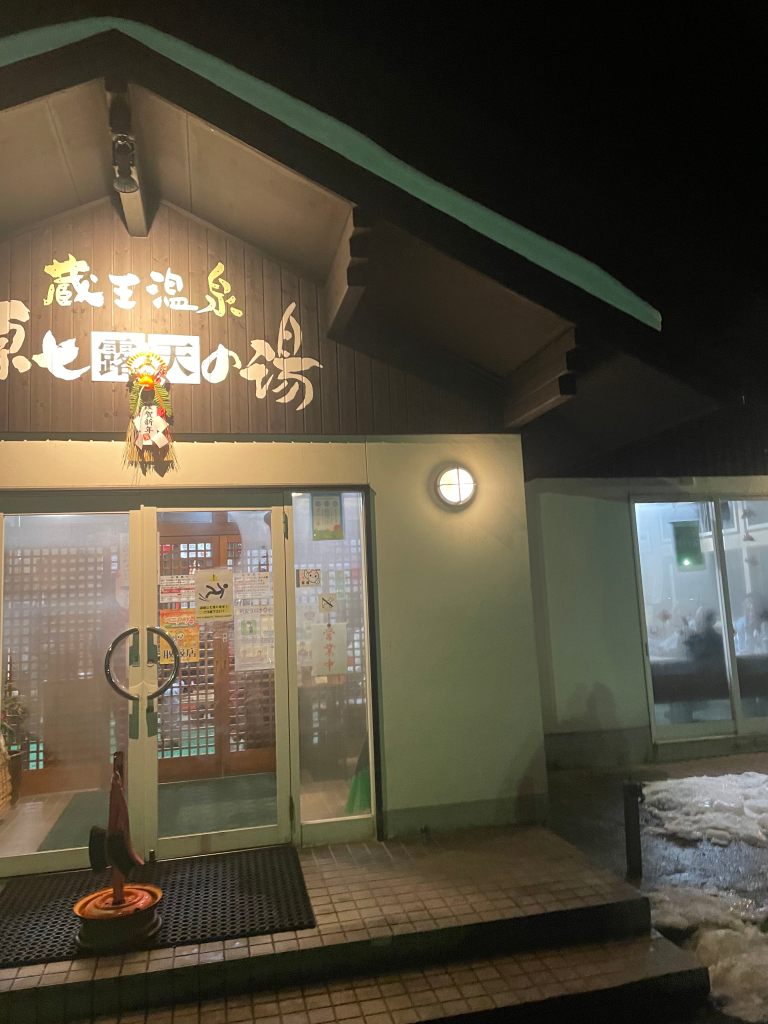
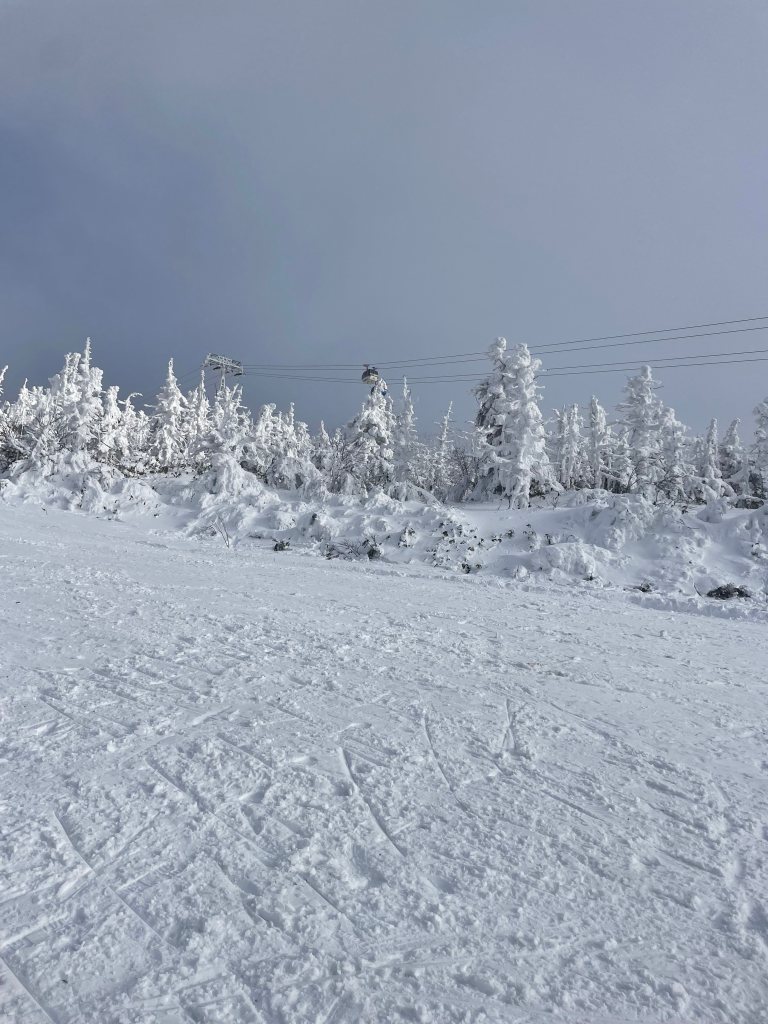
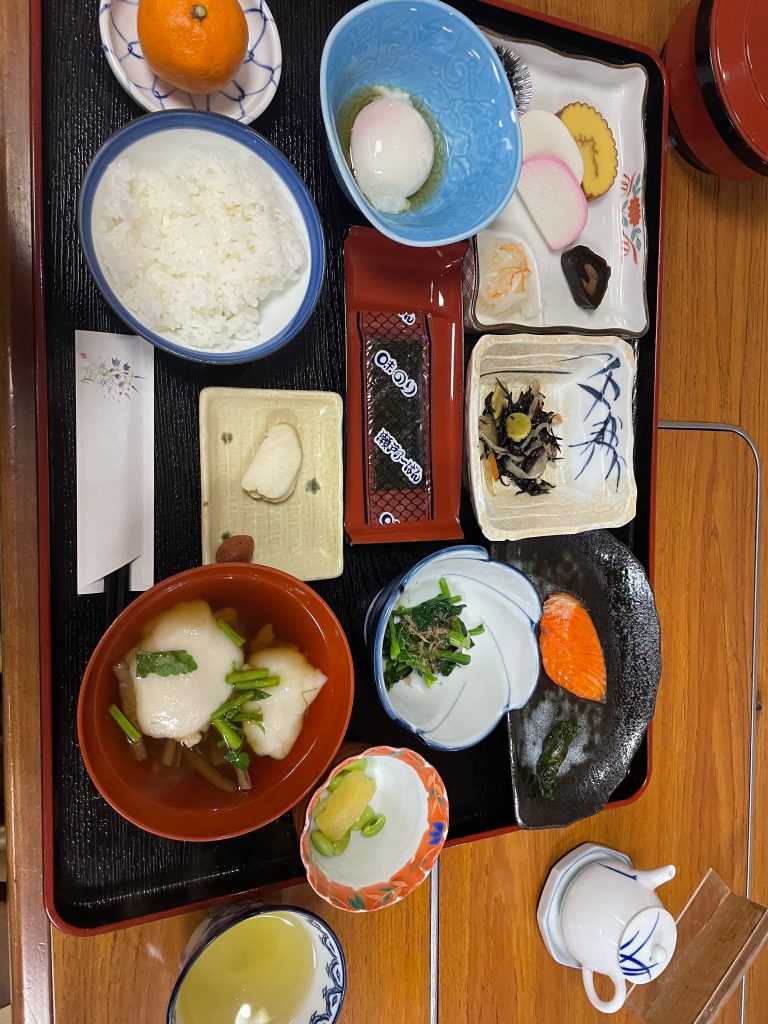
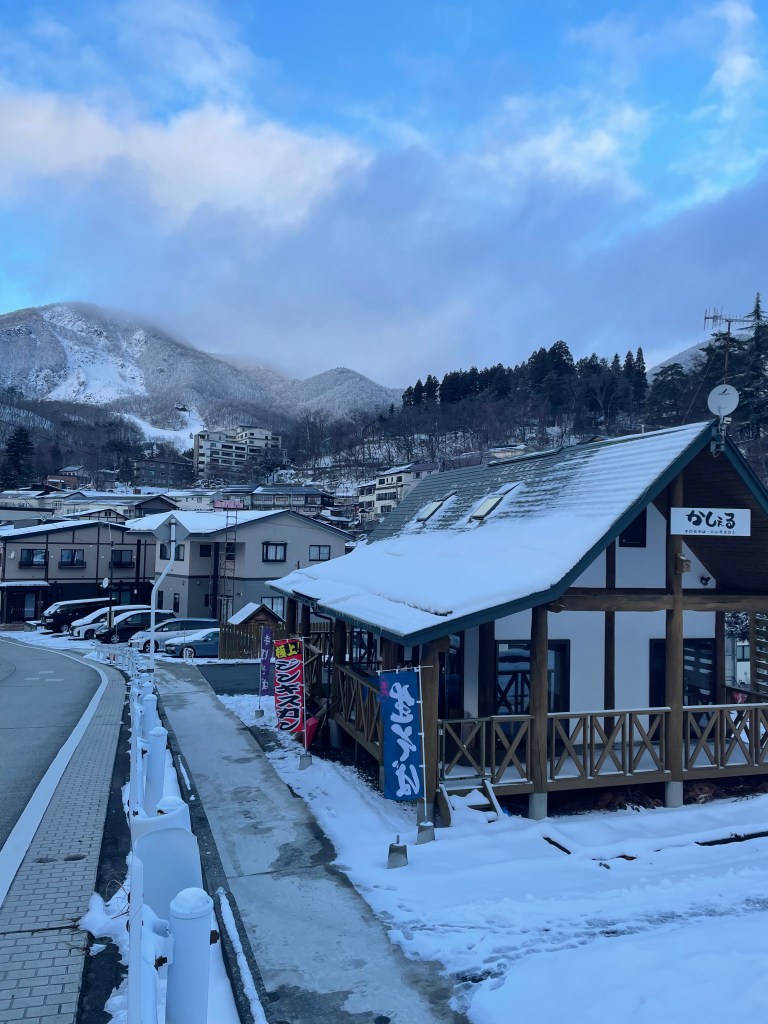
The first time I was ever in Japan for New Year’s was in 2022/2023, during my 2 week stay in Kusatsu Onsen. Read all about that experience in the separate post. Then in 2023/2024, I traveled around Tohoku during the end-of-year vacation from my job in Tokyo. I splurged on a nice room in a Ryokan for the night from 31 December to 1 January and spent the last day of 2023 skiing in Zao Onsen. Since there is not much to do in the hot spring town, I went to bed early after a nice bath in the hot springs. On the 1st of January, I enjoyed a traditional breakfast complete with the typical Ozoni soup with Mochi before heading out into the snow-covered village. I reminisced about the changes the past year has brought and what lies ahead and only returned to my room with a take-out dinner at around 16:00.
Just when I closed the sliding door in my room on the 3rd floor of the wooden building, I suddenly heard a loud beeping noise from my phone followed by a robotic voice repeating over and over “earthquake, earthquake,…”. Seconds later the floor was shaking beneath me and I could only hope that the wooden structure was strong enough to support the quake. Once the shaking stopped, I checked my phone to see where the epicenter lay. To my surprise, it was on the Noto Peninsula over 300 kilometers south-west from where I was. Immediately I looked at the shockwave distribution and contacted all my friends in the country (if they were not quicker and already reached out to see if I was safe). Soon after, my people abroad also started to message and ask about my safety. Luckily, in Yamagata it was only a level 3 quake. At the epicenter, it was a 7!
 thattravelstory