Japan — December 2024
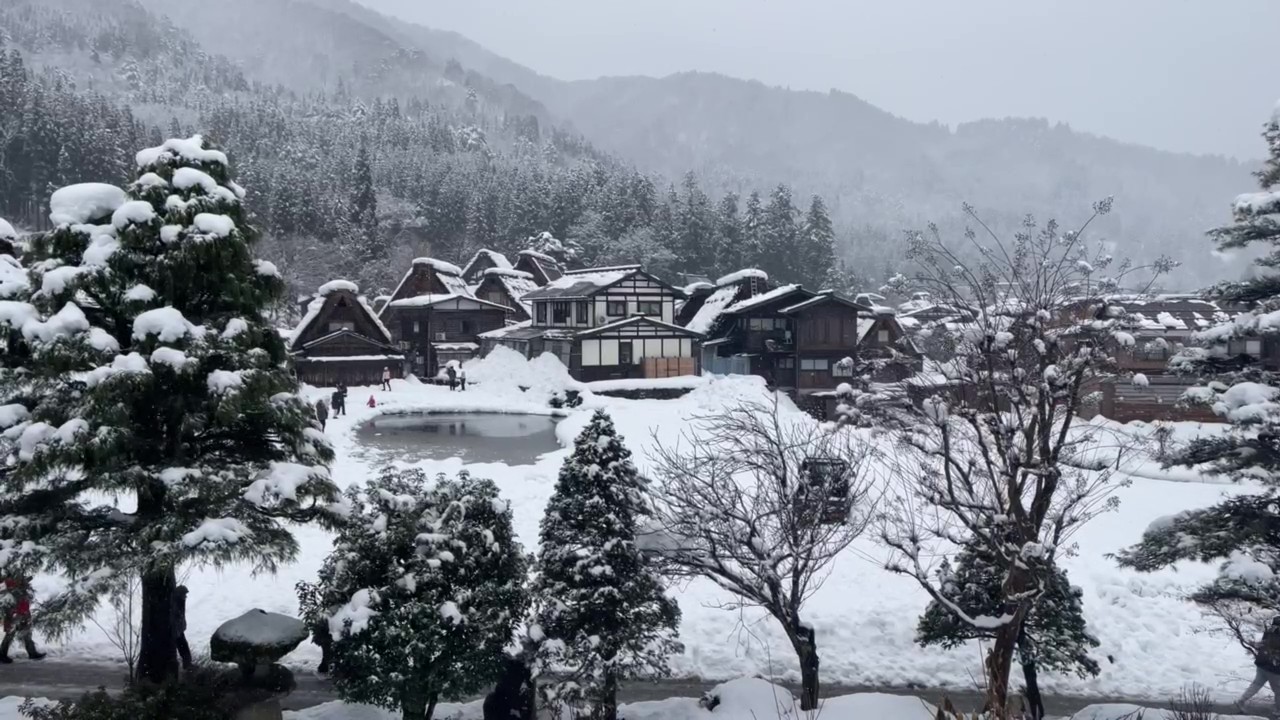
Nestled between Shogawa river and the mountains of Gifu prefecture, Shirakawago is one of the highlights for many international travelers wanting to experience rural Japan. However, it takes me 8 months of living in nearby Kanazawa before I properly visit the folk village. On one of the days between Christmas and New Year’s, I get to join my colleague Sachiko’s tour to the mountains. Our guests for today are an Indonesian family of 18 people. We meet them in the lobby of their hotel in central Kanazawa, where the microbus is already waiting for us. Once all three generations are packed up in the vehicle, the driver swiftly maneuvers us out of the city and onto the highway heading east. Since it’s still early, and we have a long day ahead of us, Sachiko sticks to a short introduction for our destinations. And soon after, grandma sitting next to me dozes off, along with the kids in the back.
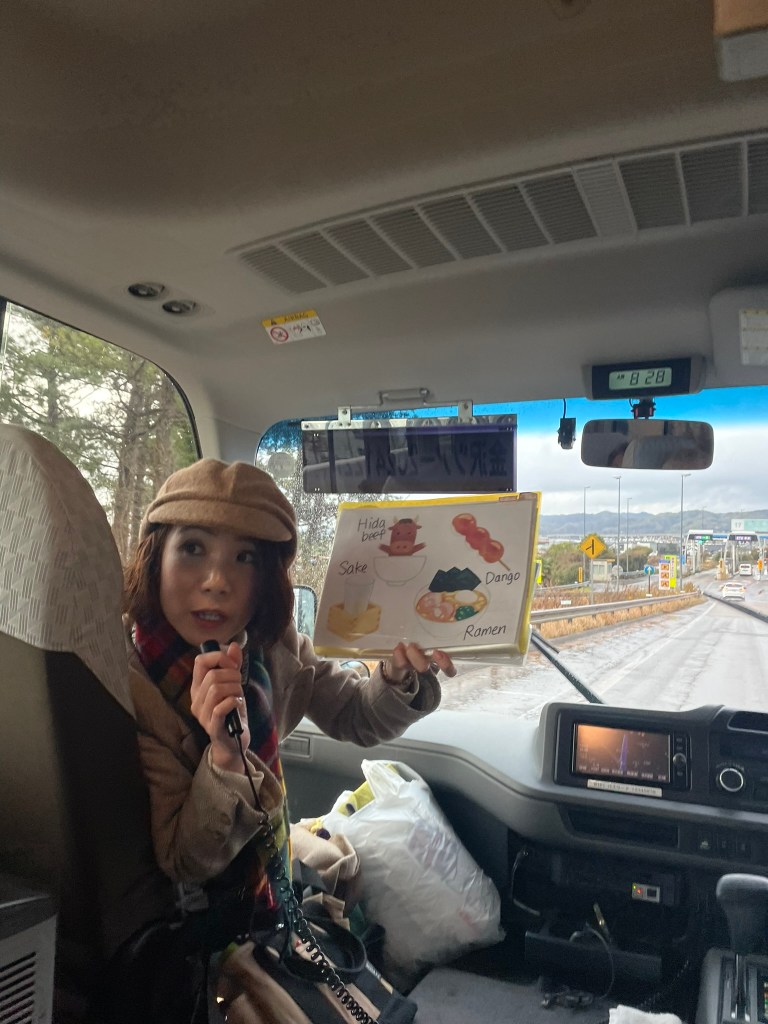

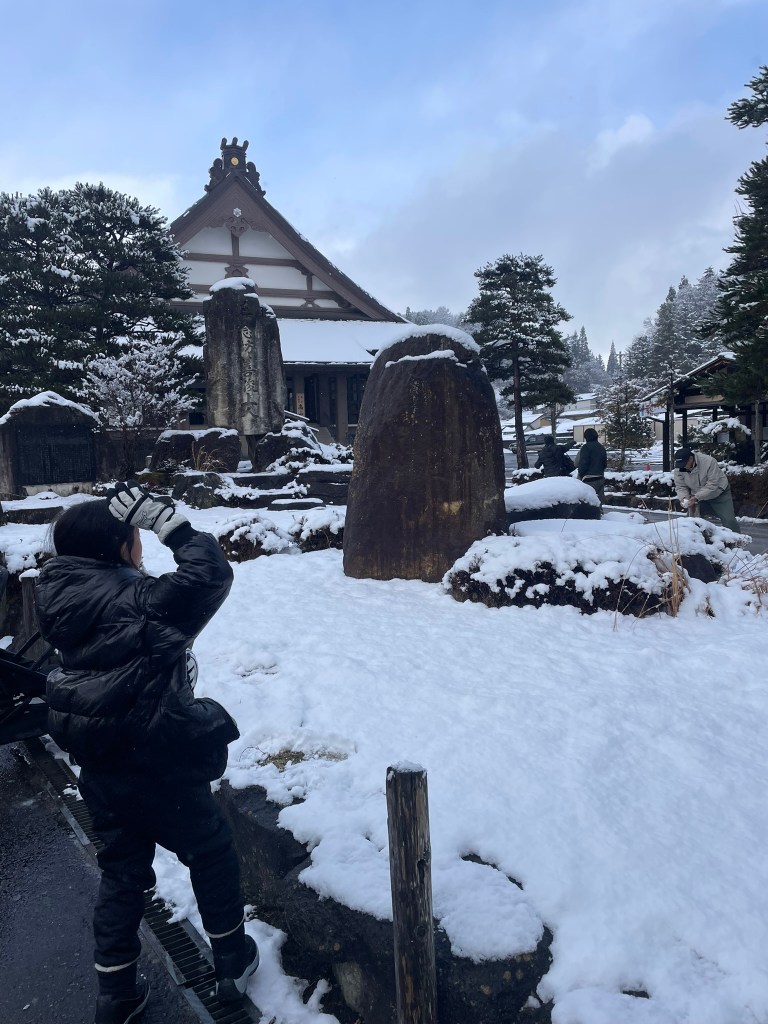
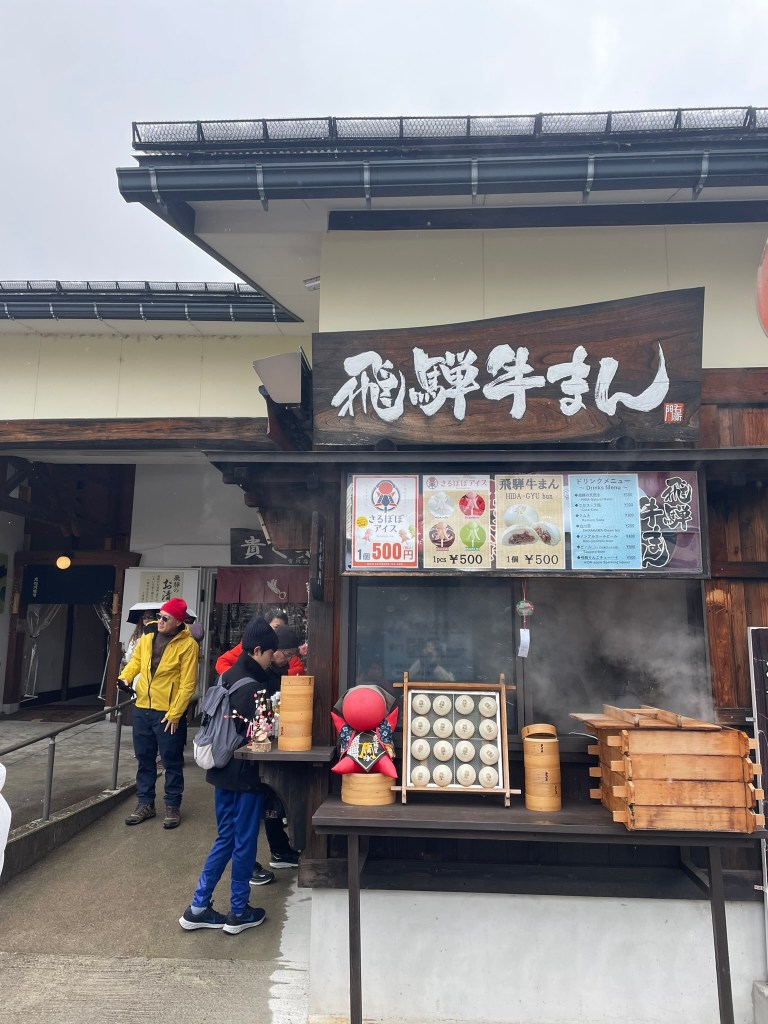
They only wake up around an hour later, just in time to see the scenery change drastically when we leave one of the long tunnels on the way. Looking at the rolling hills and edges of the highway covered in snow, everyone’s mood visibly lightens up. Another hour later, we finally arrive in Takayama. The small town located between high peaks is the main hub of northern Gifu prefecture. It’s well known for its picturesque old town district, the 2 festivals held in spring and autumn, and last but not least: the delicious Hida Beef. The latter is the item I personally am most looking forward to. But first, Sachiko and I have to guide the family — who’s already invested in an intergenerational snowball fight — to the morning market.

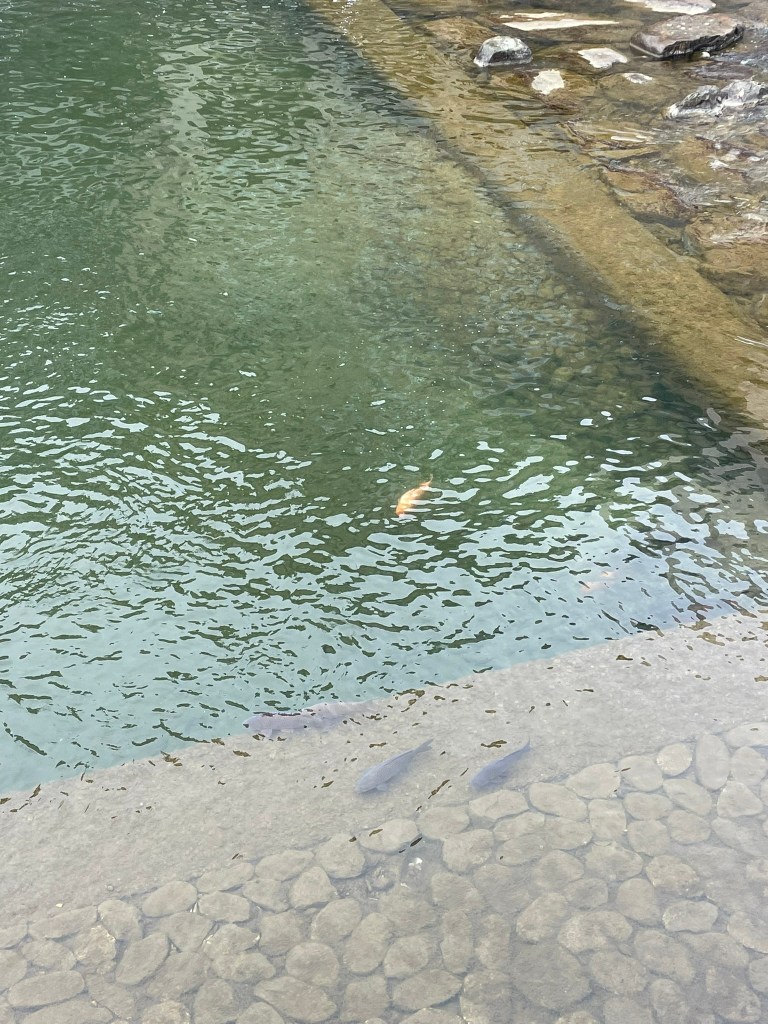
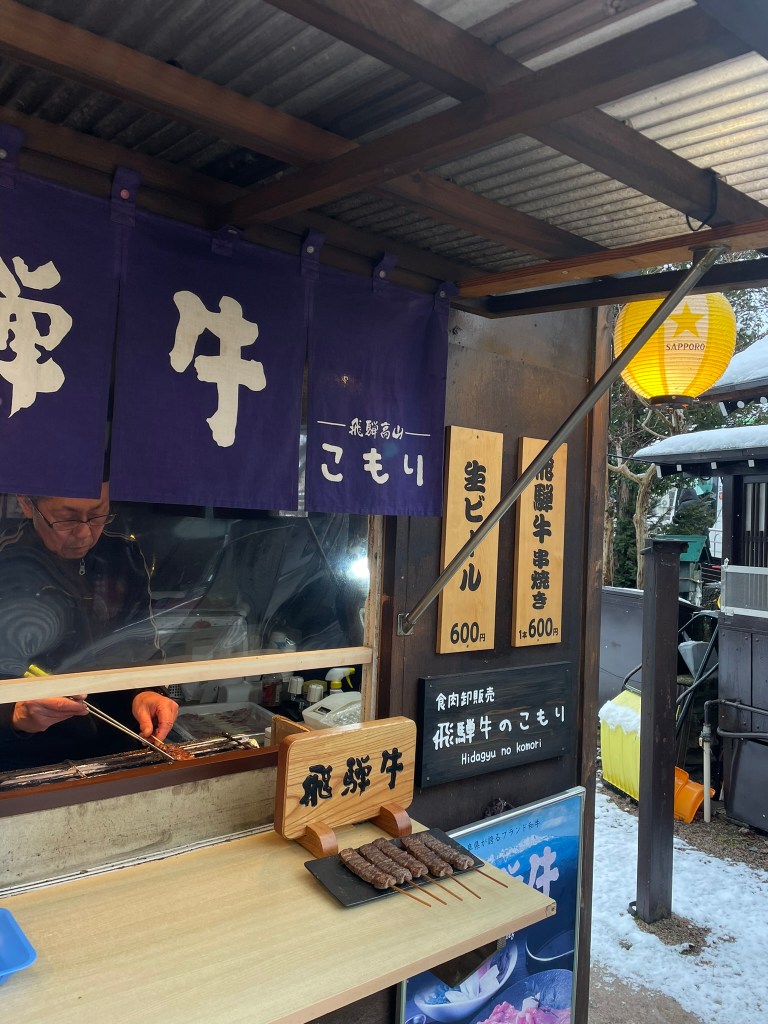
Once they are strolling between the stalls selling local products, I sneak off to grab a beef skewer at a small shop I know. Then I proceed to take some pictures of the Koi fish meandering in the icy water, the famous red Nakabashi bridge and the snow falling onto the dark wooden merchant houses lining the historical shopping street. Here I meet one of the daughters of my group with her family. The kids are still in awe of the large white snowflakes, and I take a commemorative photo for them. Then I let them explore on their own a little longer and hurry back to the main road to meet up with Sachiko. Surprisingly, one of the teenage sons is already back at the meeting point as well. He’s slurping hot beef broth stew. When he explains, that the food is what he was most excited for on this trip, I seize the opportunity to discuss my favourite topic ever: Japanese cuisine.
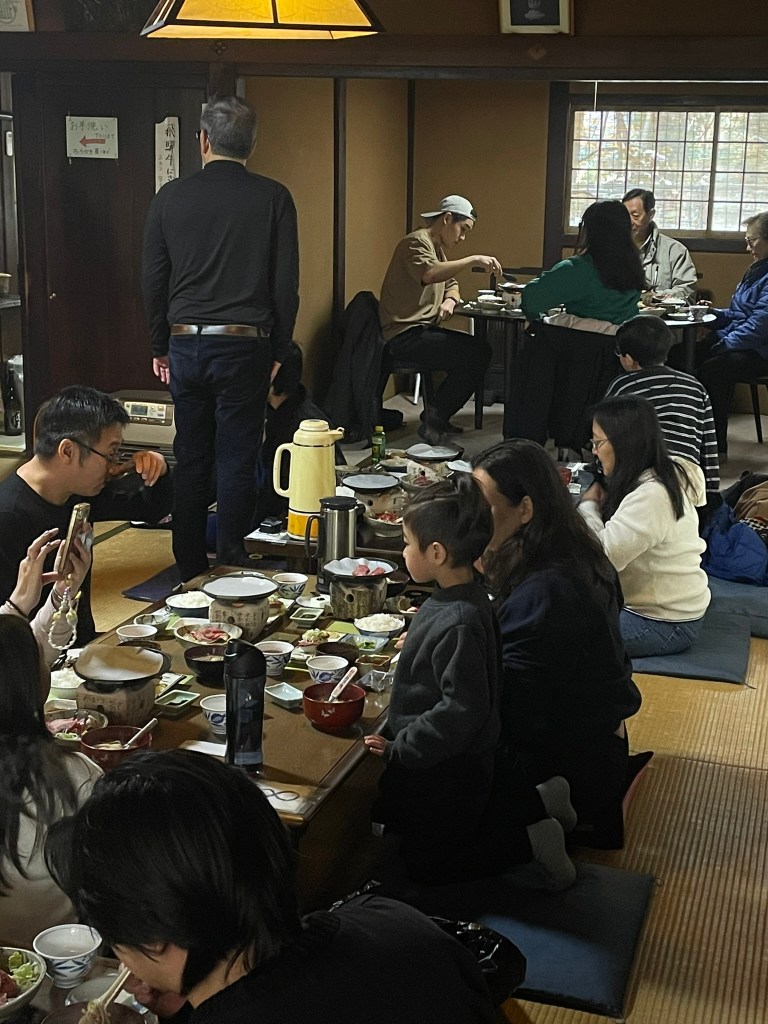
Our foodie talk is only brought to a pause when the rest of the group returns. This means back to the bus and onto lunch! Of course, the menu for today is beef. The driver takes us to a local restaurant on the outskirts of Takayama, where a large tatami room has been reserved for us. On each of the low tables, small porcelain grills are set up next to bowls of rice and pickled side dishes. The youngest kids are served Japanese curry udon and soon everyone is happily chewing away. Thanks to the electric space heater and hot food, we can heat up and restore our energy for the afternoon. After an extra order of raw beef sushi, Sachiko informs everyone that it’s time to get dressed again and hop back onto the bus. Just like she expected, the short walk in the fresh snow provokes another snowball fight, which delay our departure for Shirakawago. Only the promise of even more snow in the final destination can convince the kids to continue on.
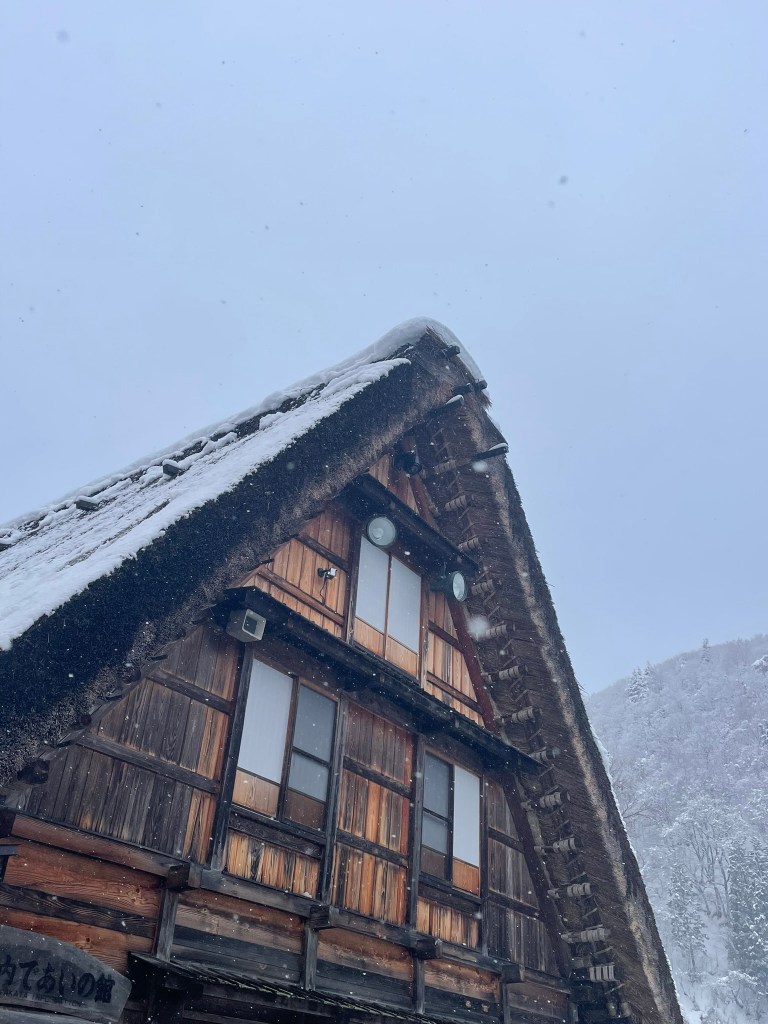
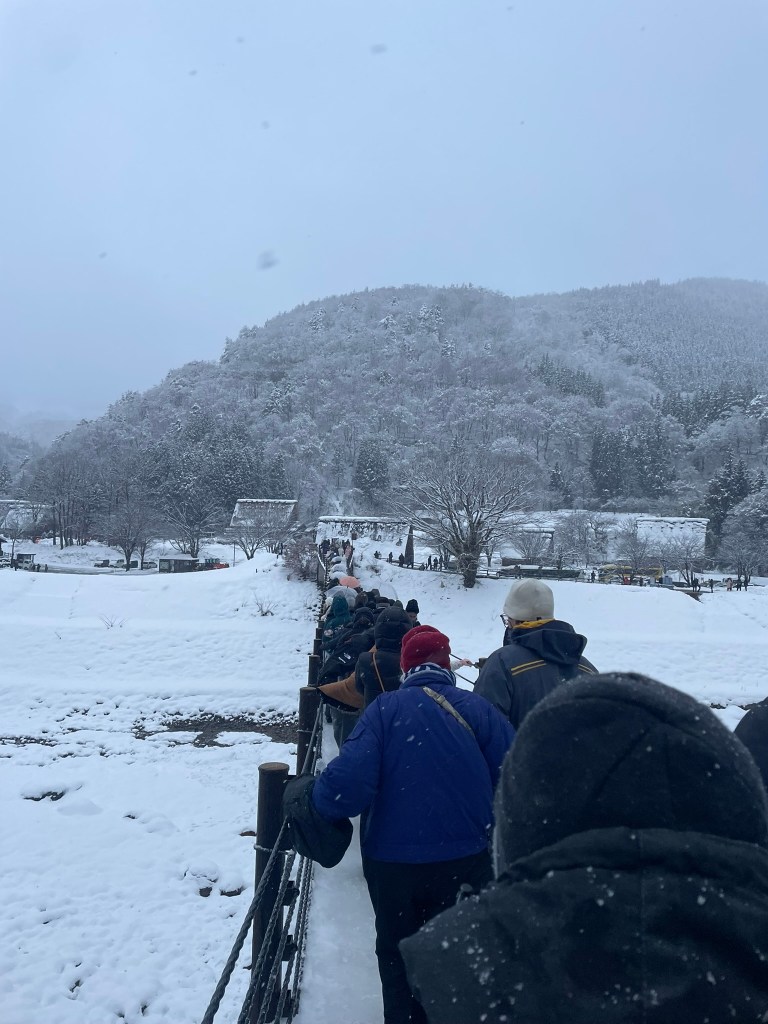
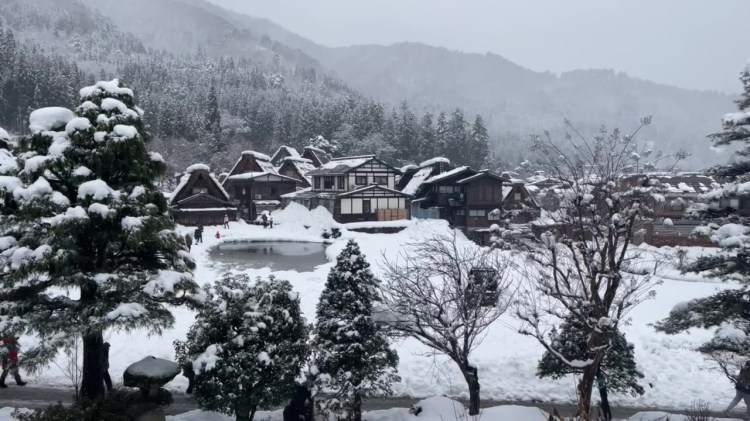
And this surely is no lie. About 50 centimeters of fresh powder snow await us in the winter wonderland nestled between Shogawa river and pine tree covered hills. While grandpa is quickly following Sachiko to the traditional village, the kids are again drawn to the snow like magnets to the fridge. The youngest ones jump into the pile right outside the bus, while mom is still holding onto the gloves and hats to be put on. Completely forgetting about the cold, they start to dig a hole and building a high tower with the retrieved snow. I gesture to Sachiko to take the rest of the group on a tour across the river, while I stay behind until the kids are done playing. It takes about 15 minutes until we can finally make our way to the icy bridge. In mini steps, we move forward to avoid falling over. Eventually, we arrive on the other side and find Sachiko waiting at yet another snowy hill turned into a playground for kids.
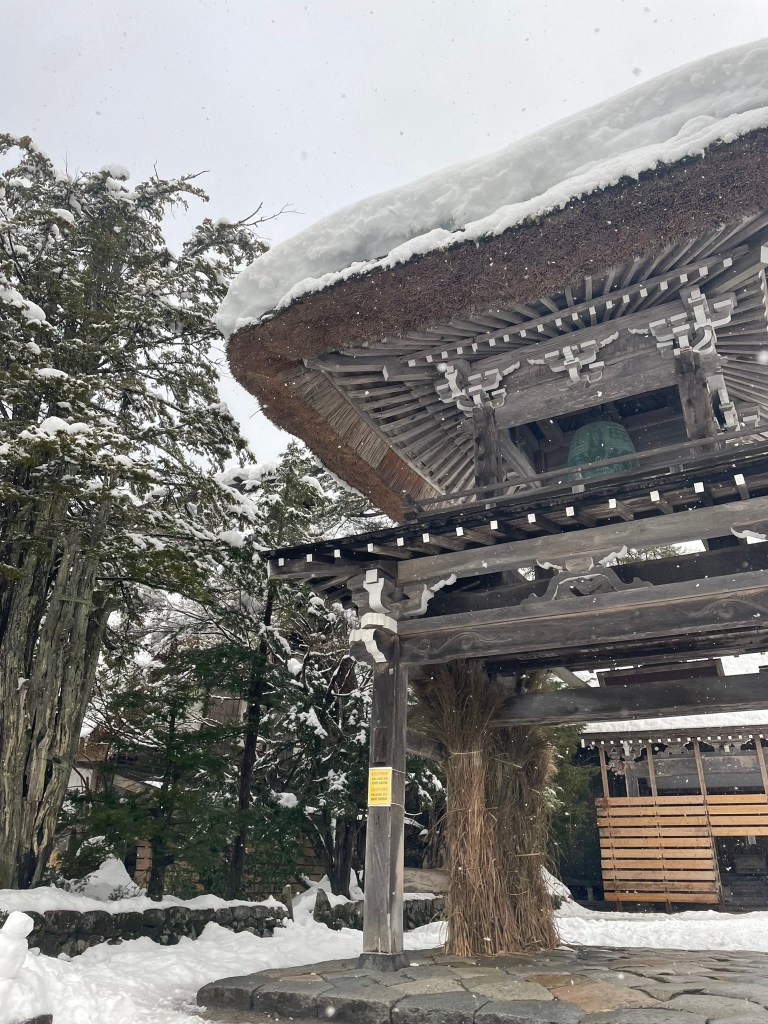
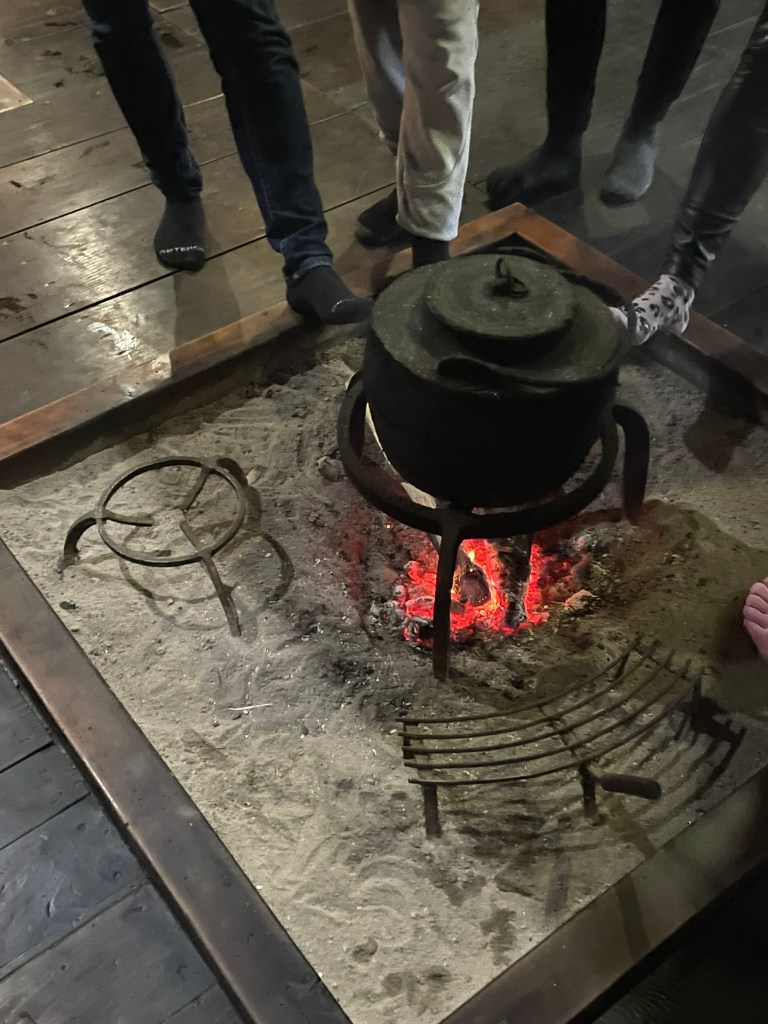
Leaving behind one family, who is more interested in playing rather than sightseeing, Sachiko takes the rest of the group to Wada House. It’s one of the 2 still inhabited traditional farm houses open to the public. The large wooden structure with the typical thatched Gasshō-Zukuri roof is covered in a thick layer of fluffy snow, just like the surrounding others. As we’re paying the small entrance fee, Sachiko explains that all the staff here are in fact the owner’s family members. They live in the adjacent quarters to the former living room, which we are about to enter after placing the shoes on the rack provided at the entrance. The boys in our group immediately gather around the fire pit of the old stove to warm up their wet and cold feet. Their initiative soon makes other visitors join and later even a Japanese TV crew takes interest in what they are up to.

Meanwhile, the older generation and I follow Sachiko to the second floor of the farm house. While the first floor was mostly used for the daily life, the upper floors once upon a time were home to thousands of silk worms used to make precious goods and provided storage for fermented food and sake. The disinfecting properties of the smoke coming up from the fire in the living room below helps to preserve the wood and thatched roof by eliminating dampness and bugs. However, the fire is also a hazard for the village. That’s why single men were sent to sleep on the second floor from where they could see any sign of fire spreading and act on it quickly. Even today, fire is one of the main threats to the village and there is an annual event to test the intricate sprinkler systems. Another quite unique aspect of Shirakawago is the strong sense of community among the villagers present even now.
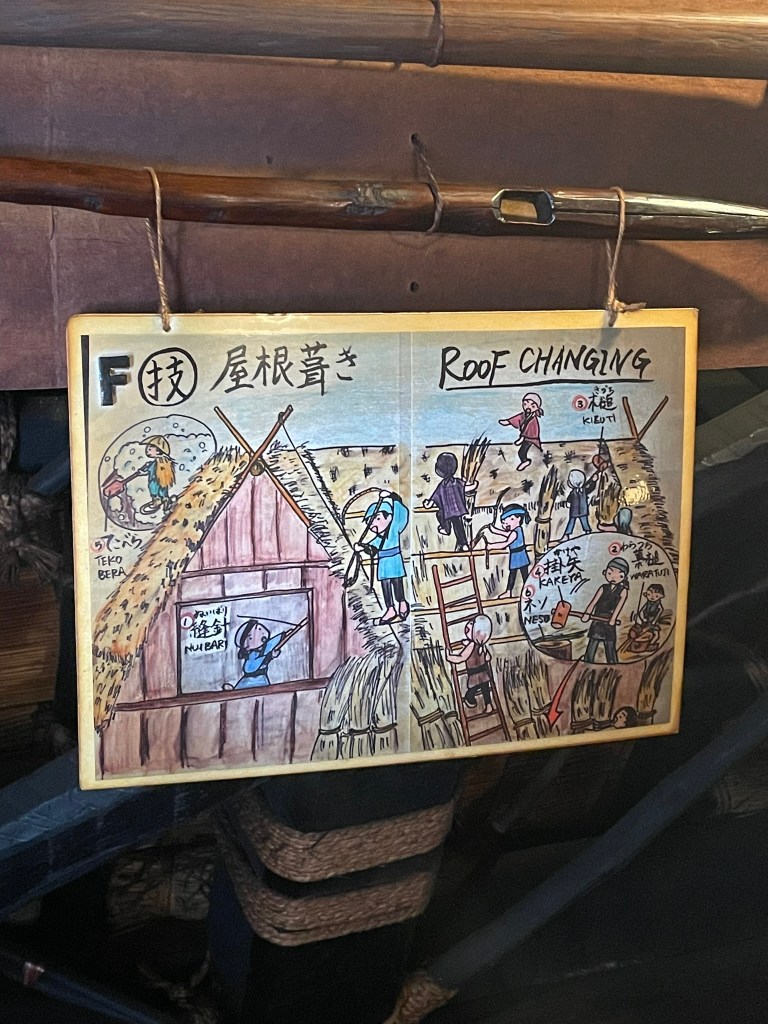
One of the most impressive ways the principle of “Yui” — helping each other out — is demonstrated, might be the roof-changing events. Every 20 to 30 years, the thatched roofs need to be replaced completely. Thanks to the joint efforts, it takes the inhabitants of Shirakawago just 1 day to complete the restoration of one full roof. There is so much more to tell about the interesting hidden away village deep in the Japanese Alps. Like the fact that it used to be a popular place for gunpowder production during the Edo period. That’s the reason in many of the traditional buildings, human urine was a sought-after commodity that was stored in special barrels until the time came to add it to the mixture to make potassium nitrate. But let’s get back to the present moment for now.
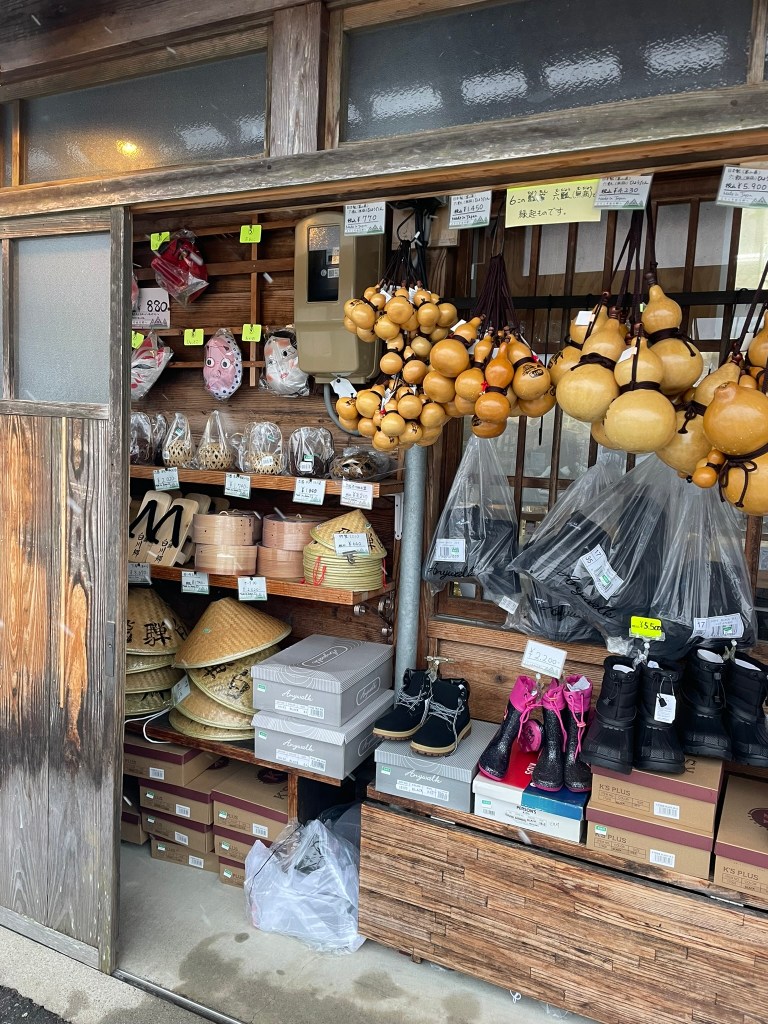

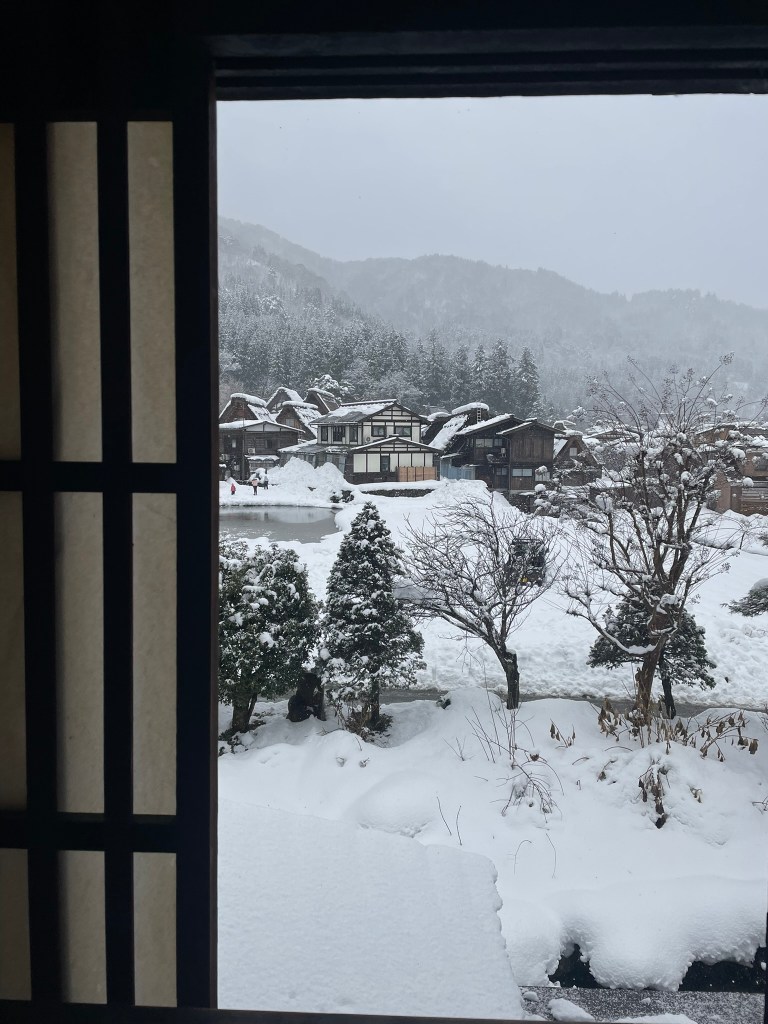
Between the history lesson, I take a moment to look out the wide open window on the third floor. From here I have a great view of the white landscapes with the deep forest in the background. Watching the visitors from abroad jump, stomp and sliding across the snow, I can finally understand why thousands of people come here during the wintertime. However, despite this realization and my work, I’m still not a fan of mass tourism and the incredible number of buses driving up to the UNESCO world heritage every day. My dissatisfaction grows even more when we rush past the souvenir shops at 4.30 pm, only to be faced with the giant queue we have to join to cross the river to get back to the parking lot. At least I know that the warm car is waiting for us and that this time I would also be able to take a nap during the drive back to Kanazawa.
 thattravelstory