Japan — May 2025
Since I spent 6 months working at the world expo in Dubai, I of course had to seize the opportunity to check out the next edition, which conveniently takes place in Japan. Yumeshima opened its doors to the world in April 2025. As my parents are also interested in the event, and we anyway plan to visit Osaka during their 3-weeks long stay in Japan, we schedule a day there accordingly. The planning starts with buying the tickets 3 months in advance through a 2-step portal on the official website. In February, a discounted “1st Half Pass” is available and after purchasing, I reserve the entry date and time slot right away. We are scheduled to enter at 9am from the East Gate close to the metro station. 1 week in advance, I also sign up for the lottery for pavilions that require reservations. I apply for 2 slots each for Japan and Korea, as well as for 1 slot at Australia Pavilion without high hopes. So I am actually pleasantly surprised, when I receive the information that we won the access to Korea Pavilion between 09:30 and 10:00.
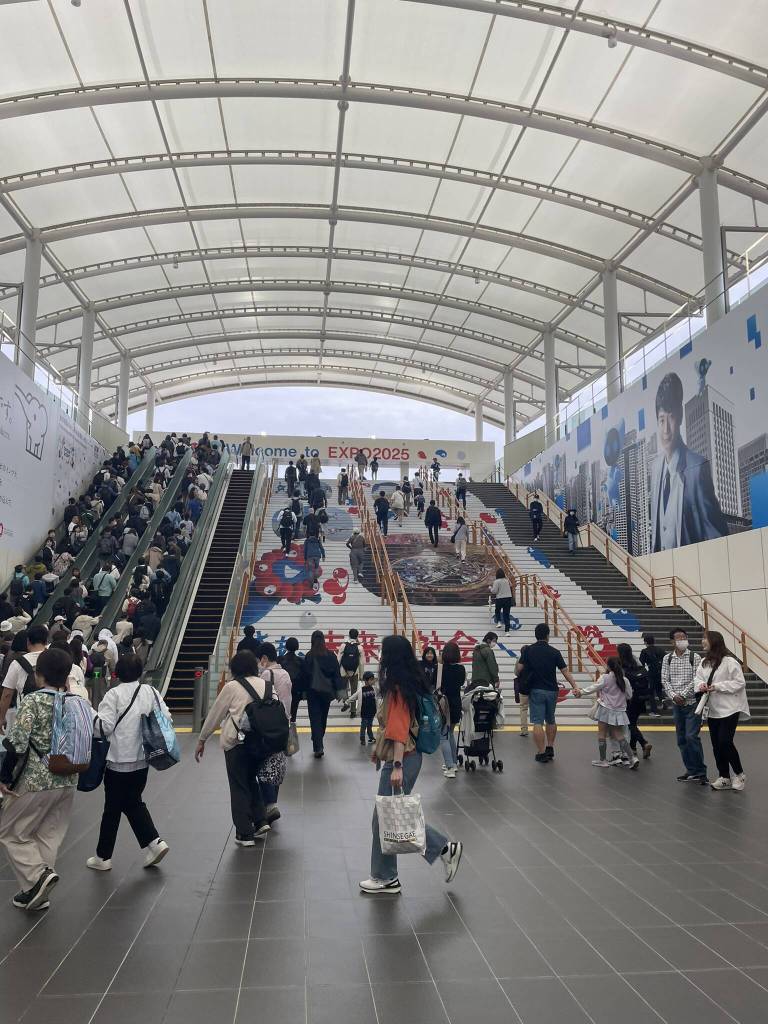
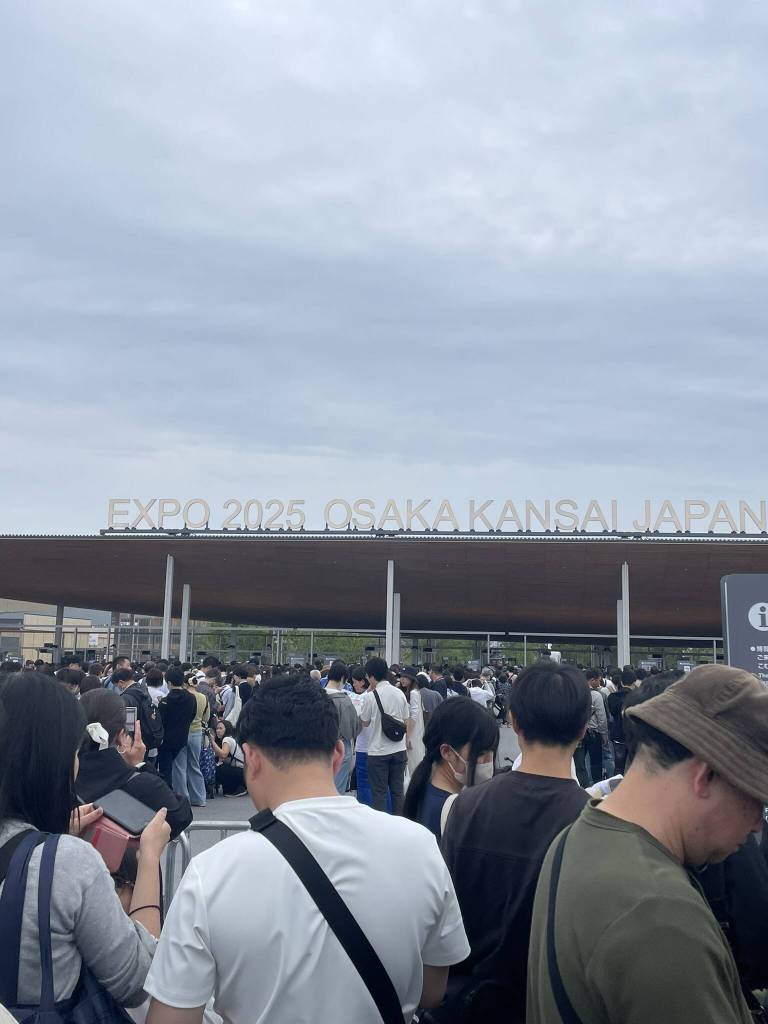
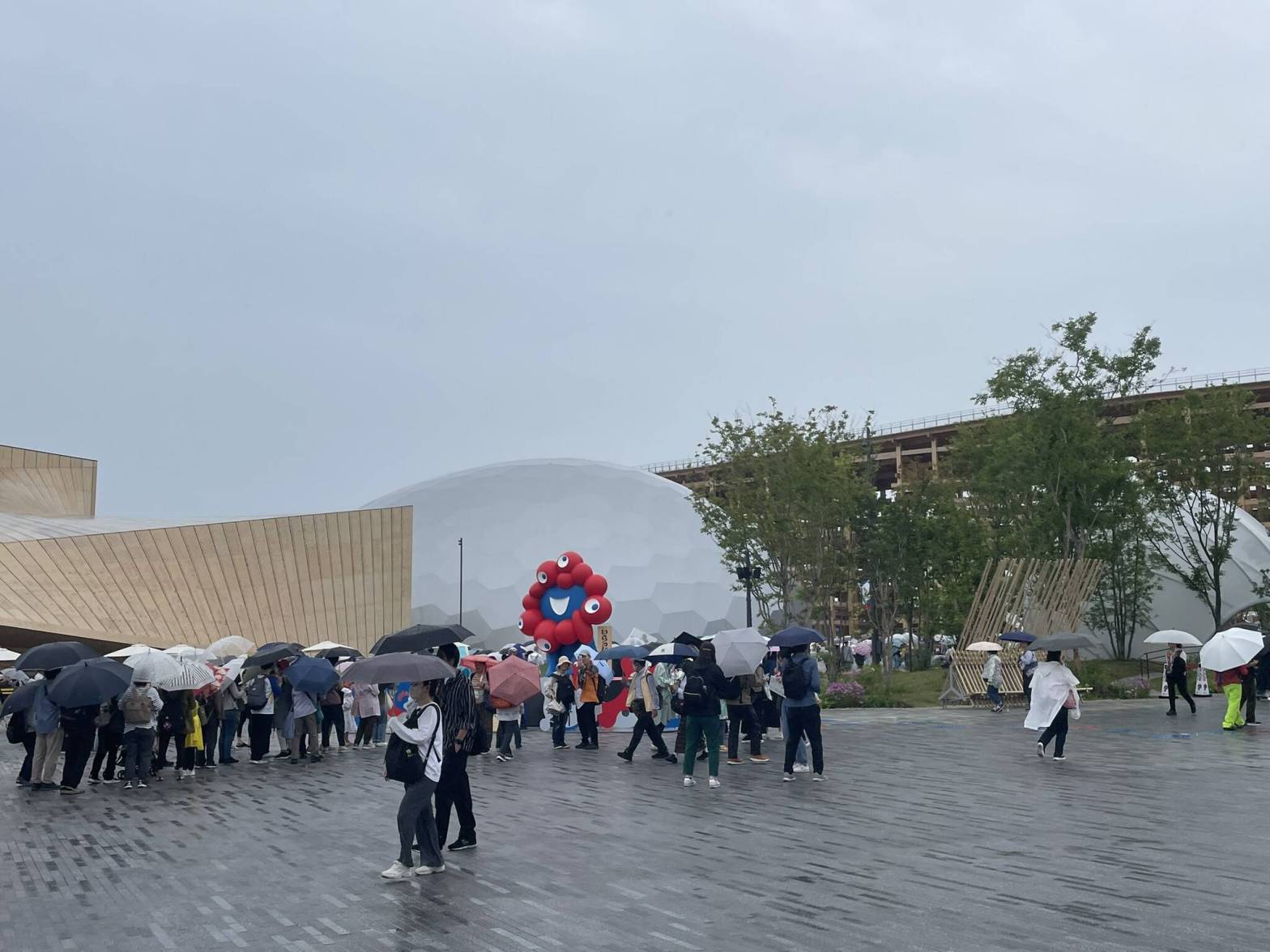
And then finally the day has come: On a rainy Saturday in May, my parents and I follow the signs to the Chuo Line at Hommachi Station in central Osaka. We catch a train scheduled to arrive at around 08:40. As expected, there are already quite a few people queuing in the rain. We follow the crowd into the fenced off section for 09:00 entries and wait for the security gates to open. Most of the surrounding visitors speak Japanese and we only see a few other Westerners. There are plenty of families and the kids are being in waterproof gear as the rain continues to fall. A lot of people also use the waiting time to eat a breakfast Onigiri or like a lady standing next to me, to research food options on-site. She came prepared with a print-out map including handwritten notes and a list on her phone titled “things I want to eat”. Once again, I’m reminded why I love Asia. Then, at around 09:45 it’s finally our turn to enter the site after a short security screening.
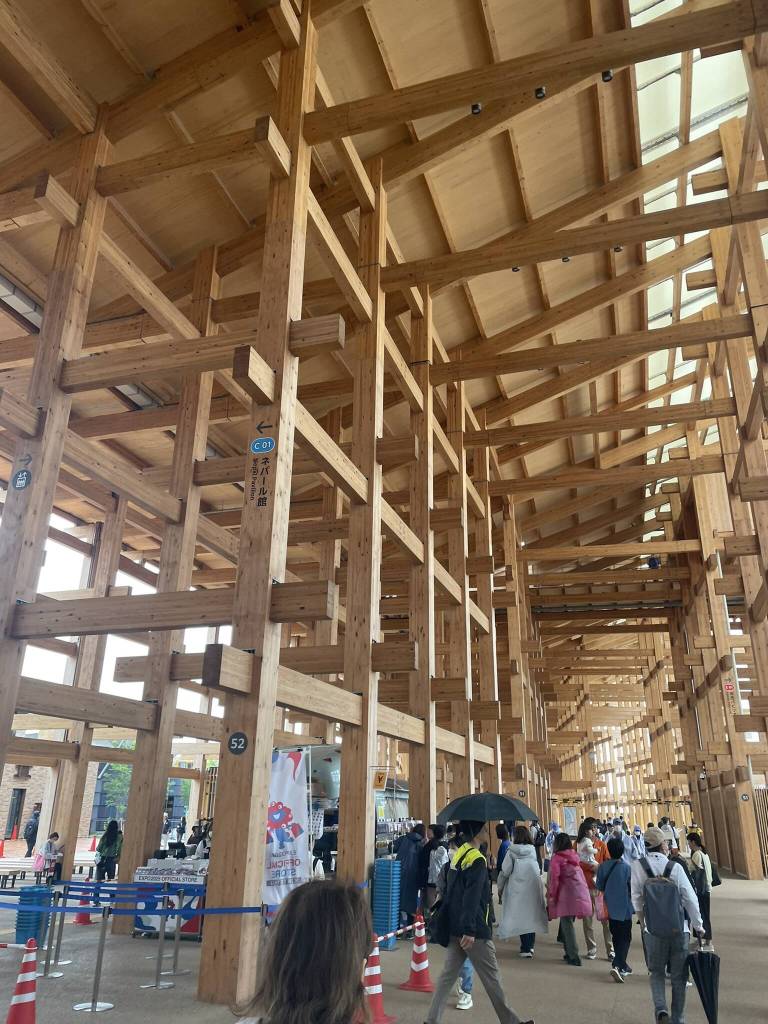
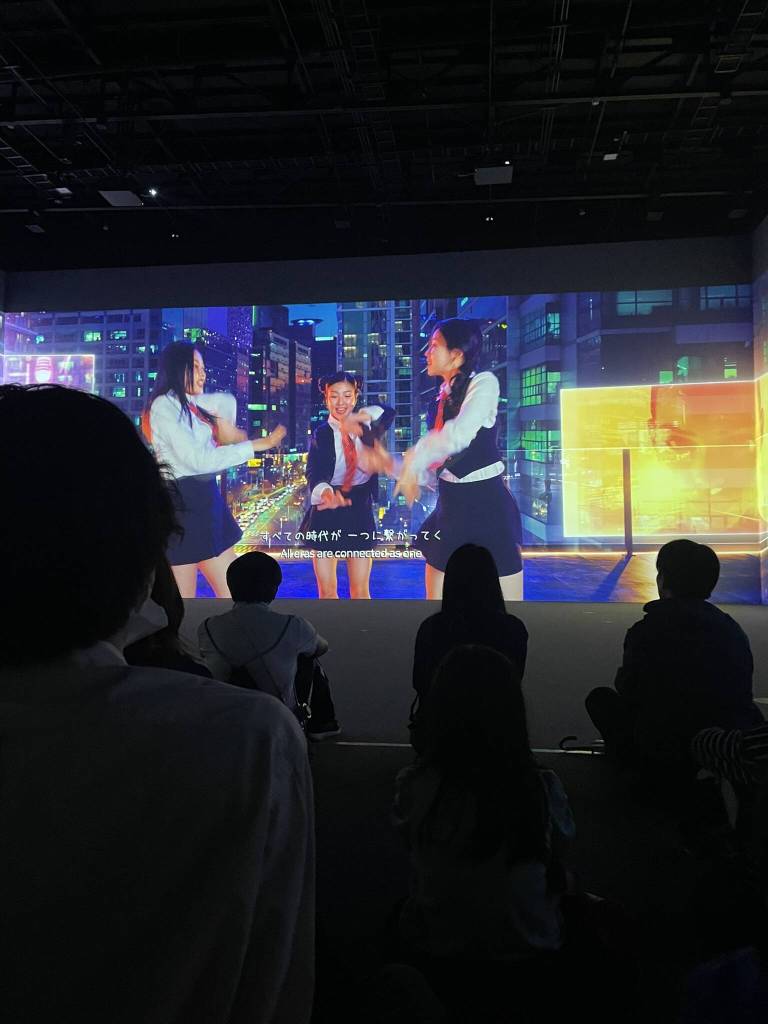
With 15 minutes to spare, we quickly make our way to Korea pavilion. Fortunately, it’s located in the blue “Connecting Lives” zone adjacent to the East Gate zone. Trying to protect ourselves as much as possible from the rain, we follow the wooden ring structure surrounding the pavilion section. The high stilts double as sign posts, so we easily locate Korea pavilion. Thanks to the lottery reservation, we can join the waiting queue immediately and are shown to a booth where we record a single word saying what’s most precious to us. (My mom chooses “family”). At 10.00 am sharp, the doors to the first room of the exhibition open. As the performance starts, rhythmic beams of light fill the dark space. Along with it, an improvised song made up of the words the visitors recorded is played. The second room features Korea’s famous hydrogene technology and in the last one, they show a short film set in the future which connects generations through music.
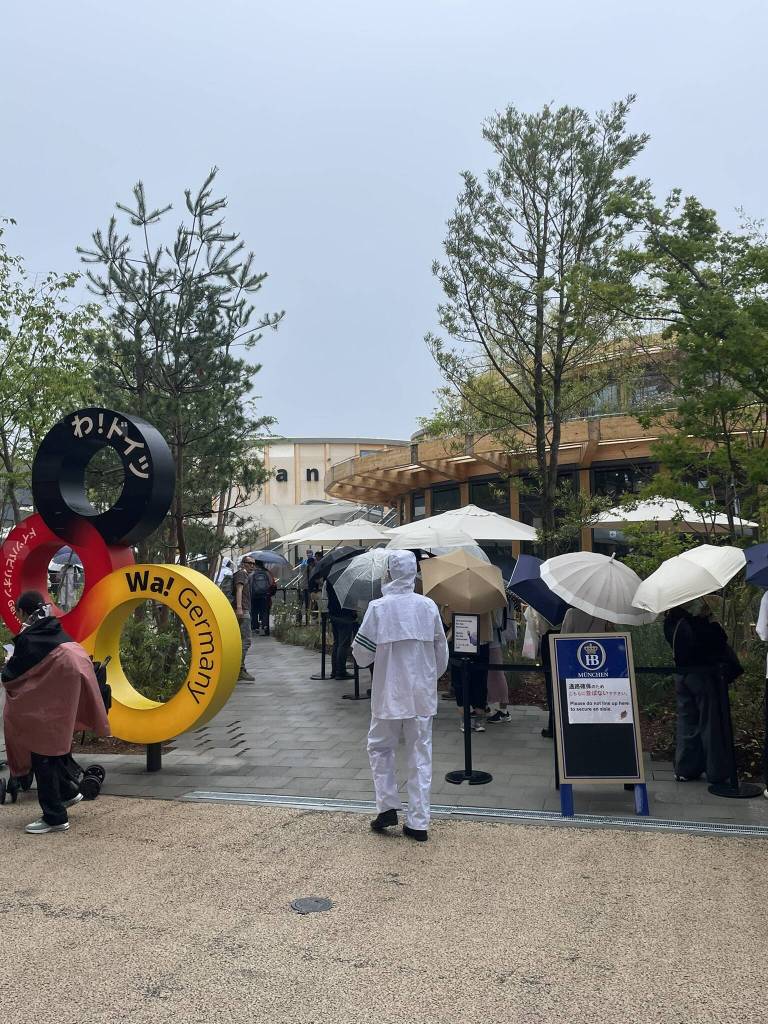
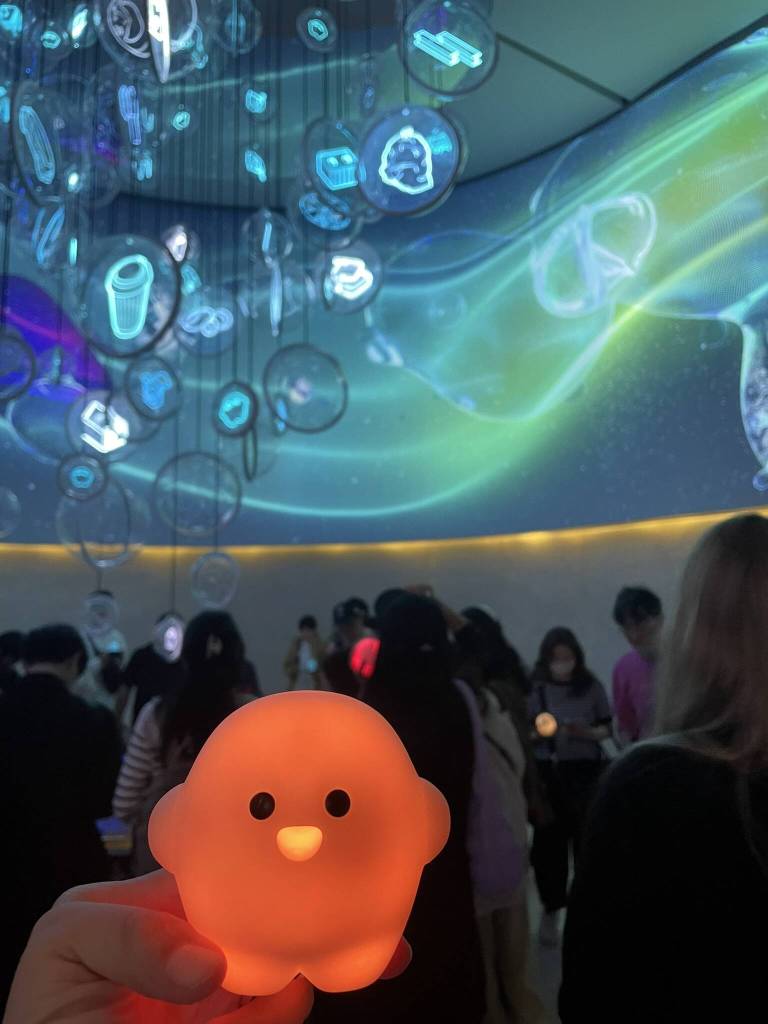
I’m impressed by the Korea exhibition, but it confirms my impression, that the Expos of 2021 and 2025 are very different on many levels. Given the budgets, space available, and target groups, this should not be a surprise to anyone. But one pavilion that hasn’t changed too much from Dubai is Germany. Located right next to Korea, it’s the second pavilion we visit. The queue for the restaurant is longer than the one for the exhibition, and we are promptly welcomed in German. Just like the Japanese guests in front of us, we receive a small speaker device in the shape of the pavilion’s “Circular” mascot. It guides us through the exhibition focused on sustainability and recounts additional information when requested. A great way to transmit the concept of “cuteness, edutainment, and immersion” and definitely well suited for the expected 90% Japanese visitors!

Upon leaving the German pavilion, I notice that the restaurant queue has grown even longer. We return to the path covered by the wooden ring and make our way towards the green “Empowering Lives” zone. By now, lines have formed everywhere and on the main square at the East Gate, helpers are busy redirecting visitors to the correct queues for the US and France pavilions. When I ask for the waiting time, I’m told it’s around 2 to 3 hours! That’s far too long for us, so my parents and I decide to take advantage of the fast access for Swiss citizens at the Swiss pavilion. Only few people who worked with me in Dubai applied for a second Expo experience. One of them I spot outside the pavilion at the VIP entrance. I quickly say hello to Claudia and vow to come back in a bit. But first, my parents have secured a spot in the reasonably short queue for the neighboring Austria pavilion.
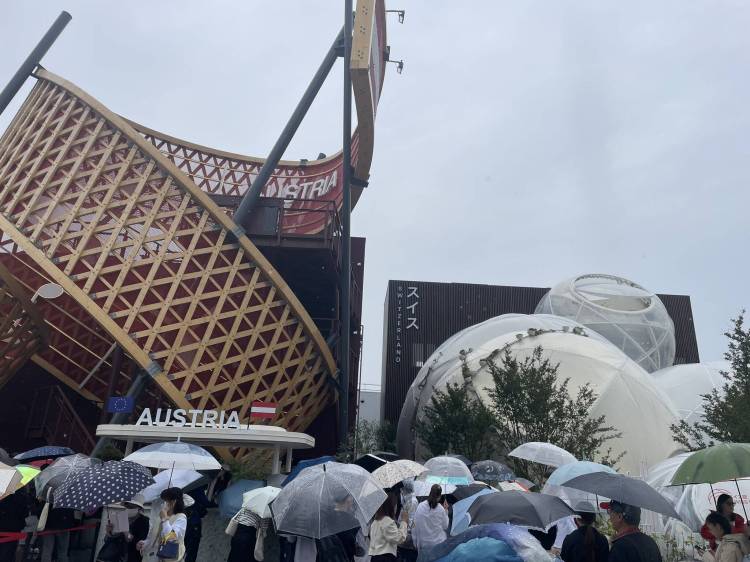
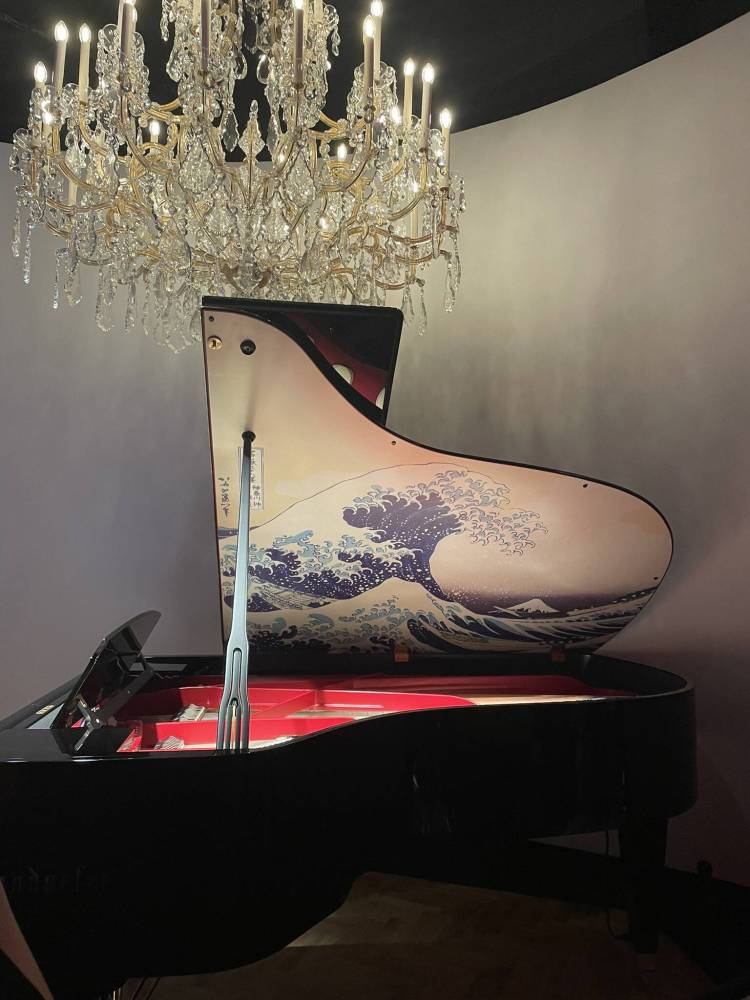
The Austrian theme is all about music, innovation, and the connection between the European alpine nation and Japan. In the first section of the exhibition, we listen to the performance of a self-playing Austrian piano equipped with a Japanese automated motor. The second part focuses on Austrian-led initiatives across the SDGs, including humanitarian and medical achievements. It’s another of the pavilions that impress me much more than their counterpart in Dubai. But let’s go back to Switzerland: my former colleague is nowhere to be seen, so I ask the new guy standing at the VIP entrance for fast access to the pavilion. He’s delighted to hear that we are from Lucerne — just like him — and quickly shows us the way down the shortcut to the pavilion entrance.
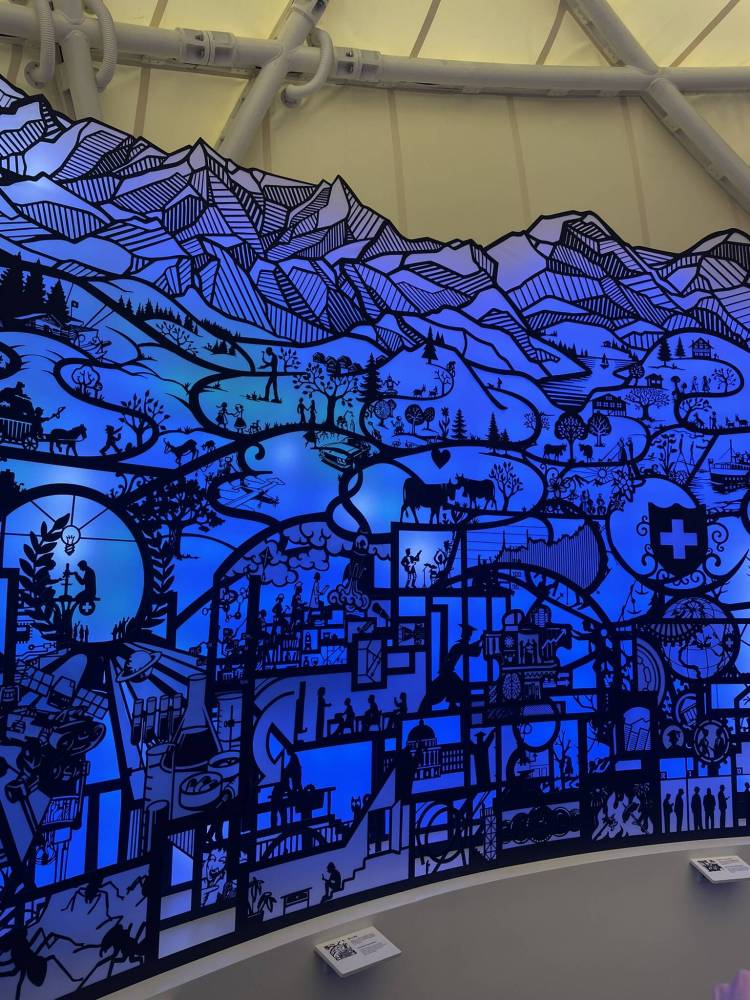
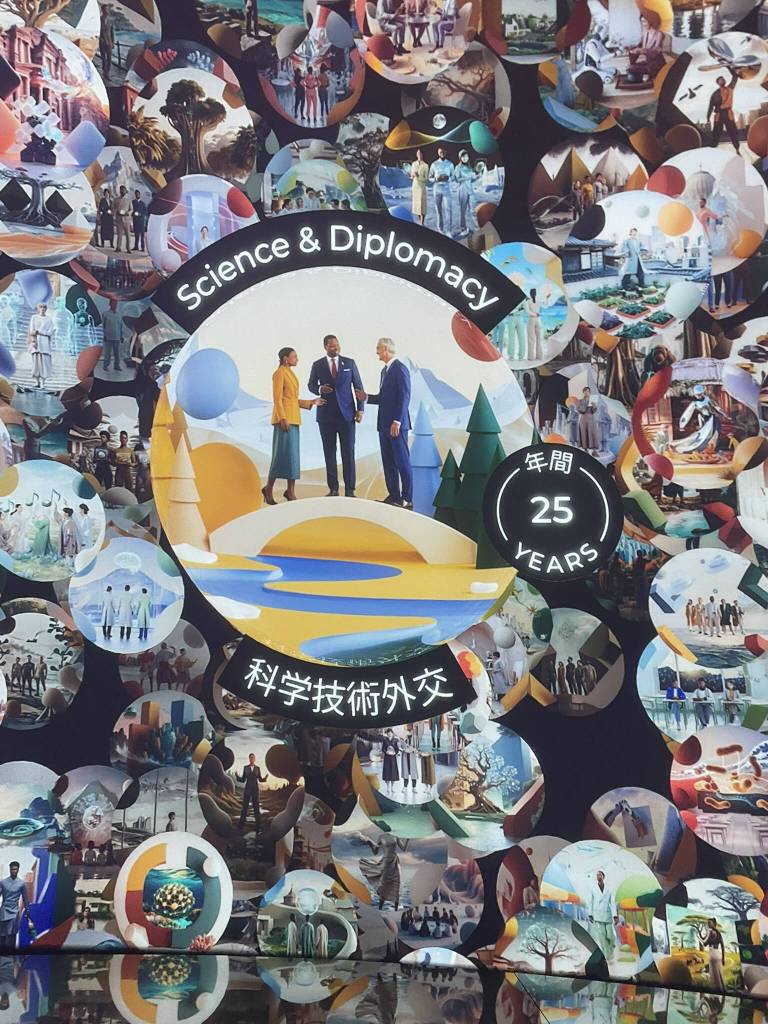
The indoor exhibitions are divided into sphere-shaped rooms. The first sphere is rather small and houses the tourism section. A large paper cut showcasing the classic image of Switzerland covers the wall. Mountains, cows, and steamboats are backlit by color changing lighting and accompanied by the sounds of the Swiss national anthem. The second sphere is more interactive and focuses on the innovative side of Switzerland. While walking up a ramp, visitors can activate soap bubbles by talking into microphones fixed on the rail. Another exhibition featuring augmented reality aims to present the many policies around SGDs that are connected to Switzerland. And finally, in the temporary exhibition room, projects from prestigious Swiss universities like ETH and EPFL are closing the journey “From Heidi to High-Tech”. Overall, the interior concept is quite similar to Dubai, but adjusted to the limited space and target audience. From outside, in my opinion, it’s kind of overshadowed by Austria.
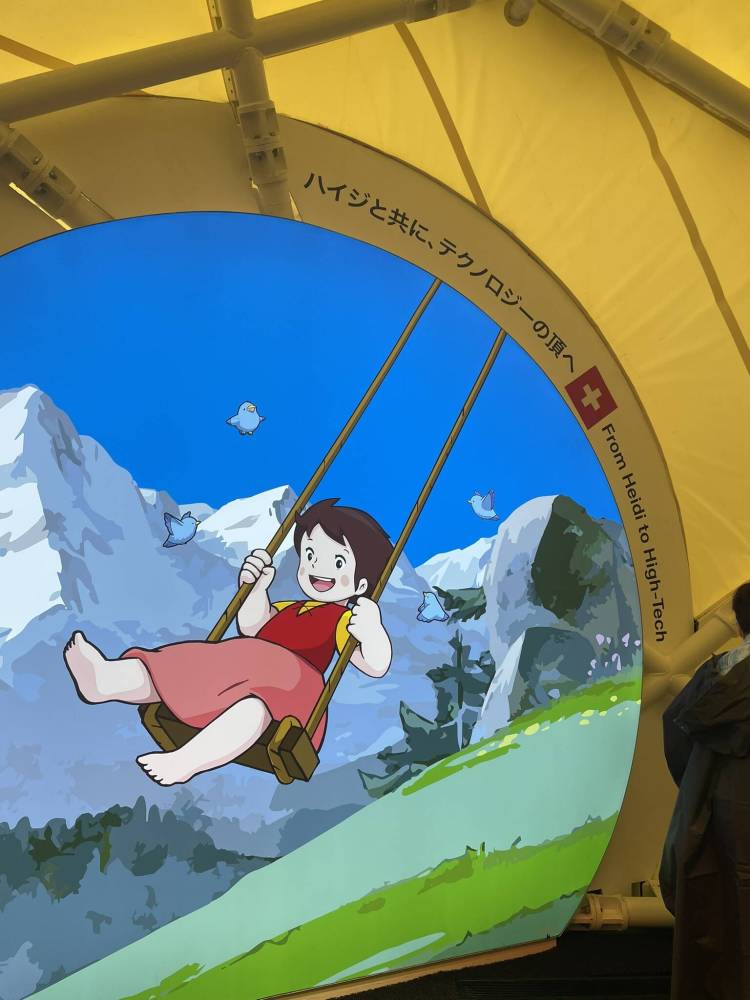
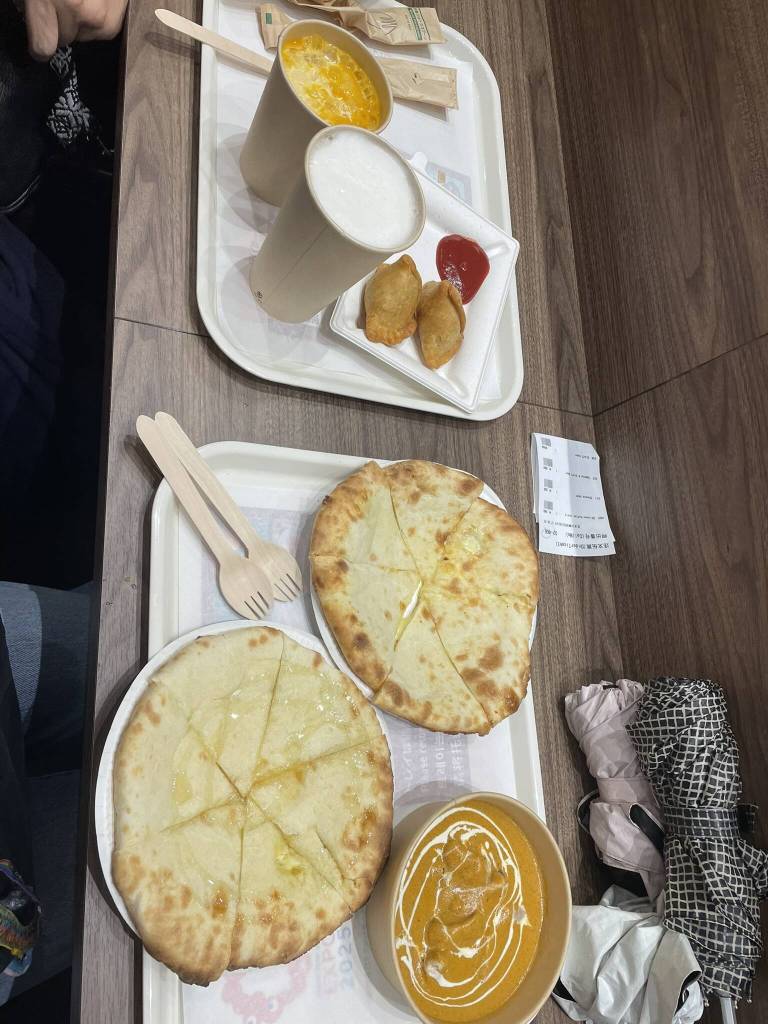
By now quite hungry, my parents and I return to the VIP entrance, asking if there is also special access for us to the Heidi Café. Unfortunately, there is not and the waiting time is 2 hours. Needless to say, we look for other options. We cross the “Signature Zone” and the “Forest of Tranquility” with little luck, and finally return to the restaurant section north of the “Connecting Lives Zone” where we started. On two floors, pop-up restaurants set up in large shipping containers offer all kinds of foods from all over the world. We look around for a bit, hoping for indoor seating, since the rain and wind are not inviting for a picnic session. Finally, we settle on an Indian fast food place where we order curry, naan, beers, and a mango lassi. The flavors are authentic and being able to sit down without getting soaked is a huge plus. However, as always at these kinds of events, the prices are quite high.
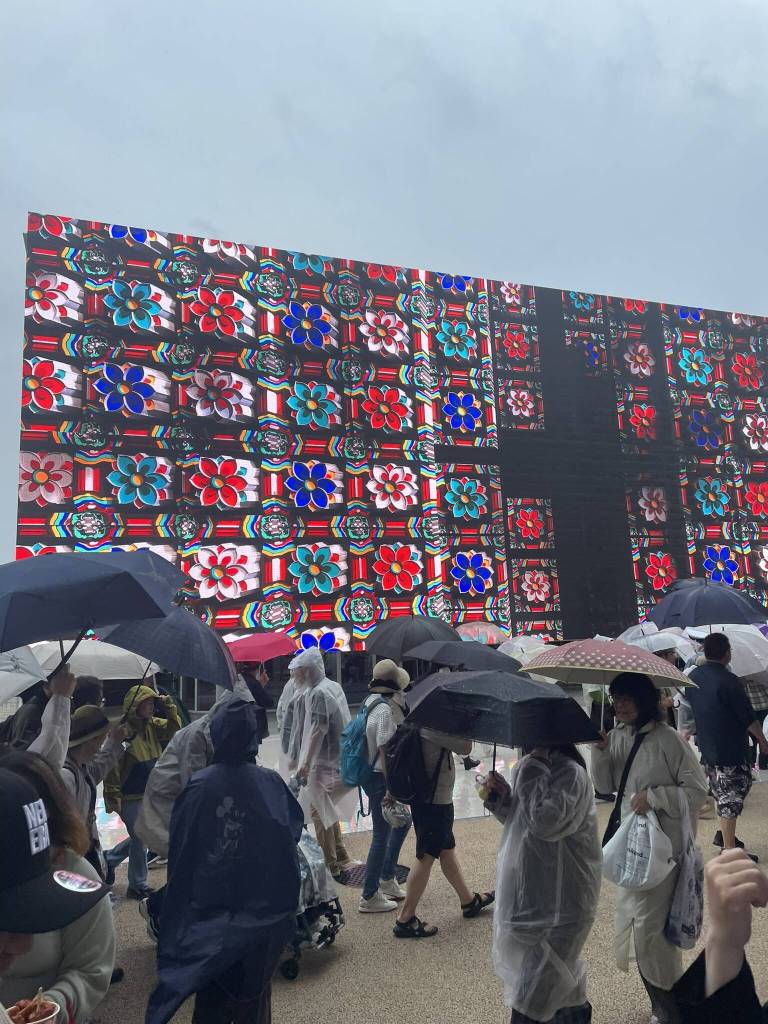
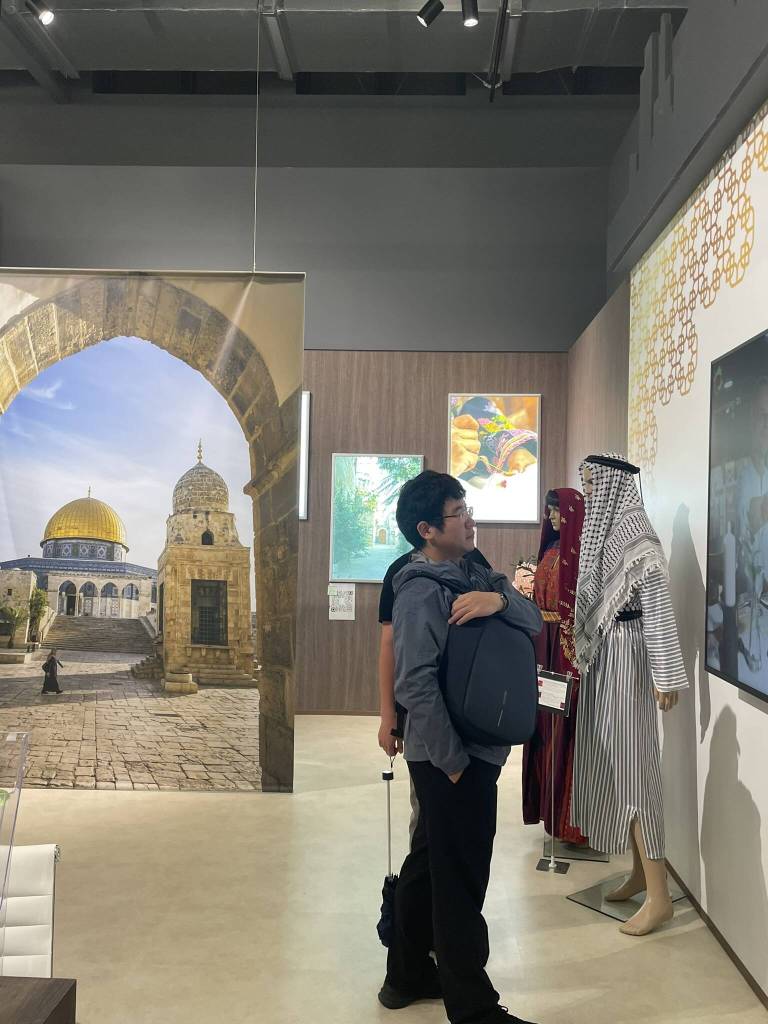
With renewed energy, we head back out into the bad weather. Following the wooden ring for some protection against wind and rain, we look out for pavilions with less waiting time. But “2 hours” or “temporarily closed access due to overcrowding” are the regular responses. So we resort to enjoying the impressive architecture and outdoor installations like the Korea Pavilion’s LED facade. Then, in the orange “Saving Lives” zone we get lucky with the queue to the “Commons” pavilion re-opening just when we pass by. We quickly enter and stroll along the small booths showcasing smaller nations. Just like in Dubai, the differences in the exhibitions here are vast. While some countries have multiple representatives welcoming visitors, others rely on uninterested volunteers or none at all. Some focus on selling their country as a tourism destination, while others are eager to show the connection to Japan — even if that means calling out the former colonial activities.
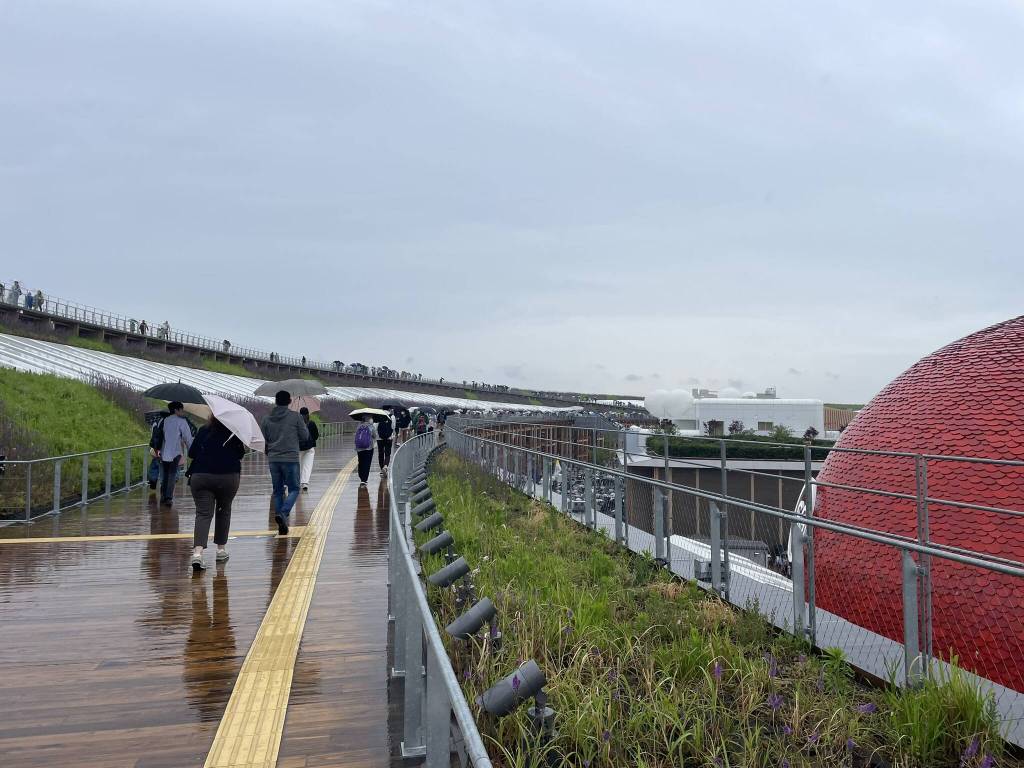

Since I have plans to meet up with a friend whom I met at Expo Dubai, we return to the “Connecting Lives” area by means of the ring. However, this time, despite the still horrendous weather, we walk on top of it rather than in its shade. We still enjoy the view of the interesting pavilion architecture from above, but I’m sure that it would be an even better experience on a sunny day with blue skies. Upon arrival at the location that the map on the Expo app shows me for Kazakhstan Pavilion, I’m surprised to see that it’s a shared “Commons” space. After all, the counterpart in Dubai was one of the largest and most impressive structures. Nevertheless, there is a 1-hour queue here too, and we are lucky to be let in by my friend Dariya through the fast access. The guide, a young Kazakh girl, professionally conducts the tour for the group we join in fluent Japanese and English. The exhibition is fairly similar to Dubai, but since I now have actually visited the country, the explanations of the nature and culture leave a totally different impression.
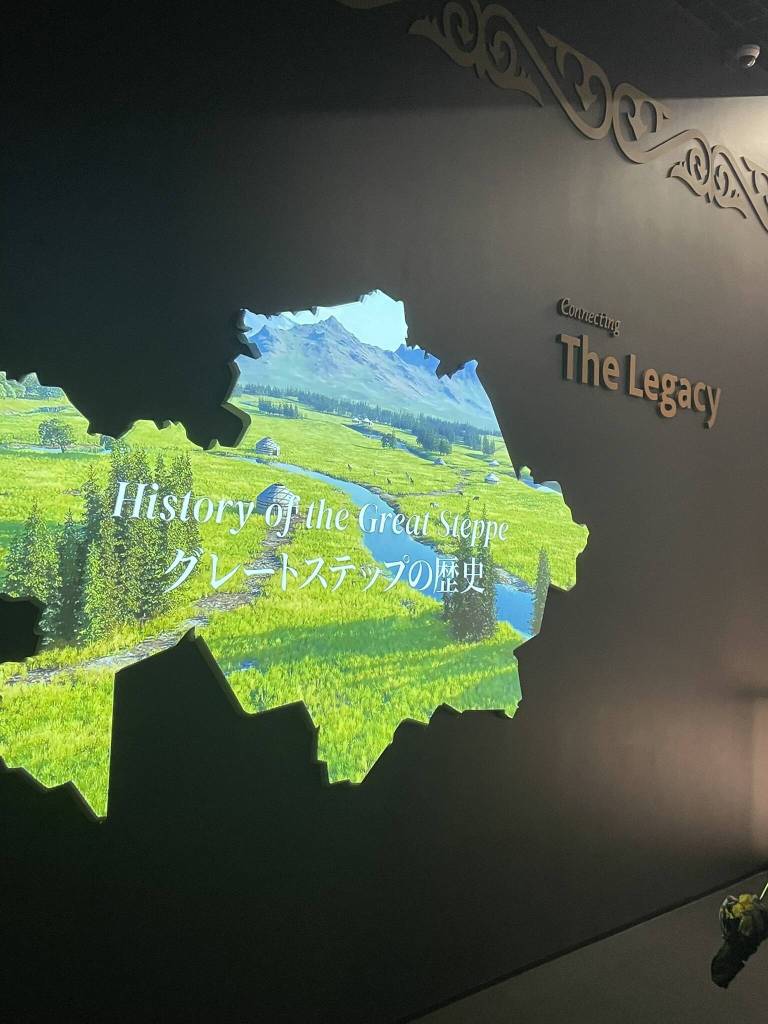

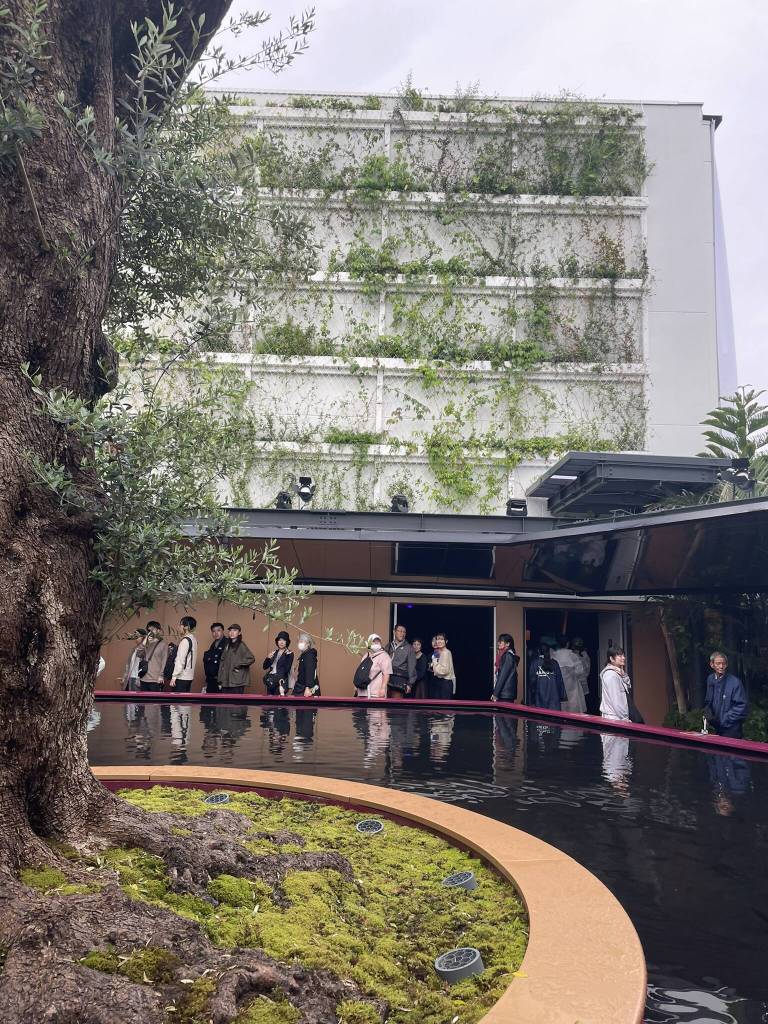
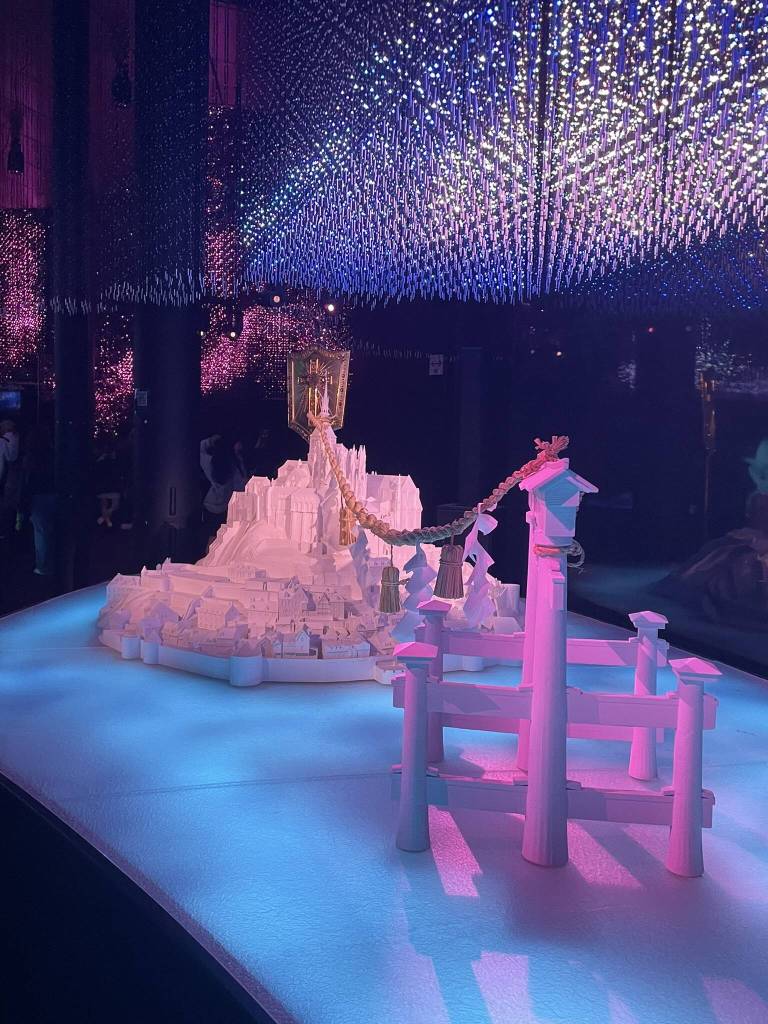
Giving Dariya and my parents a bit of time to get to know each other, we stroll along through the site for a while. The rain has stopped and with energy left for one last pavilion visit, we gladly take Dariya’s offer of a fast pass for France pavilion. After all, it has one of the longest lines. Trying to remember their exhibition in Dubai, I can only picture the impressive size of the building in general. So I enter without many expectations and am pleasantly surprised. The first room is an hommage to a French-Japanese anime, followed by a clearly sponsored Luis Vuitton art installation featuring their iconic suitcases. A modern dance video set on the roofs of Paris and an exhibition of Alsace vineyards close the tourism section. In the courtyard, there is even space for a large olive tree set on an island in the middle of a pond. Then the tour continues back inside with more designer and art exhibitions featuring. My favourite installations are a large wall of white dresses and the sculpture of Miyajima’s famous Torii connected to France’s Mont Saint-Michel.
Satisfied with the last pavilion visit, Dariya and I say goodbye to my parents for now. They want to stroll around a little more as long as the weather is nice, while we have enough of the Expo athmosphere. While I heard that the water show at night is one of the highlights, I feel like I’ve had my fair share of those experiences in Dubai and rather spend the evening catching up with Dariya, eating reasonably priced food in downtown Osaka.
 thattravelstory