Mongolia — 10 & 11 July 2025
All the guests at the Mongol Ujin Camp are gathering for breakfast at 08:30 sharp. It’s the most important day on everyone’s schedule during their stay in Hatgal, Khuvsgul and nobody wants to miss the departure for the local Naadam festival grounds. Between bites of toast, we try to put together all the information we have, which is still not much. But we know that the origin of the festivities lies in the annual gathering of the different Mongol tribes living in the steppes before Chinggis Khan’s united them under his rule. Since then, competitions in horse riding, wrestling and archery dominate the festival. The participants competing on a national level are of course opting for the largest gathering in the capital, Ulanbaatar (UB). There, the national stadium hosts an enormous opening ceremony, with the most popular Mongolian singers, dancers and actors participating.
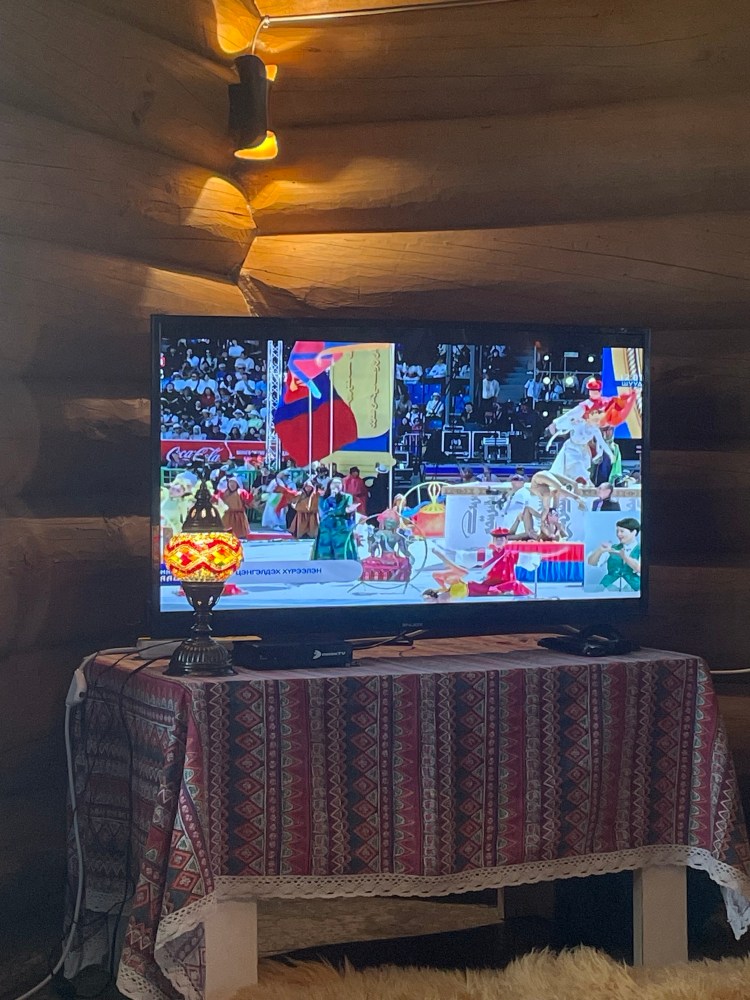

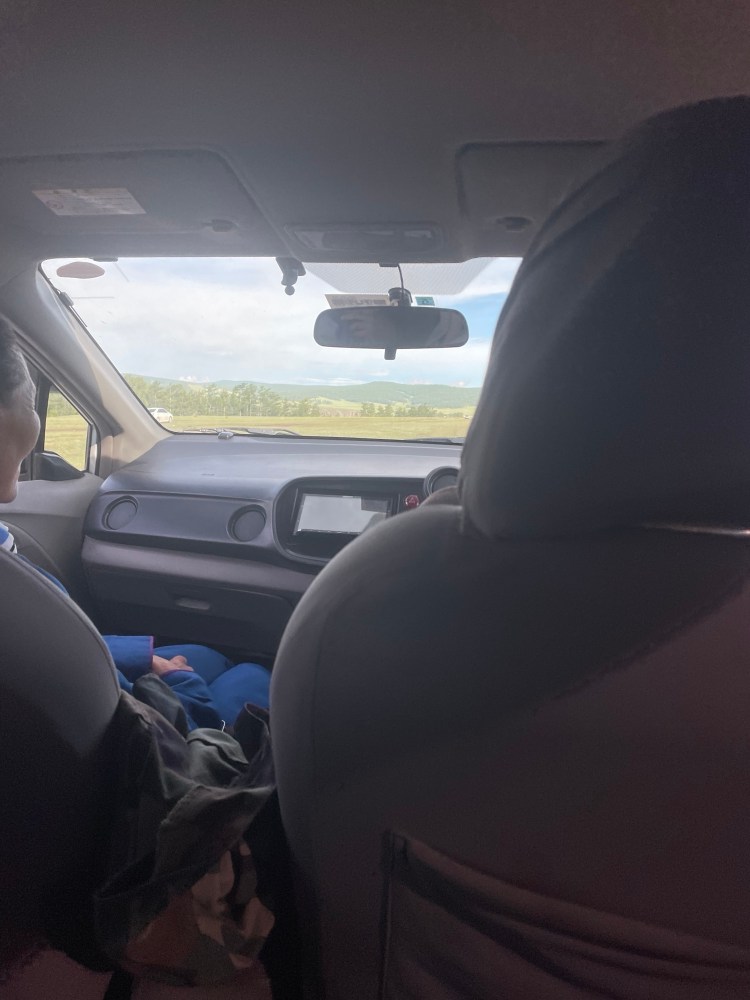
Tickets for the event skyrocket due to the many resellers on the black market and many who can’t get in opt to watch it on one of the big screens outside the stadium (or on TV at home). This information is what made me (& the other people at the breakfast table) reconsider staying in UB for the festival. However, there is much less information available about the local festivities across the 21 provinces. So, we have to trust our host to take us to the location somewhere on the outskirts of the town on time. Finally, at around 10:30 am, Daava announces that we will be leaving shortly. A couple from Colombia drives in their own rental car, while us 5 other foreign guests squeeze into the tiny Toyota Aqua with Daava as a driver. Fortunately, it’s only a few minutes before we turn onto the field road leading past the archery competition and onto to a large unorganized parking area reaching up into the forest area.

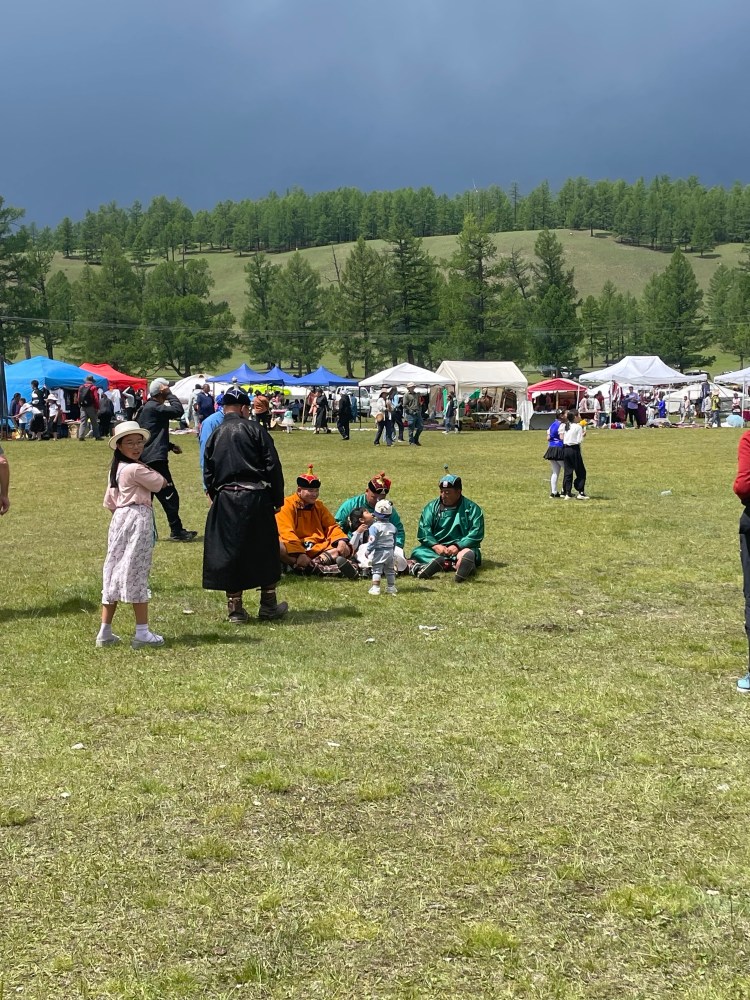
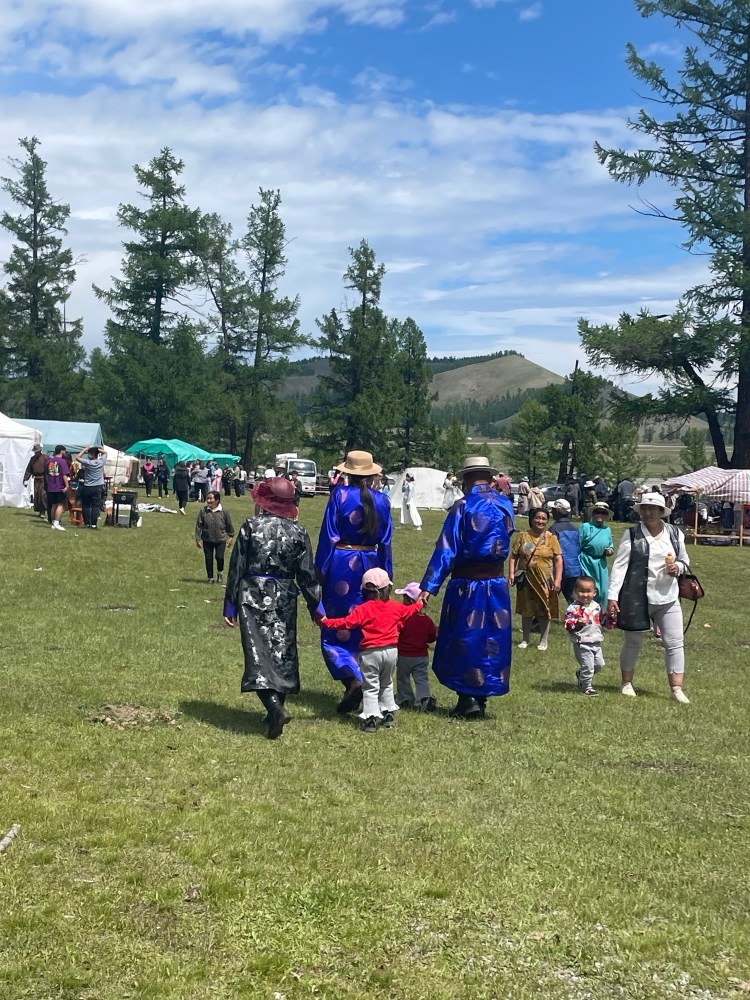
After locating Alan and Marcela, who drove their own car, we take a look at the schedule. Being familiar enough with the Mongolian concept of time, we quickly understand that the hours mentioned are more of a general reference of the order of events. After a first look at the deserted wrestling area, we stroll around the stalls lining the perimeter of the event location. It’s aparent that the spectators have all put a lot of effort into their outfits, with many dressed in traditional, colourful “Deel” robes. Among many other souvenirs, they are for sale too. As we walk along the simple market stalls, some of my fellow travellers buy handmade jackets, scarfs and leather items from the nomads. I have to keep reminding myself that there is not enough space in my backpack to bring a Deel with me. Suddenly, a voice crackling through a speaker disturbs our shopping spirits. Not understanding the announcement in Mongolian, we look around and see the local spectators flock to the area east of the wrestling arena.

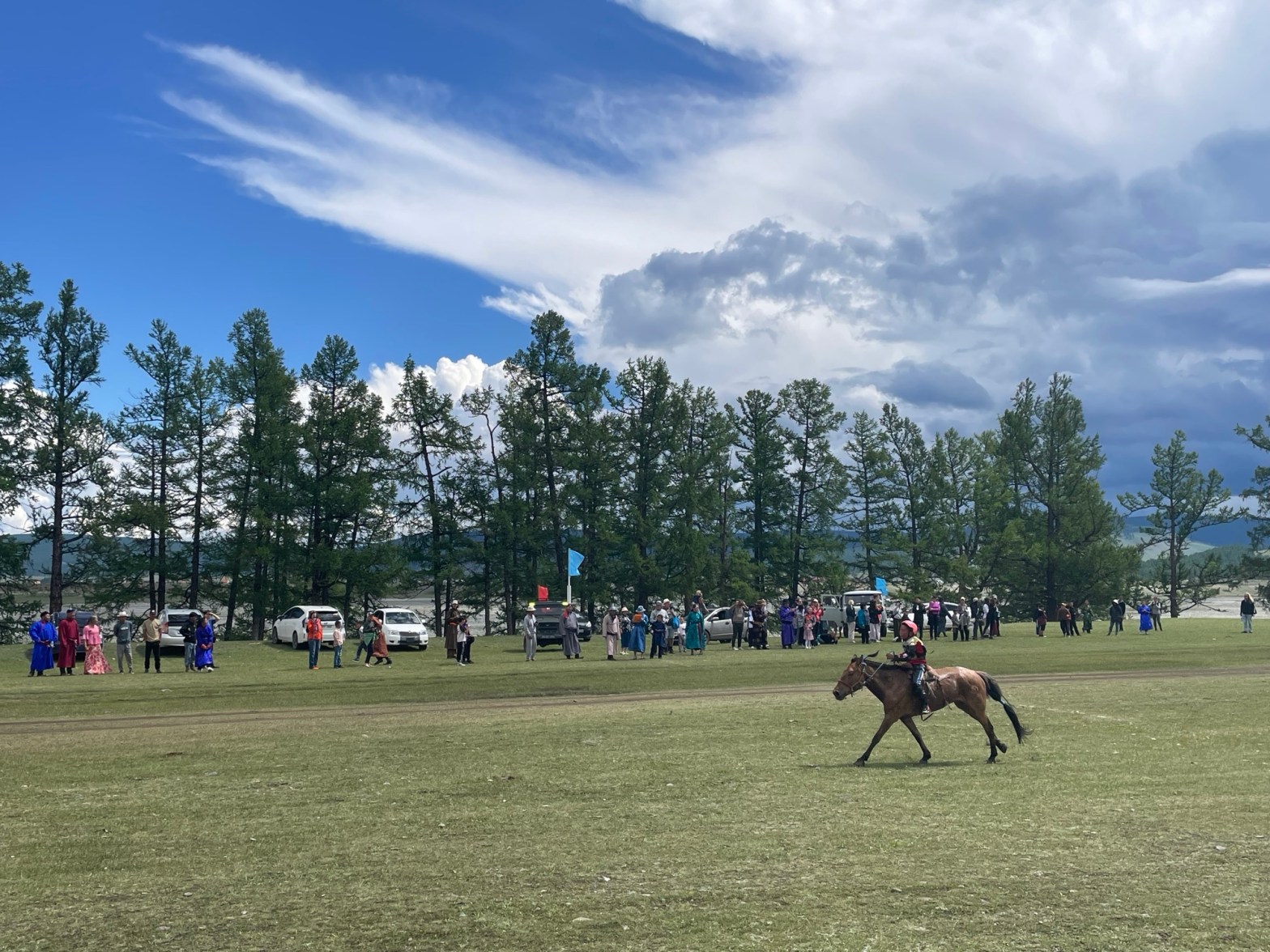
Daava told us before that this is the finish line for the ca. 19 lkm long horse races It‘s pretty clear from the athmosphere that the horse race is the most prestigious discipline of the 3. In the village there are around 50-70 pairs of horses and young riders competing per age category of the former: 2, 3 & 5 year old horses compete against each other in 3 rounds. The first 5 to cross the finish line receive medals and are celebrated with a poem recital during the award ceremony. In the first race that we witness, the second of the 2-year old horses arrives without a rider. Luckily, the kids are accompanied during the whole ride by cars and adults on horses, so nobody worries too much about the missing child. Despite the dangers of racing on semi-wild horses, I’m told that it’s easy to find kids who want to participate in the games. They practice for several months with special trainers who either have their own race horses or rent one to send into the race.


The whole crowd at the side lines waits until the very last horse crosses the sideline – showing yet again how much respect they have for the contestants. Then it’s lunch time. Of course we stop at one of the local gers for a taste of Hoshor, Mongolia’s beloved deep-fried meat pastry. Crispy on the outside and juicy inside, the ones here are actually really good (locals like Davaa’s father will warn you that in the countryside Hoshor may be fried with low quality oil). While we wait for our order, Marcela, a Colombian woman in our group, talks to a Mongolian man through Google Translate. Conversation is slow—until we discover he speaks Japanese. I become an interpreter and translate for the group that he’s lived in Nagoya and Saitama for 16 years, studying and working in the dairy and wagyu industries. His entire family welcomes us in fluent Japanese, adding a surprising layer of connection in this remote lakeside town.


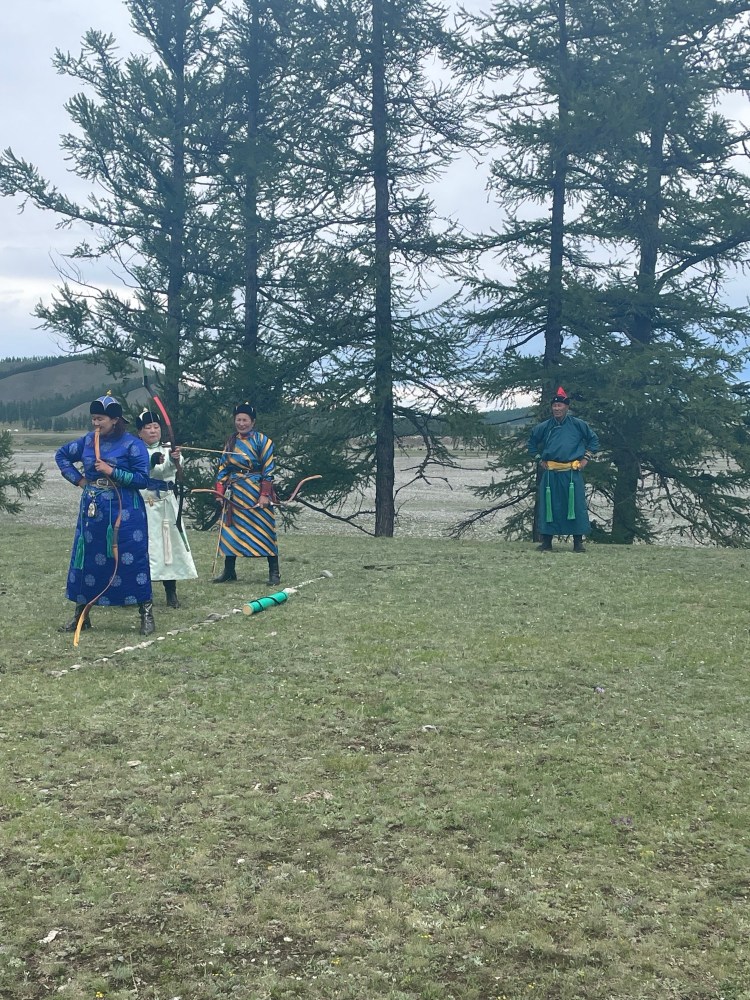
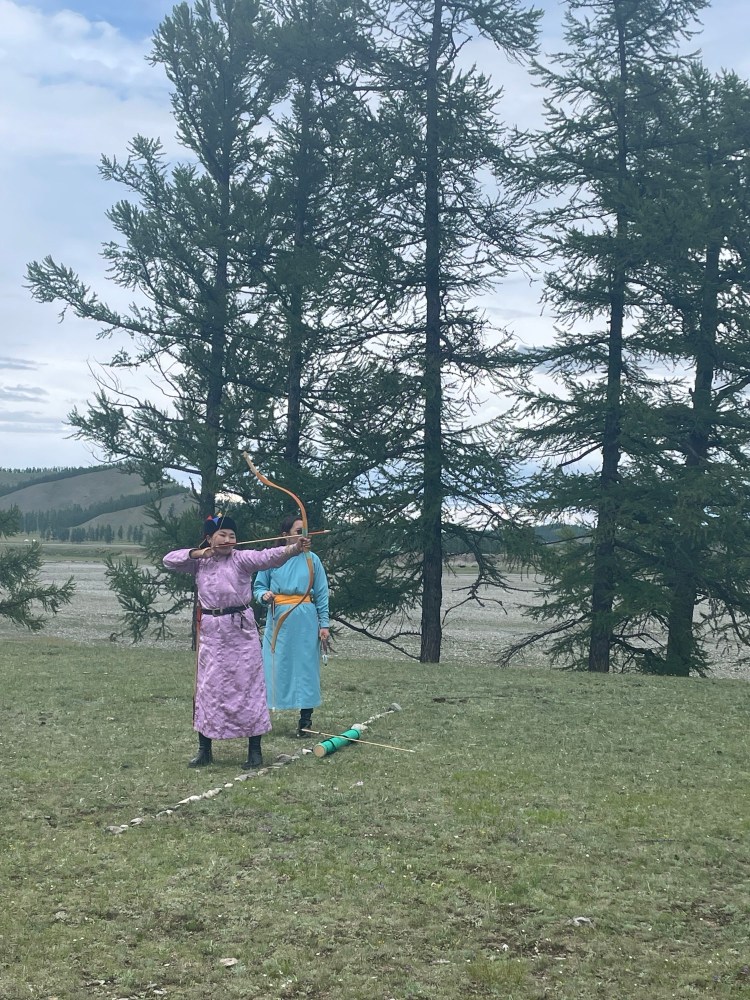
After lunch, I wander over to the archery competition, which feels more low-key compared to the buzz of the horse races. Men and women compete in teams, shooting at a shared target—a line of stacked cylinders—but from different distances: the women stand 15 meters closer. There are no formal referees here; the participants take turns judging each other’s shots. Hits and misses are signaled silently with graceful hand gestures. The competitors wear beautifully embroidered Deels, and many carry hand-crafted bows that look like family heirlooms. It’s the quietest event of the day, with the fewest spectators, but the atmosphere is focused and full of quiet pride.
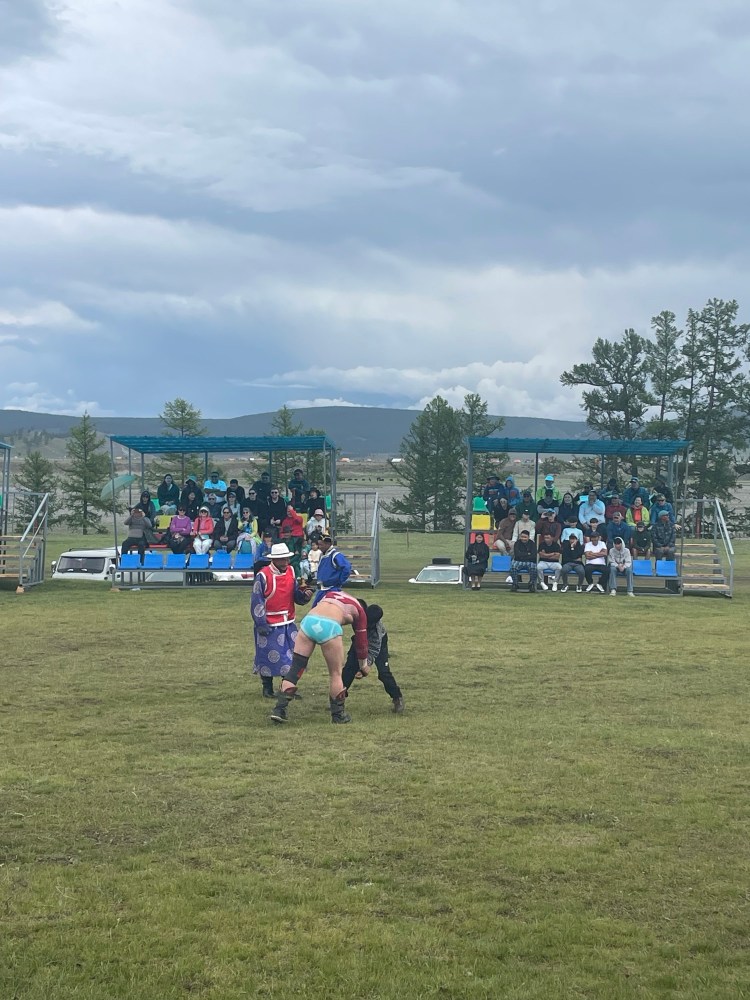
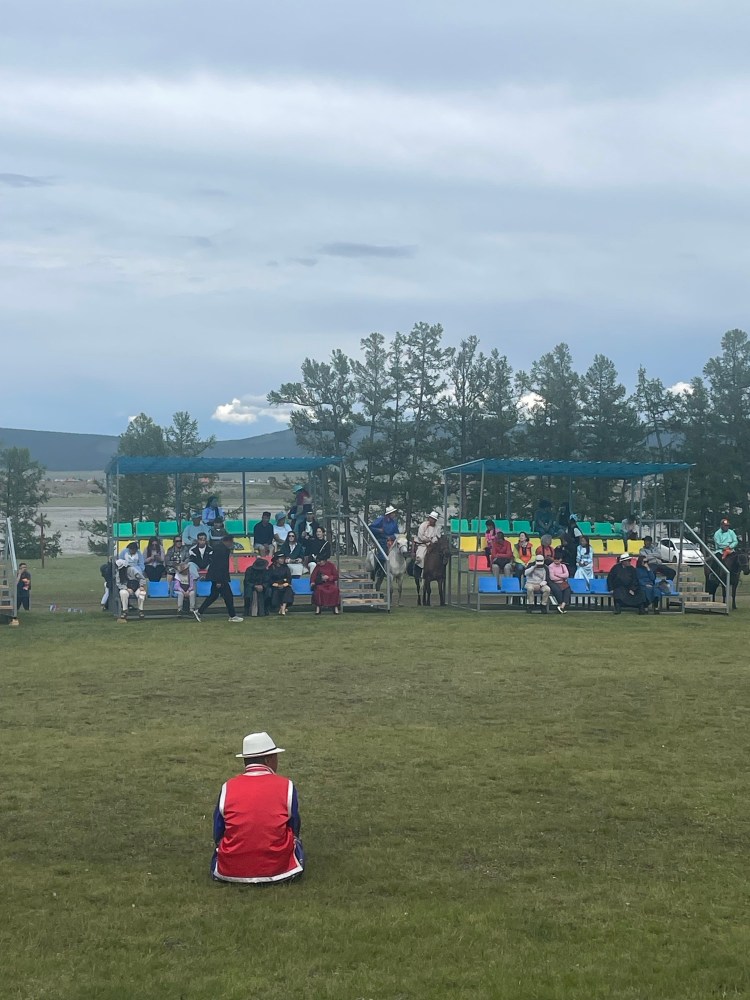
As the afternoon rolls on, we stroll back through the stalls, soaking in the festival atmosphere—kids with balloons, vendors calling out, the scent of grilled meat drifting through the air. Then, the second round of wrestling begins. The setup reminds me of sumo: the rituals, the formality—but instead of one pair in a ring, multiple matches unfold at the same time on the open field. In the big leagues, like in Ulaanbaatar, up to 512 wrestlers compete in nine elimination rounds, with losers dropping out each time. Higher-ranking wrestlers even get to choose their next opponents. Here in Hatgal, the scale is smaller, but the traditions are the same. Referees hold the wrestlers’ hats, and the athletes perform an eagle-like dance in front of the flag before greeting their opponents. The rules are simple: the first to touch the ground with anything other than a hand or foot loses.
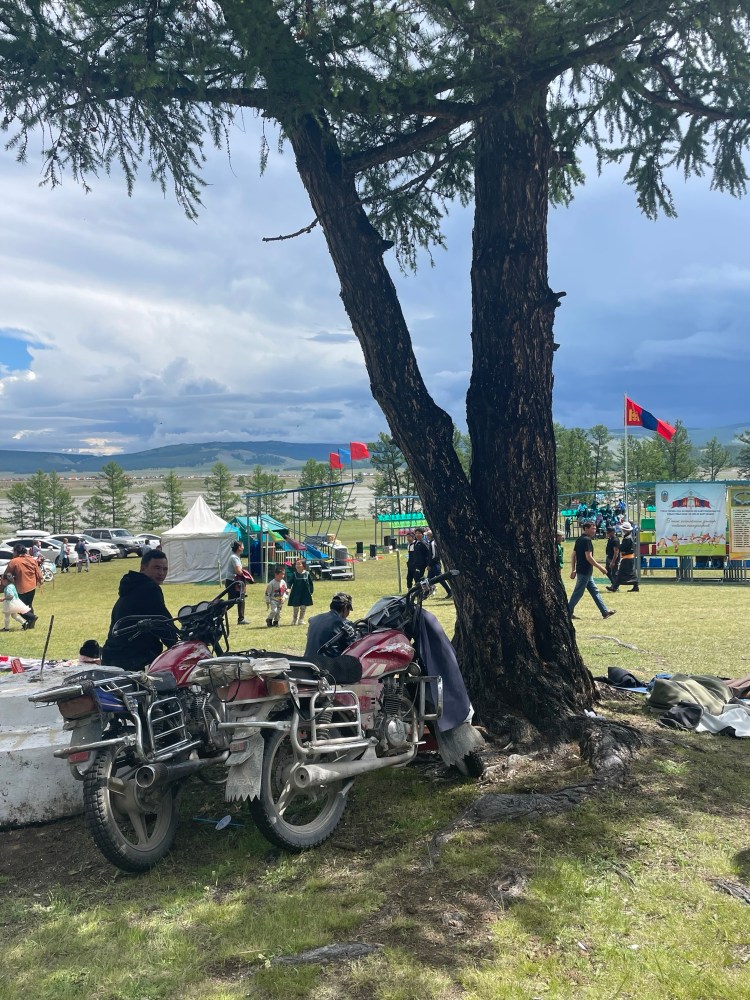
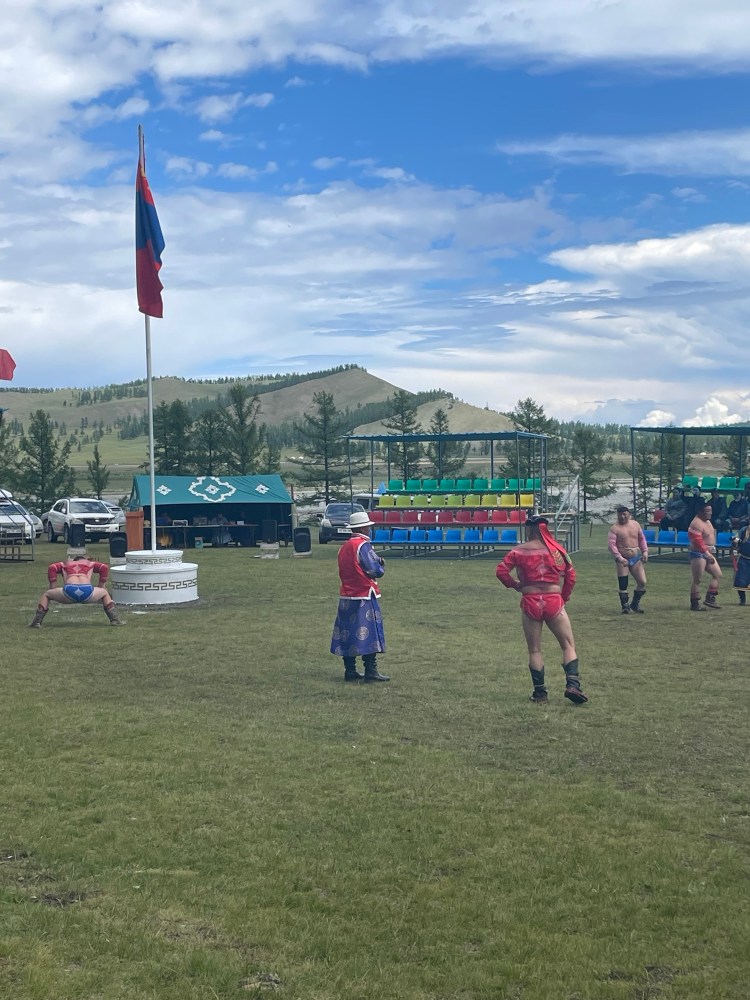
When a match ends, the winner returns to the flag to collect his hat and performs the victory dance once more—arms outstretched like eagle wings. The defeated wrestler bows in respect and also retrieves his hat. From a communal tub nearby, the winner pulls out pieces of cheese and tosses it toward the flag before handing some to the referees and nearby spectators. Even the public is invited to join the matches. A few familiar faces step forward, including the son of the nomadic family we visited just days earlier. Most are swiftly—and relatively gently—brought to the ground, including a uniformed policeman who laughs as he’s carefully laid flat by a seasoned wrestler. Spectators watch from wooden tribunes, perched on horses, or stretched out on the grass. The energy is quietly electric—supportive, respectful, and full of pride.
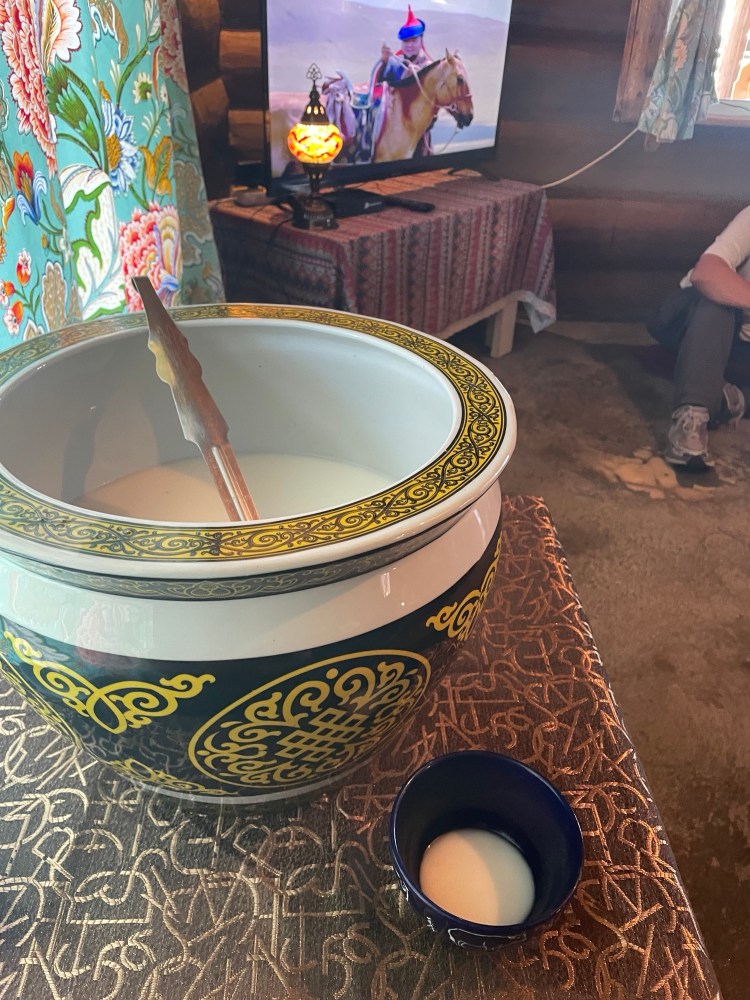
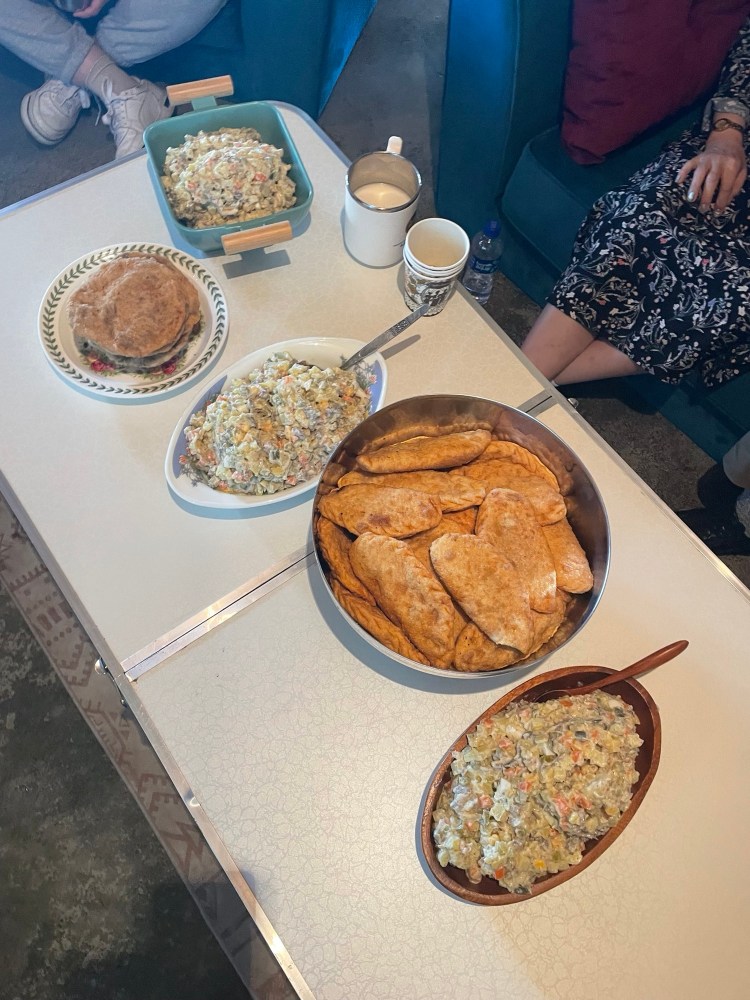
As the sun begins to dip behind the hills, we slowly make our way back to camp—everyone drifting off in small groups. Livio and I are the last to leave, starting on foot until a friendly local couple pulls over and offers us a ride. Back at the camp, the evening unfolds in true Mongolian fashion: we sip Airag, the traditional fermented mare’s milk, and pass around an eclectic mix of liquors (including Aquavit from Norway). Dinner is a comforting spread of Russian-style potato salad and homemade vegetarian Hoshor, still warm and flaky from the pan. It’s a lively, content end to a day full of celebration, connection, and shared moments.
 thattravelstory
2 thoughts on “Naadam in Hatgal”