
Murun to Tsetserleg- July 2025
This isn’t how it’s supposed to go. Not for me, and definitely not for the three Scandinavians I meet at Mongol Ujin Camp in Hatgal. Oystein and Pernille from Norway, along with Oystein’s Finnish girlfriend Stephanie, have planned a multi-week horseback journey across Mongolia. But on day one, Oystein’s new horse kicks him off and breaks a couple of ribs. Their trip is over before it begins. Meanwhile, I’m prepping for a solo overland journey south. We start talking, and by the next morning, we’ve pooled supplies, mapped a loose route, borrowed an extra tent, and hired a local driver. His daughter was meant to come along as interpreter, but with a music festival happening, she decides to stay home. The rest of us just decide to figure it out as we go.


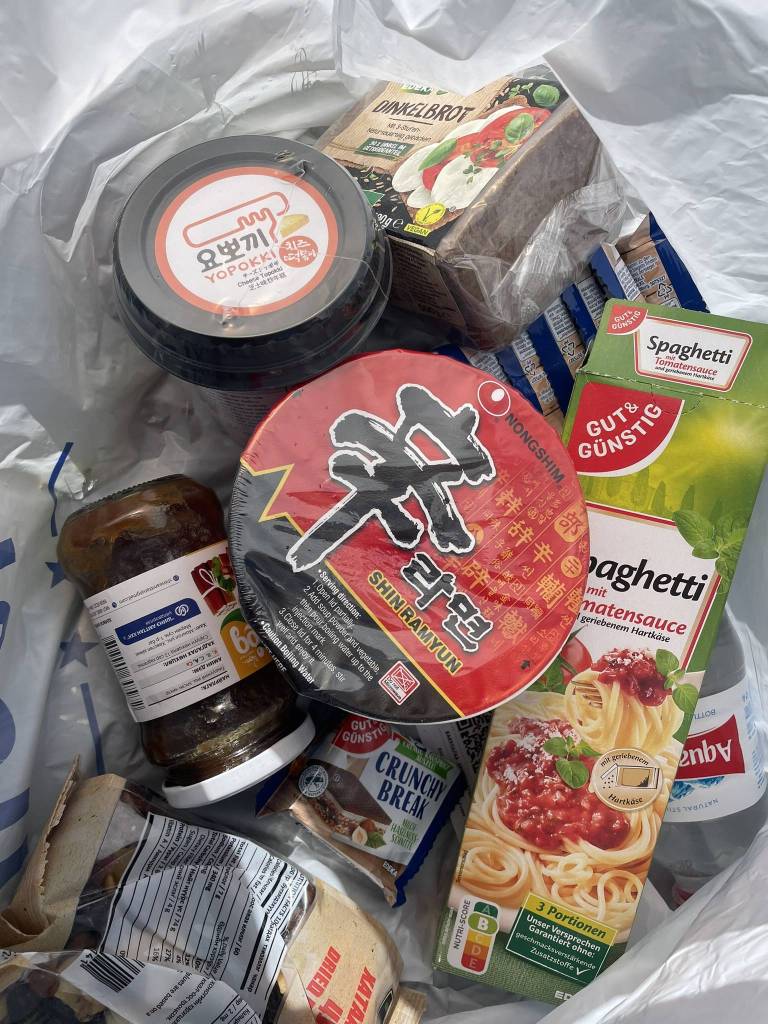
Daava’s colleague brings us to Murun, where we meet the real driver for our trip in front of the hypermarket where we quickly buy some extra food. The others have a stash of camping rations from their now-defunct horse trek, but I grab a few extra essentials—stuff that can be made with one pot and a small gas burner. To my surprise I also find proper dark bread from a German brand. At 11:30 we fuel up, 62 liters for 190,000 MNT, which should get us through three days of off-roading. Our goal is White Lake near Tariat, about 341 kilometers away. Google Maps says 7 hours and 15 minutes. That optimism lasts until the asphalt ends. The road dissolves into green valleys and muddy tracks. The rain comes and goes. My window is quickly coated in mud. Wildflowers line the hills, and we wave to Ulaanbaatar residents in dust-covered Priuses heading north.

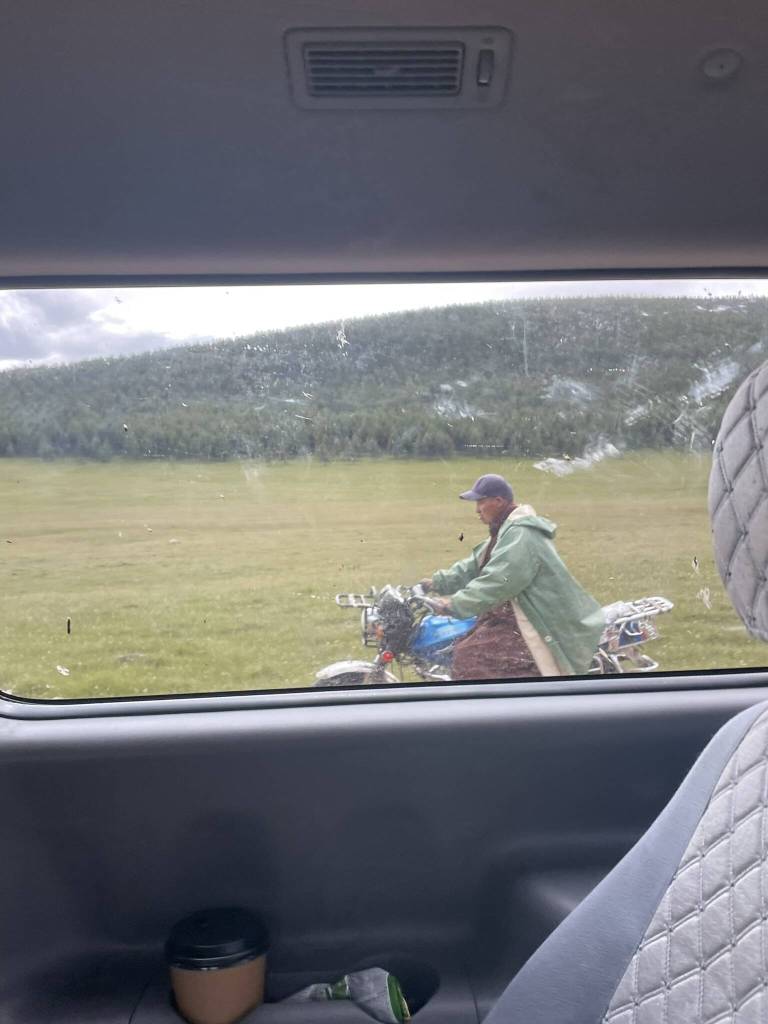
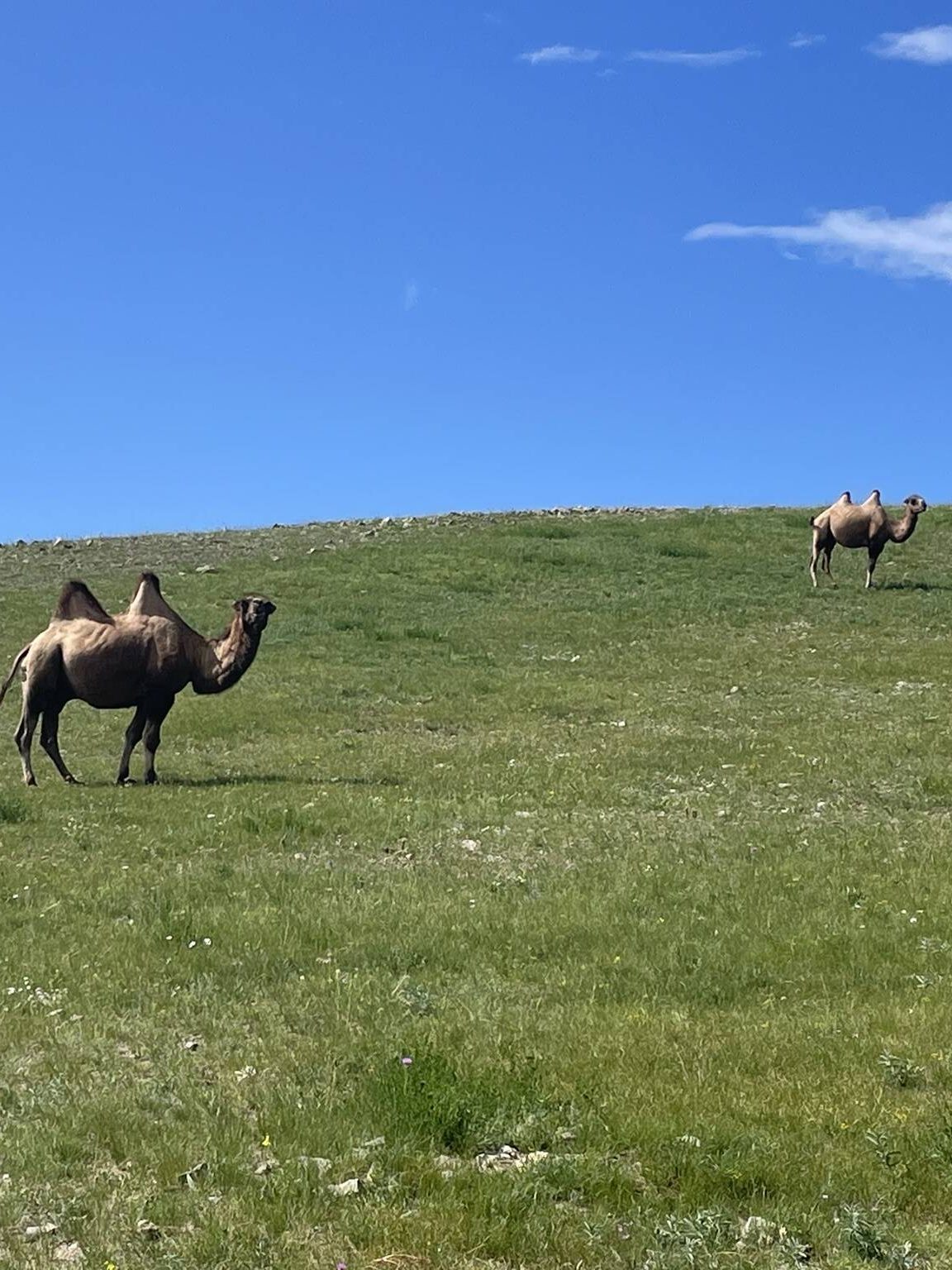
We drive through rolling hills and rain-blurred landscapes, pausing near Shine-Ider when the sun breaks through and reveals a group of wild camels grazing on the slope. It’s 4 p.m. and we’re hungry, already an hour behind schedule. We stop for snacks on a ridge between two valleys. Then the driver suggests heading to Jargalant. It’s unclear which one he means—our map lists several. After a short discussion, we follow an unmarked track that leads us along a quiet river through increasingly remote terrain. After not seeing anyone for hours, we suddenly find ourselves near scattered gers and wood smoke. We reach Dschargalant around 8 p.m. The 200 km drive from Murun has taken 8.5 hours. Google claimed it would take 5.5.

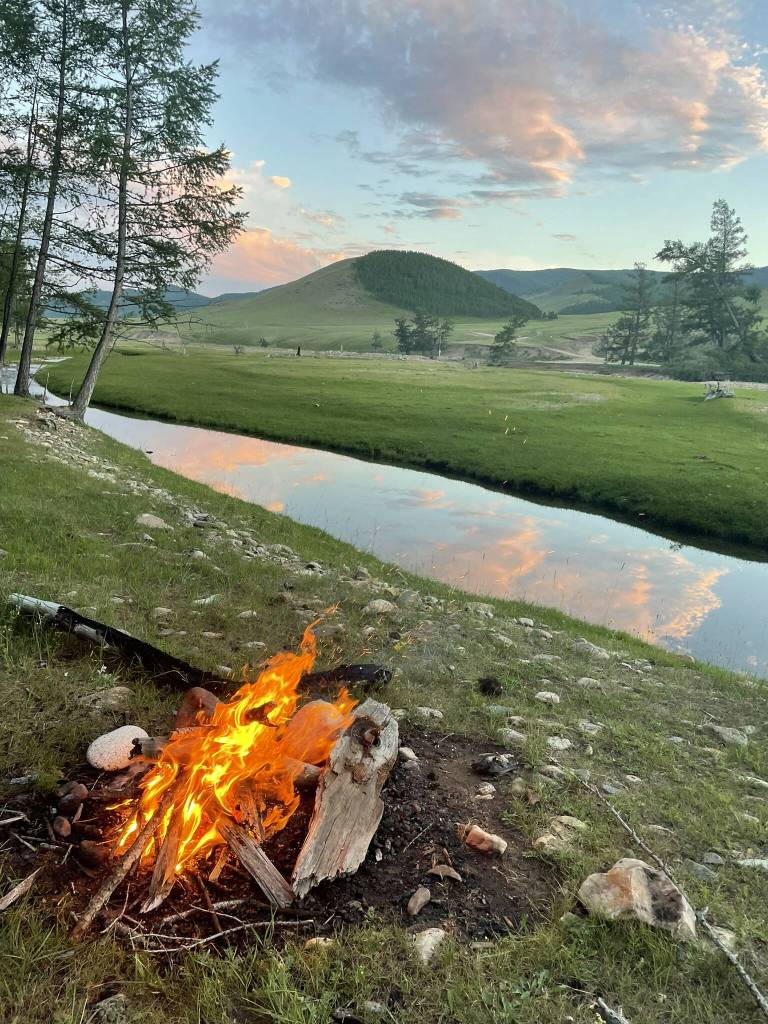
Using Google Translate, we tell the driver we want to sleep near the river. He says something about trees, and we find a patch of marshy ground just outside the village. We unload and carry our tents toward the water. The 4×4 rumbles through the woods to meet us on the other side. It takes several tries to get a fire going, until the driver steps in and shows us how it’s done. He lies down next to the car and takes a nap. I fall asleep shivering due to not putting on enough layers. Morning arrives with sun and silence. We brush our teeth beside the river while the driver, as always, scrubs the car clean with a rag and water from the stream. The Scandinavians eat granola prepared with milk powder and I pumpernickel with rhubarb jam before packing up quickly.
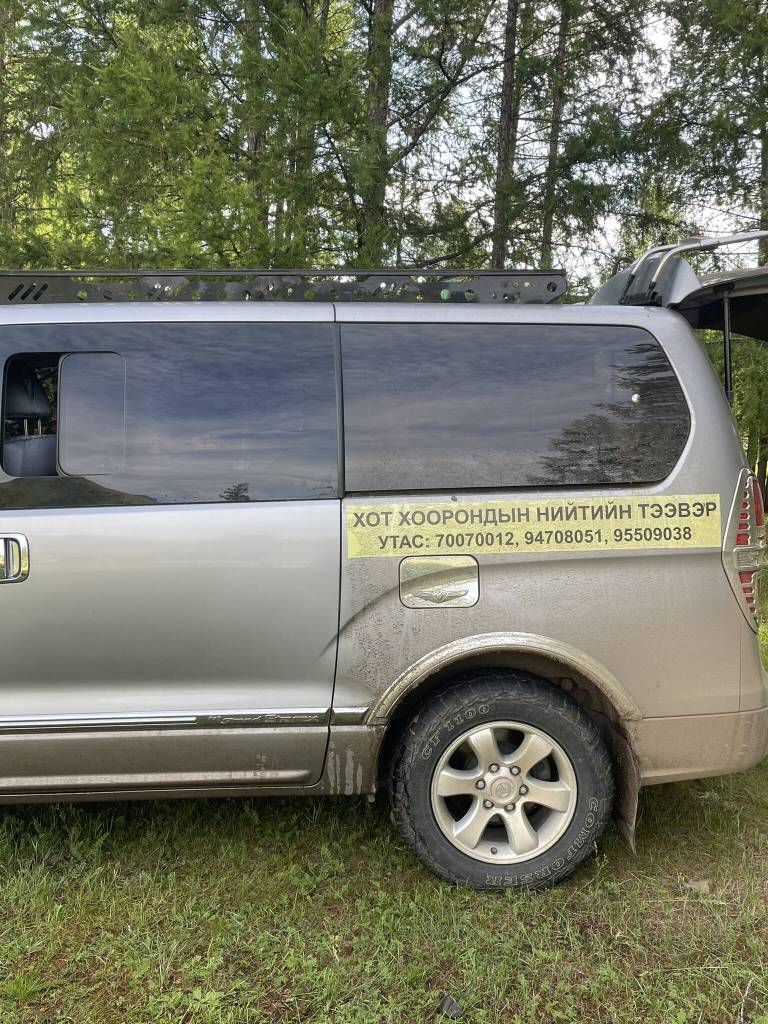
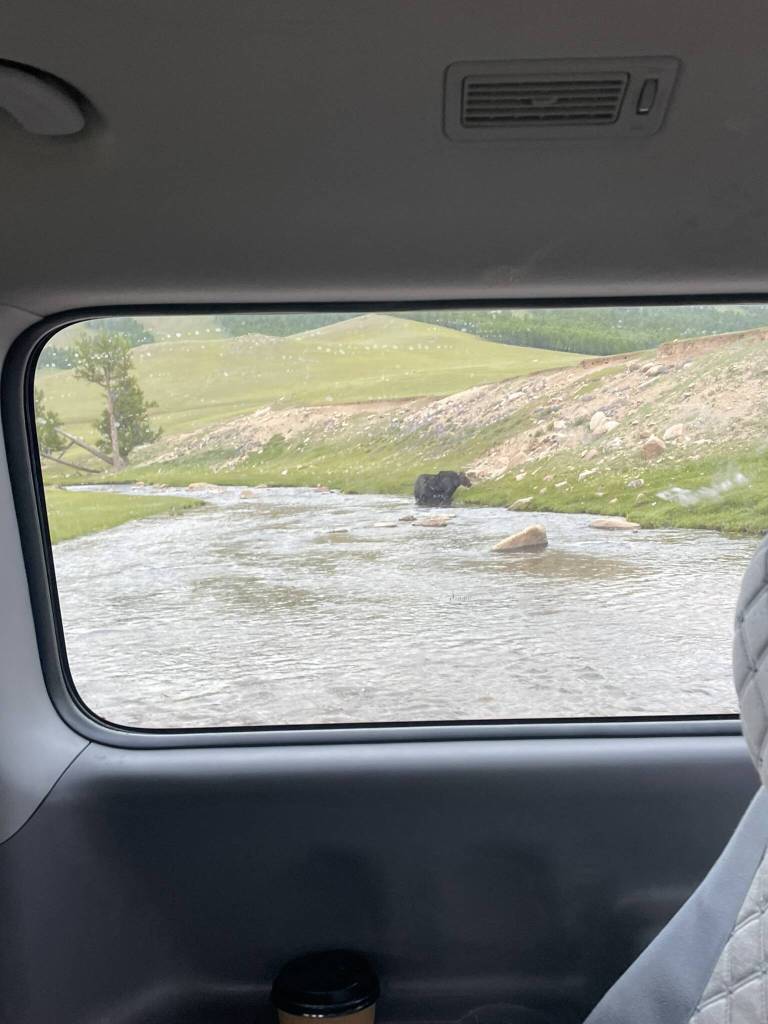
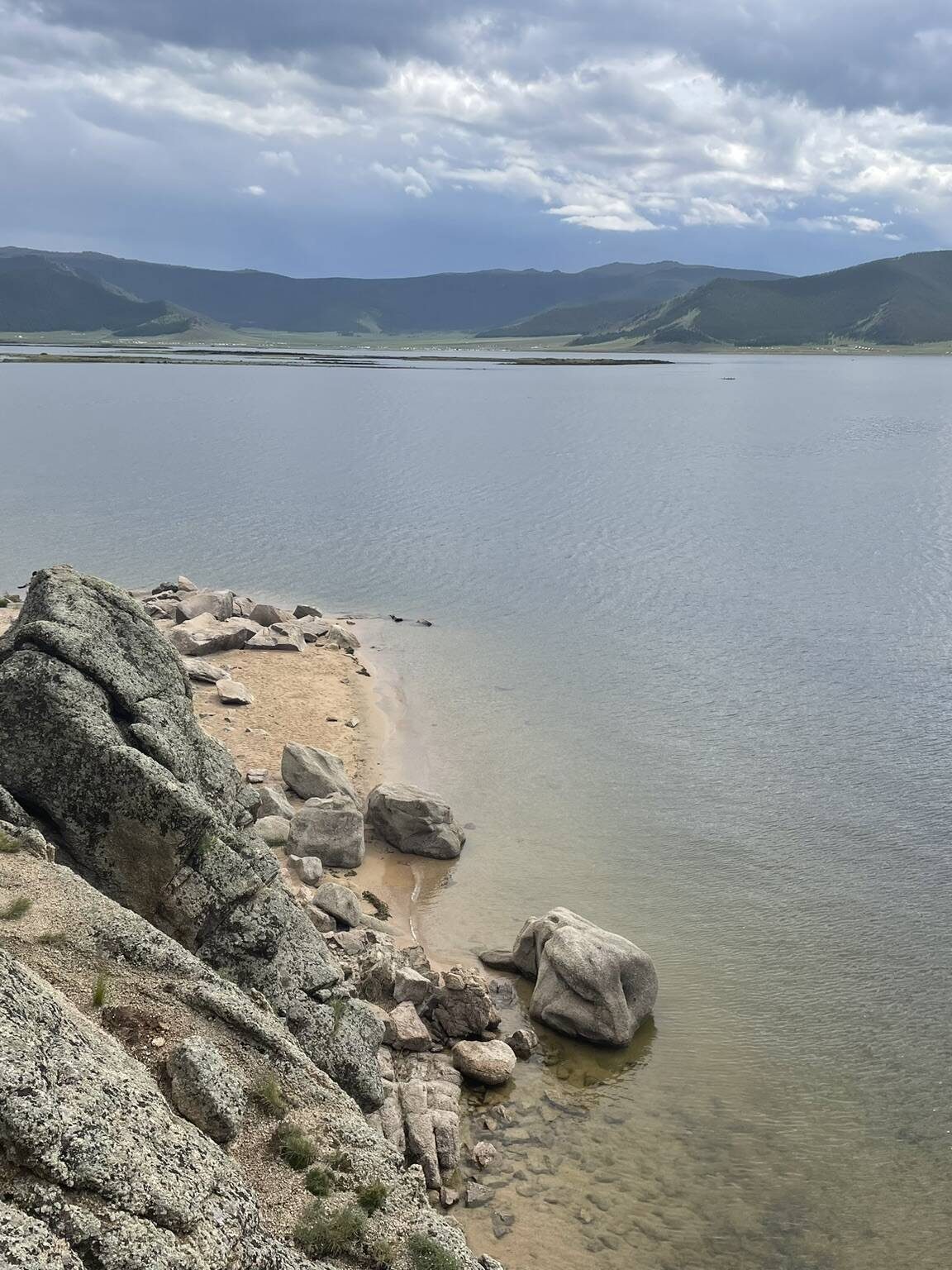
From 9am, we follow the river, looking for a way back to the main road. The driver refuses to use the rickety wooden bridges and instead drives straight through the water, honking at herds of sheep and yaks until they scatter. Back on dirt roads, we cross wide valleys and pass a tiny airstrip where a propeller plane is about to take off. At this point, Oystein tells a story about a Mongolian pilot who once lost GPS and lasked a tourist to lend him a paper map. Honestly, I can believe that. Then we climb another nameless mountain trail and suddenly find ourselves overlooking Tsagaan Nuur, White Lake. The water is still and blue. Stephanie suggests camping on the lake’s western side, which looks more isolated. We all agree. But first, we want to go for a hike on a volcano on the eastern side.
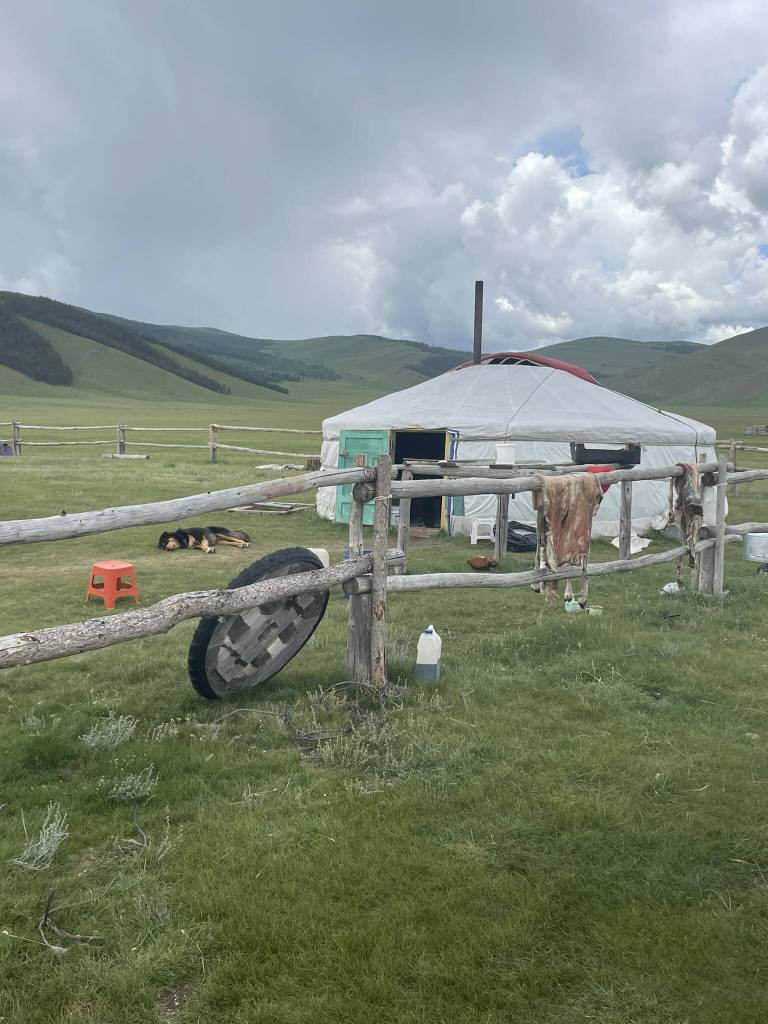
The road across the hill narrows to a rocky strip, just wide enough for one car, traversing a steep cliff. Tiny Toyotas struggle up hill, but somehow making it work. Our 4×4 descends next to them rather effortlessly. Down in the plains, our driver pulls up to a family’s ger, suggesting to stop for lunch. They serve “Tsuivan”, thick fried noodles with vegetables and mutton, followed by bowls of airak, fermented mare’s milk. We all sip politely but struggle to finish. The driver drinks his, plus three of our servings. After lunch, we continue toward the volcano on the eastern edge of the lake. Resorts begin to appear, and we stop at a giant boulder where the driver tries to convince us to a speedboat ride. We say nothing, just get back in the car. He gets the message. The ground turns black with scattered lava rock along the lake. Then we spot a congregation of people on the side of the road.
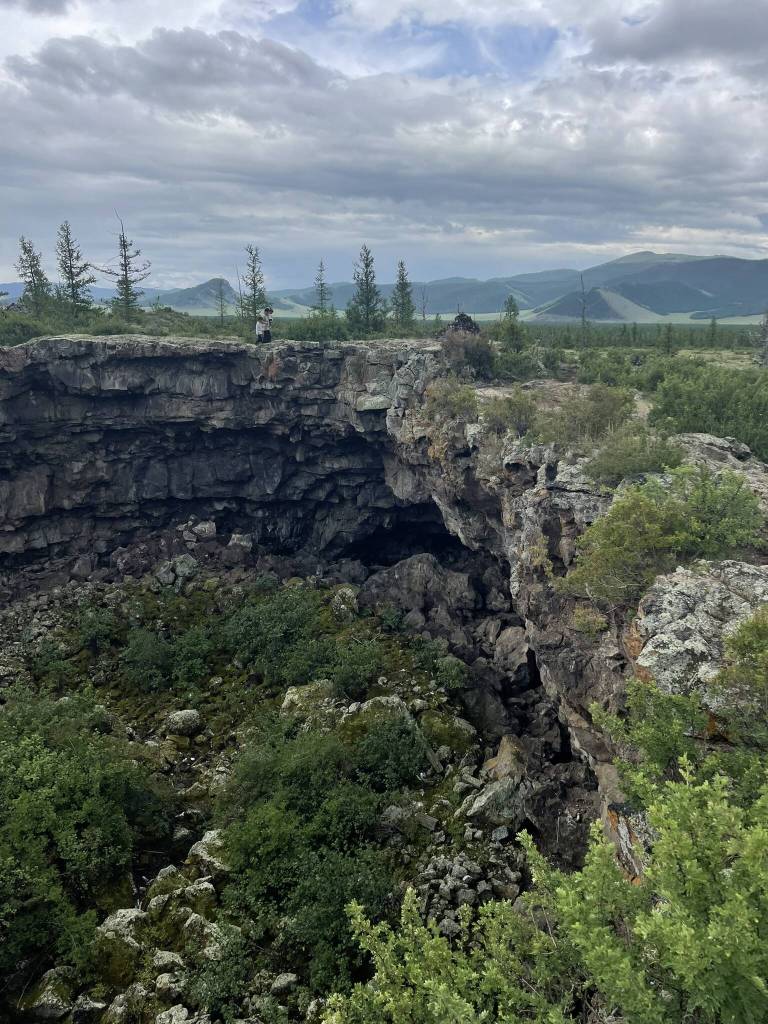
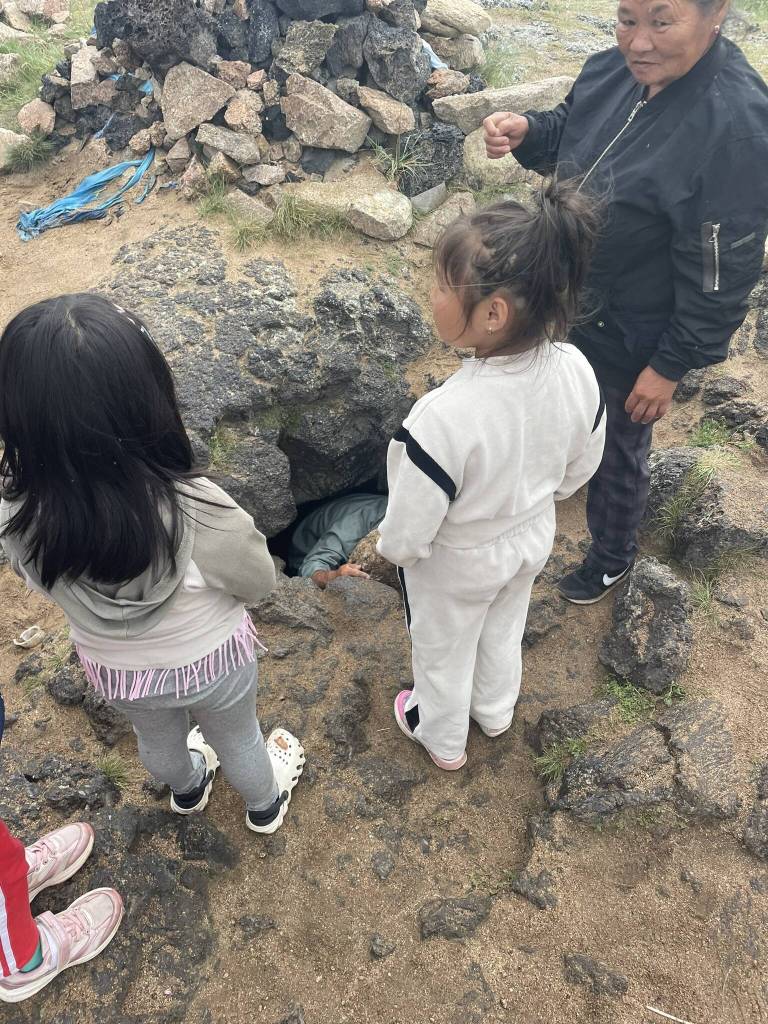
A weathered sign points to a narrow cave entrance that seems to fit only one person, but somehow twenty Mongolians emerge from it laughing. We pass on the invitation to climb down and instead head for the volcano. The driver says the hike should take two hours. A rain shower gives us an excuse to wait. When it passes, we hike quickly and return to the car 1 hour later. I can imagine that the people who climbed down into the extinct crater take a little longer to get back out. It’s now getting late, and we decide to give up on sleeping next to the lake. Instead, we drive through the town of Tariat to refill the tank. We finally settle at a riverside close to the highway. It is an open and flat space, but littered with cow dung. After some scouting, we find a clean enough patch and set up for the night.

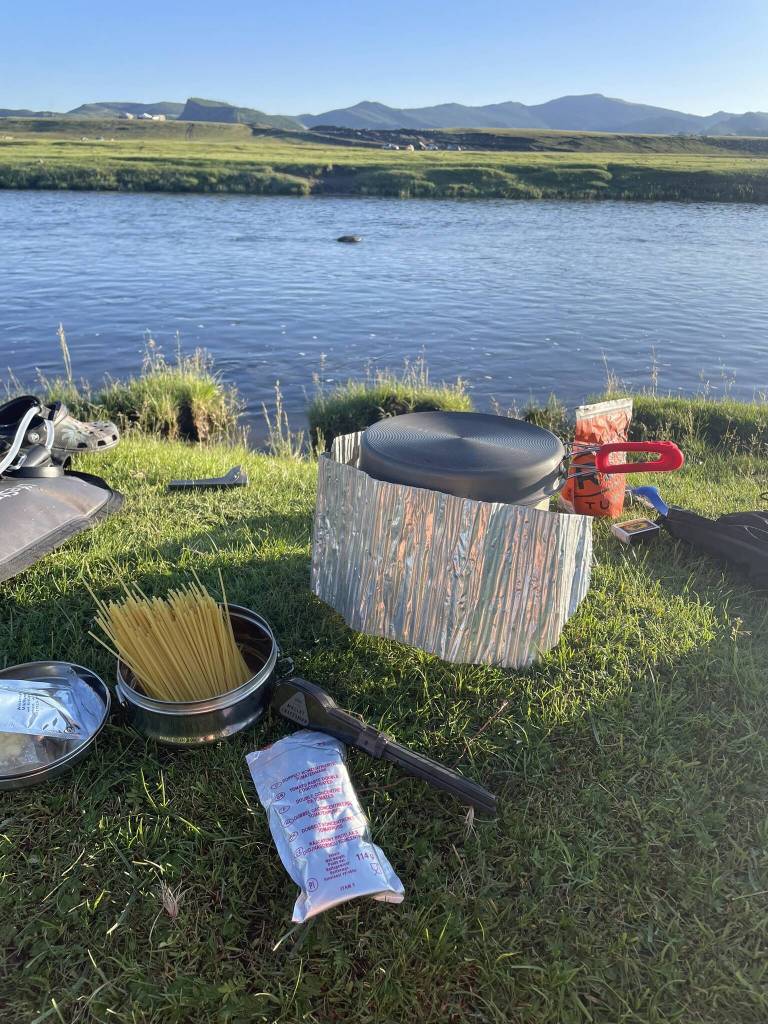
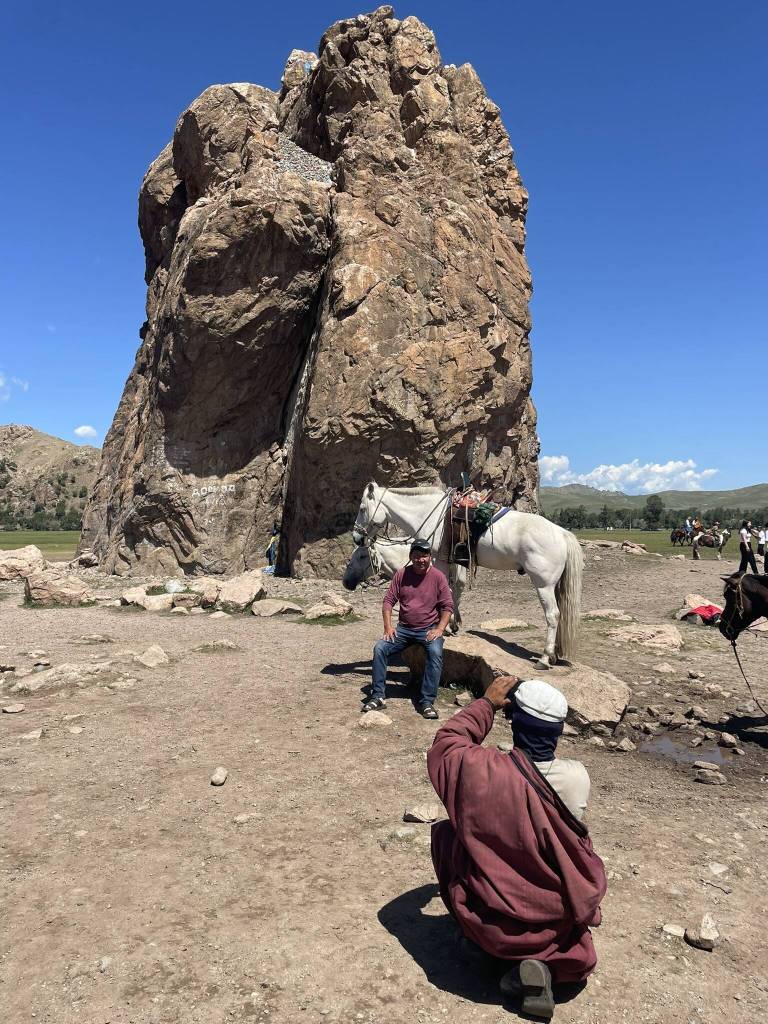
Dinner is a pre-packed spaghetti and tomato sauce meal from an imported German supermarket brand. It tastes better than expected. I sleep warm this time, layered and curled up in my sleeping bag. I only wake up once to look at the clear, starry sky. Morning brings the usual routine. We eat quickly while the driver wipes every inch of the car. The river is too muddy to wash, so we hit the road still covered in dust. The highway to Tsetserleg is newly paved and smooth. We cruise in silence, heads bouncing less than usual. After a surprise sightseeing stop at an impressive canyon, we make another detour to Taikhar Rock. The place feels more like a fairground than a holy sight. Locals offer yak rides, horse rides, archery, and photo ops in traditional Mongolian dress.

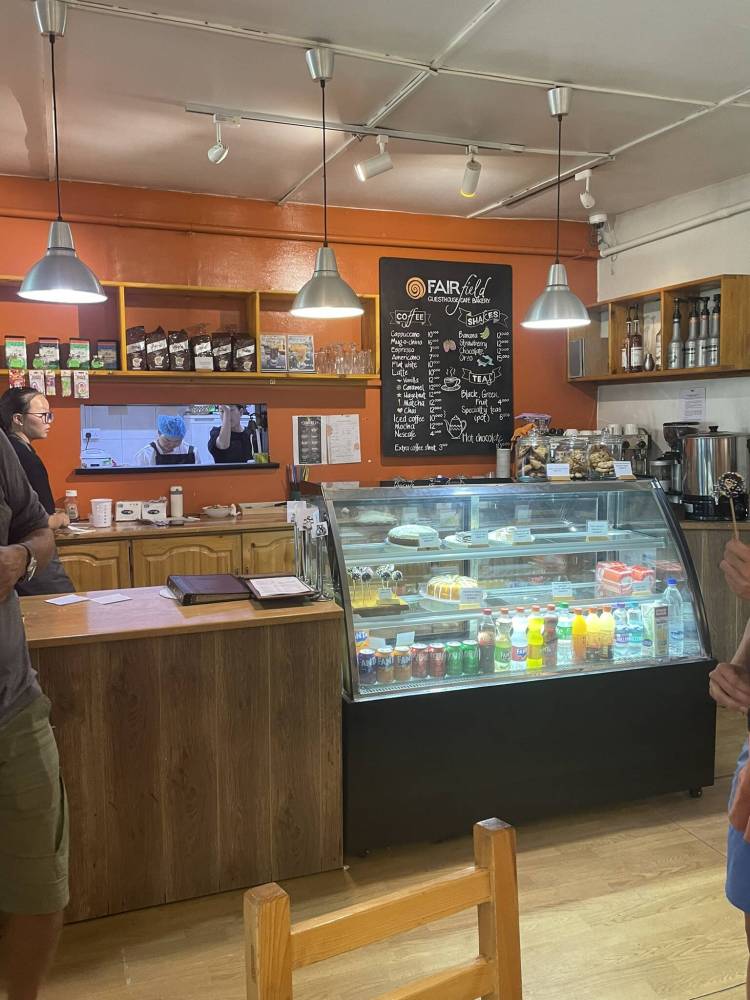
Following Daava’s dad’s advice, we steer clear of the greasy hoschor and instead direct our driver to Fairfield Guesthouse in Tsetserleg. We reach the city by early afternoon and immediately order vegetarian meals that thankfully don’t contain any noodles. The owners, an Australian couple, sit down for a chat. Another guest joins in, speaking fluent French and full of suggestions for hidden hot springs and off-the-path temples. We save the GPS maps for the unnamed hot spring and ask the guesthouse owner to help us explain the plan to the driver in Mongolian. Continue reading here for the second part of the adventure.

 thattravelstory
2 thoughts on “A road trip through Central Mongolia (Pt. 1)”