
Mongolia – July 2025
After being confined to her ger for three days (the only cure for her cold according to the Chinese medicine practitioner), Daava announces that today is the day – we’re going to visit a nomad family in the afternoon. As always, there is no clear answer in form of a number when I ask about the expected departure time. To avoid being left behind, I spend the rest of the morning lounging in the wooden chair outside the main cabin of Mongol Ujin Resort. Suddenly I hear movement from the guest’s ger. The family from UB is staying over for the Naadam festivies. They are friends of Daava’s and also joining the visit to the herders who spend the summer near the southern shore of Lake Khuvsgul. Ironically, the city people are much better equipped for the off-road drive into the national park than us. As they pack all their belongings into the 2 large landcruisers with roof tents, we (Daava, her dad, my 3 English pupils and I) squeeze into a tiny Toyota Aqua.
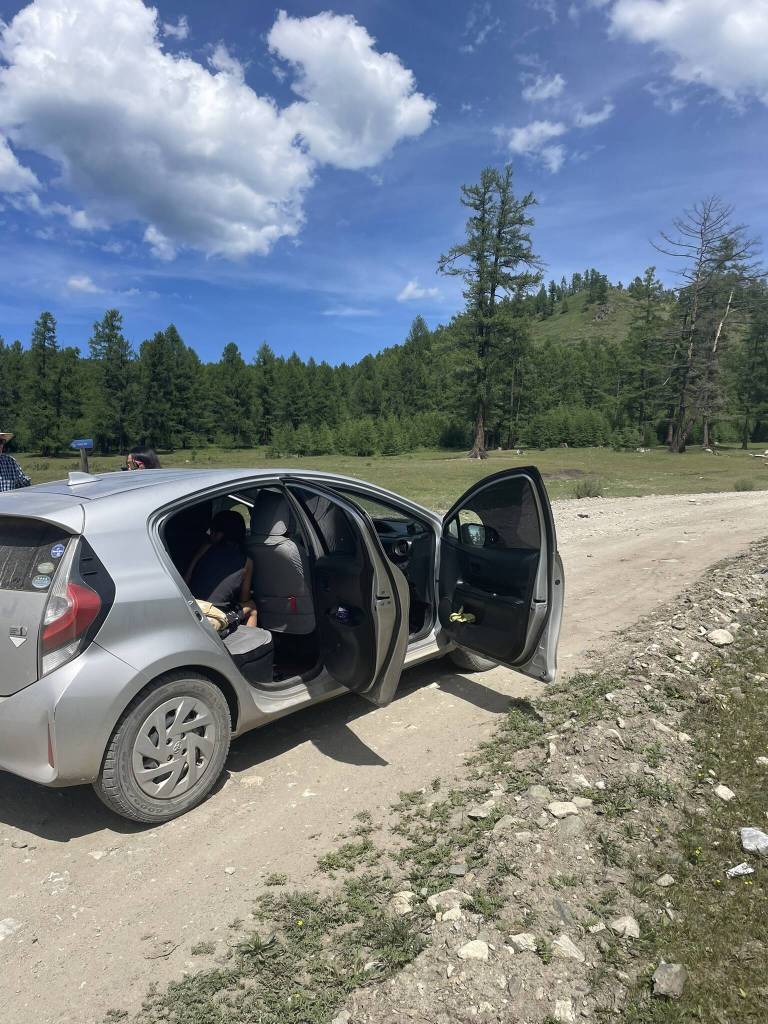

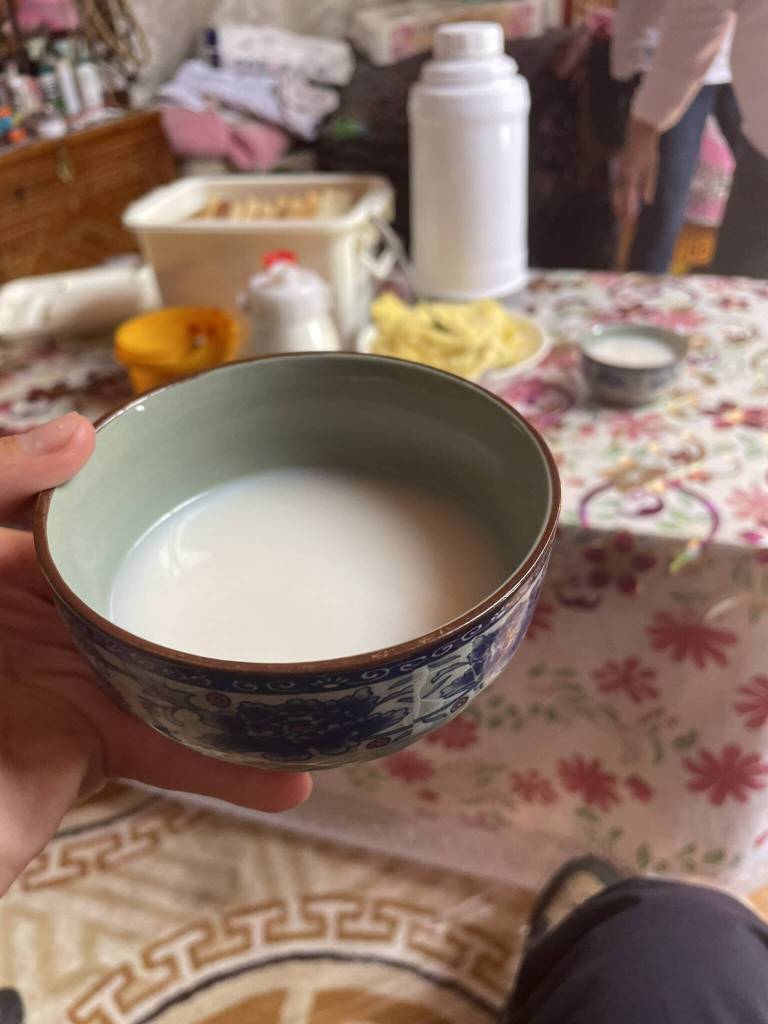
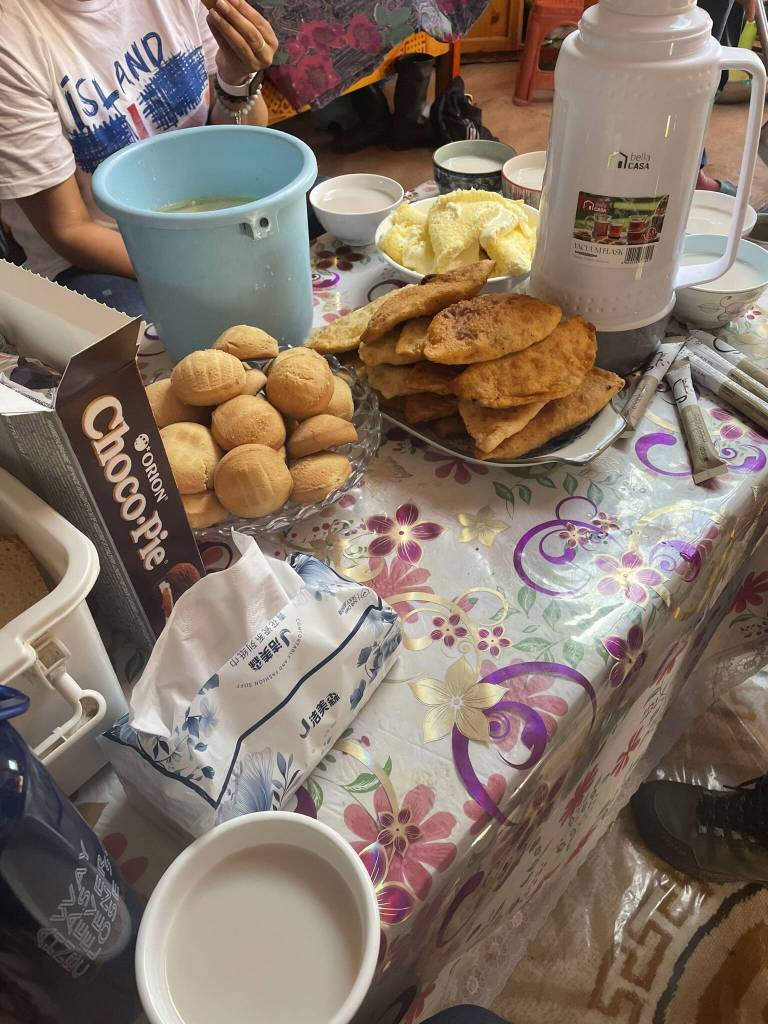
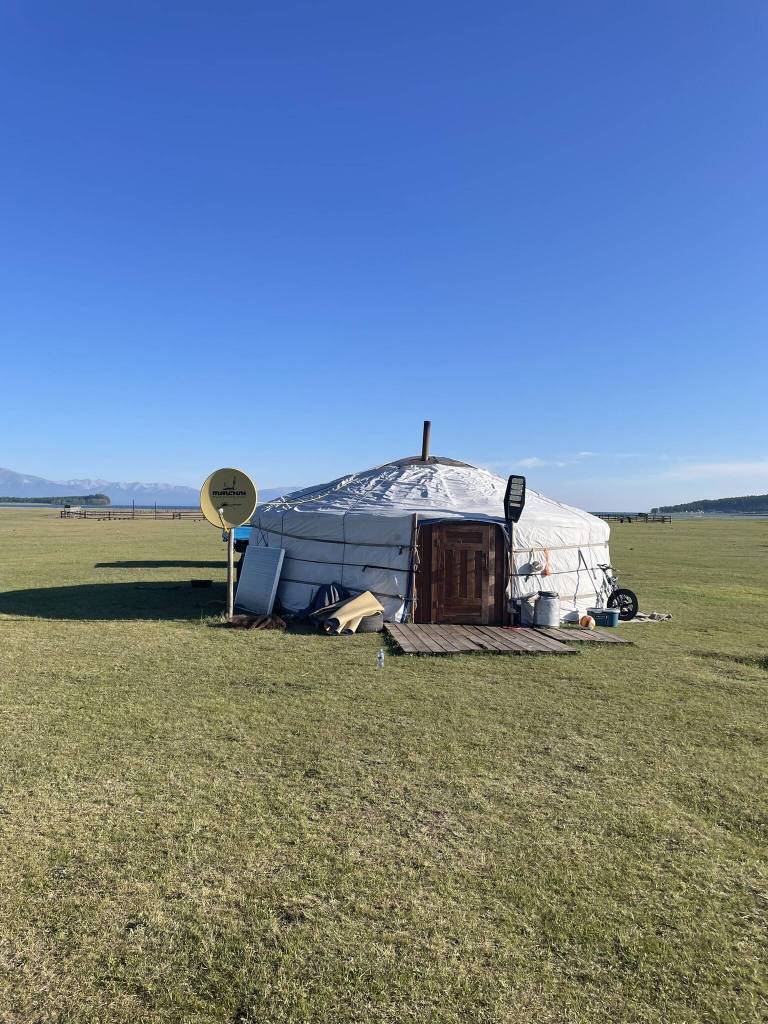
If you read my previous posts about the week-long roadtrip from Khuvsgul to Kharkhorin, you might have an idea of the road conditions our 2×4 Toyota has to endure. A few hundred meters out of town the asphalt road transitions to gravel, which lasts for another few kilometers before turning into field tracks. Luckily, the weather is good and we manage to cover the roughly 35 kilometers in 1.5 hours. After quite a while of nothing but empty fields, there is suddenly a herd of yaks blocking the “road”. It seems we have arrived at our destination. Daava parks the car next to one of the 2 gers and we are quickly ushered into their home by the the nomad family’s mom. After having us sit down on any of the available seats (small plastic chairs, wooden stools and their beds), her and the older daughter serve everyone a bowl of milk tea. I follow the example of the Mongolian tourists and also help myself to some of the toast piled up in the middle of a small table, lathering it with yak butter and jam before taking a hearty bite.
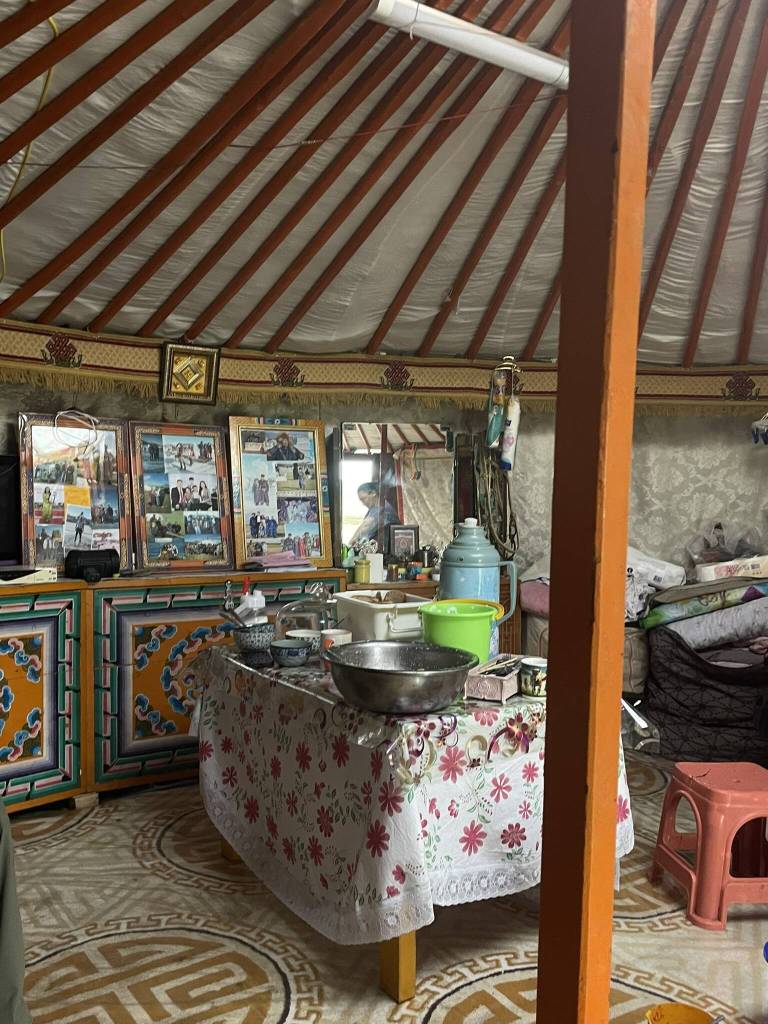
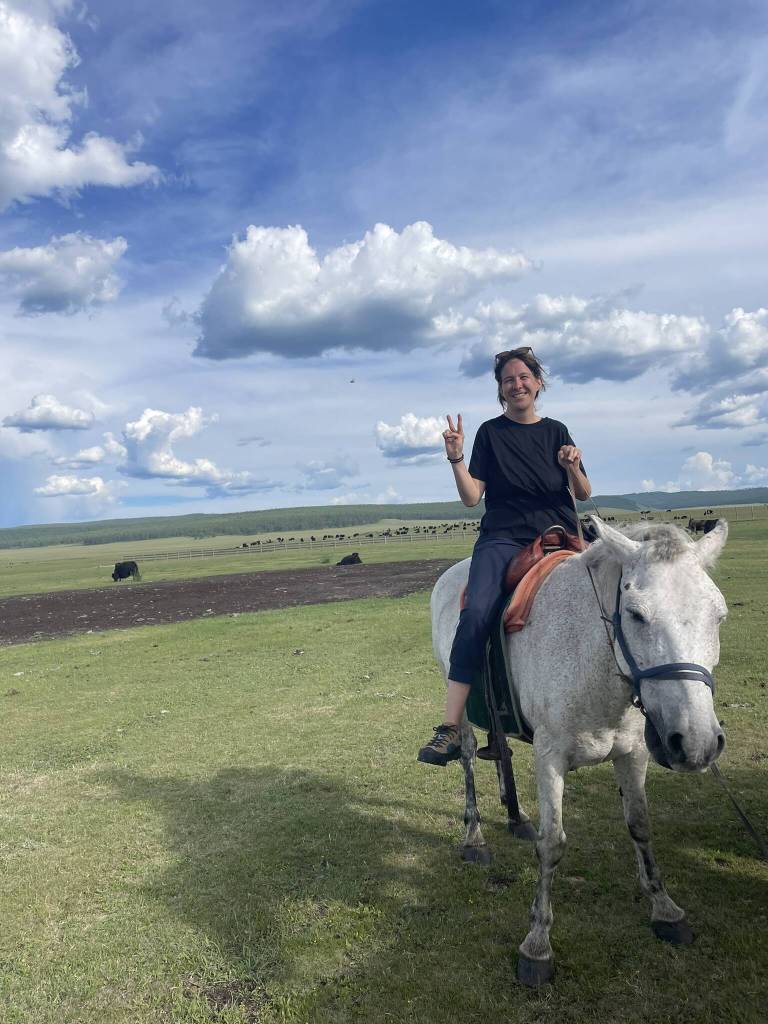
I barely finish my tea when I hear someone shout my name from outside. I step out of the dark tent into the bright sun and see Daava talking to the nomad’s older son, Deegi. The moment I’ve been dreading since researching my trip to Mongolia has come: I’m going to be riding a horse. Thankfully, Deegi is an experienced horse guide and even knows a bit of English. He explains to me and the second rider (a young boy from UB) that we can only approach the horses from the left side, should never let go of the reigns and not make any sudden movements with our arms. Without further ado we get into the saddle, Daava takes a picture of me for proof and off we go. Since there are other people wanting to go on a ride too, I opt for the shorter 1-hour route. Deegi keeps a slow pace while on the way to the lakeside and I slowly grow more comfortable with the swaying movements of the horses body below me. I ask Deegi if he ever goes for a swim in the lake. He says yes, and adds that he’s basically a fish.
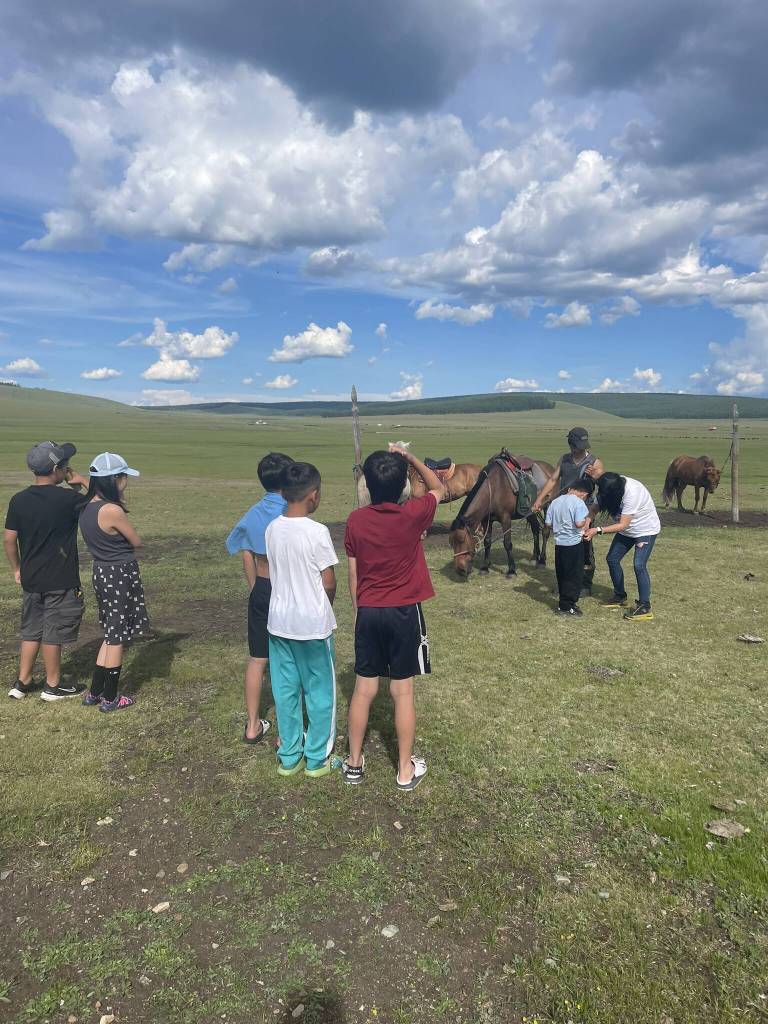
Apparently the horses are quite comfortable in the water too. Or maybe it’s just that they are thirsty. Either way, the 3 of them pick up speed as we get closer to the lake and don’t hesitate to step into the clear fresh water. Then, my horse decides to take a sip and I almost tumble down its neck. Somehow, I manage to hold on tight enough and by keeping my feet up high, return to the shore completely dry. That’s not the last excitment for the ride tho. On the way back to the small ger settlement we pass the neighbour’s herd of goats. Deegi suddenly stops and points to a small pile a little away from the other animals. First I can’t see what it is. We lead the horses a little closer and I realize that it’s a newborn baby goat. Still covered in sticky liquid, it attempts to stand up but falls down time and time again. A few meters away, the mom is bleating encouragingly, desperate for the baby to make it to the safety of the herd.
We let goats be goats and head back in a straight line across the fields. By now I’m feeling quite secure sitting on the horse, but I’m still far from Deegi’s level of comfort. He’s actually texting and trying to translate an animal name for me on his phone while we are still riding. For a second I wonder if this would be a punishable offence, like texting and riding a bicycle etc. But then I remember where we are and that there is probably no police patrol to be found within the radius of 100 kilometers. Back at the ger, suddenly all of the other kids who were too shy before also want to go for a ride. So Deegi takes the next 4 of them on another tour, while I follow the younger son who gestures to come with him. Somewhere in the field between the tents and animal enclosure he finds a frisbee and we start to play. Despite no common language and around 20 years of age difference, we have a great time and soon the boy’s sister joins too.
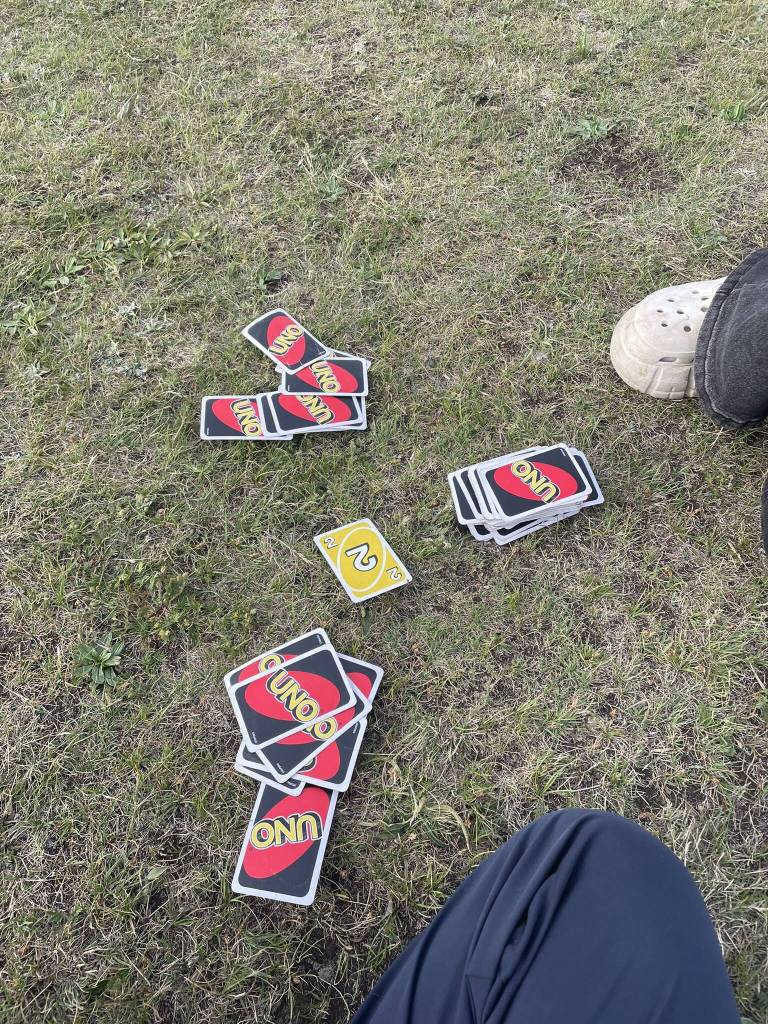
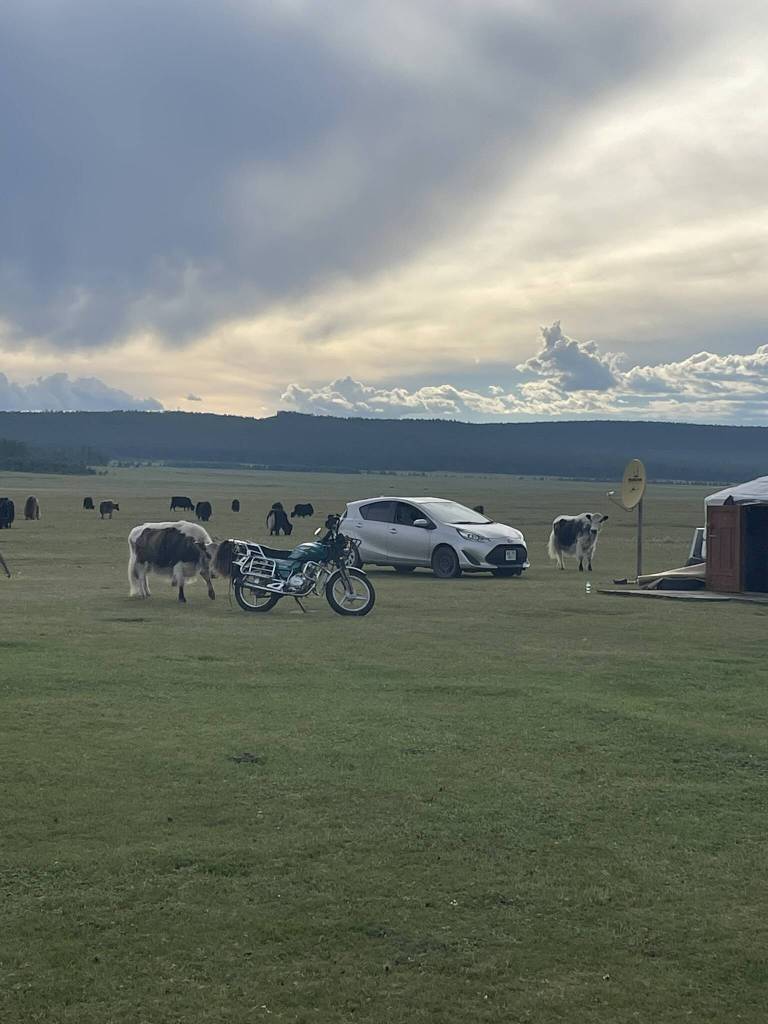
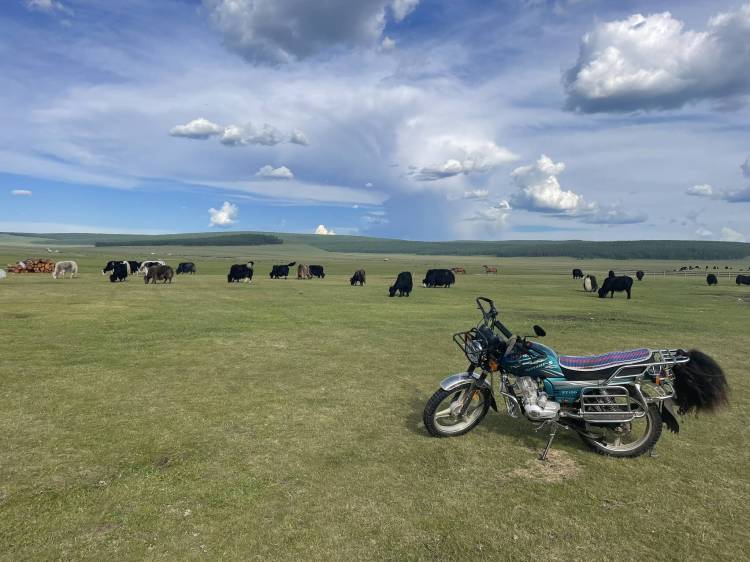
Once we ran around enough, we switch to playing the world’s most wellknown card game: UNO. As always, the question of the possibility to add a +2 on top of a +4 comes up. We decide on yes, and soon I’m holding 14 cards, while the kids have almost none left. Unexpectedly, one of the grazing yaks comes to my rescue before I have to accept defeat. The large animal seems to have a better nose than eyes and mistakes the hairy tail tied to the family’s motorbike for one of his 4-legged companions. The boy quickly runs over and despite being much smaller than the cow, confidently shushes the yak away. He then seems to suddenly remember his responsabilities, cause the boy and his sister begin to run across the field towards the herd of grazing yaks. They gesture me to follow and by means of body languge show me how to get the animals to go where we want them to be.
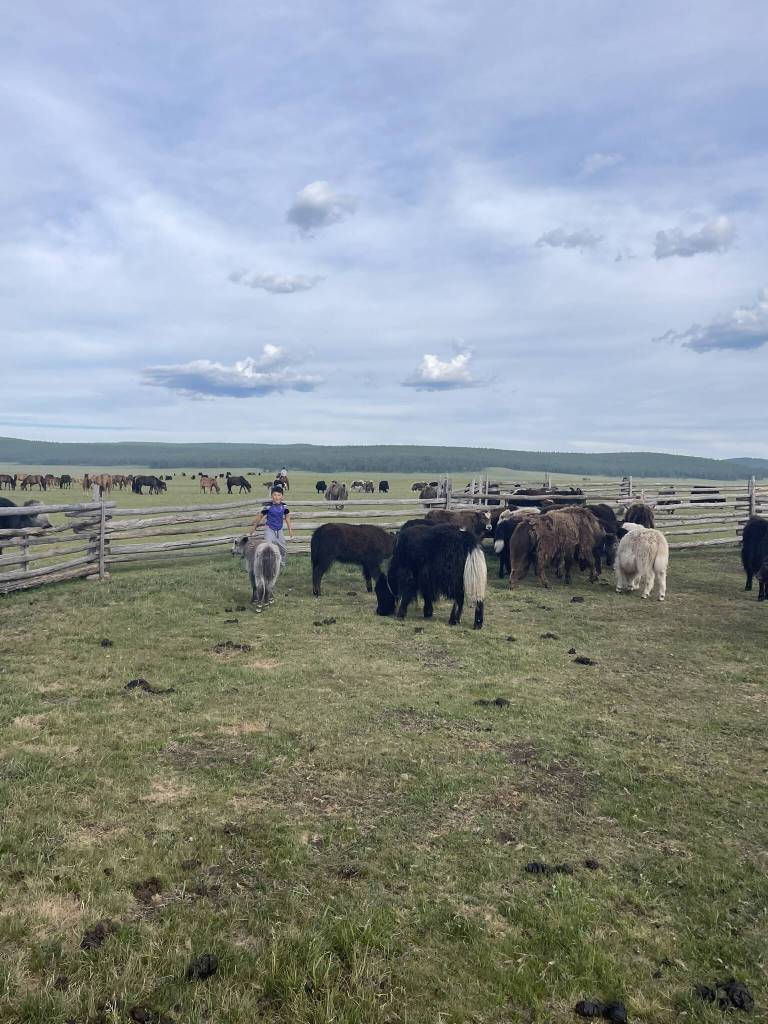
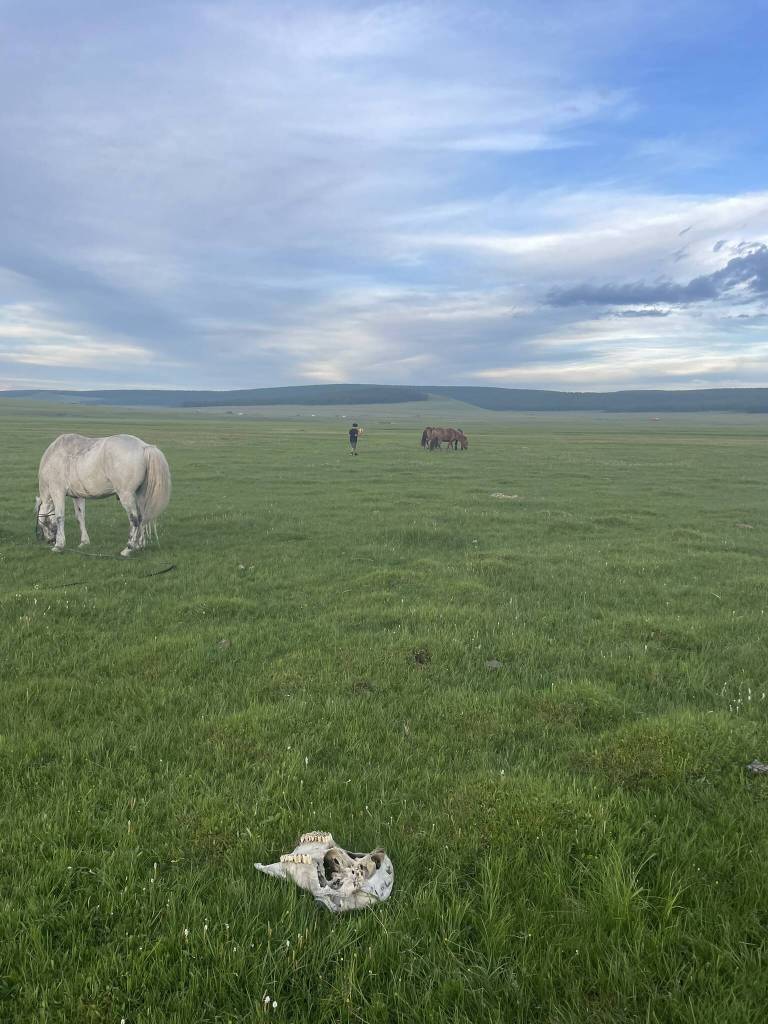
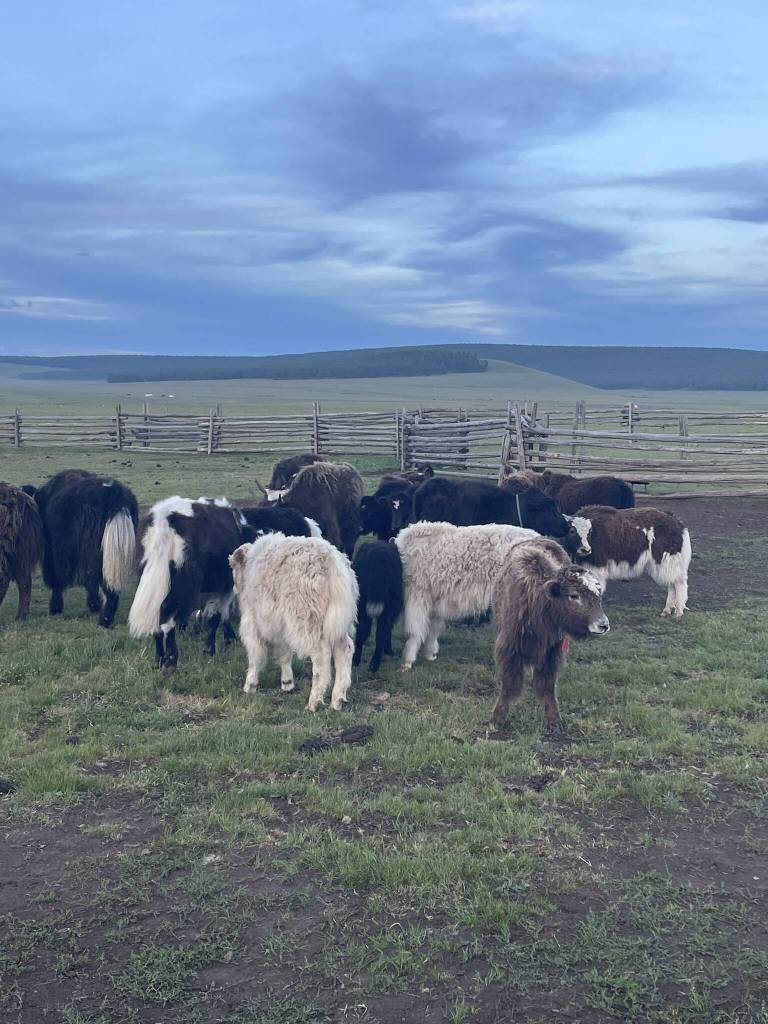
The three of us keep raising our arms behind the young yaks while shouting „hosch“. Another signal in Mongolian I learned that was the one to guide horses: „chum“. The baby yaks seem to already know the drill and are eager to have dinner. So herding them into their small enclosure made of wooden sticks is a piece of cake. We soon finish the task and return to the ger. The last horse riders also just get back from their tour to the lake and Deegi prepares the animals for their resting time. I follow him together with Giiguuleh and Beda, as he brings 3 of the horses down to the lush meadow. Here Deegi ties them to the several meters long ropes attached to pins in the ground. Now just 1 lonely stallion covering the evening shift is neighing on the top of the hill under the bright moon. We walk past him on the way back to the ger, where Daava and Deegi’s mom are busy preparing Hoschor for dinner.
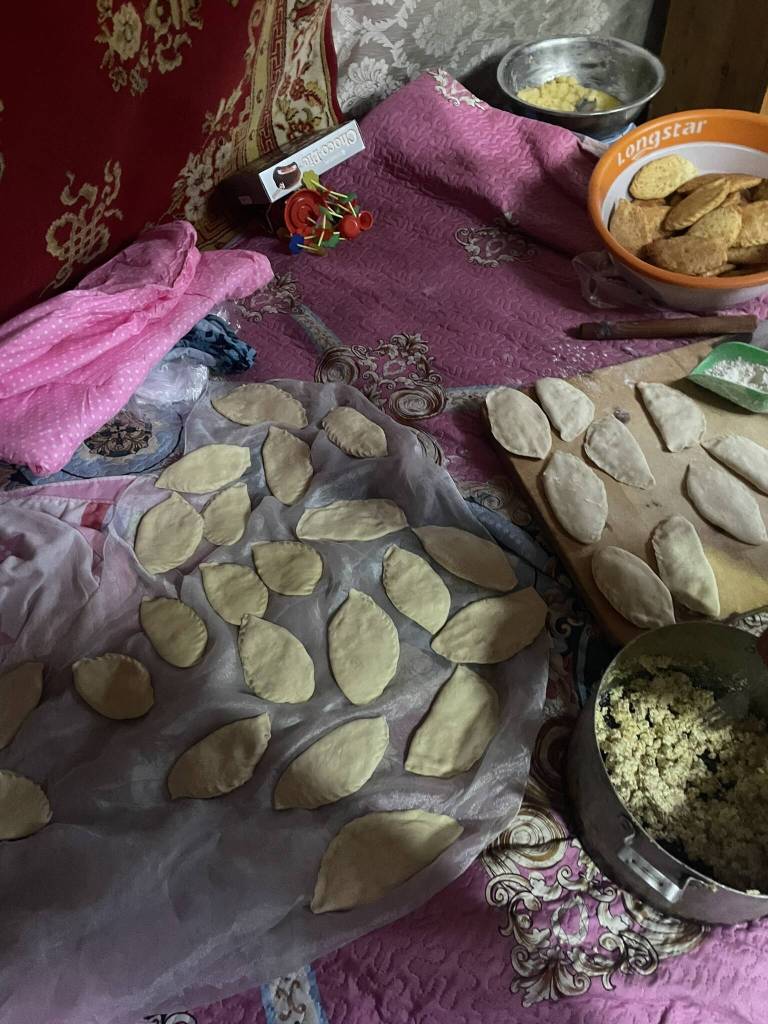
The large Mongolian dumplings are usually stuffed with meat, but Daava values healthy nutrition, so tonight we’re having a vegetarian version. There are lots of homemade circular pieces of dough spread out on a towel on the double bed. While Daava is catching up with filling and shaping the dumplings, the mom fries whatever is ready. It looks like there are still around 200 pieces to go, and I offer my help to get dinner started faster. After all it’s already around 9pm. I do my best to stuff the dough with the yak cheese filling and secure the folds so it creates the iconic zigzag shape. The 2 seasoned Hoschor-makers keep telling me that my dumplings look fine, but I suspect their main goal is to keep me helping. I continue my work until most of the dumplings are done, and then join the next round of herding the yaks to their night quarter.
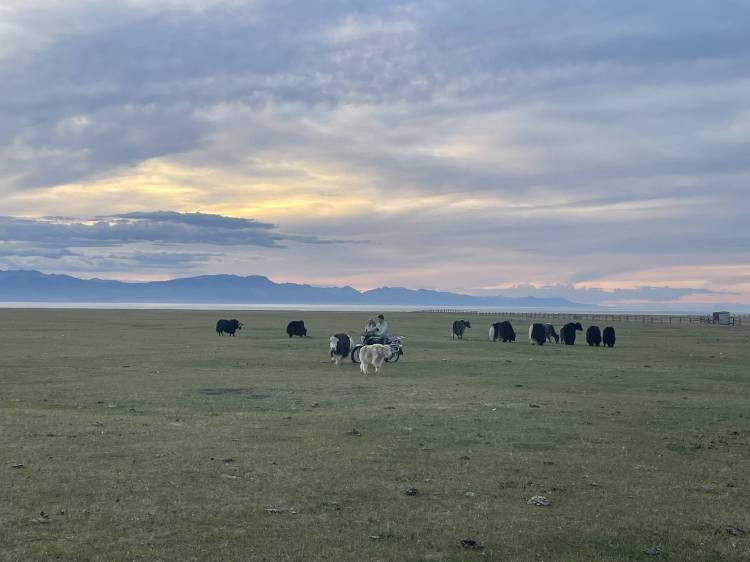
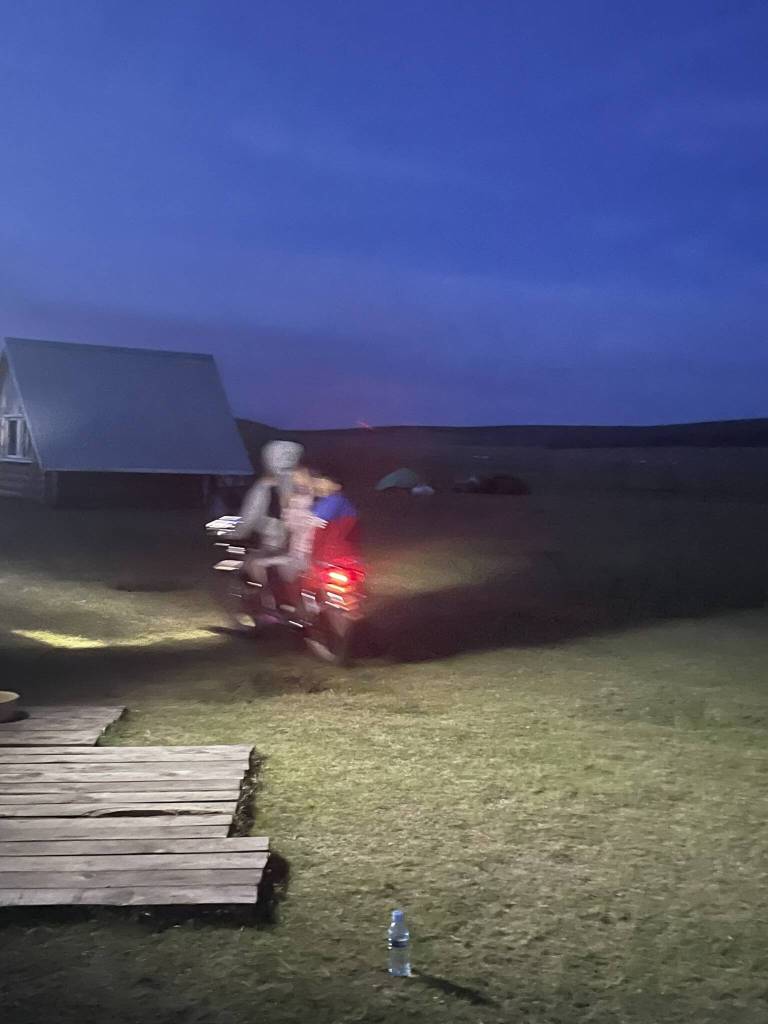
Since the distance the animals have to cover is a bit larger, the younger boy jumps up on the stallion who was left behind on the hill, while Deegi rides his motorbike. Their sister, me and my 2 English students join on foot. Everyone is screaming, the yaks are running, it’s an energetic event illuminated by the rising moon and the single light of the old motorbike. Once all animals are where they are supposed to be (grazing contently on a new patch of grass), Deegi takes Giiguuleh, Beda & me back to the ger on the motorbike. While I have seen the like before in Asia, I do not have faith in the power of this particular bike to carry the 4 of us at once. But somehow it works, and everyone is back in time to dig into dinner. This is when I finally meet the 2 British guests staying at the nomad’s homestay.

They came with their guide from UB 2 days ago and get the full lifestyle experience – including milking the yaks the next morning at 5am. They are just as happy to be eating a vegetarian meal as I am. Much more so than the nomad boys, who look very confused after their first bite of what they think is a normal Hoschor. (I hear on their next visit Daava brought Korean BBQ for lunch, so rest assured they are fine). It is over dinner that Daava asks me if it’s okay with me if we sleep here. The kids want to stay longer and her dad isn’t too keen on the long drive back to the camp at 10pm either. Of course I agree – finally I get to sleep in a ger! But is there enough space for the 5 of us? Daava says not to worry.

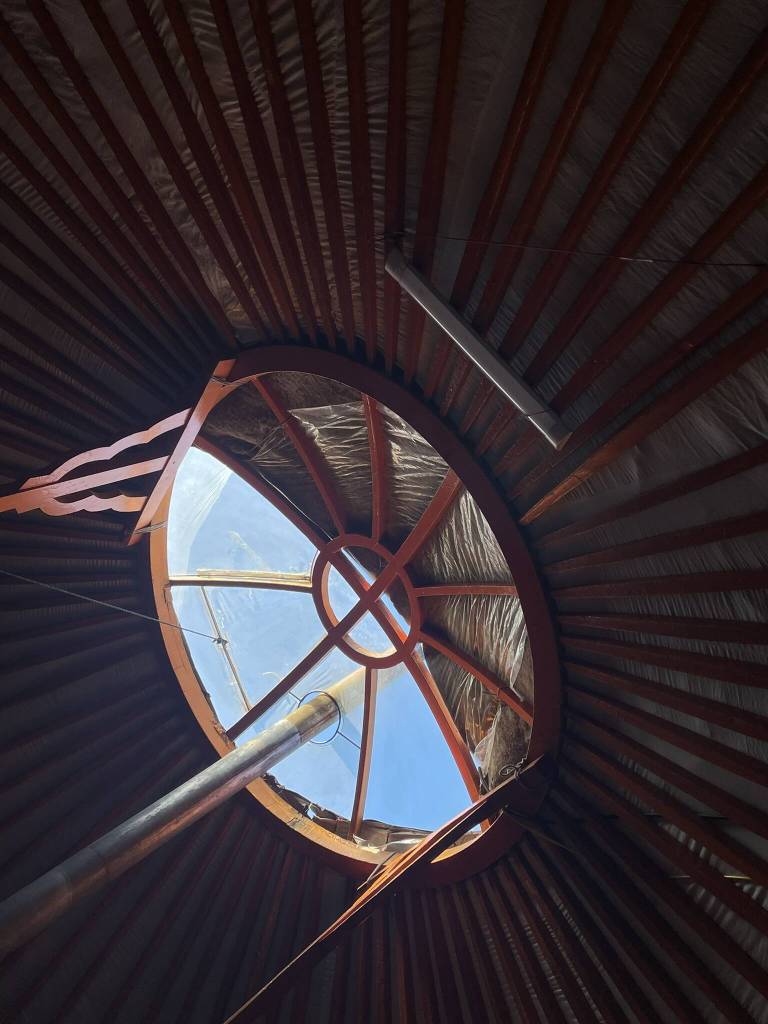
And so Grandpa gets to sleep in the husband‘s bed (he’s away for work), Beda joins the nomad boys in their own ger, and the floor space where the table was standing during the day is quickly turned into collective sleeping area for us girls. We spread out multiple layers of blankets on the plastic sheet with a final one to cover us – the most important rule: the head must always face north and therefore away from the door. I use my fleece jacket as a pillow and quickly change into my pajama under the blanket. Daava is impressed by my preparations and I tell her that I kinda anticipated this would happen. She tells me, that it’s very common in Mongolia to just go over to someone’s ger and stay there unannounced. After all this is how people survived on this land for centuries. And so I fall asleep soundly on the floor, looking up at the night sky through the smoke window, while the fire slowly burns down.
This extraordinary experience (for me anyway) showed me how deeply the famous saying of the Chinggis Khan saga still is engrained in Mongolia’s culture today: “One arrow alone can be easily broken, but many arrows bound together are unbreakable.”
 thattravelstory
One thought on “Milk Tea, Herding, and Hospitality: a Day with Mongolia’s Nomads”