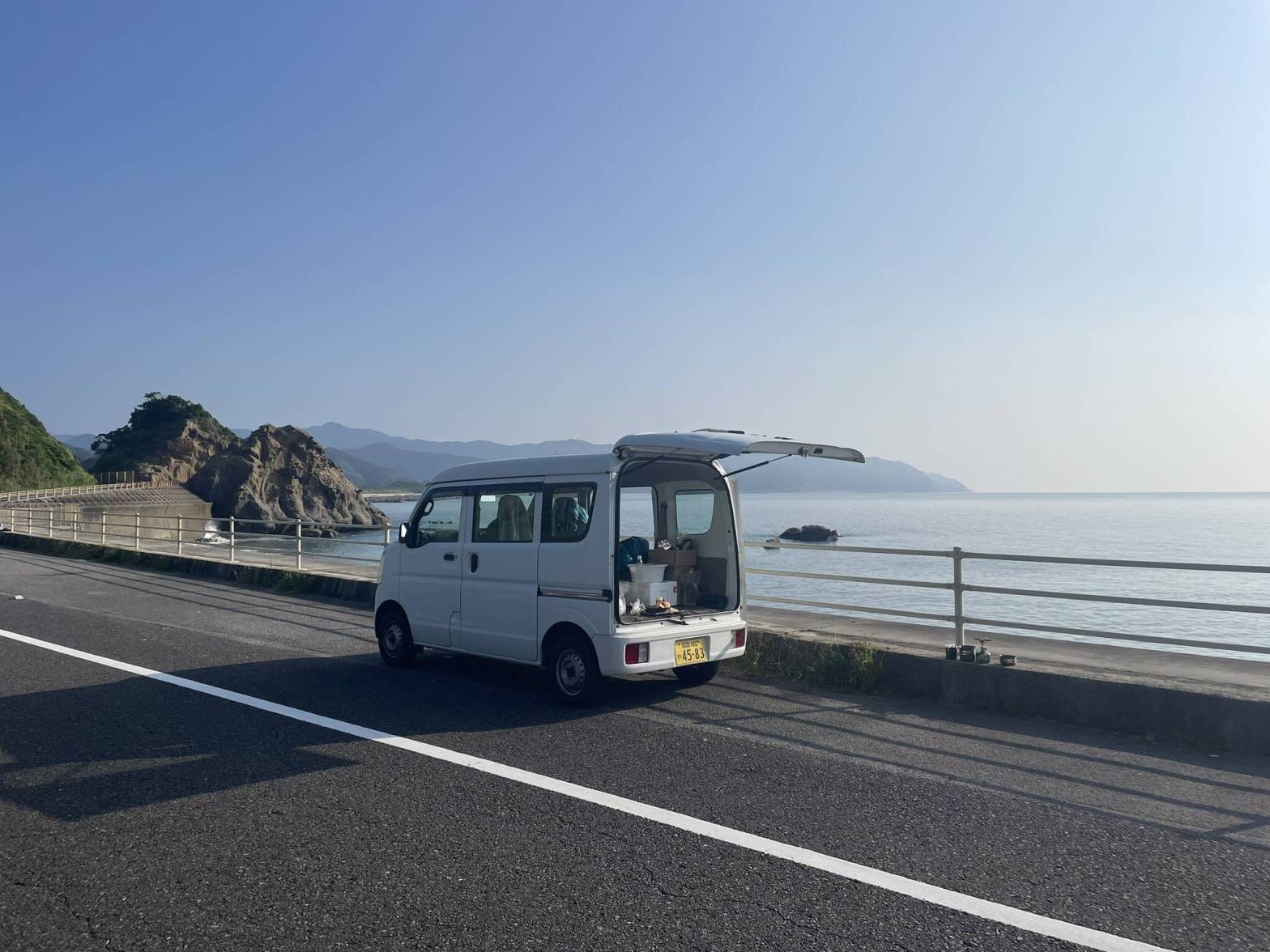
Kyushu – August 2025
You have probably heard that travelling in Japan can easily become quite pricey. I already covered a few ways to keep costs low in another post, but my latest trip was the cheapest ever: in total we spent around 200’000 JPY for 2 people and 1 month of travelling. The rental car being the largest expense at ca. 50’000 JPY excl. gas. Which gets us to the first point you want to clarify when planning any roadtrip is transportation. If you already have a vehicle – great. If not, try to find a local shop that rents out cars on a monthly basis (eg. マンスリーレンタカー, like this one in Fukuoka City). A heads up, this will likely be easier if someone in the group speaks Japanese and has a local drivers license. Otherwise you can opt for a chain like Budget Rental Car. Keep in mind that you need an international license or for CH/DE and some other European countries even a Japanese translation of your original license.
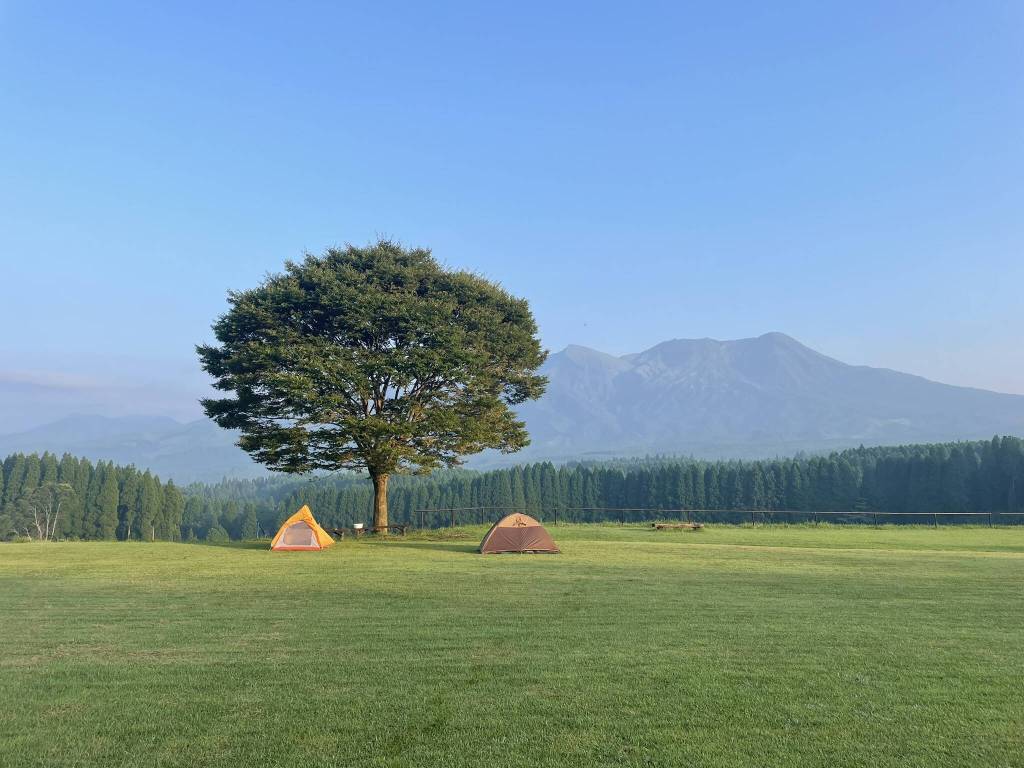
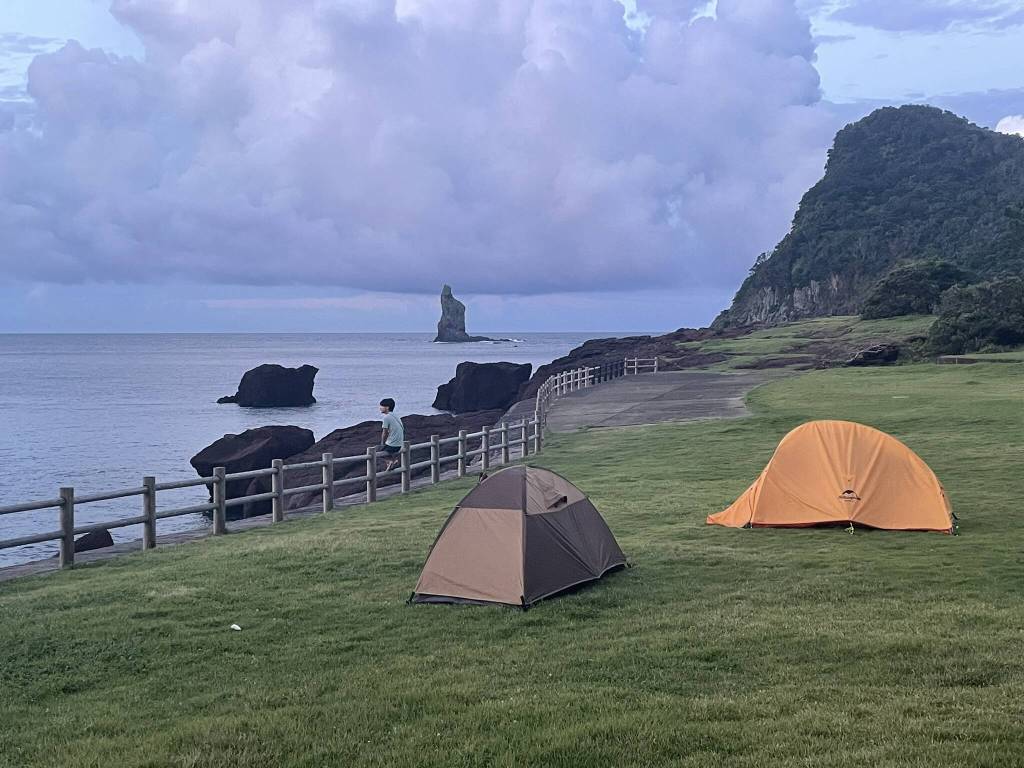
The next point is accommodation. Of course you can opt for hotels and guesthouses along the way. But if you want to keep costs low, camping is the way to go. Again, there are different options. Depending on the season and preferred level of comfort, you might decide to sleep in the car/van. Or you might want to pitch a tent every now and then. In my case, I ended up sleeping better in a tent during peak summer. I bought a cheap used one at the reuse chain “Second Street” (price was 3000 JPY) and at the end of the trip I dropped it off at another of their locations (got 250 JPY back…).
Keep in mind that wild camping is technically not allowed in Japan. However, there are a few places like recreational parks owned by municipalities that don’t charge for pitching a tent. You can find them by searching Google Maps for „キャンプ” or checking this website. For public parks I’d highly recommend confirming there is a toilet with running water and parking available if you want to stay overnight. Some places may close the water access during off-season or require a “water key” (水道キー). You can buy one at any Home Center for a few hundred Yen.
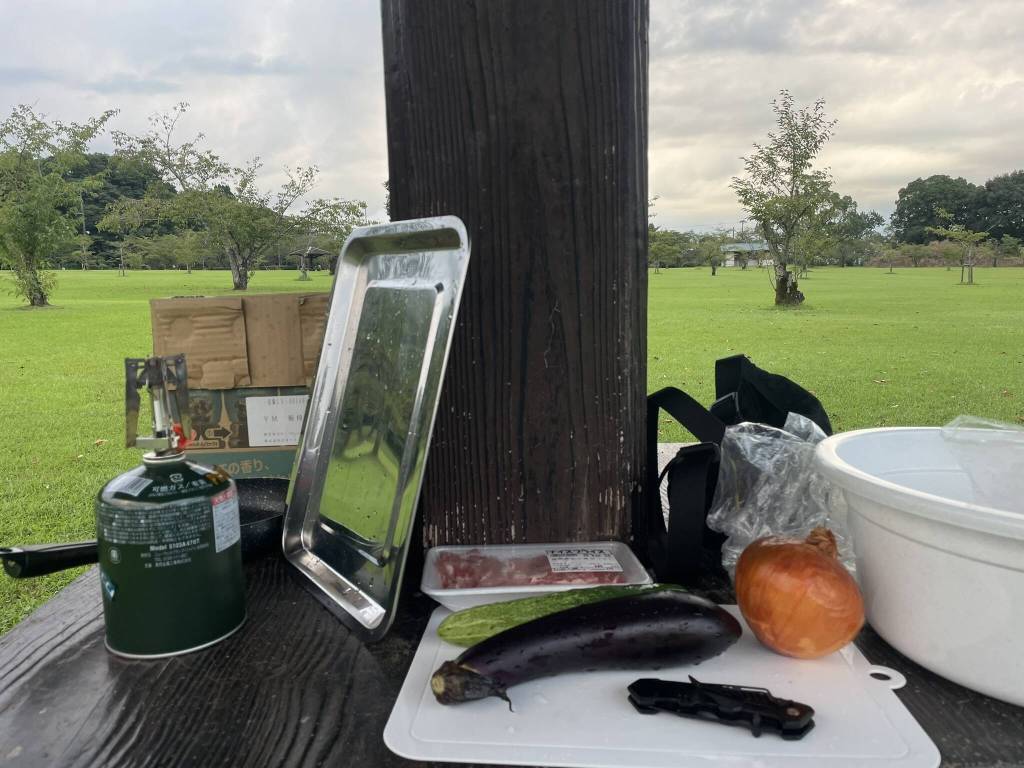
The third big thing to think about is food. In general you will never be far from a place to eat good affordable food wherever you go in Japan. Check my restaurant recommendations here: Sway. However, if you want to cook yourself, there are some helpful pointers. Some parks don’t allow open flames, which includes camping burners. But if you keep it to the parking lots it’s usually okay. You can buy gas cartridges at most home centers and outdoor shops, for cooking utensils I’d check “Daiso”. As for groceries, there are lots of large supermarket chains like “MaxValu”, “業務スーパー” (many international products) or “Discount Store TRIAL” which are open 24/7. We also used them to get bags of free ice for the styrofoam box which like that easily turned into a cheap fridge – even at the height of summer. Roadside stations (道の駅) often sell cheap local produce! Oh & getting tasty fresh water the local way: stop at springs in mountain areas called 湧き水 (eg. 高森町水汲み場 or 霧島裂罅水の泉) & fill any empty container with free water.
One thing that you shouldn’t underestimate, is the struggle trash disposal can pose. In Japan, recycling is taken very seriously and many places separate different types of waste rigorously. When camping, especially if you’re cooking yourself, this can easily become an issue. The best places to check for large enough trash cans are Roadside Stations (道の駅), convenience stores, the supermarket chains mentioned above & last but not least: McDonalds. Probably the most difficult thing to get rid of are gas cartridges. Unfortunately, the places that sell them (supermarkets, home centers, etc) usually don’t accept empty containers. Your best bet are the prefectural waste centers near the major cities. However, most of them only accept local waste, so make sure to tell them you were staying at a local campsite before.
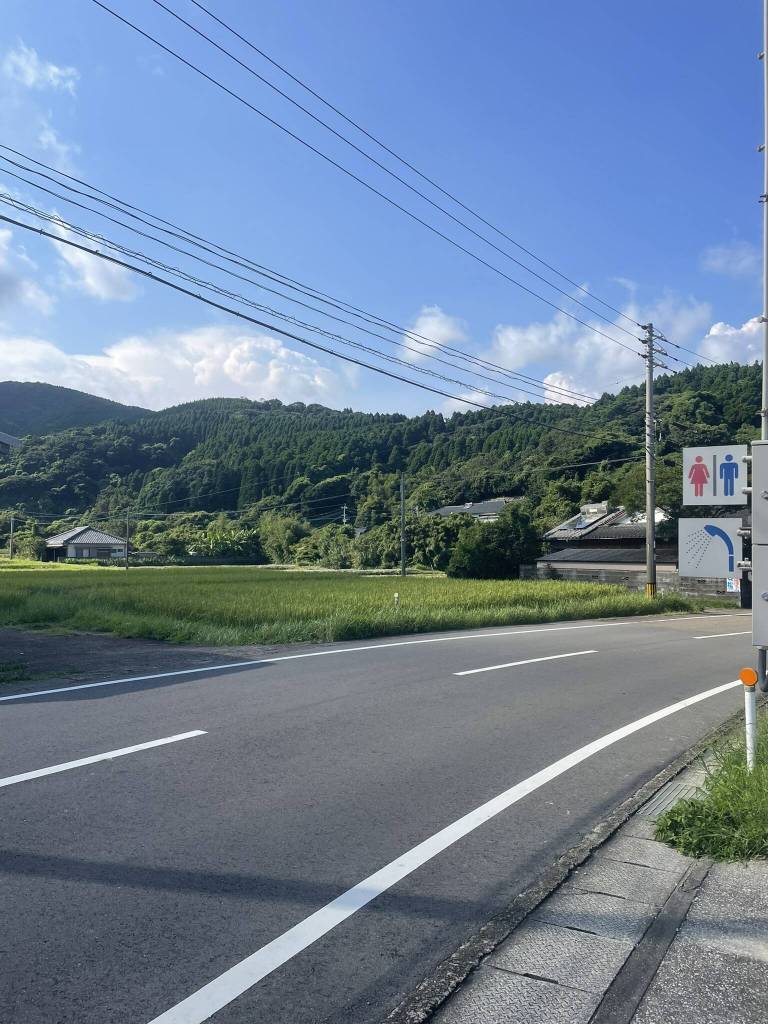

With the biggest question marks out of the way, there are some things that are refreshingly easy to find in Japan. Free public toilets can be found at most parks, supermarket, convenience stores or 道の駅. For laundry, just google コインランドリー and lots of laundromats will show up. The cheapest option we found in Kyushu was the chain „Wash ハウス“. In Aug 2025 they charged 300円 for 9kg washing and 100円 for 10 minutes drying. Apart from supermarkets we also frequently visited the 100円 shop “Daiso“. They have everything from cigarette plug adapters to USB for the car, condiments, fry pans, wet tissues and even 蚊取り線香 (Katorisenkō). The latter is the most effective version of Japanese mosquito repellent. Trust me, you will need it if you plan to travel between July & September. Another hot topic: showers. In beach areas (like Miyazaki) there are often free cold showers & paid (100円) hot ones available. Otherwise local Sentos are your best friend 🙂

More about the travelling in summer – July to September – prepare for hot (35+ Celsius) and very humid days. Rain is highly likely and you might even experience a typhoon. So keep an eye on the weather radar and stay safe. Be aware of the summer holiday period around “Obon”. It’s a popular season for local tourism and well-known attractions may be crowded. Super fun summer activities that are free: 川遊び = playing in the river and 花火大会 = firework events. Check this post for further insights what a week of van life and camping in Aso could be like.
 thattravelstory
2 thoughts on “How to: Van Life in Japan”