Japan — June 2025
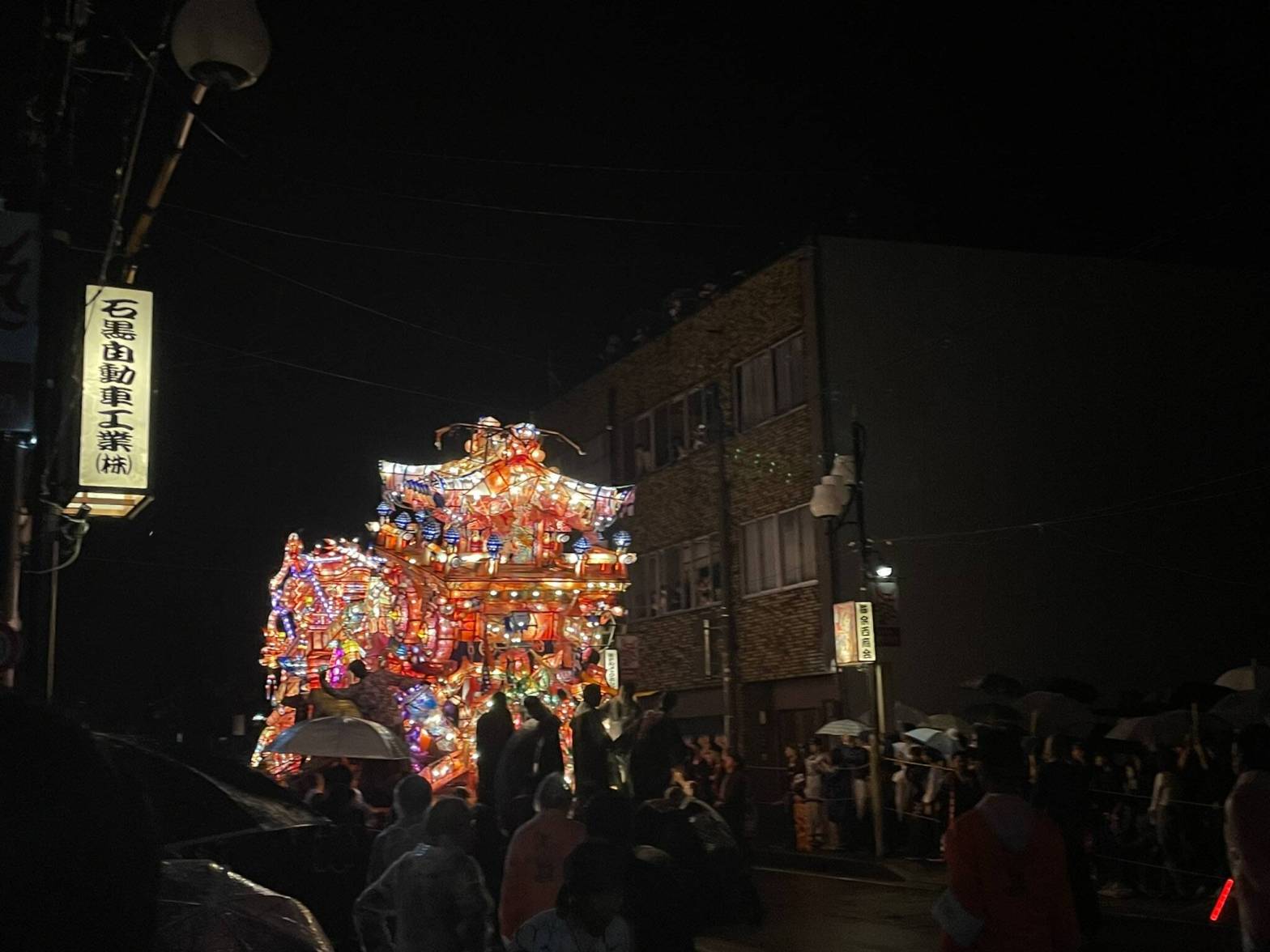
During my last days of living in Japan, I receive a spontaneous invitation from my friends Irene & Marina to join them on an excursion to Toyama prefecture, where the Tonami Matsuri is held in June. I never heard of it, but I would also never say no to a Japanese festival, since they are always fun. So on 14th June, Marina and I take a train to Morimoto station, where Irene picks us up in her car. Together, we drive to the small town of Tonami, which lies only 40 kilometers behind the Uchiyama mountains. We arrive well before the main event of the festival starts and park the car at the conveniently located Aeon mall. Here we buy some refreshing drinks before walking to the town center. It’s just before sunset time, and there is a bit of rain drizzling. Just when we debate if the festival would still happen if it continued to rain, we see the first floats passing through the streets, covered in large transparent sheets of plastic.
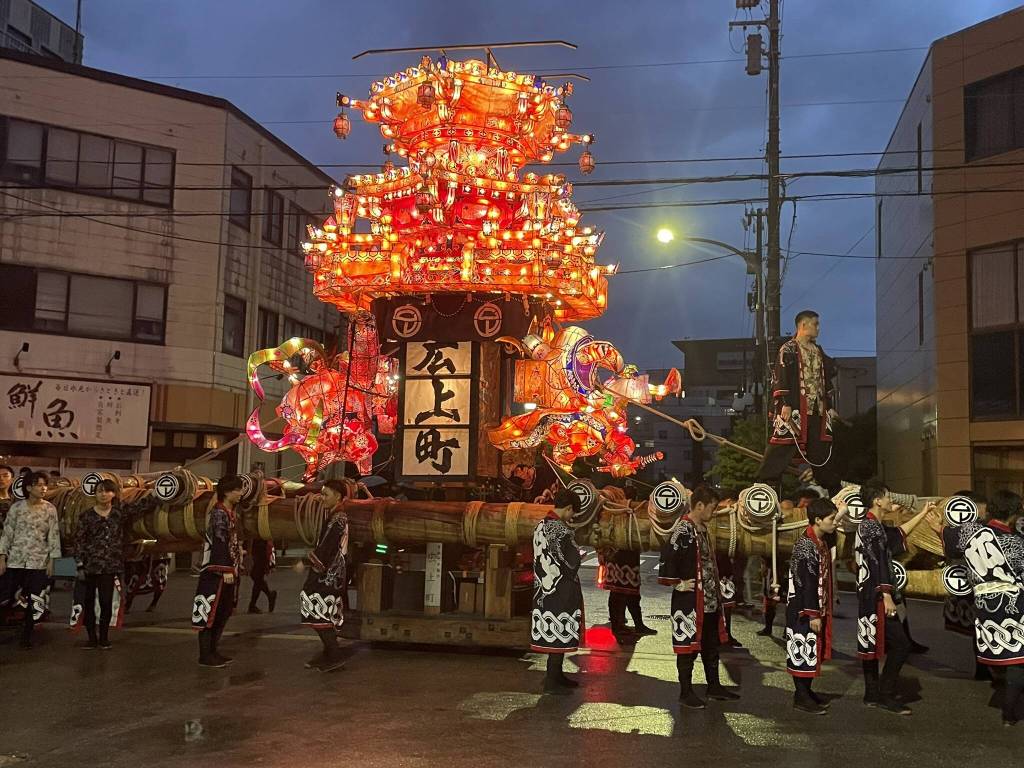
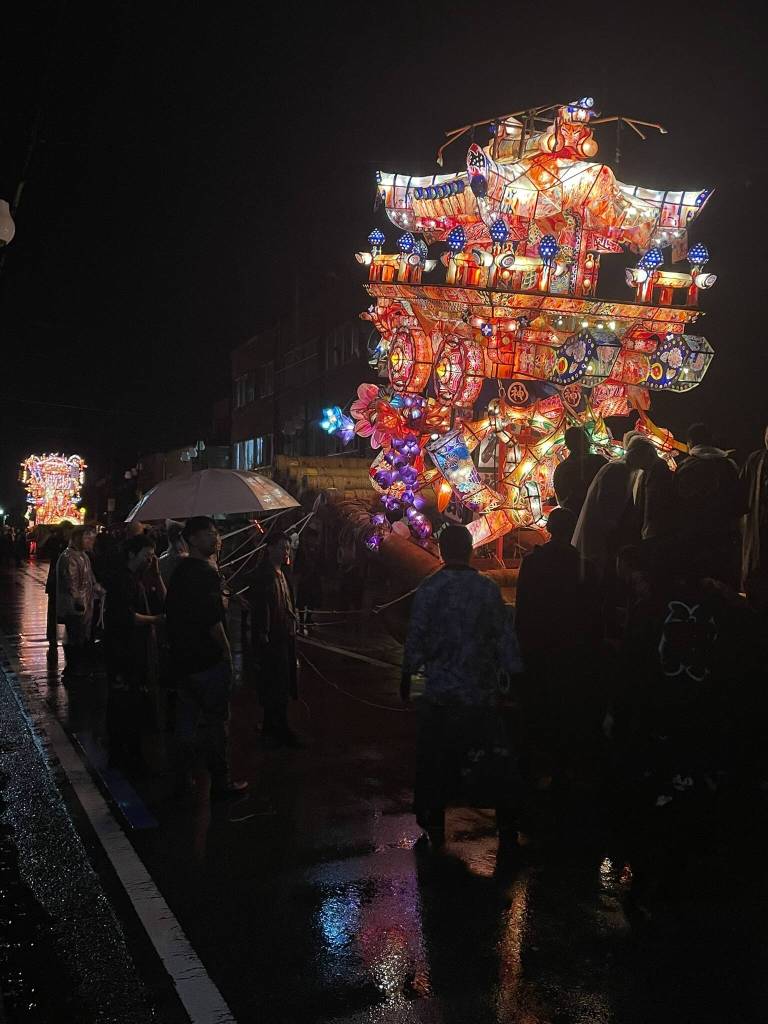
It seems that the town people are very eager to run the festival despite the unfavorable weather conditions. Through the plastic covers, we can still make out the general shapes of the towering andon lantern structures. They are made from wooden frames and covered in brightly painted washi paper panels. Reaching several meters high, they are richly decorated with bold colors, traditional motifs, and calligraphy, and glow dramatically when lit from the inside at night. They typically represent themes drawn from Japanese history, mythology, and folklore. Many depict famous warriors, legendary heroes, kabuki characters, or scenes from classic tales, rendered in bold, dramatic imagery. Others feature symbolic motifs such as dragons, deities, or seasonal elements that convey strength, protection, and good fortune. Together, these themes reflect both cultural tradition and the community’s pride in storytelling through visual art.
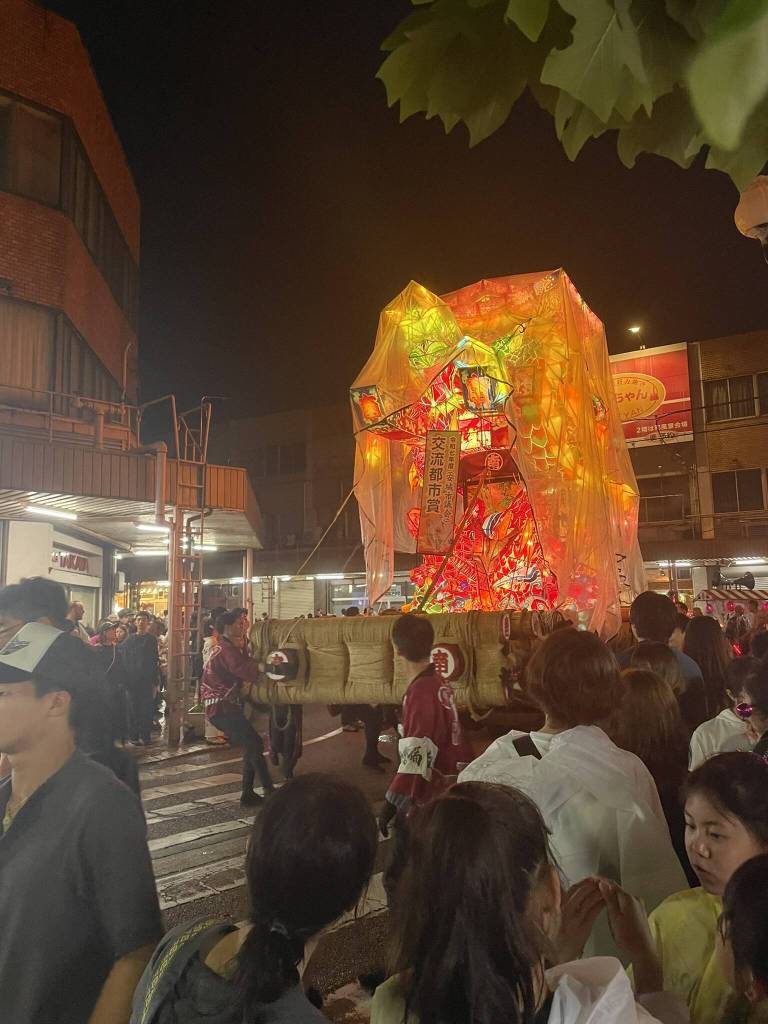

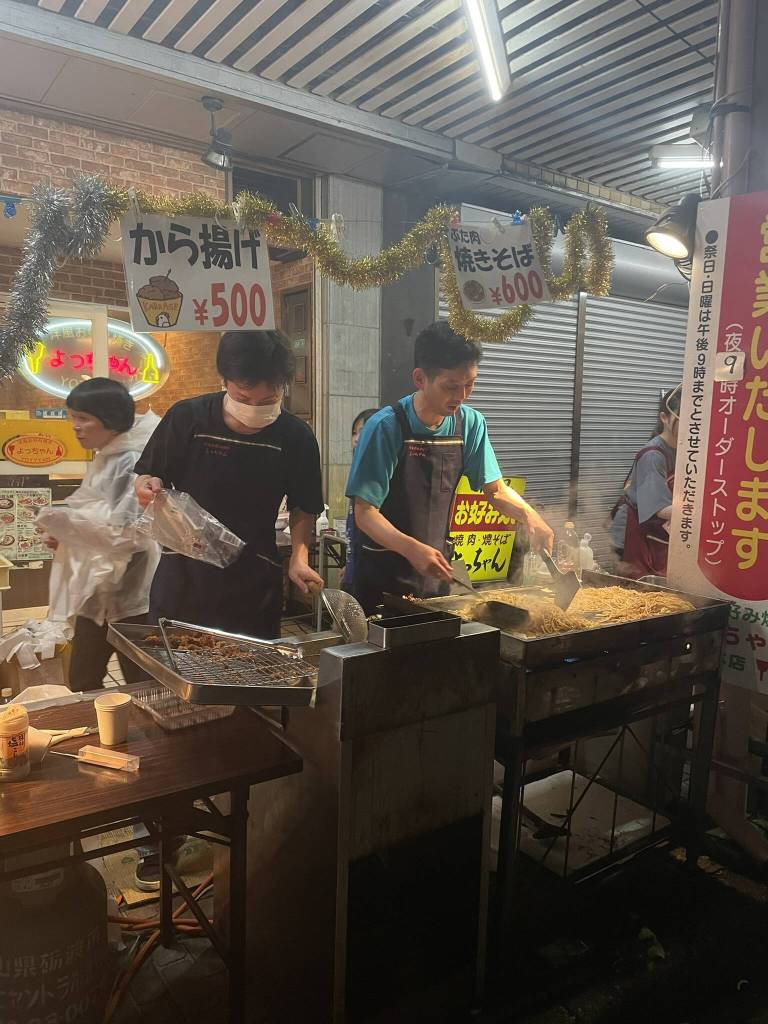
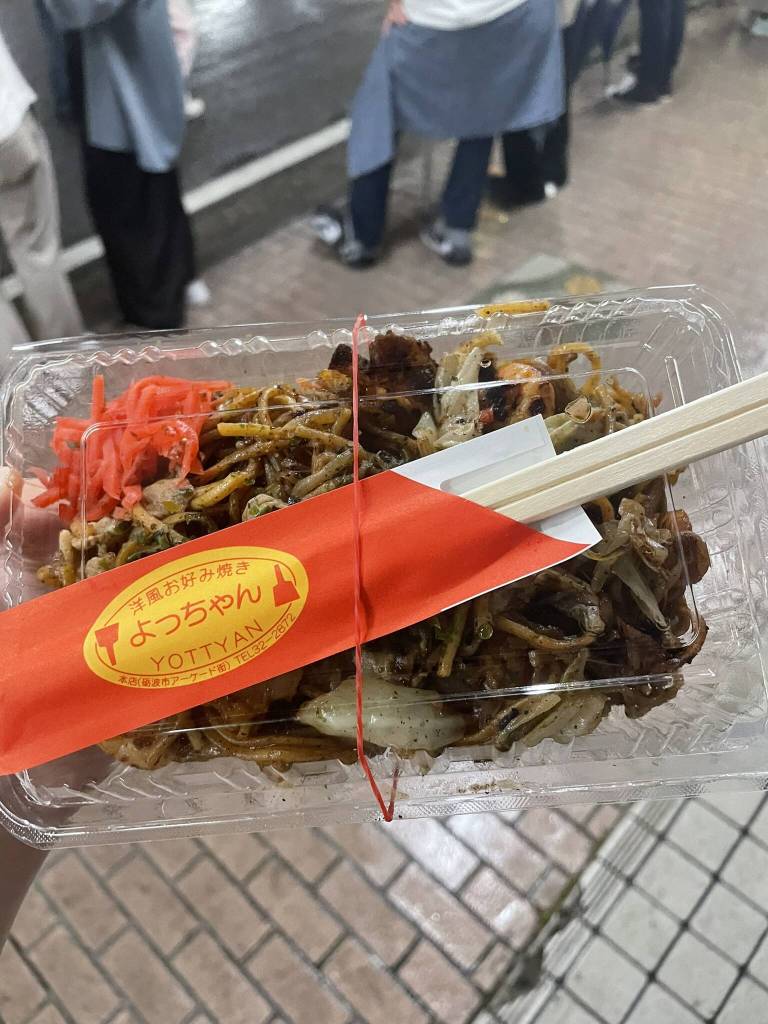
Carried and pushed through the streets by dozens of young men to the sound of drums and flutes, the floats create a powerful visual spectacle. The local pride, energy, and festive spirit of Tonami can be felt even before the main event begins. While we wait for the clash of the floats, we buy dinner at the various food stalls set up in the city. We eat our yakisoba and karaage chicken under an arcade covering the shopping street, which protects us from the rain. There are lots of musicians, elders, and local community members who join as onlookers like us or to support the young men by delivering food and drinks.
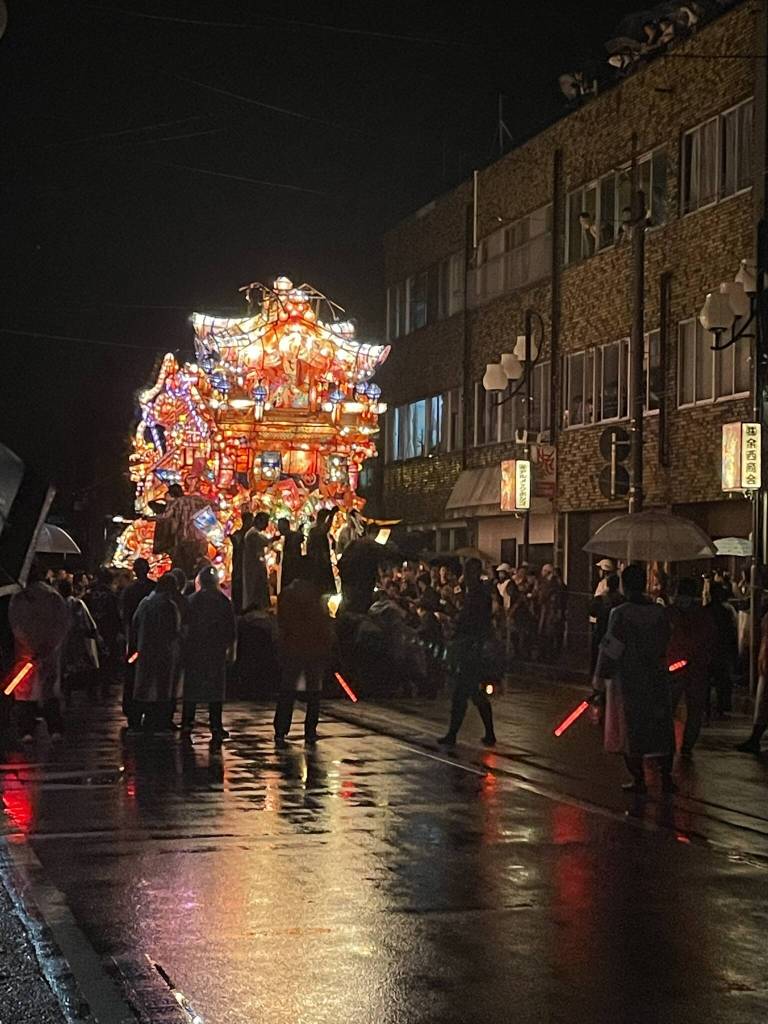
Finally, the increasing sound of drums & flutes announce the start of the main event. We head back to the main crossing, where a sea of transparent umbrellas blurs out the lit-up floats. Security guards (& ropes) are preventing onlookers from walking out into the road, which could be very dangerous. 2 colourful floats are already pulled back by their builders. They are ready for the festival’s peak: now teams will deliberately ram their massive lantern floats into one another in a spirited display of strength, coordination, and courage. After a bit of readjusting, the foreman standing on top of the structures counts to three. This is the signal for the rest of the group below to push and pull the floats to the center point with as much force as they can. As far as I can tell, the goal is to damage the other float. This is likely also the reason the rain doesn’t stop the event from happening, unlike other festivals, where the floats are to be protected at all costs.

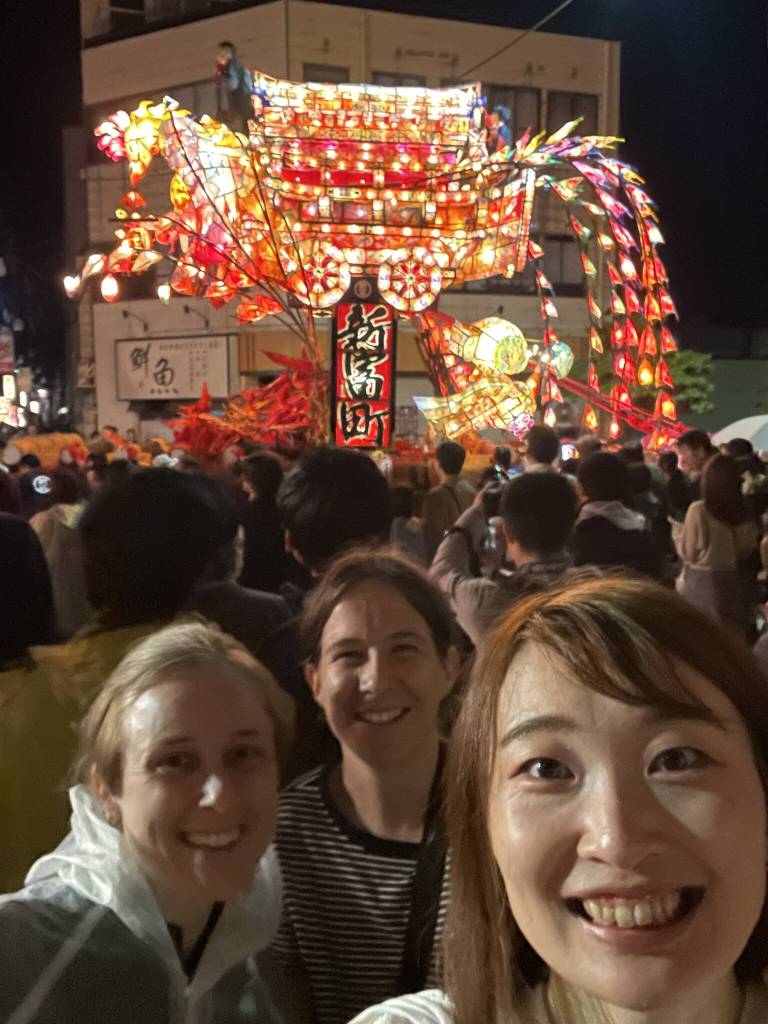
When the lanterns finally crash into each other, the participants rock them back and forth a few times, which is accompanied by a lot of supportive chanting from the crowd. I find myself conflicted between cheering on the guys who are clearly having a lot of fun doing this, and feeling bad about the beautiful floats getting destroyed in the process. At least it seems that none of the lanterns are too badly damaged after the fights, and all participants stay safe. When the last floats finish their fights, we get another chance at looking at them from close up as they return retrace their way through Tonami’s streets. Only then I realize that there are even people standing on top of some structures. This is definitely one of the more unique festivals I’ve been to in Japan.
 thattravelstory