India – January 2026
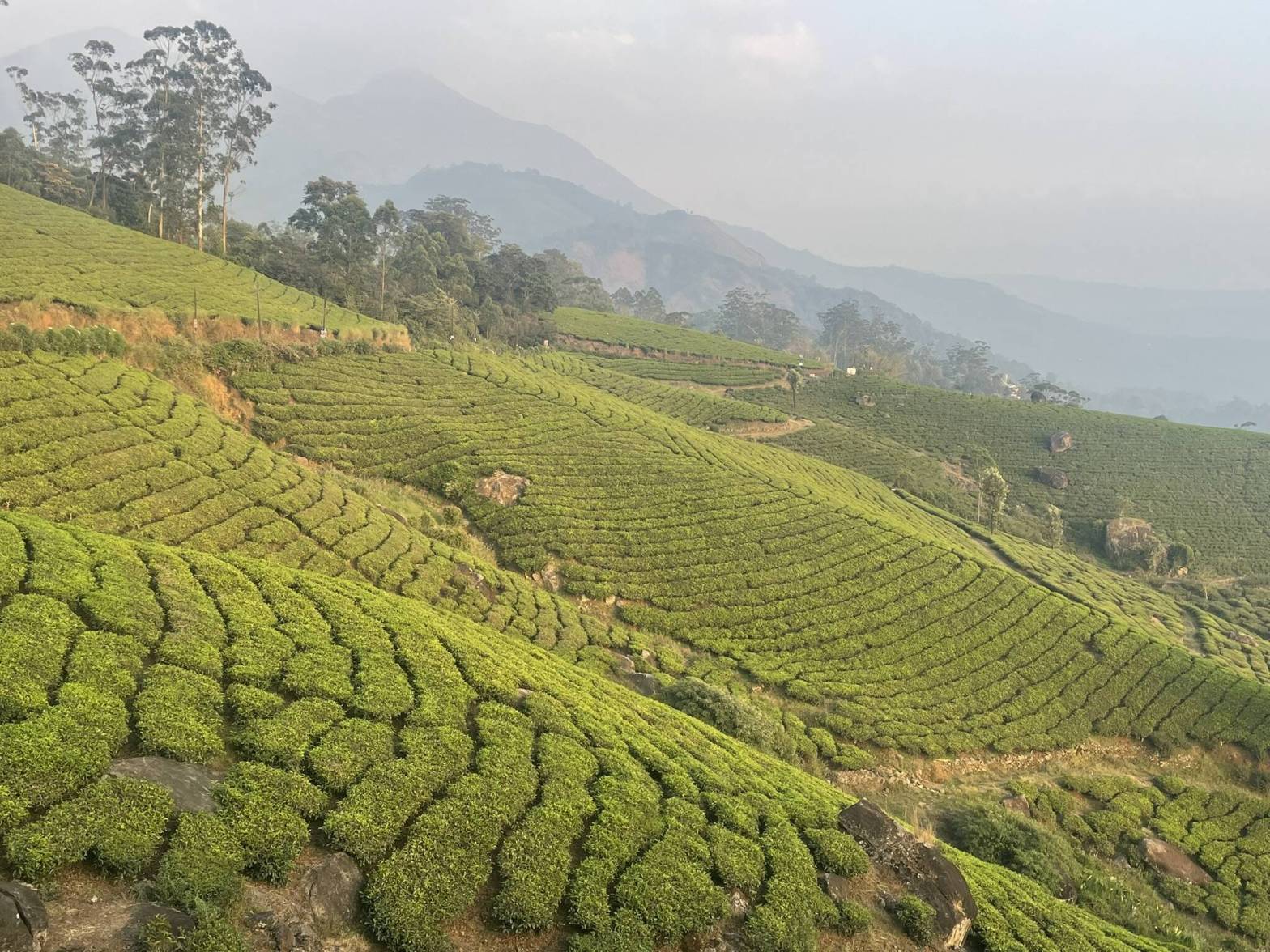
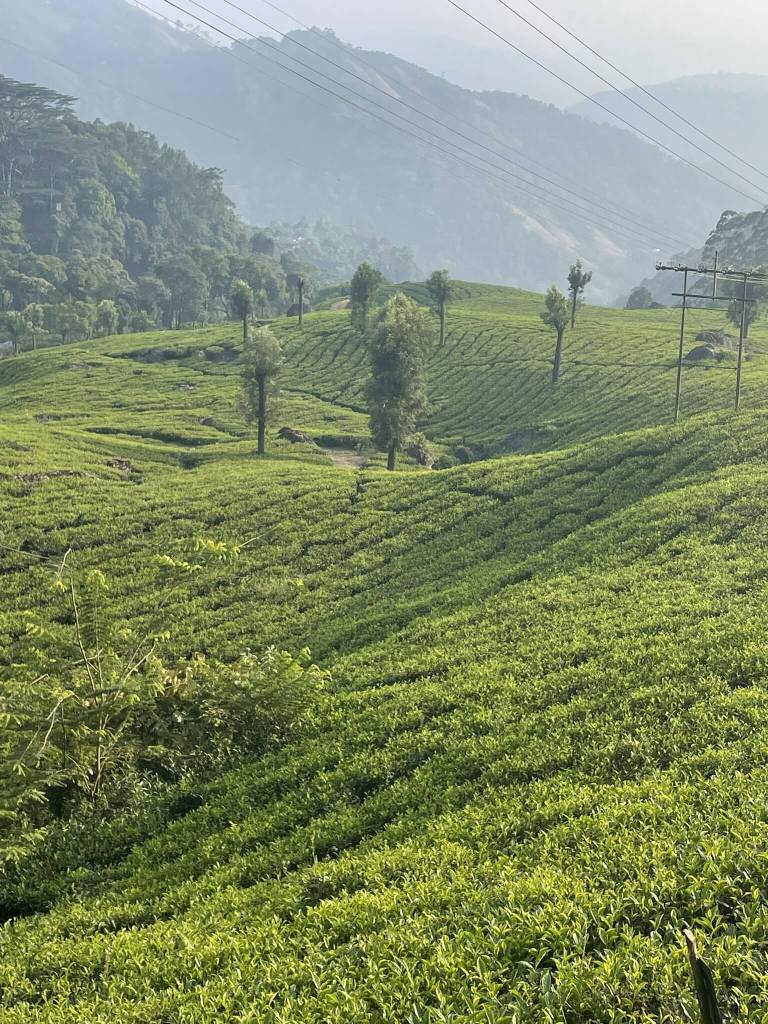
Inspired by a guy I met at a hostel in Fort Kochi, I decide to return to the Couchsurfing app for my upcoming stay in Munnar. I filter for hosts who are “accepting guests,” sort by “last login,” and start reading profiles. Anand Paul’s immediately stands out, so I send him a message. He accepts my request for a two-night stay shortly after and follows up by sharing his WhatsApp number. We exchange a few messages the day before I travel, confirming my arrival time. But my bus reaches Munnar earlier than expected, and Anand clarifies that his office and home are actually in another part of the hill station. Luckily, I’m passing close to that area anyway, so I impulsively jump off the bus. Anand guides me to his office, where I leave my bags, chat with his staff, and enjoy a surprisingly good coffee before heading out to explore Munnar town and a few quieter tea plantations.
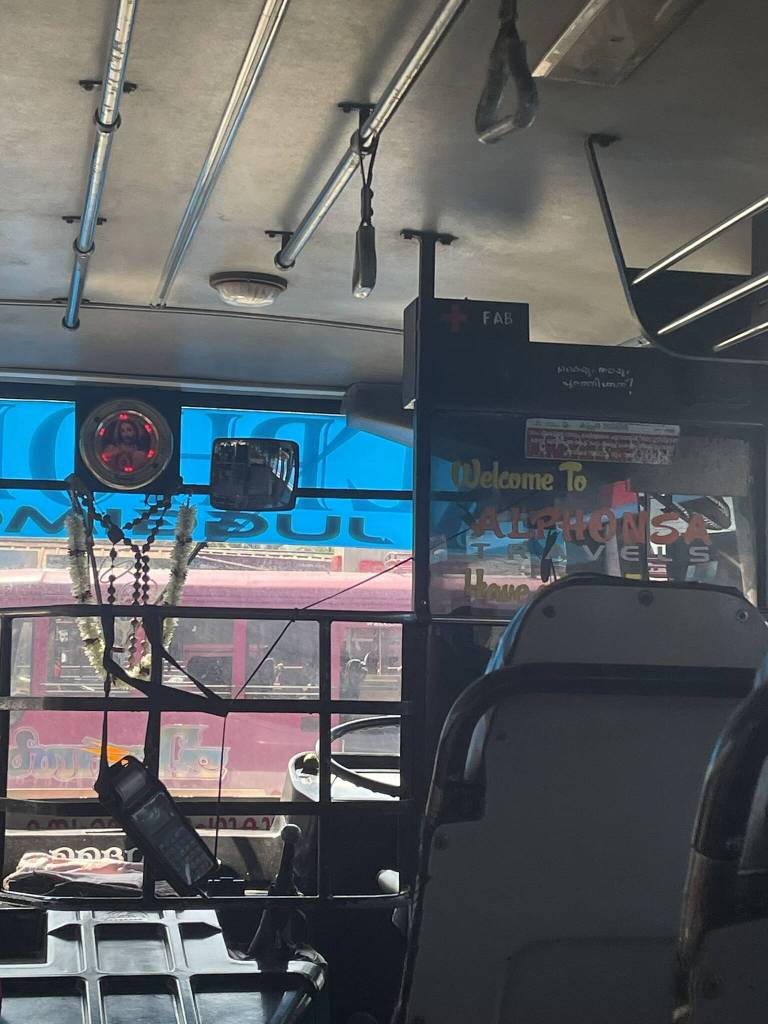
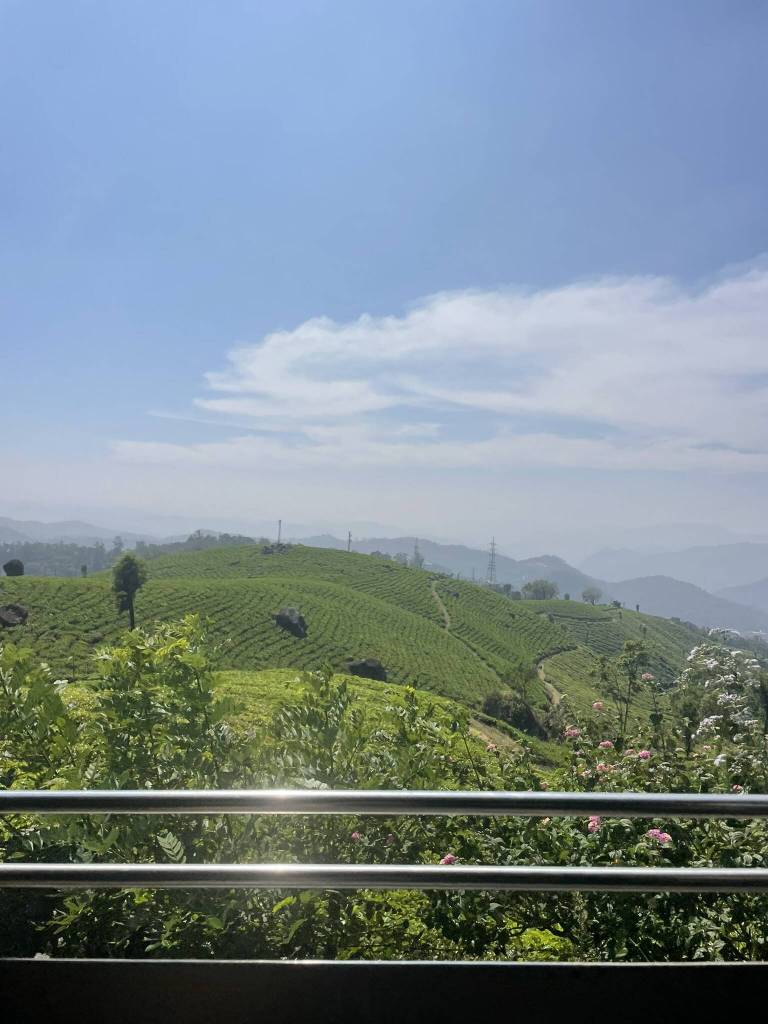
In the early evening, Anand messages to say he’s free and asks if I’d like to join him for a drink. How could I say no? He’s already taken my luggage back to his house, so around sunset I catch a bus to a spot where he’ll pick me up. Anand and his wife, Jismy, arrive in one of those half-open Mahindra Jeeps I’ve seen everywhere in the hills. They welcome me warmly, and we head straight to the family home. After a quick tour, I’m offered tea and food by Anand’s sister-in-law. She and Anand’s brother live upstairs with their two young boys. Soon, Anand’s parents join us in the living room. When Mummy realizes I’m traveling alone, she immediately insists that I can’t possibly stay by myself in the separate guesthouse and must take the kids’ room downstairs instead. Case closed. Papa follows up just as decisively: the next morning at 7:50 a.m., I’ll be joining him on his school bus duty. At this point, I fully commit to going with the flow. Not long after, Anand gets us back into the Jeep and heads out again. We stop briefly to meet a group of his friends by the roadside.
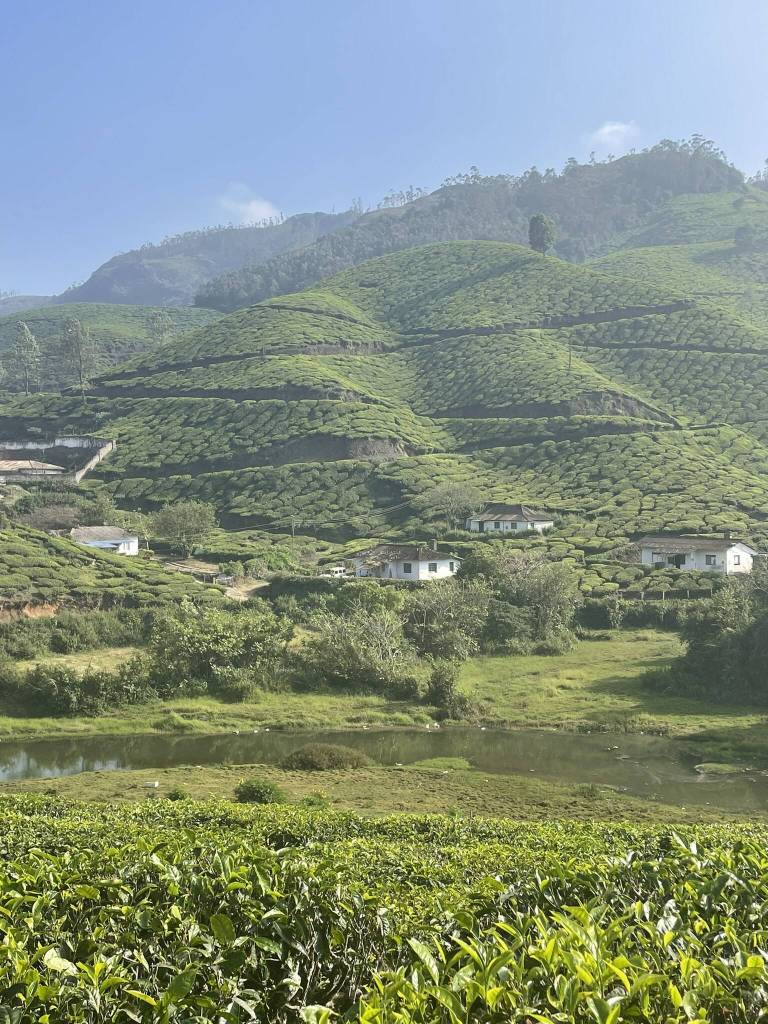
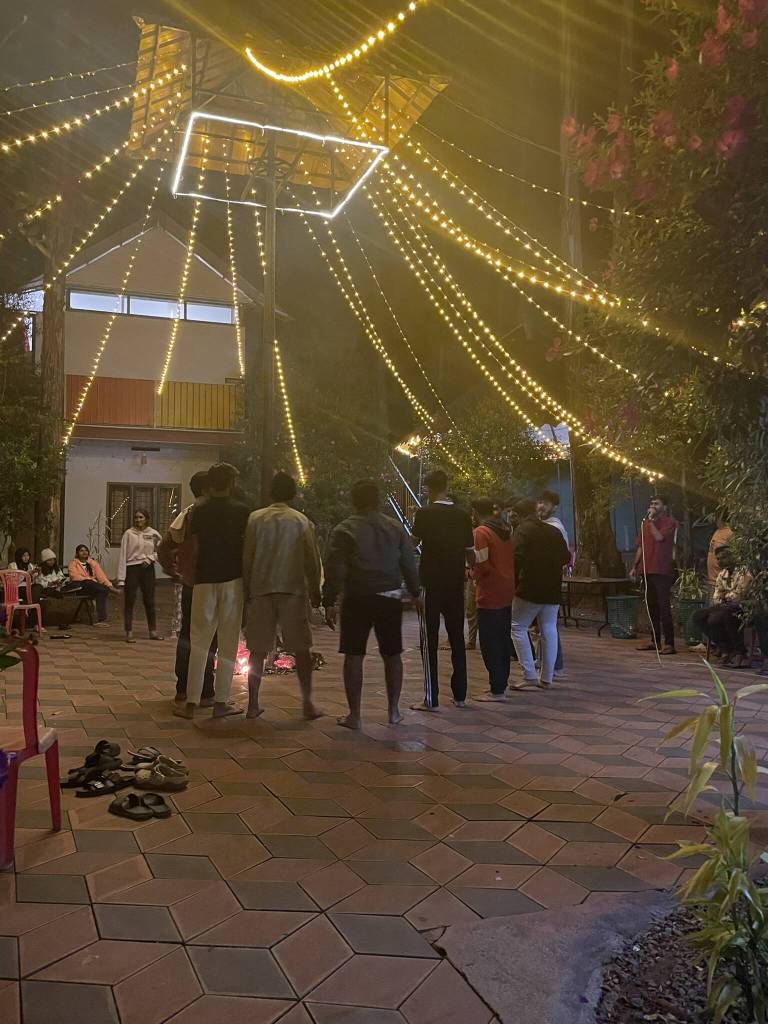
To me, they look like people who’ve known each other forever. In reality, only one grew up with Anand; the others are friends of friends, some visiting Munnar as tourists. This is how easily connections seem to form here—especially in South India. From there, we drive through dark forest roads to a campground Anand co-runs. That night, they’re hosting a school group from Karnataka. Students dance around a bonfire when we arrive. After watching quietly, the host introduces us, and Anand leads a game he’s prepared. Divided into teams, the students debate, strategize, and react to one another’s decisions. Emotions run high. It’s just a game, but in that moment—with different languages, backgrounds, and personalities—it feels like a small demonstration of how India functions. Once the game ends, food is served and we’re invited to stay, but we’ve already eaten and it’s getting late. On the way out, Anand reminds one of his associates to ask everyone for reviews—another small insight into how business works here.
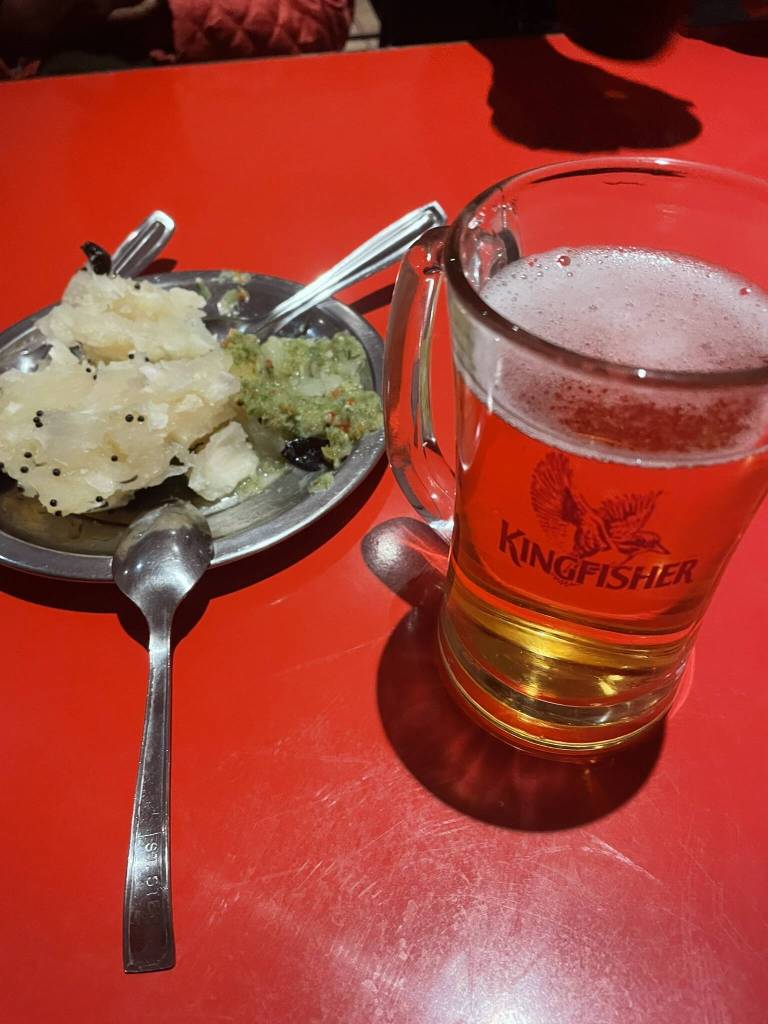
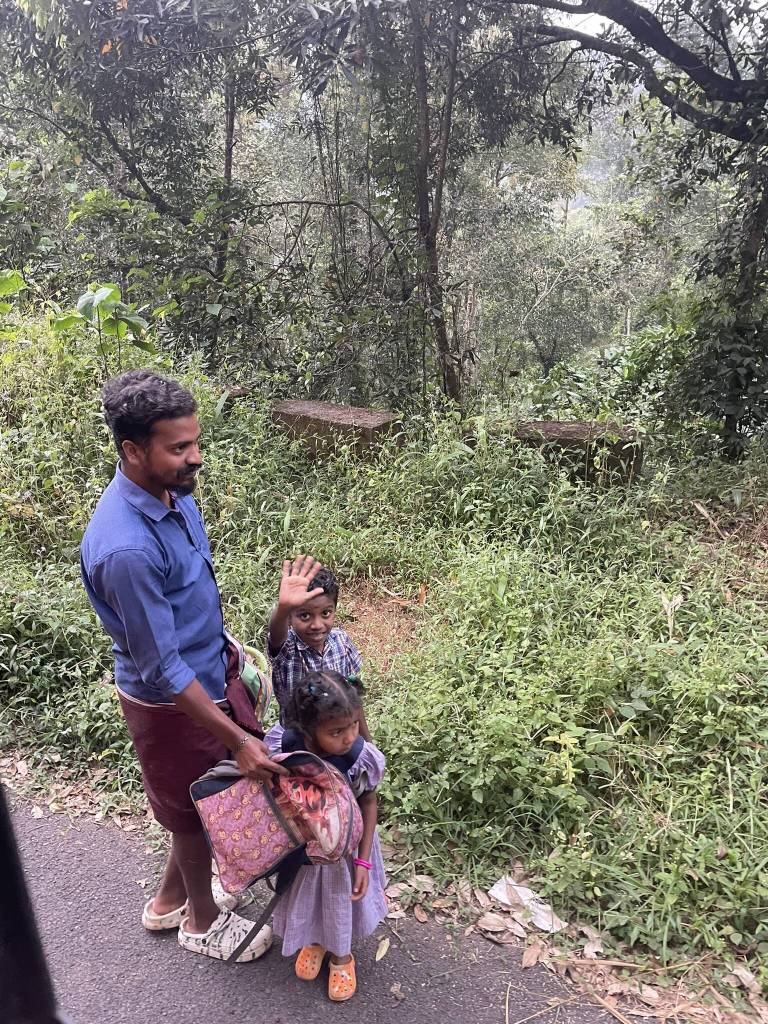
We stop at a bar along the way, where his long day finally winds down over two bottles of Kingfisher and tapioca snacks. By 11 p.m., the bar closes and we head home. The mountain air is cold now, a sharp contrast to the coast, and I lay out warmer clothes before going to bed. The next morning, I’m up at 7:15 a.m. Papa arrives exactly on time in his preferred vehicle: an auto-rickshaw. I’m skeptical it’ll manage the steep forest roads, but he assures me it’s the most durable vehicle in existence. At the top of the hill, we reach the school bus. I take the front seat—my first time on a yellow school bus. We spend the morning picking up children and teachers from scattered forest settlements. Most kids are already waiting outside their homes. Papa greets each one by name, introducing them to me with comments like, “She’s very smart,” or “He’s shy, but a good boy.”
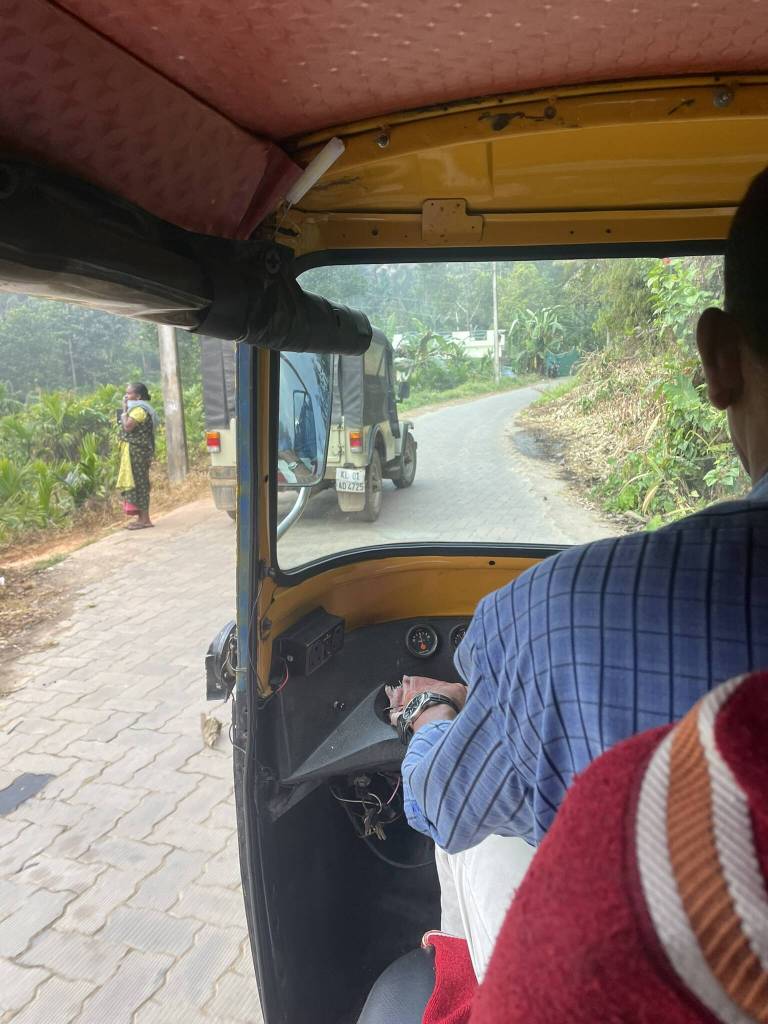
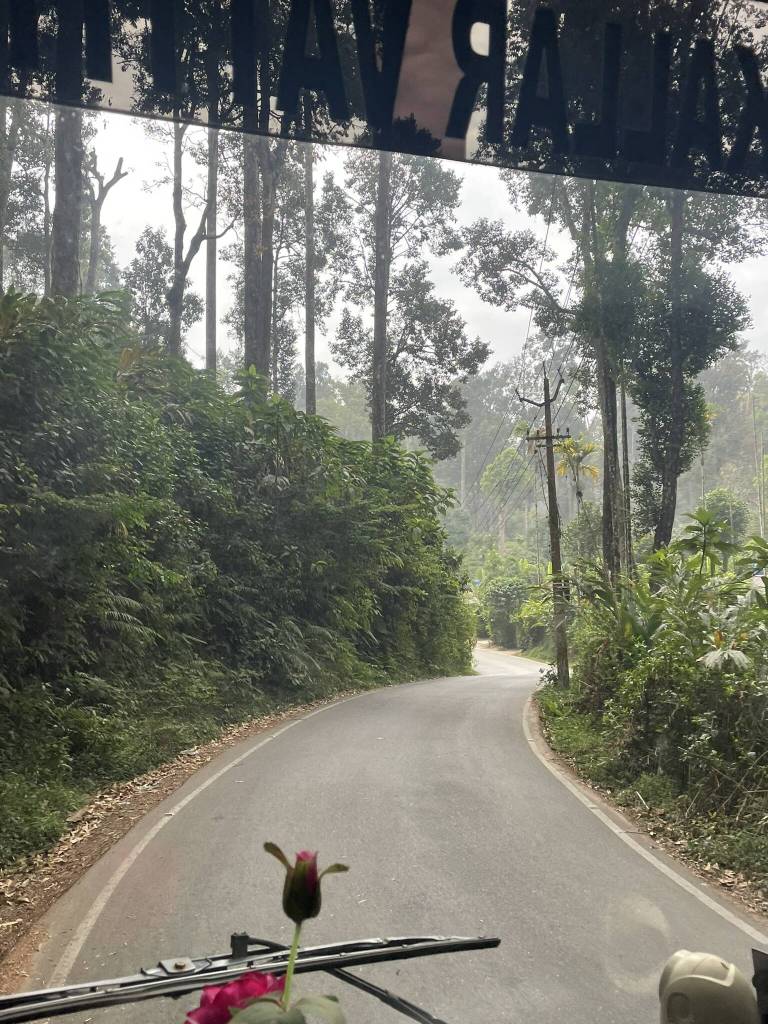
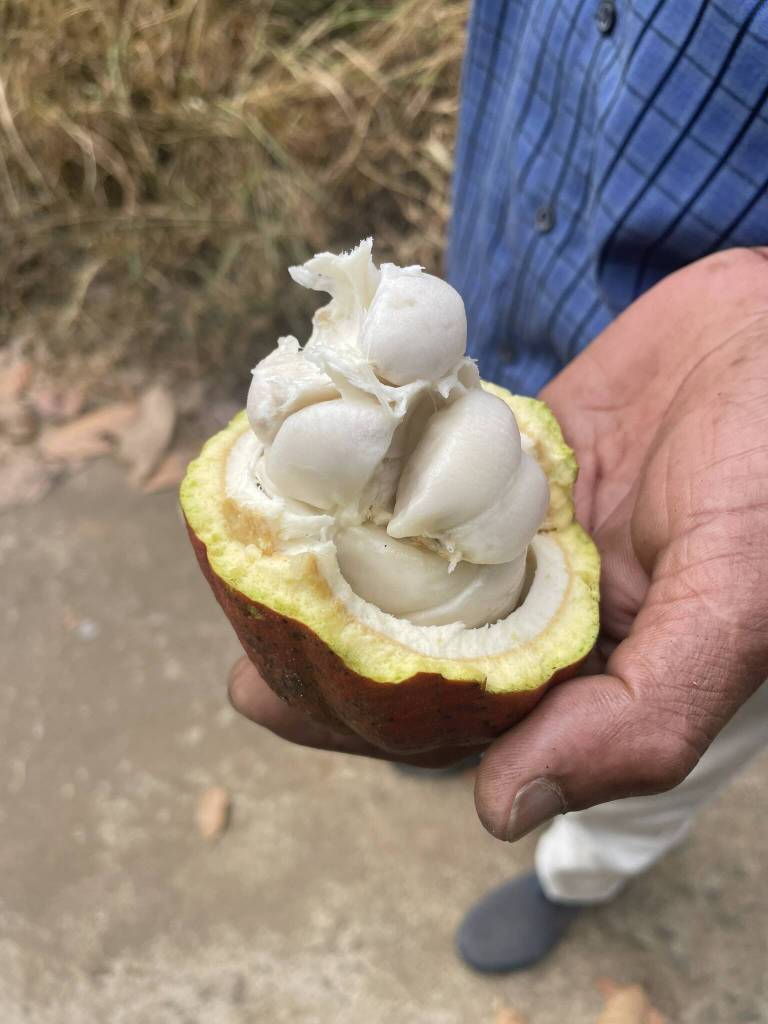
With the science teacher’s encouragement, the kids practice their English, telling me about their favorite subjects and hobbies. After the first drop-off at school, we begin a second round with younger, quieter children. Papa points out plants, wildlife, and tribal areas along the way, and I enjoy the brief silence and scenery. At the second school, the principal invites me into his office and asks about my home country and education system—information I later learn becomes the basis of his morning assembly speech. Leaving the bus behind, Papa takes me on a jungle walk toward the family’s second house. Along the way, he picks cocoa pods and water apples for me to try, pointing out pepper vines, banana trees, wild ginger, and coffee bushes. Eventually, he admits his legs hurt—he’s not used to walking—and calls a taxi to take us back to the village. After lunch at a small stall (porotta, egg curry, and black tea), we return home.
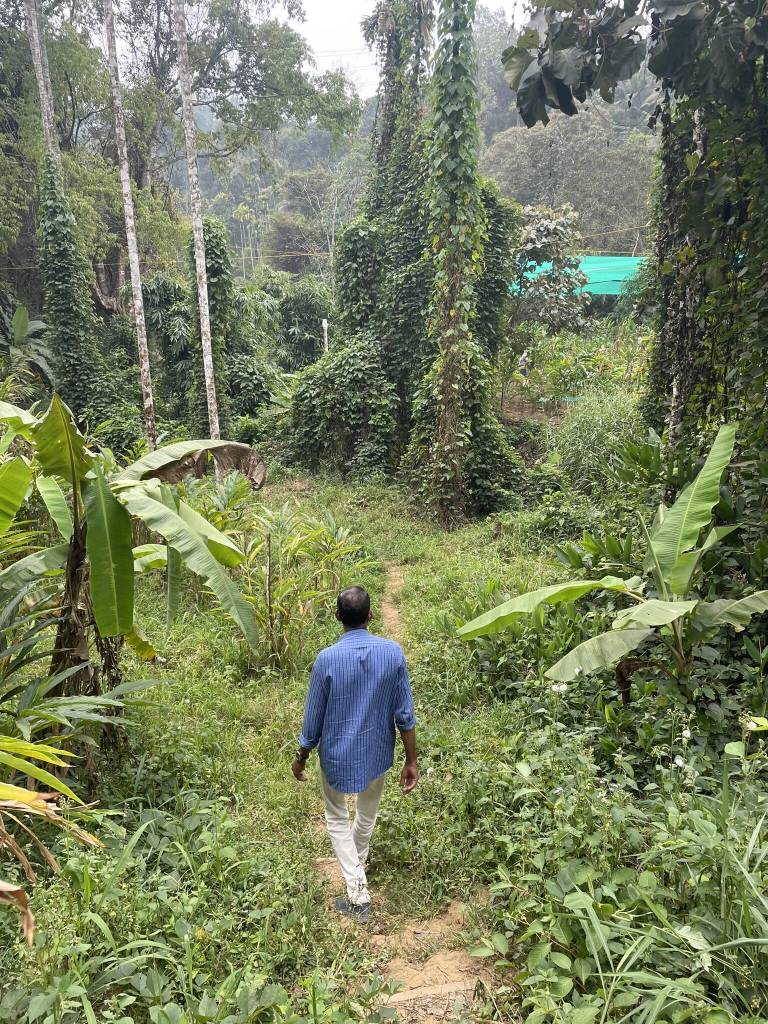
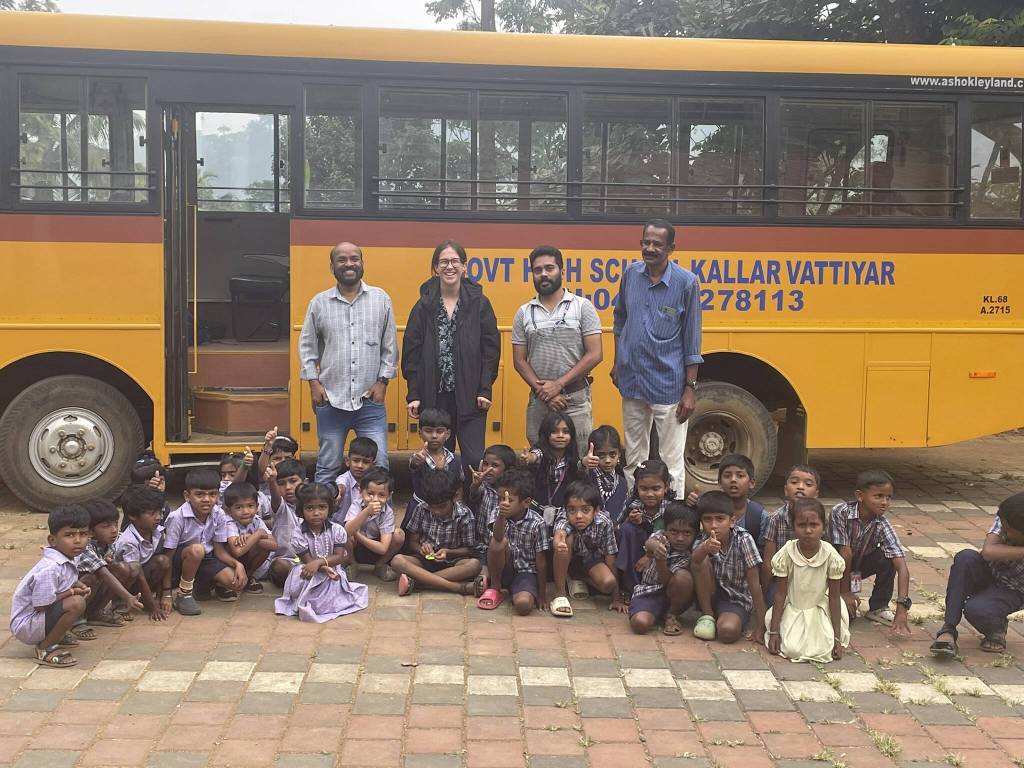
While Papa naps, I chat with Mummy and Jismy and mention I’d love to see the wild elephants living in the area. Anand had shown me a webcam the night before that tracks their movements near a river. Mummy explains that the elephants are often seen there because mineral-rich spring water seeps through the rocks, making the area slightly salty—something the elephants seem to love. She doubts they’ll appear that day, though, as the weather is cloudy. It starts to rain lightly, and inside, Mummy and Jismy show me how to make homemade pickles from freshly harvested water apples. They’re spicy, tangy, and perfect with mashed tapioca. Later, Papa’s second school bus shift begins, and I join again. This time the bus is full of chatter and laughter. I take selfies with students, promise to send photos, and am quickly followed on Instagram by entire families. At one point, a small boy climbs onto my lap for the ride home.
That evening, just as I’m ready for a quiet night, plans change once more: the elephants are out after all. I rush through dinner, and we pile into the Jeep—Anand, Jismy, Mummy, and me. On the way to Anakulam, we stop at one of Anand’s staff member’s houses for chai. She joins us for the excursion, eager to practice her English. Most of the drive is filled with conversation. About India, Japan and Switzerland, business and local culture. In the backseat, Mummy occasionally spills tea about her son in Malayalam. I don’t understand much, but Anand’s protests and the scattered English words tell me she’s sharing stories no boss wants his staff to hear. Everyone is laughing. While Anand navigates the winding roads, Jismy keeps checking updates. Just past a place called “Kuwait City,” she announces there are about fourteen elephants at the river.
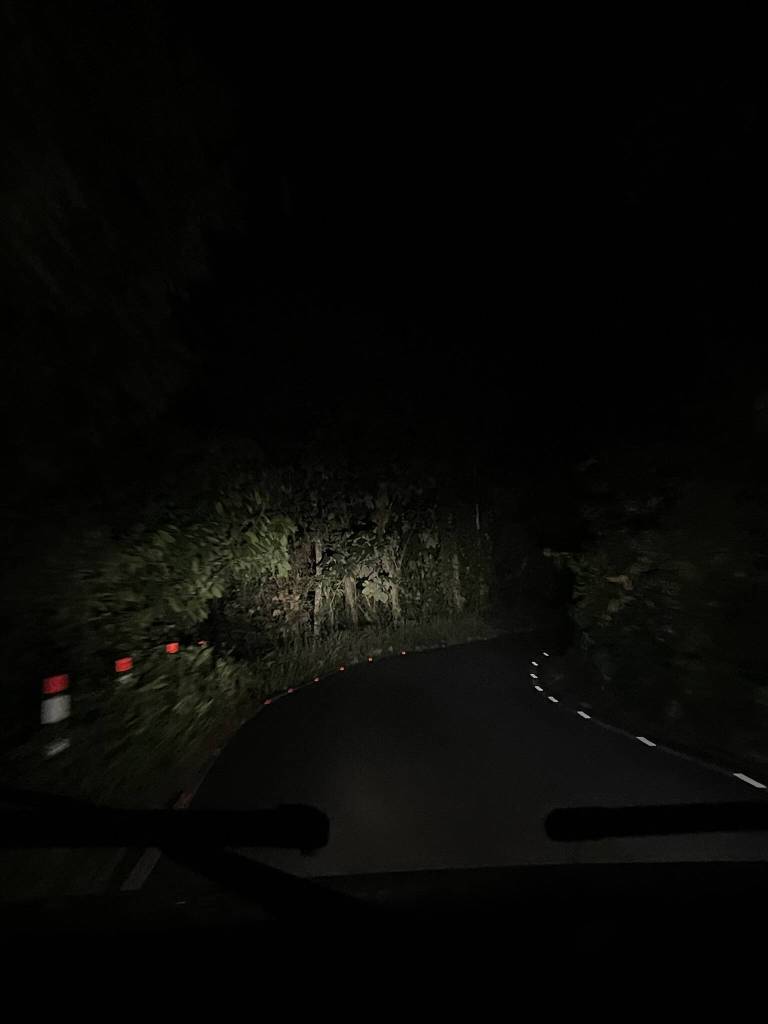
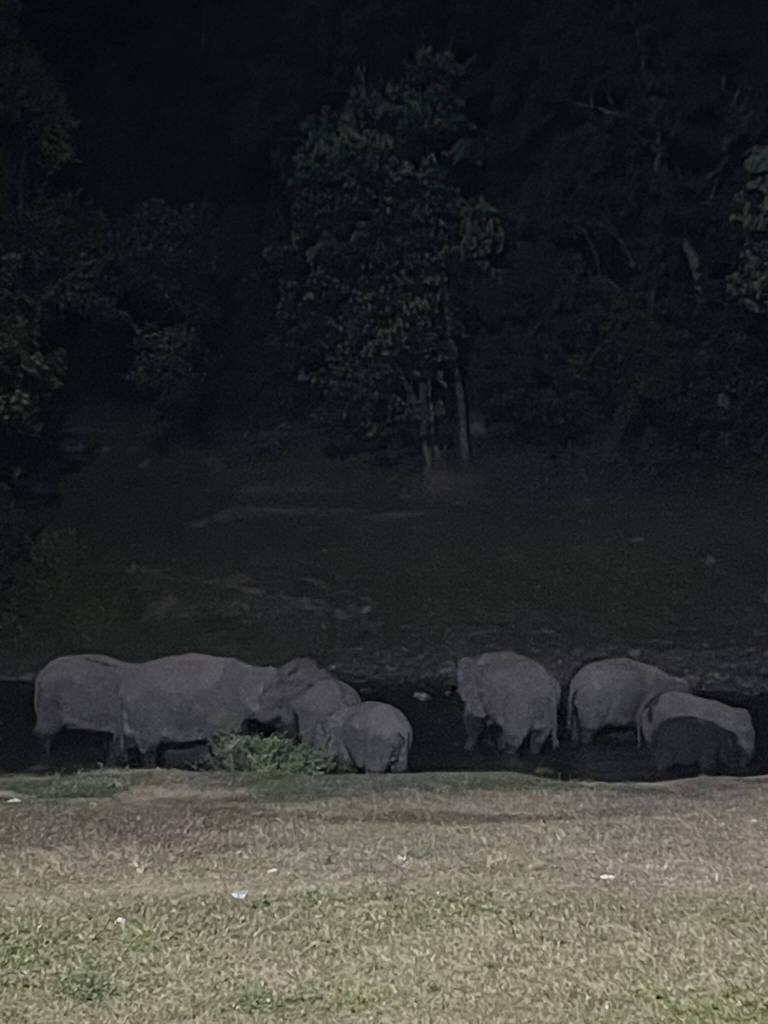
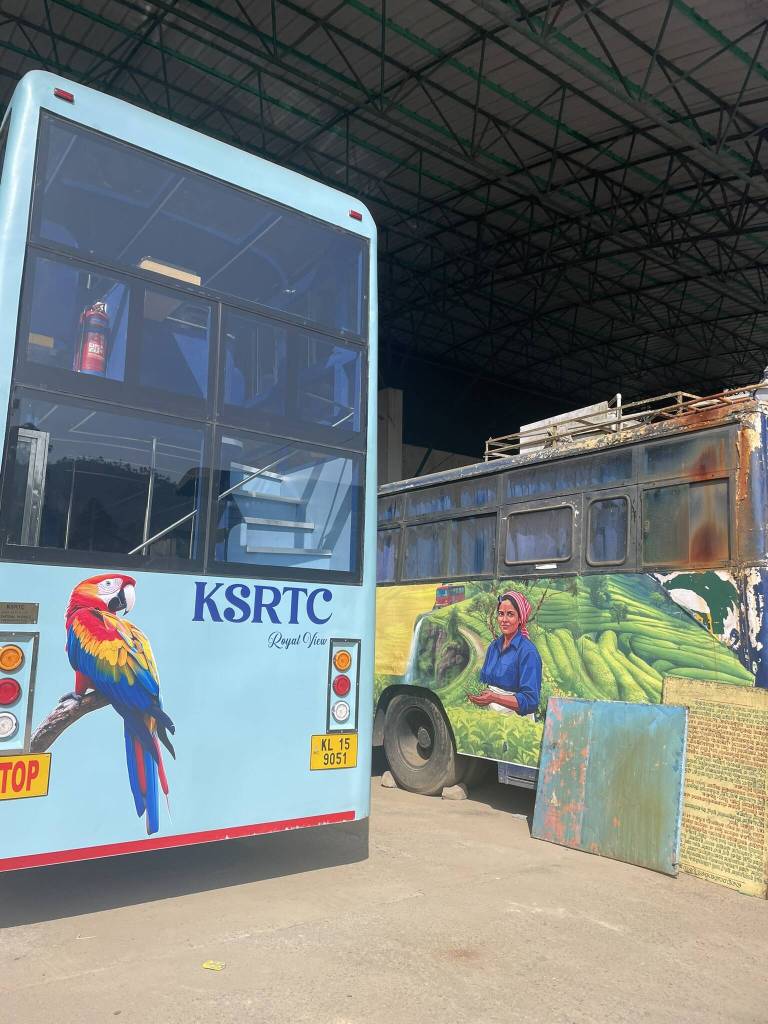
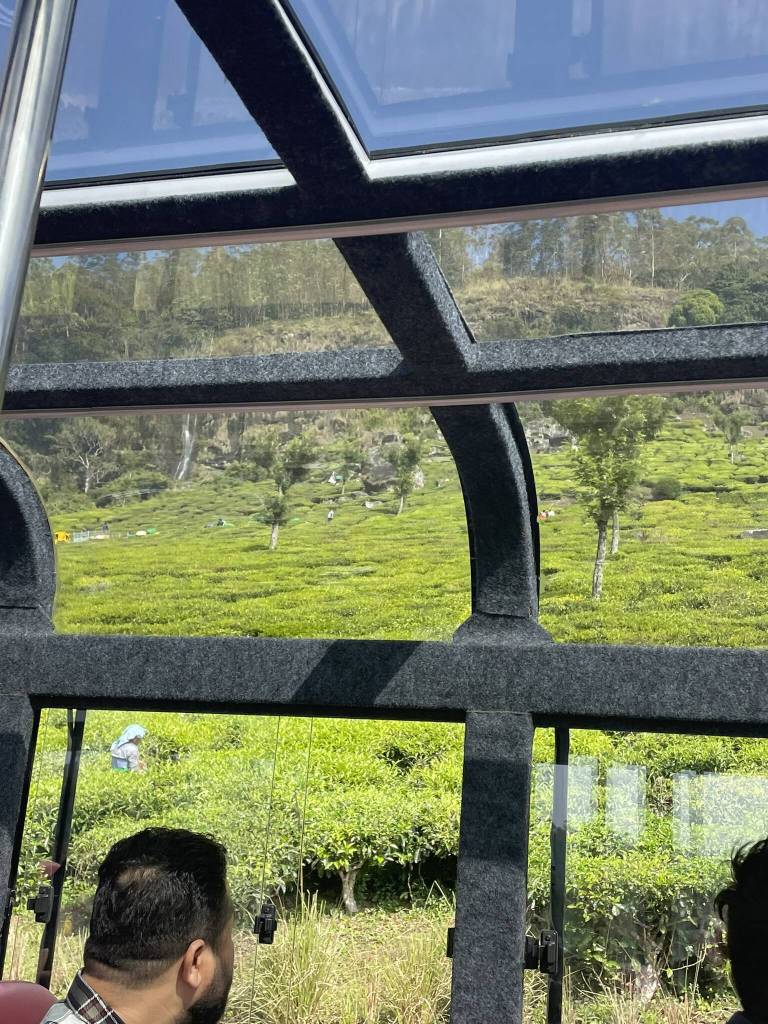
We arrive shortly after. Fewer people are gathered than I expected—mostly Indian tourists, with a few Europeans mixed in. We sit quietly, watching the elephants bathe in the shallow water. I mention Mummy’s explanation about the mineral-rich springs. Anand is surprised we managed to communicate that well, then confirms she’s absolutely right. For a long while, we just enjoy the view and say nothing at all. On the way back, exhausted, I ask if I can stay another night. The answer is immediate: I’m welcome for as long as I want. The next day, I join a double-decker sightseeing bus through the tea plantations east of Munnar. Indian music blasts from hidden speakers, mist drifts over the hills, and for a moment I feel like the main character in a Bollywood film. Despite wanting some solitude, conversations start easily—about tea cultivation, travel, and life abroad. By noon, I’m back in town and spend the afternoon walking through tea estates alone.
On my final morning, I ride Papa’s auto one last time. This time to catch a bus toward Kochi. Anand messages me on the way and invites me to lunch. We meet for biryani with his business partners, then spend the afternoon at a hospital for their checkups. It might seem like an odd tourist activity, but being included in everyday life feels deeply meaningful. As evening approaches, traffic thickens. Anand drops me near Lulu Mall, from where I take the metro to Vyttila Bus Stand and finally catch my bus south at 8 p.m. The journey stretches on, giving me time to reflect on how a single Couchsurfing message led to days of generosity, connection, and unforgettable moments. As we said goodbye earlier, Anand and Jismy told me, “You are always welcome here.” In Kerala, and South India in general, this level of hospitality seems natural. I don’t take it lightly. Needless to say, I’ll be back.
 thattravelstory