Vietnam – October 2025
It’s my third day in Dalat. I’m sitting on the terrace of my hostel, ejoying the quiet athmosphere with a bowl of fruits like every morning. 2 other early birds, Alan from India and Alex from Taiwan are smoking next to me. We discuss plans for the day, when Alex mentions that a friend whom he’s met in Laos will arrive in an hour or so. Once Julianne checks in, I quickly notice her manta ray tattoos and we soon bond over our shared passion for diving. While Alan returns to finish his volunteer duties and Alex joins a British guy at the pool table, Julianne and I check out guide books for things to do here. While my French book is slightly outdated, Julianne finally strikes gold on google maps with Thánh Thất Đa Phước (Cao Dai Temple of Dalat). She’s keen to find out more about the unique Vietnamese religion the temple belongs to and I’m intrigued by the colourful, slightly colonial architecture. (Also, another day of hanging out at cafés would be too much).
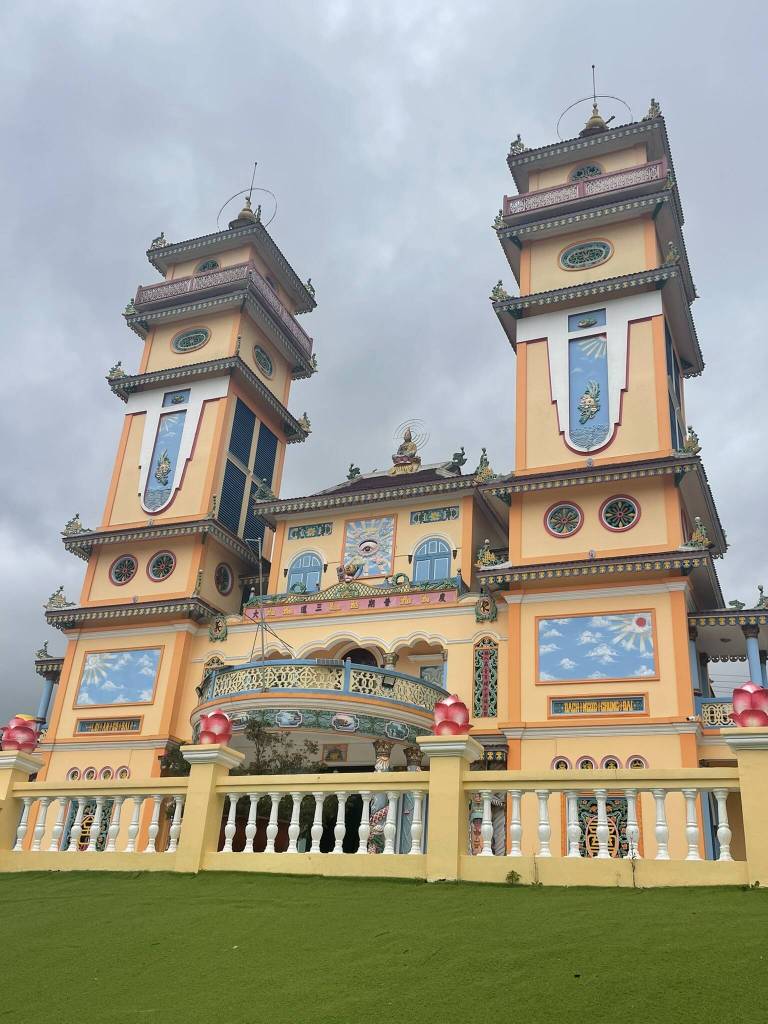
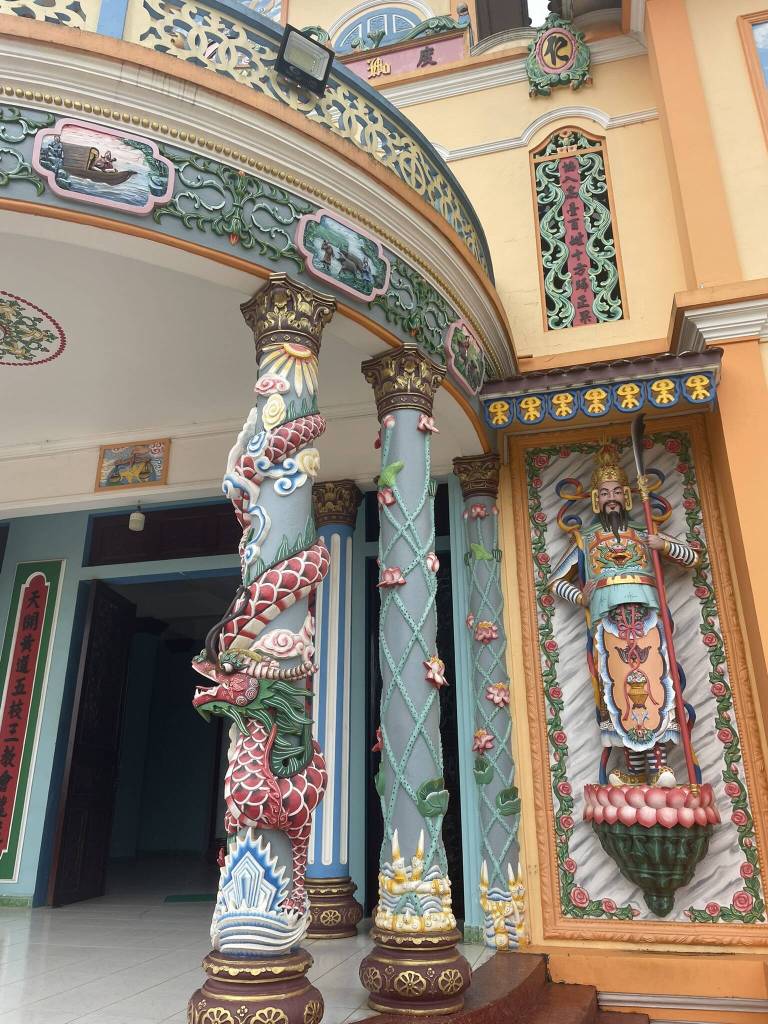
Since neither of us can/want to drive a scooter, we have to convince Alan and Alex to come with us. Turns out that’s not too difficult and we quickly fill in the necessary paperwork. For 5 dollars each, we get 2 motorbikes and at around 1pm are cruising about on the curvy hill roads. Alan has spent quite a lot of time in Dalat over the past years, so he points out interesting spots while expertly manouvering our bike through the Vietnamese traffic. It’s only a 15 minute drive to the eastern outskirts of the town, but the athmosphere sure is different here. I’m slowly adapting to exploration mode and can’t wait for what this misterious temple has to offer. What strikes me first, is the overall structural ressemblance to a christian church. The 2 main towers and the long, rectangular main hall are shaped just like a European cathedral. However, the dragons wrapping around the pillars at the main entrance and the 2 guardians on either side of the door give off rather Eastern Asian vibes. And then there is the all-seeing eye painted on the roof…
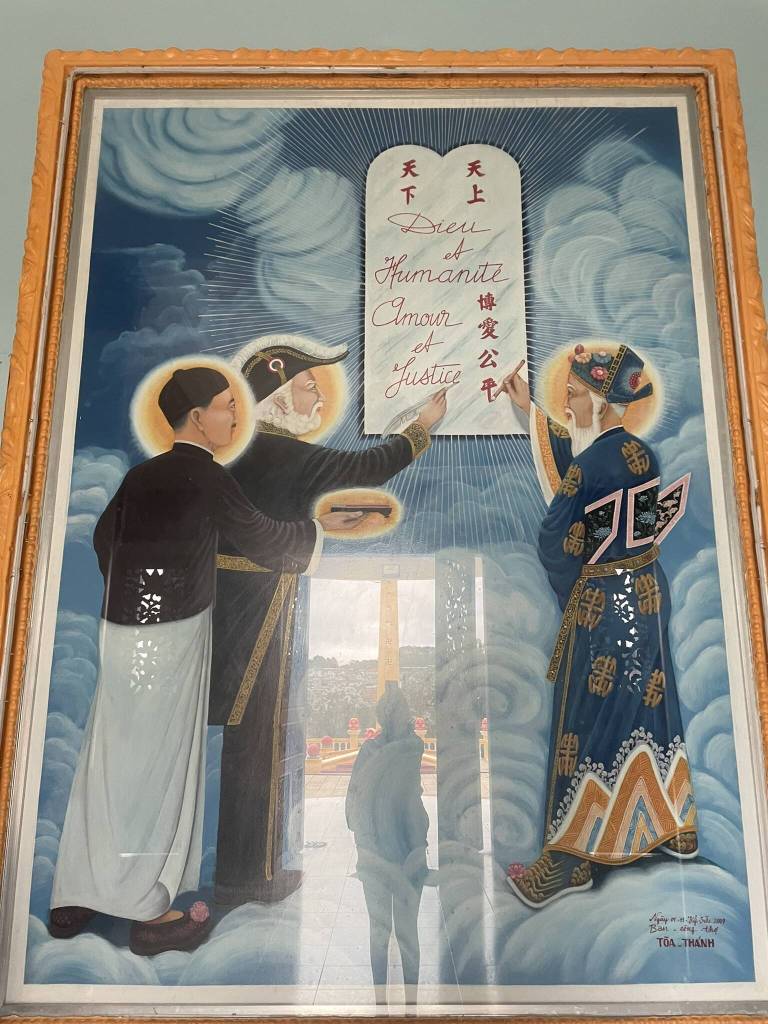
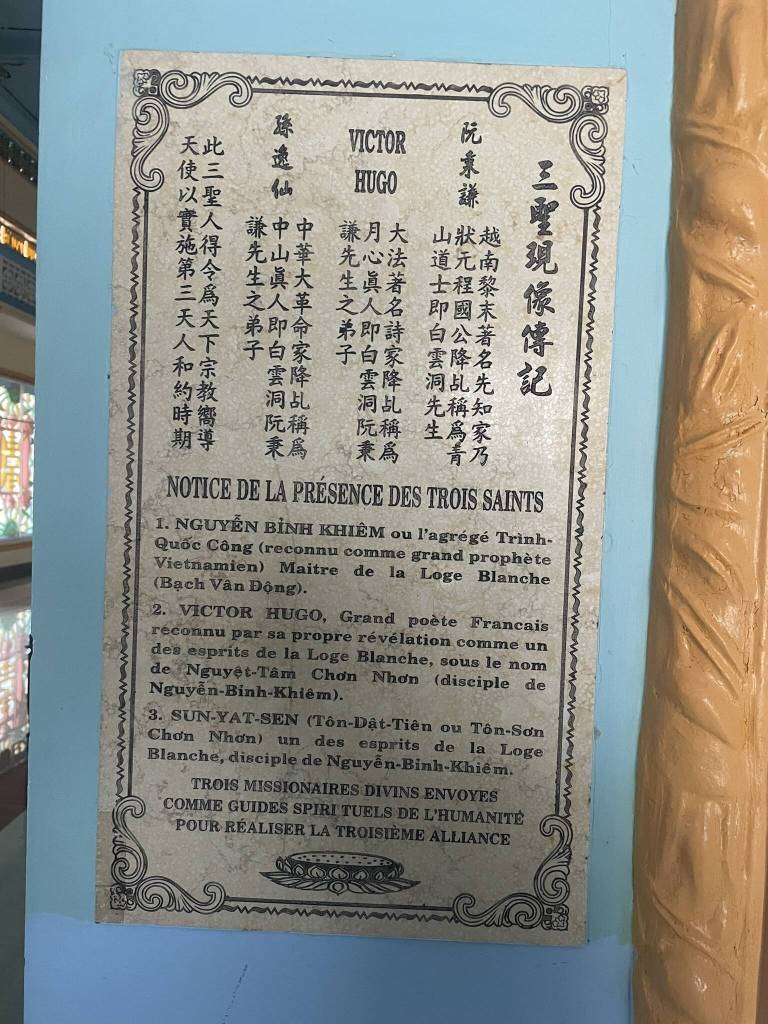
As we step inside, my confusion about what this temple exactly is only grows. Inside the entrance hall, we find a large painting of three men who seem to be signing some kind of oath. I translate the French words for the group: “God and humanity, love and justice”. And together with Julianne and Alex, we also manage to decipher the Chinese/French inscriptions next to the painting. Here’s a brief summary: The painting represents the Third Covenant, a new pact between God and humanity that, in Cao Đài belief, marks a spiritual era of unity among religions and cultures. The three saints (the men in the picture) come from different parts of the world to symbolize this unity: Nguyễn Bỉnh Khiêm, a Vietnamese scholar-prophet, represents Eastern wisdom; Victor Hugo represents Western moral and humanist thought; and Sun Yat-sen represents ethical and social renewal. Together, they act as spiritual witnesses and guides, showing that divine truth is shared across cultures rather than owned by any single tradition. *There is of course much more to Caodaism, read about the interesting background of the religion in the detailled blog post by Julianne here.
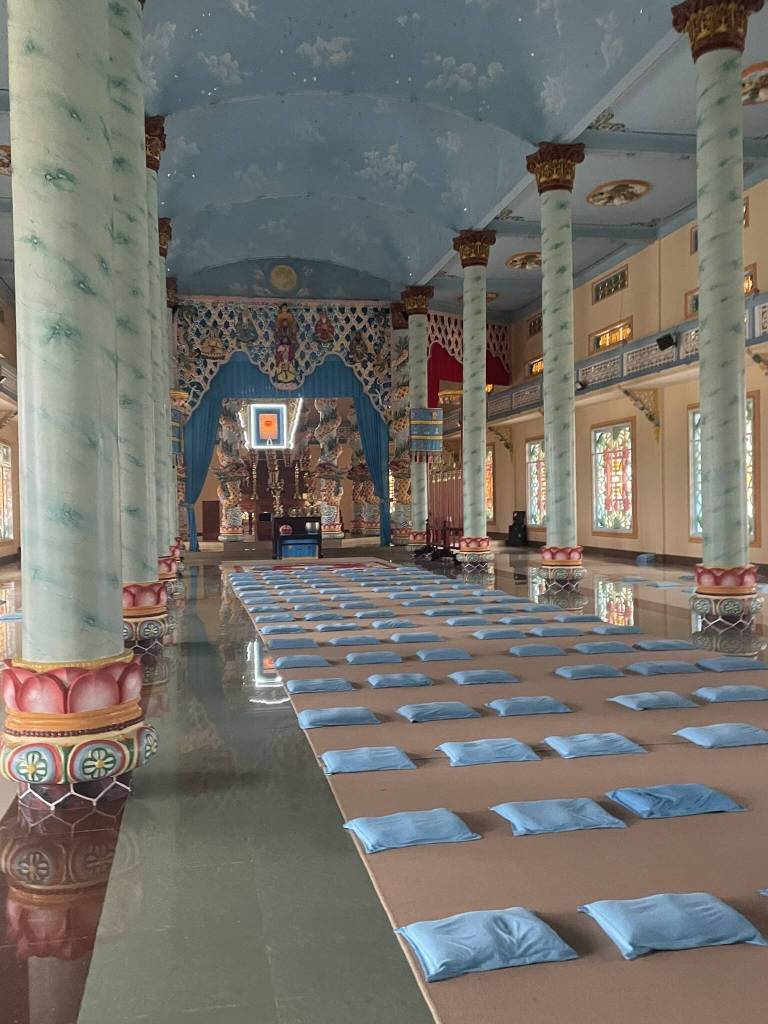
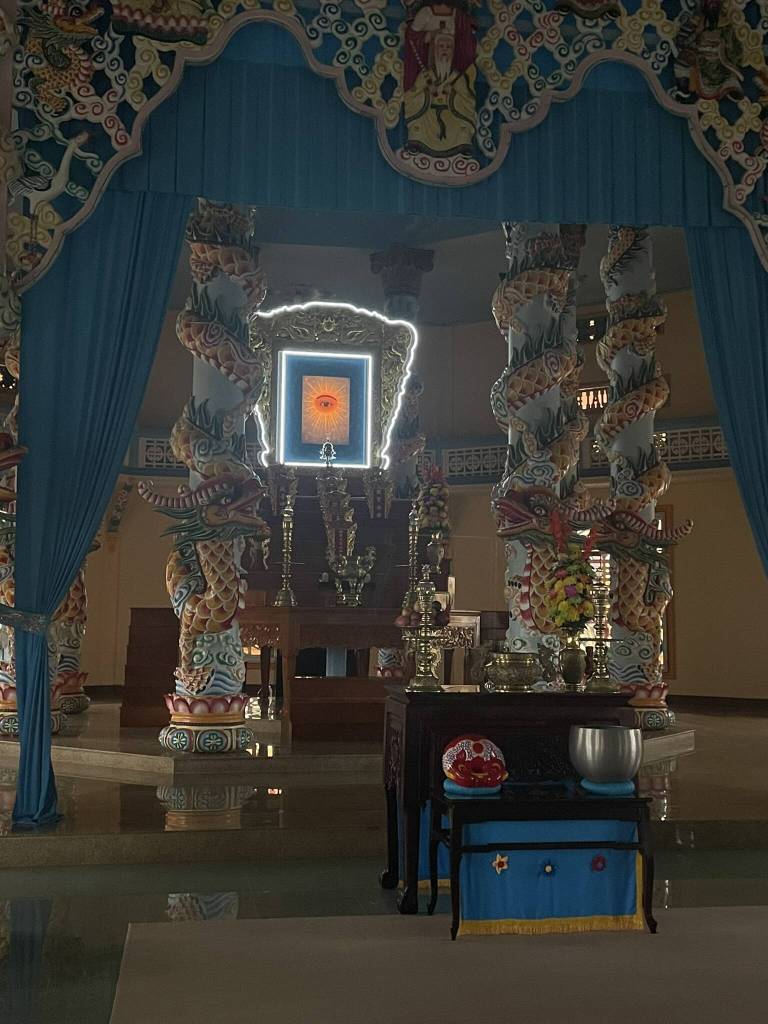
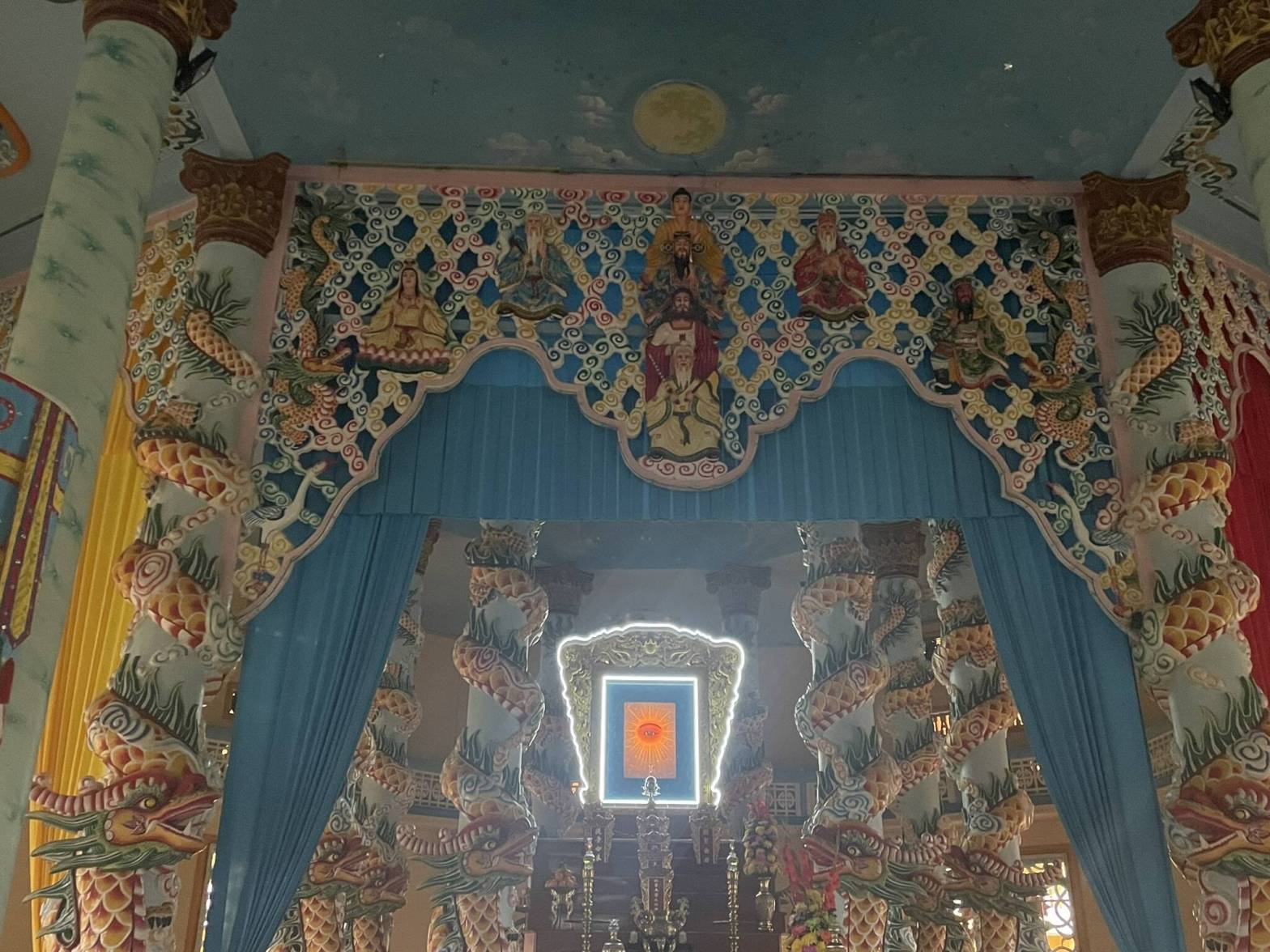
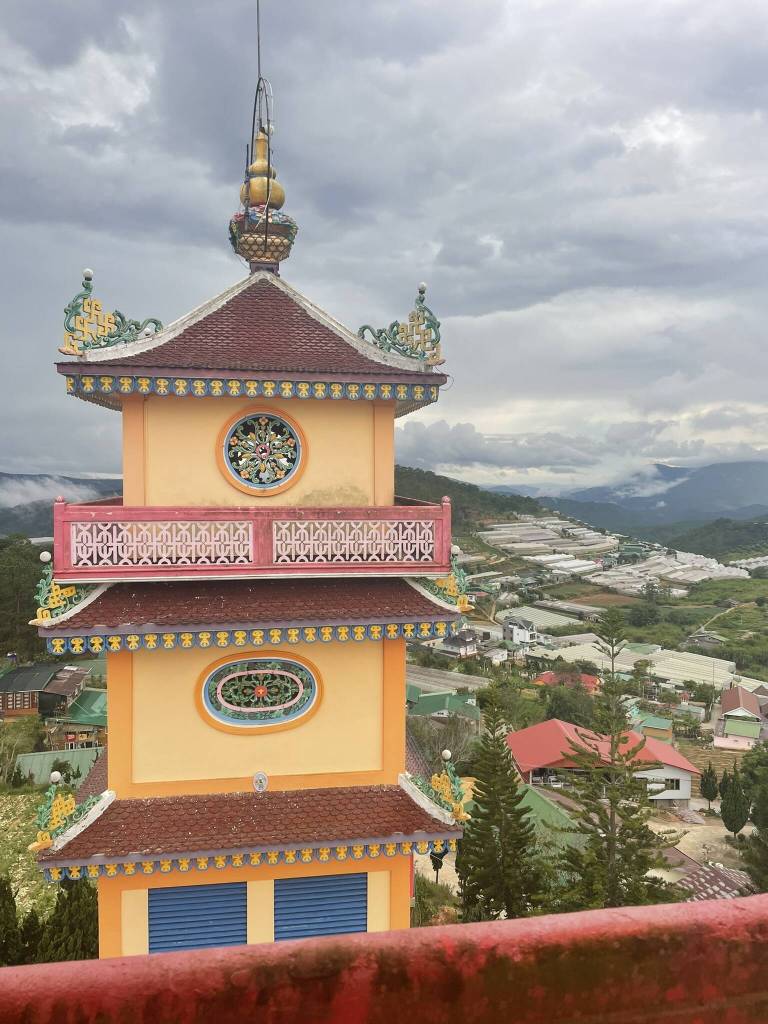
The mix of cultures and religions becomes even more surreal as we enter the main hall. While the room’s shape still reminds me of a church, the cushions on the floor definitely don’t. I guess the ceeling and pillars with their cloud pattern can’t really be attributed to either of the popular religions. But then there is the altar. Adorned with flowers, incense and a large singing bowl, at first glance it’s giving off strong buddhist energy. However, as I look up, my eyes meet another all-seeing eye. And above it tower 8 enlightend figures, including Buddha, Lao Tzu, Confucius, Jesus and 4 culturally important Chinese characters: Li Bai (poet), Goddess Guanyin (Bodhisattva of Compassion), Guan Yu (deified general) & Jiang Ziya (legendary strategist and Daoist immortal). Thinking to myself, how nice it is to see such a mix of cultures under one roof, I continue the exploration of the building. Above the entrance hall, where in a church there would usually be the organ pipes, there is a just a small balcony. Maybe important members of the congregation observe sermons from here. While Alan and Alex disappear somewhere, Julianne and I climb up to the top of the north tower. Through the Chinese-style lattice windows we get a great view of the surroundings before heading back outside into the grey weather.
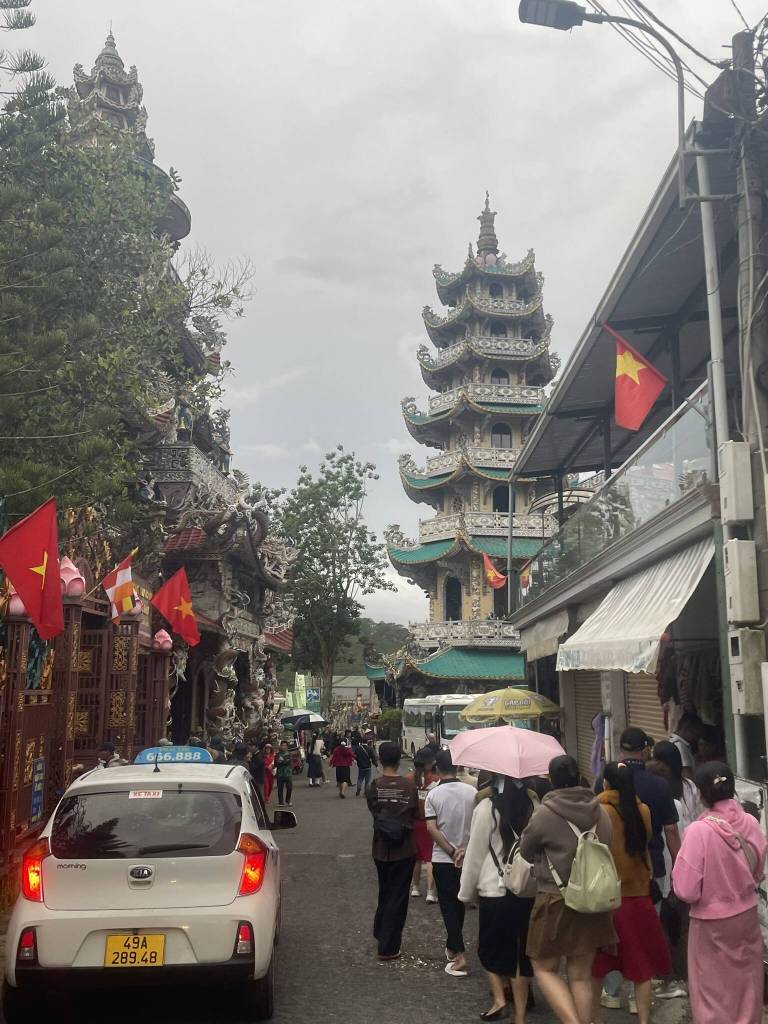
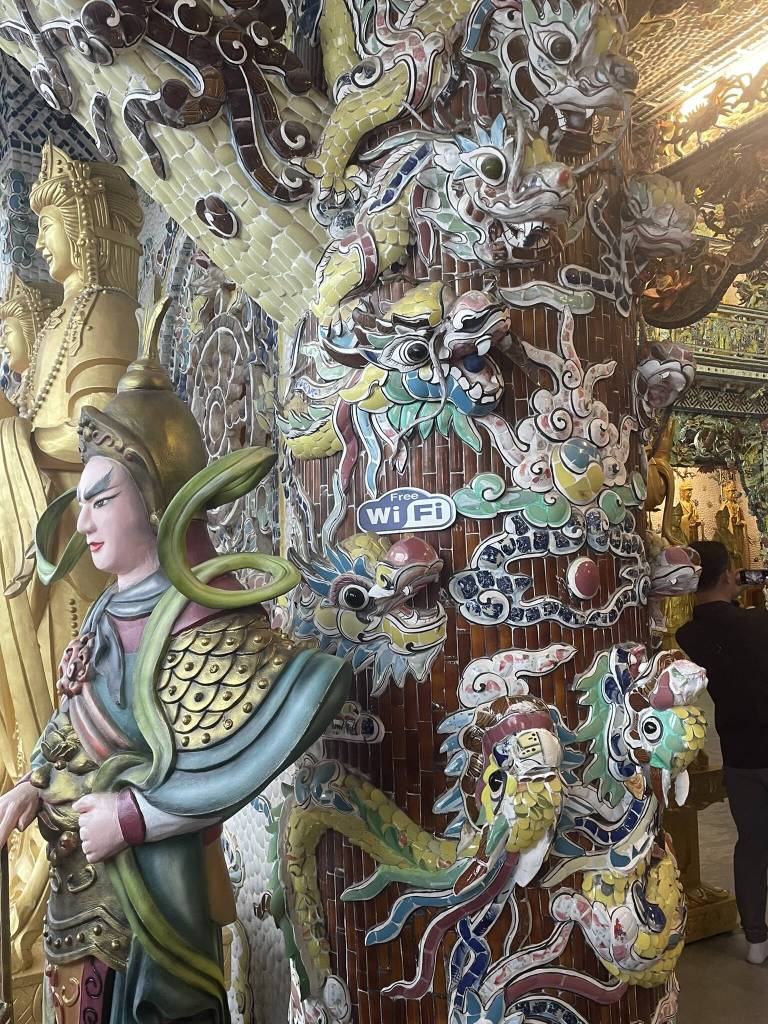
Still processing the symbolism and cultural mash-up of the Cao Dai temple, we hop back on the motorbikes and continue west. Just a short ride away lies Linh Phuoc Temple (with a lot more reviews on Google). We park the motorbikes in the designated lot and brace ourselves for the crowd of bus tourists. Nicknamed “the broken glass temple”, it is covered almost entirely in mosaics made from shards of bottles, ceramics and porcelain. Dragons coil along walls, pillars sparkle with colour and there are lots of Buddhist figures included in the intricate designs. Do check out Julianne’s other post for further background on religious aspects here. At the main hall where different gods are displayed, she and I are reprimanded for wearing shorts and can’t enter. This gives me time to have a closer look at the mosaic patterns and I come across a “Free Wifi” sign. There really is no need to pay for data in Vietnam. We skip the wish-making at the oversized Buddhist bell where visitors attach written prayers and head back downstairs to explore more. Seeking to escape the crowd, I venture into a dark staircase.
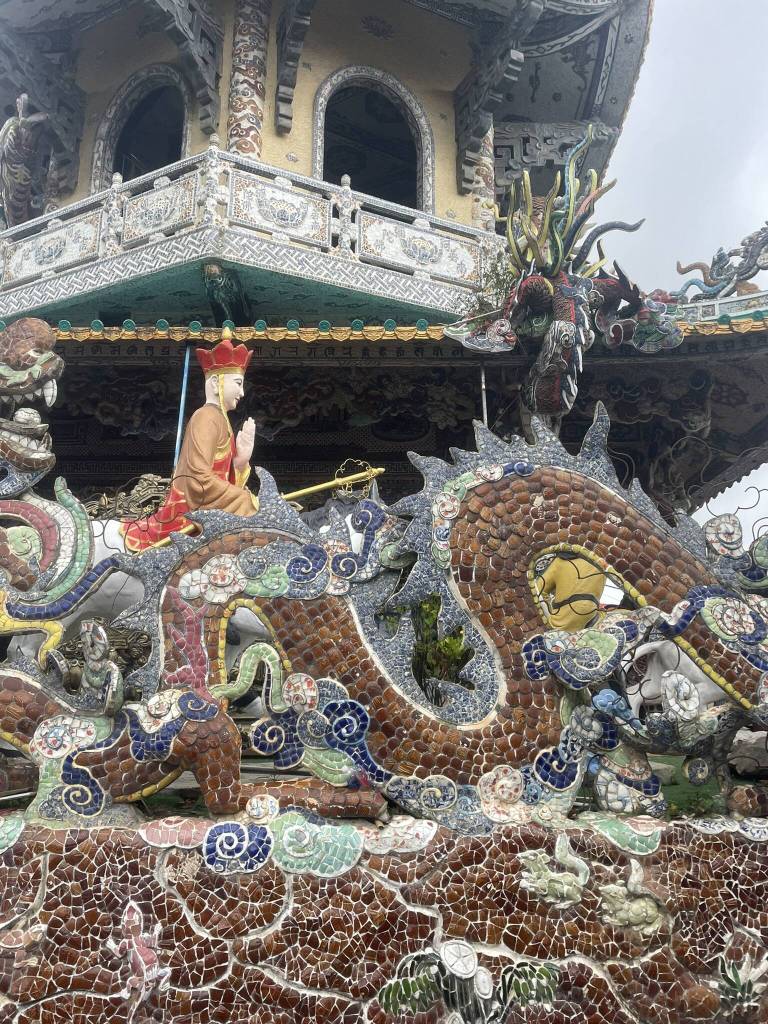
A few steps in, my wet flipflops loose their grip on the smooth stone floor. I fall and slide down to the bottom of the stairs on my butt. It must have looked like a cartoon scene and for a moment my breathing stopped. The 3 others rush down the stairs behind me to check if I’m fine and once we establish that there are no broken bones, we continue to explore the basement. To our surprise, it’s full of large antique furniture and statues made of teak wood, marble and mosaics. We look at the treasures for a while, knowing that none of us would be able to afford any of them. But then I spot something very different in the back of the room: 2 large statues of half-humans, half-beasts guarding the entrance of another staircase. It truly looks like the door to hell and of course we have to check it out. I slowly make my way down (even more so as it’s getting darker and darker). Nothing could have prepared us for this vivid installment of the Buddhist 18 levels of hell.
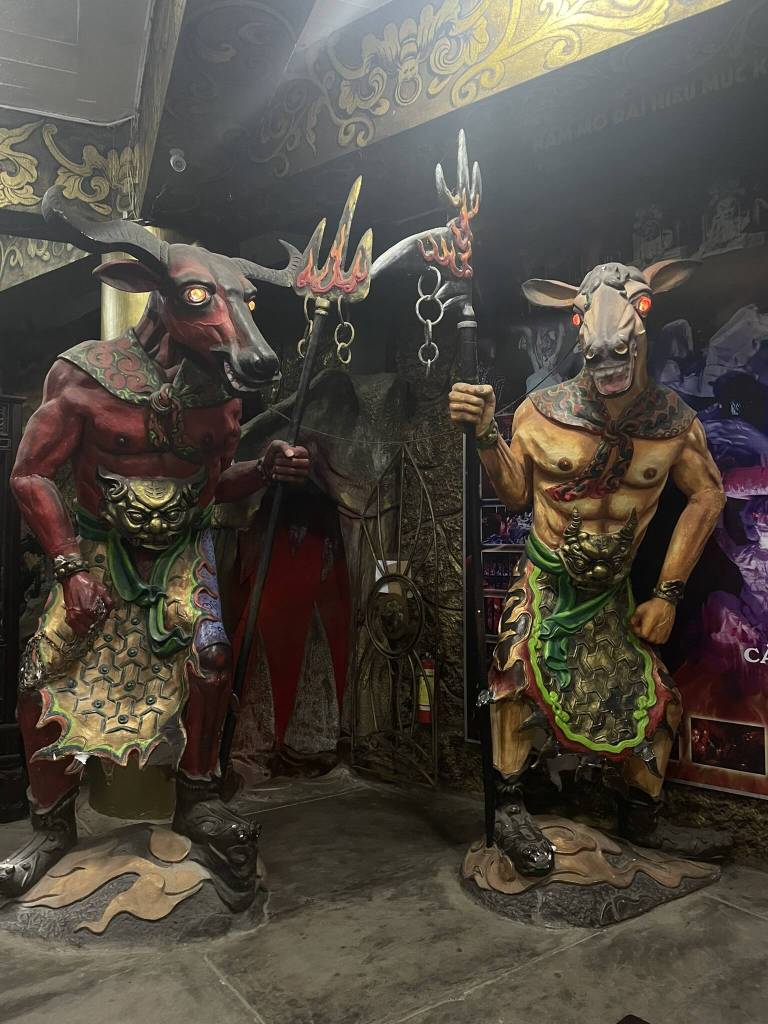
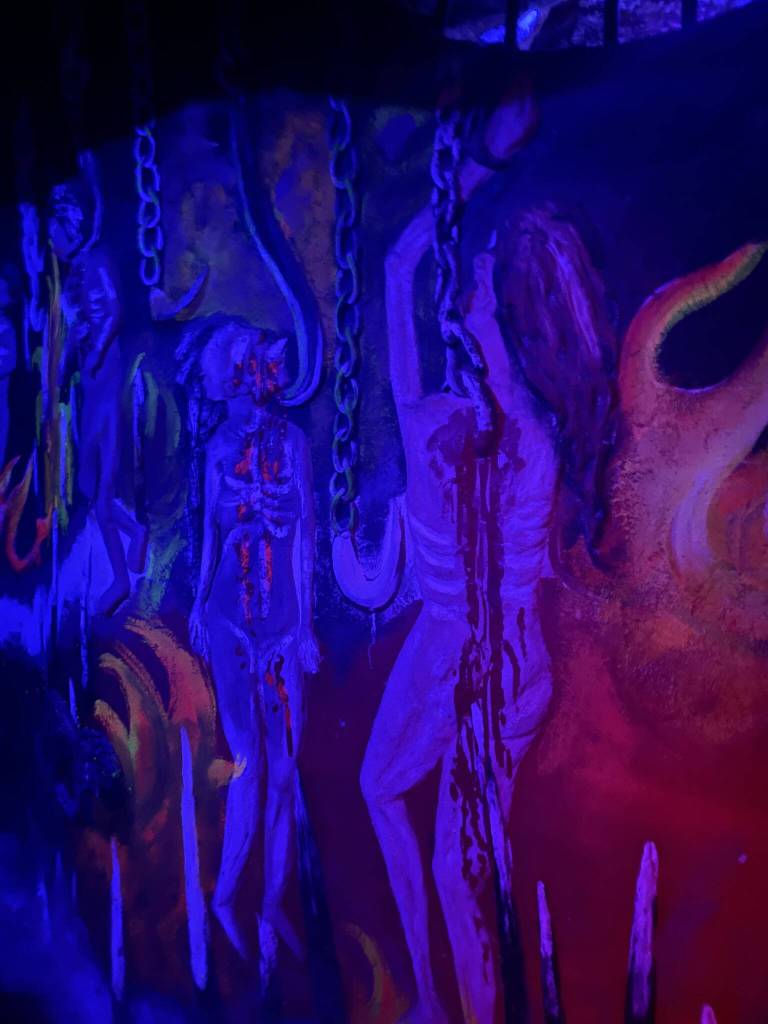
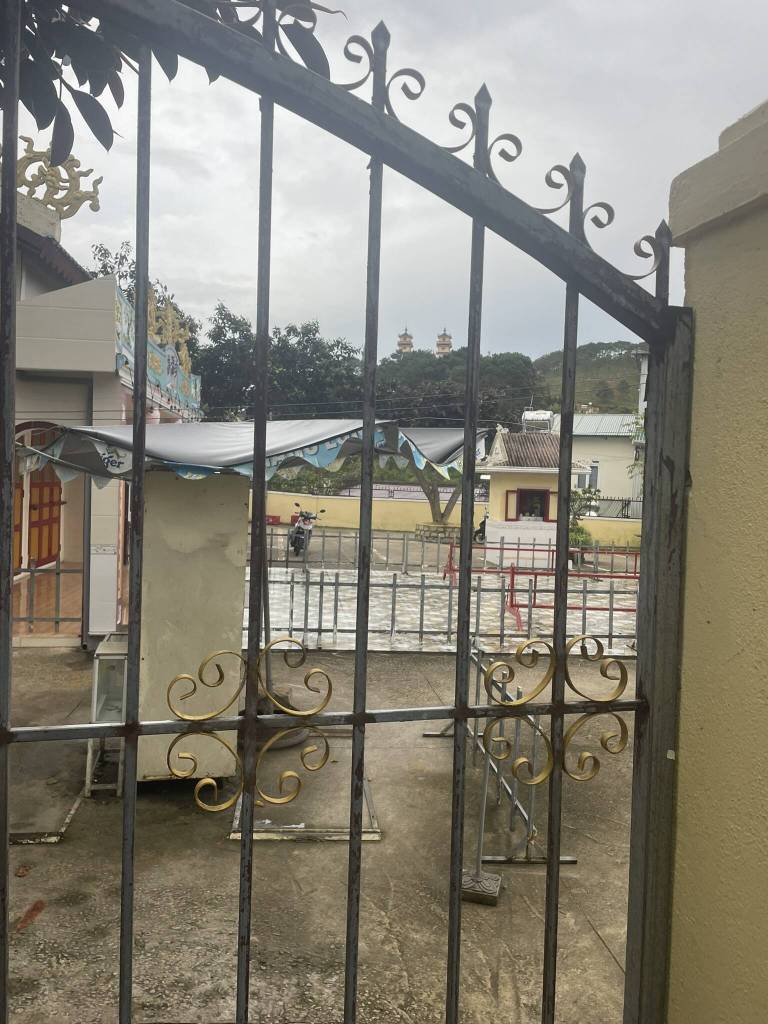
The scenes of demons punishing sinful souls are surprisingly graphic. Like boiling cauldrons, saws, and tortured figures. What makes it even more eary is the dim lighting with some colourful highlights to “important” scenes and the background sound. But somehow the purpose feels less about installing fear and more about moral teaching, a reminder that actions have consequences. By now, I’m a little exhausted from the shock of the fall and the 3 very contrasting impressions of this afternoon. Since the temple is closing anyway, we head back to the motorbike parking, only to find out it’s locked. There is no guard to be found and no phone number we could call to get someone to open. Finally, I resort to ask around at the shops selling amulets and offerings. Luckily, a lady understands me and takes me to another place where a bunch of uncles are chilling in the shade. One of them follows me, muttering to himself in Vietnamese before opening the gate for us.
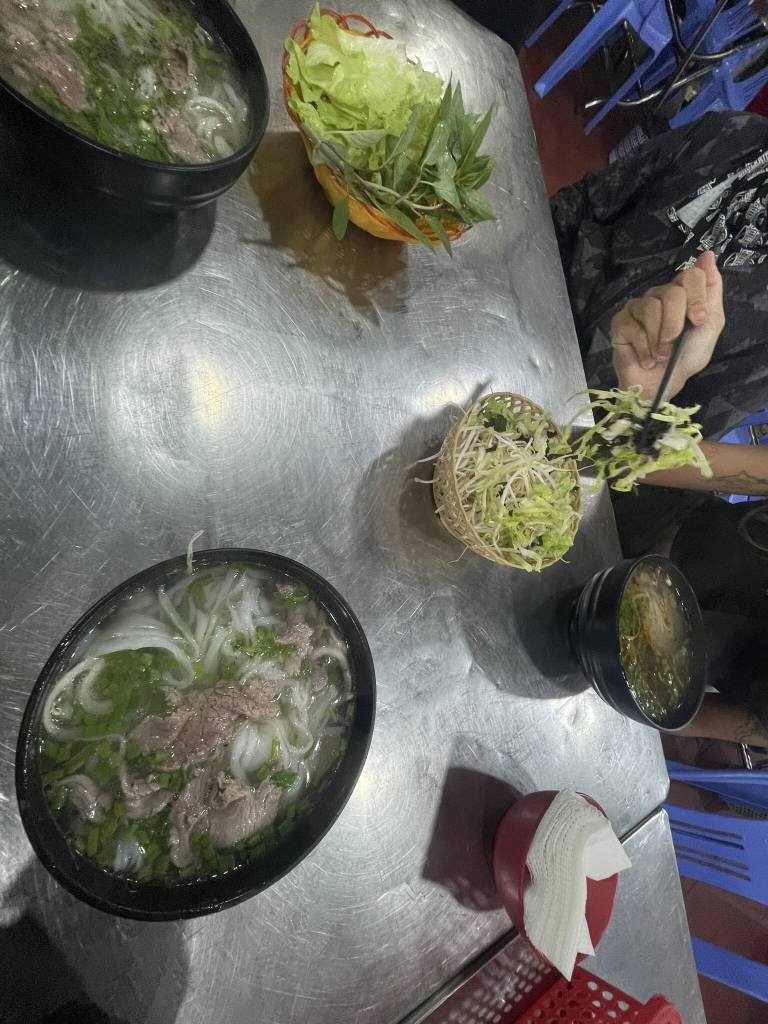
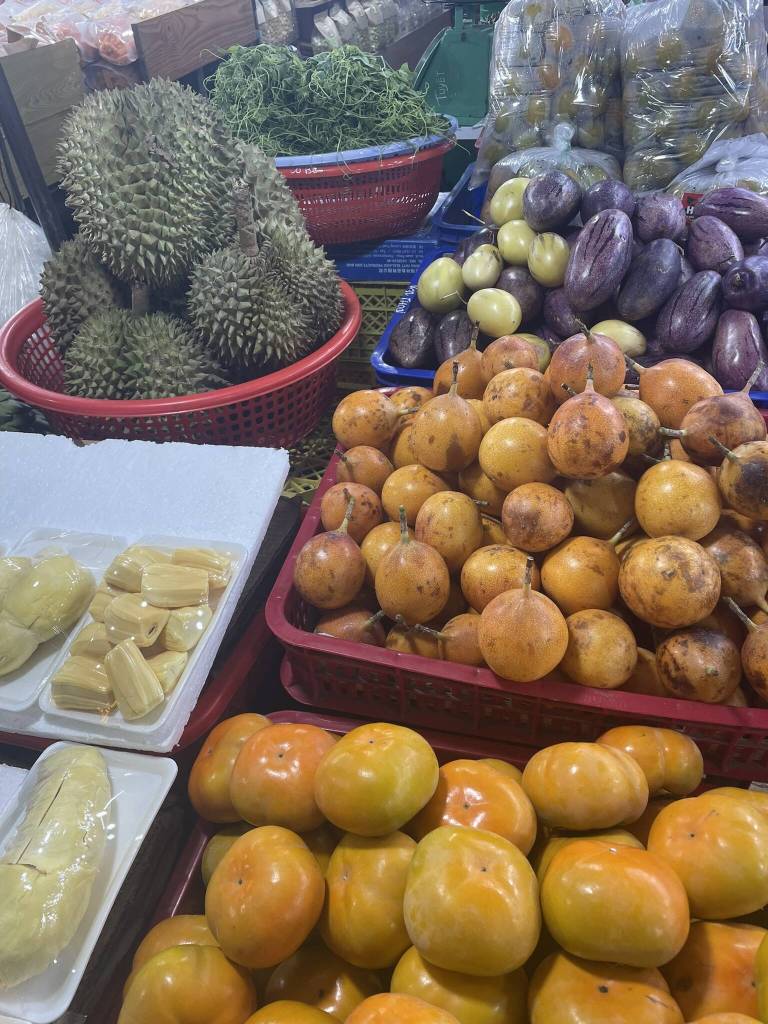
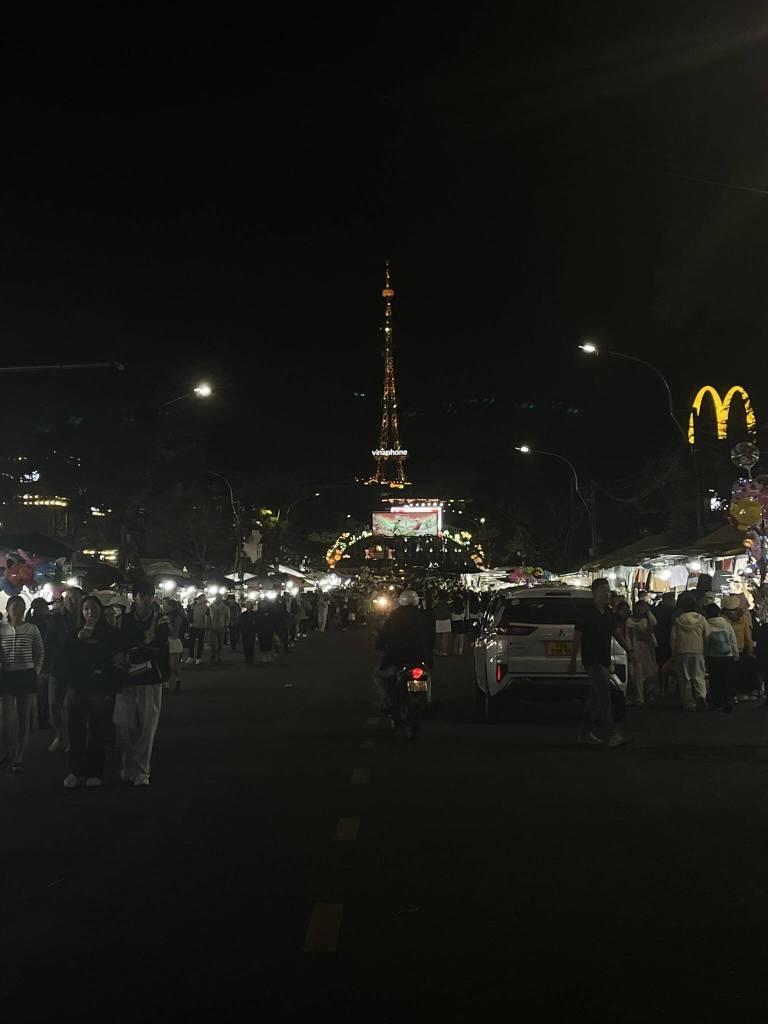
Back on the bikes, we return to the city centre of Dalat with a pit stop at the crescent shaped lake. Then we stroll around the local market for a bit, sampling fruits here and there (dried persimmon for me, durian for Alex). As we can keep the motorbikes till midnight, we decide to take the opportunity to have dinner at the market before going back to the hostel. During the meal, we are surprised by a lion dance anticipating the upcoming mid-autumn festival – I might cover this in a separate post. Overall this was just one of those days in the life of a solo traveller where the adventure unfolds effortlessly if you only commit to saying yes.
 thattravelstory