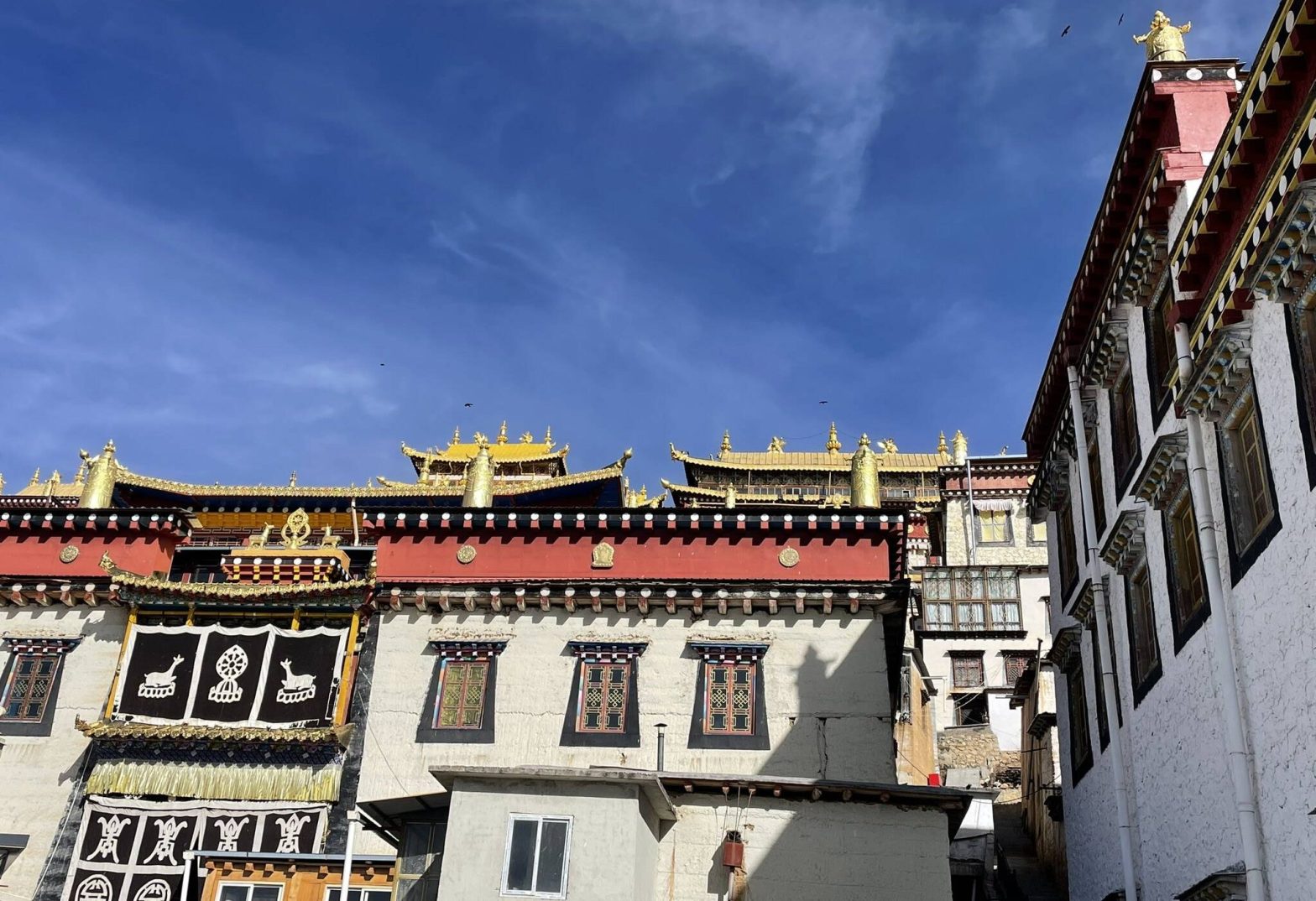
China – February 2026
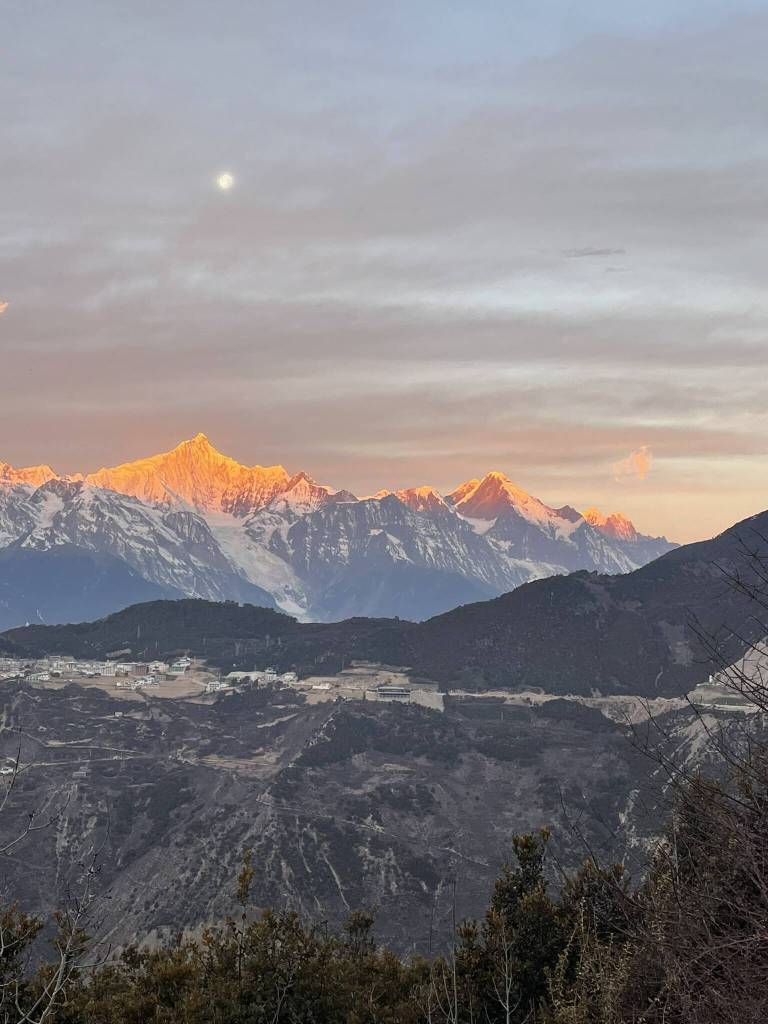
I included the far north of Yunnan in my itinerary because I’m interested in Tibetan culture. This is one of the few Tibetan cultural regions on the edge of the plateau that are accessible to foreign tourists without a special permit. The small town of Shangri-La is also surprisingly well-connected to the outside world: I arrived by bus all the way from the lakeshore of Dali (which transported more parcels than passengers). But there is also a high-speed railway station connecting Diqing Prefecture with Lijiang and Kunming, and even an airport operating domestic flights. As a bonus, the landscapes are simply stunning. From the sacred Meili Snow Mountain to the world-renowned hiking trails along Tiger Leaping Gorge, there is plenty to see and do. I’d love to come back and explore more of Napa Lake and Abuji National Park. But today, I’d like to share a little bit of the town’s interesting background.

Shangri-La, formerly known as Zhongdian, is located in Yunnan at an altitude of around 3,300 meters.Historically, the Diqing Prefecture has been inhabited primarily by Tibetan and Naxi people. Its history as a settlement dates back roughly 1,300 years. Located along the ancient Tea Horse trade network (sometimes referred to as the southern Silk Road), the old town of Dukezong was once a major hub connecting Yunnan, Sichuan, and Tibet. The name of this trade route comes from the exchange of tea from Yunnan for horses from the Tibetan regions. One of the reasons the town flourished historically was the nearby Ganden Sumtseling Monastery, founded in 1679. Its architecture has earned it the nickname “Little Potala,” after the palace in Lhasa. It’s the largest and most important Tibetan Buddhist monastery in Yunnan. Though parts of the complex were destroyed during the Cultural Revolution, it once again houses more than 700 monks and lamas today.
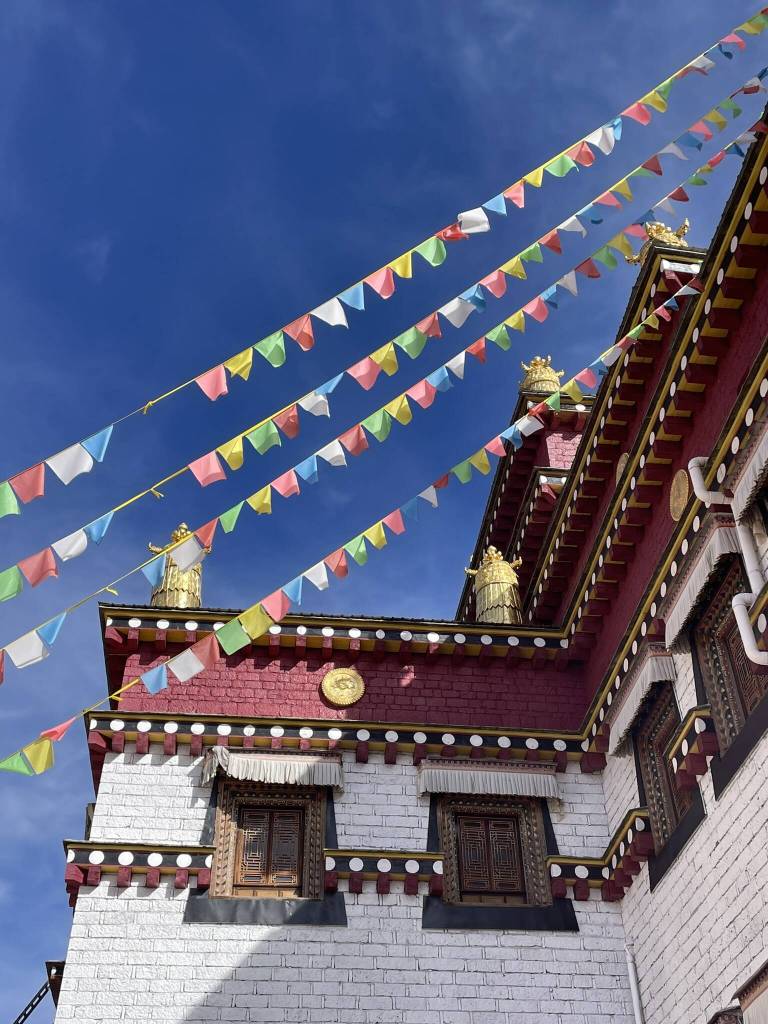
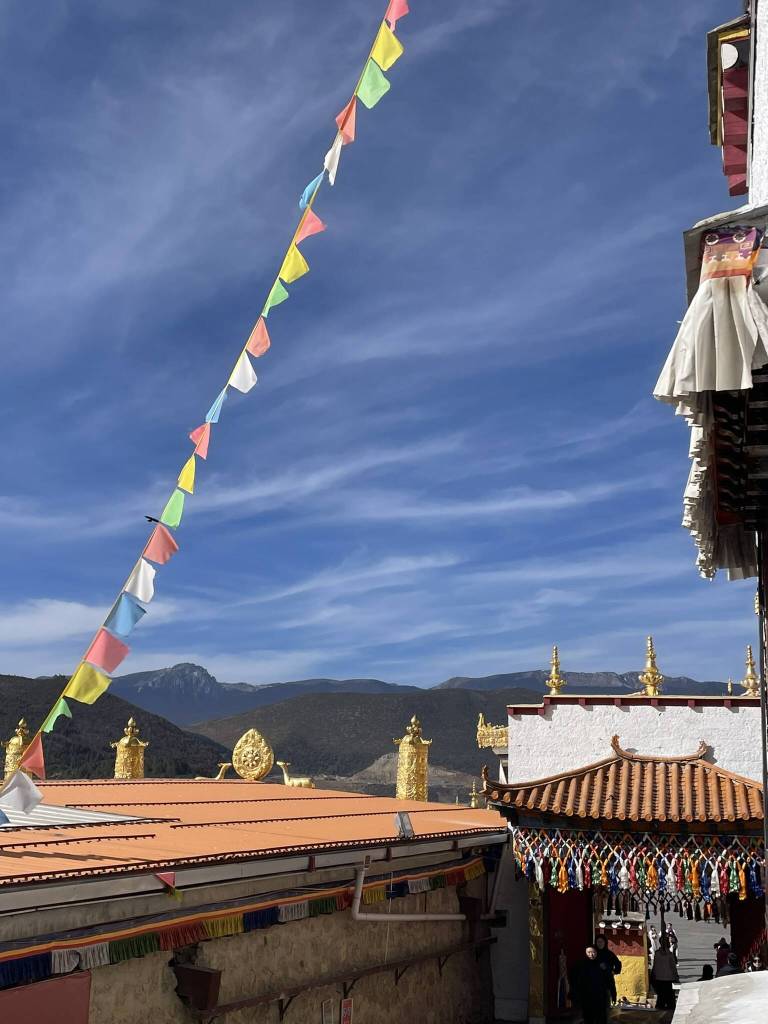
The monastery is often mentioned among the features that later helped Zhongdian “earn” the name Shangri-La. The term itself is associated with Shambhala, the Buddhist concept of a hidden paradise. It was coined by James Hilton in his 1933 novel Lost Horizon to describe a fictional utopian place somewhere in the Himalayas. In the story, survivors of an airplane crash are welcomed by the multi-cultural inhabitants of a remote town centered around a Buddhist lamasery. The book was highly successful in the West, and many explorers ventured into the Himalayas in search of its real-world counterpart. While several places have since claimed to be the Shangri-La, China officially renamed Zhongdian in 2001 as part of a tourism development strategy. A popular anecdote recounts that a local resident read Hilton’s novel in the 1990s and identified his hometown as the setting of the story. Some might say this came at a convenient time. Offering an opportunity to polish international perceptions of China’s relationship with Tibet by providing a tightly surveilled space in which Tibetan culture is “encouraged to thrive.”
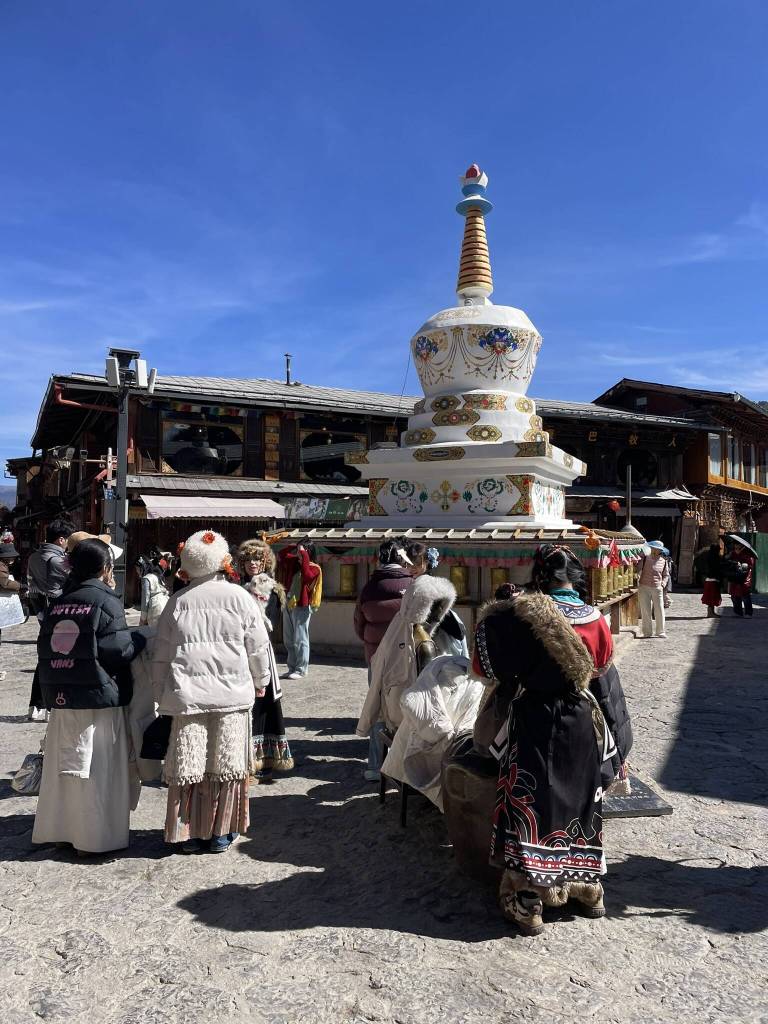
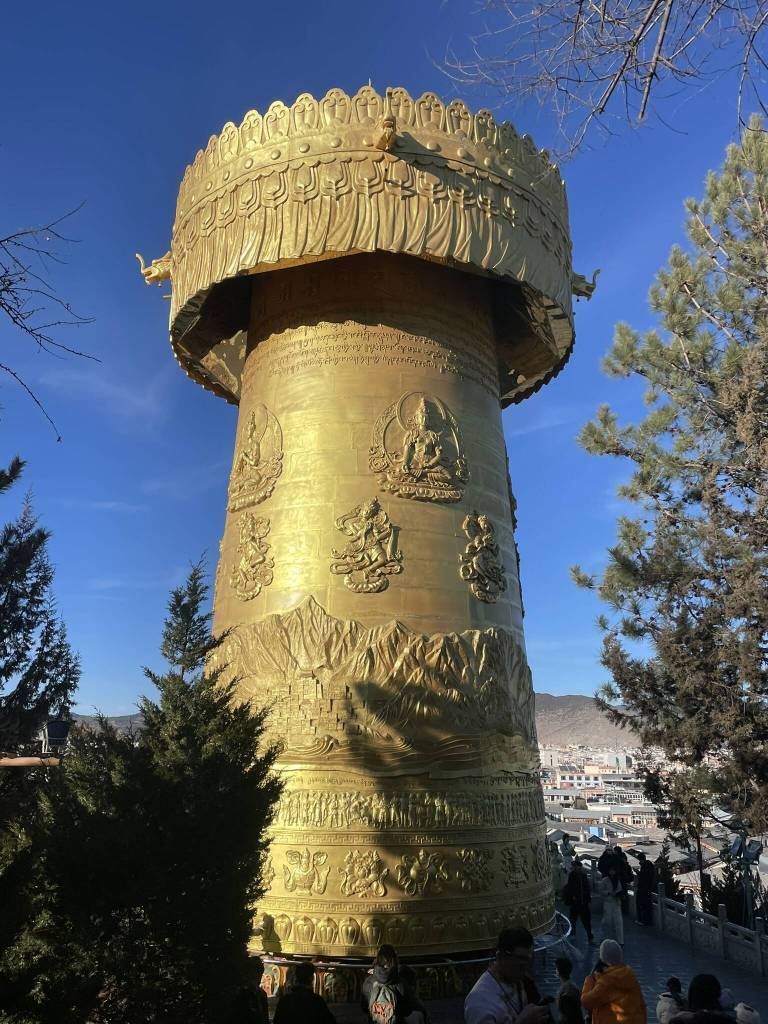
One welcome side effect is that the name attracts large numbers of domestic and international tourists. They spend their money on Tibetan handicrafts, yak products, and photo shoots in traditional attire. Tourism may help keep some traditions alive — such as the daily evening dances on the town’s “Dancing Square”. And the giant prayer wheel installed on Turtle Hill may raise awareness of Tibetan Buddhism and its symbolism (though, realistically, it often only serves as a backdrop for photos and livestreams). The downside of the tourism boom is the influx of business opportunists from all over the country. Making it increasingly difficult to find authentic goods, food, and accommodation. Still, I managed to find a cozy guesthouse in a traditional Tibetan farmhouse in the old town, as well as a few spots offering delicious meals and much-needed hot chocolate.
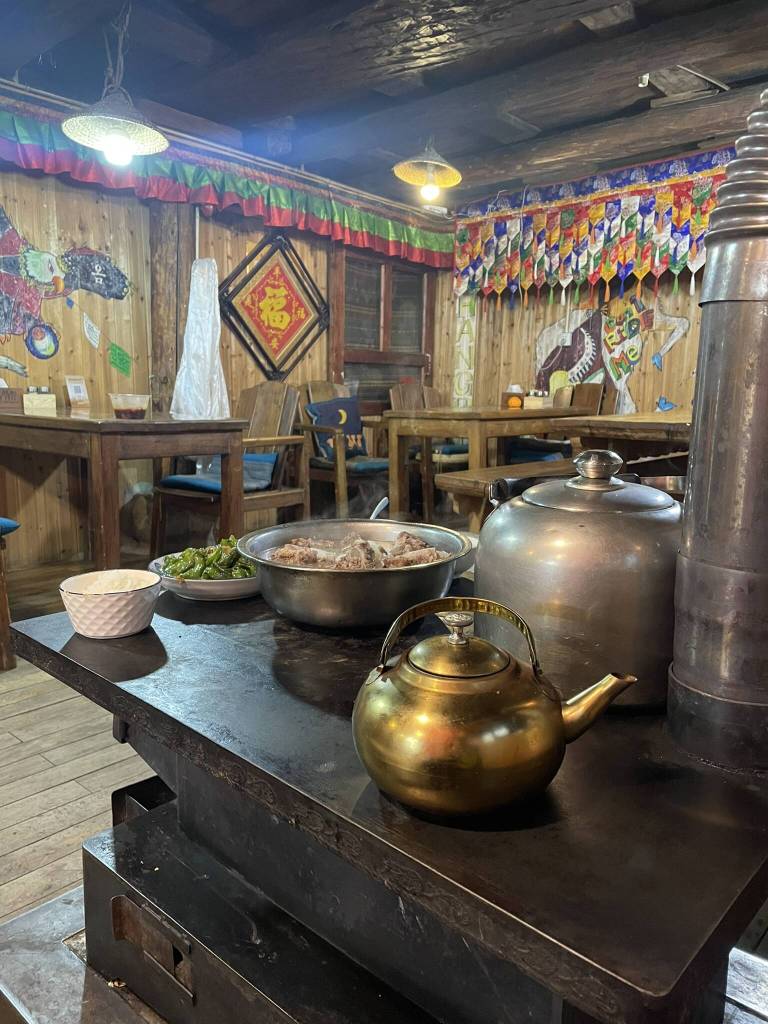
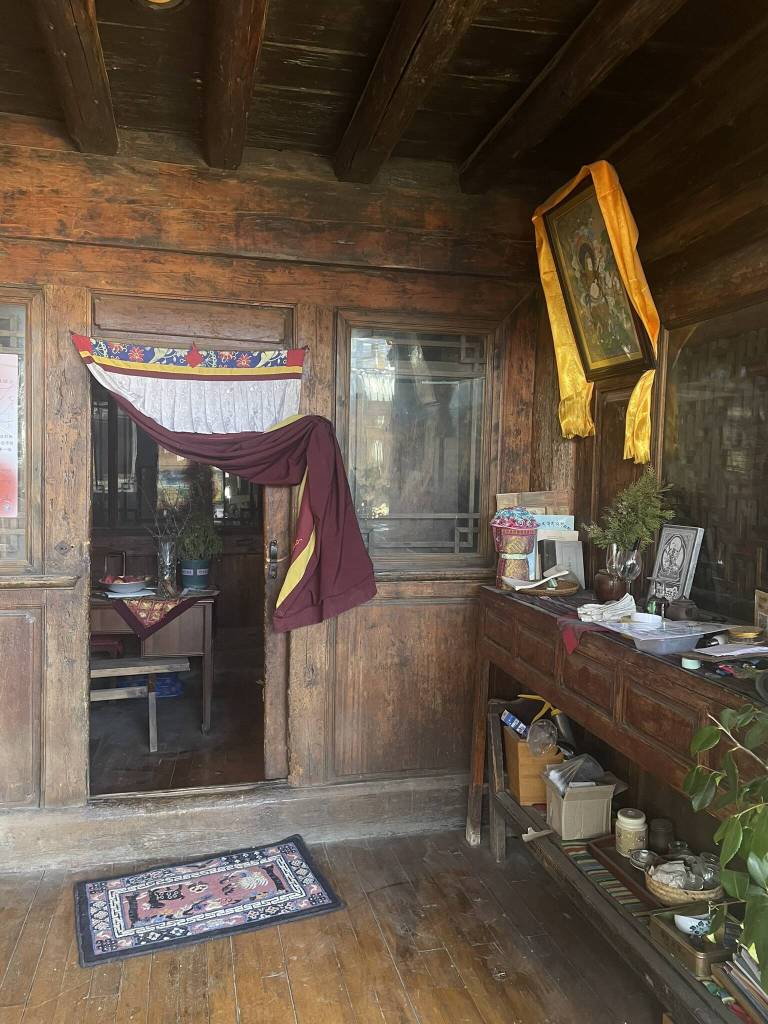
These traditional houses are built entirely of wood. The ground floor was originally used to shelter animals such as goats, sheep, and yaks, while the upper floor served as living space for the family. Without central heating, people would gather around the fireplace in the kitchen-living area. This construction style and heating method were also the reason why, in 2014, a fire spread rapidly and destroyed around 300 buildings in the old town. Much of this, and more, I learned by talking to locals. Without asking too directly, not wanting to put anyone at risk for speaking their mind, I tried to get a sense of what life is like here today. Many spoke English well. A recurring concern people mentioned was education. One person had been sent abroad by their parents at a young age and only returned to Shangri-La upon graduating from university. After working locally as a teacher for some time, they eventually lost the ability to continue doing so due to political circumstances.
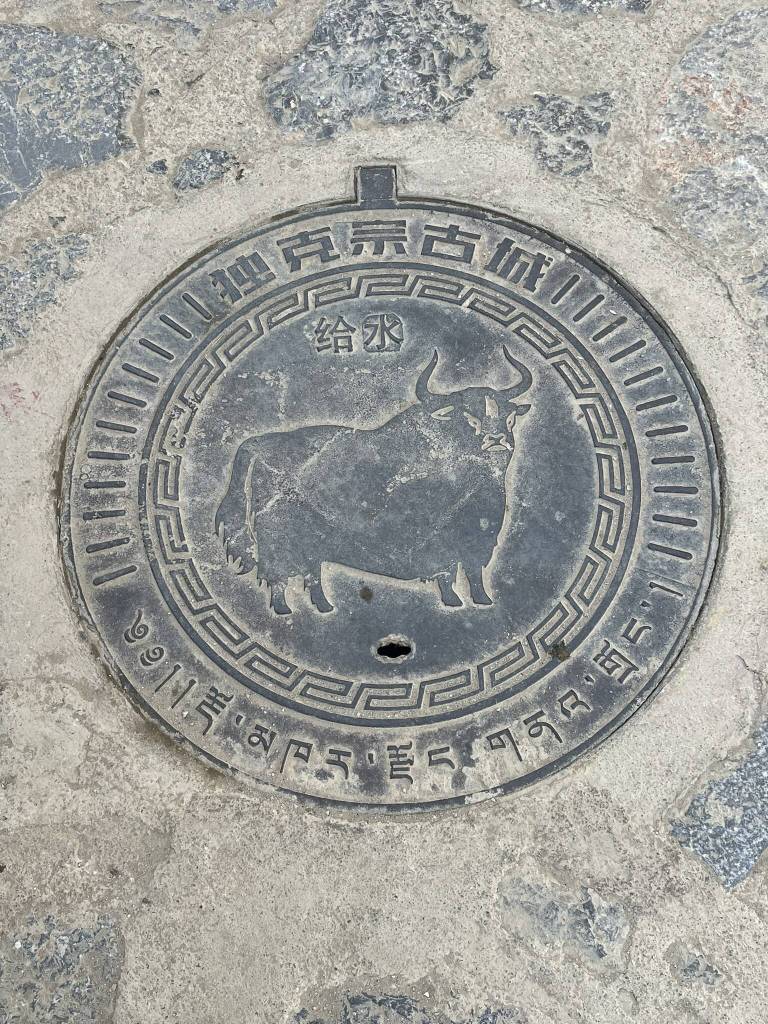
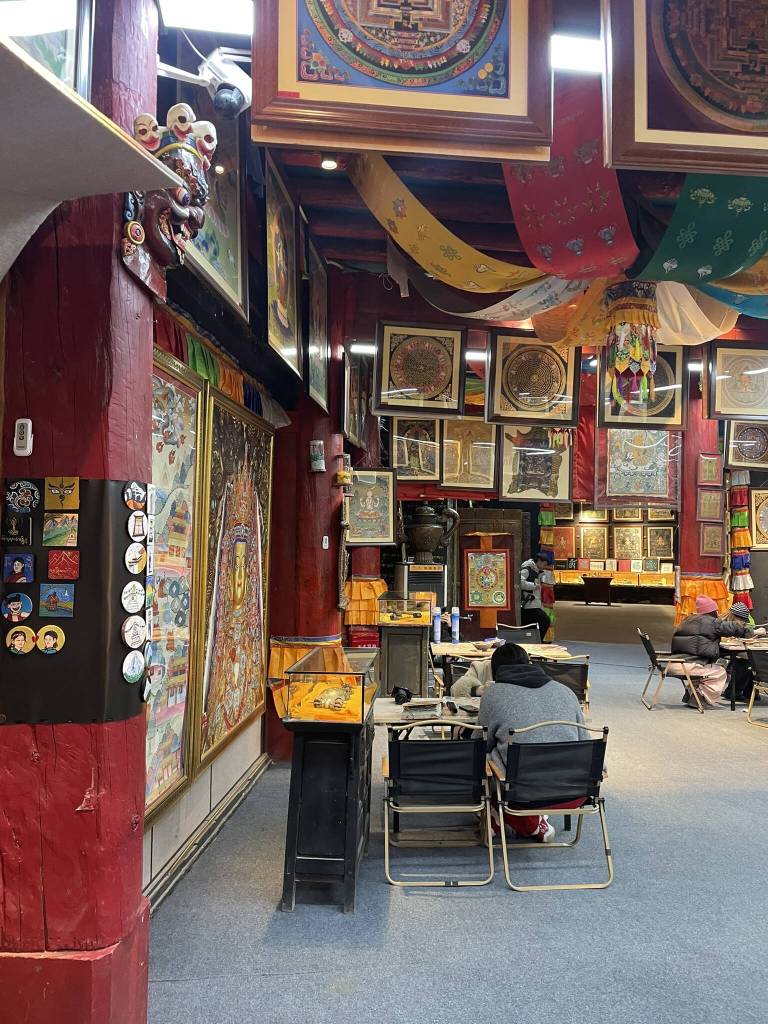
Unsurprisingly, they recommended that their younger sibling remain abroad, where there is more freedom. They also noted a clear difference in thinking patterns compared to relatives who had spent their entire lives in China. Another family is considering a move to Kunming or another larger city with access to international schools once their children are older. Their reasoning was that they want their kids to grow up open-minded and exposed to a variety of ideas. I haven’t experienced the Chinese education system myself, so I can’t fully judge these differences. Still, one observation stood out: on one side of the town’s “Museum Square” sits the Red Army Long March Museum, and on the other, the Tibetan Culture Museum. One of them appears to be temporarily closed; the other is thriving with visitors. You may take a guess as to which one is open — and why.
 thattravelstory