Mongolia – March 2026
The morning air in Hatgal is freezing as we load our bags into the van just after sunrise. Our destination lies far beyond the last paved roads of northern Mongolia: the remote forests of the taiga, home to the Tsaatan reindeer herders. Together with my travel companions Benji from the UK and Irene from Italy, I climb into the car and we leave Hatgal at 7 am. Our luggage looks more like preparation for an expedition than a short visit: every warm layer we can find, thick winter sleeping bags, and a large Mongolian thermos filled with boiling water. Food supplies are improvised: ten boiled eggs and several packs of dried camping meals left behind by previous visitors at Mongol Ujin Camp. To our surprise, our driver speaks fluent French, which quickly becomes our shared language for the long journey. Driving directly across Lake Khuvsgul, like we did in the previous week, is no longer possible as the ice is already melting now. Instead we take a long detour: first south, then west, before eventually turning north again.
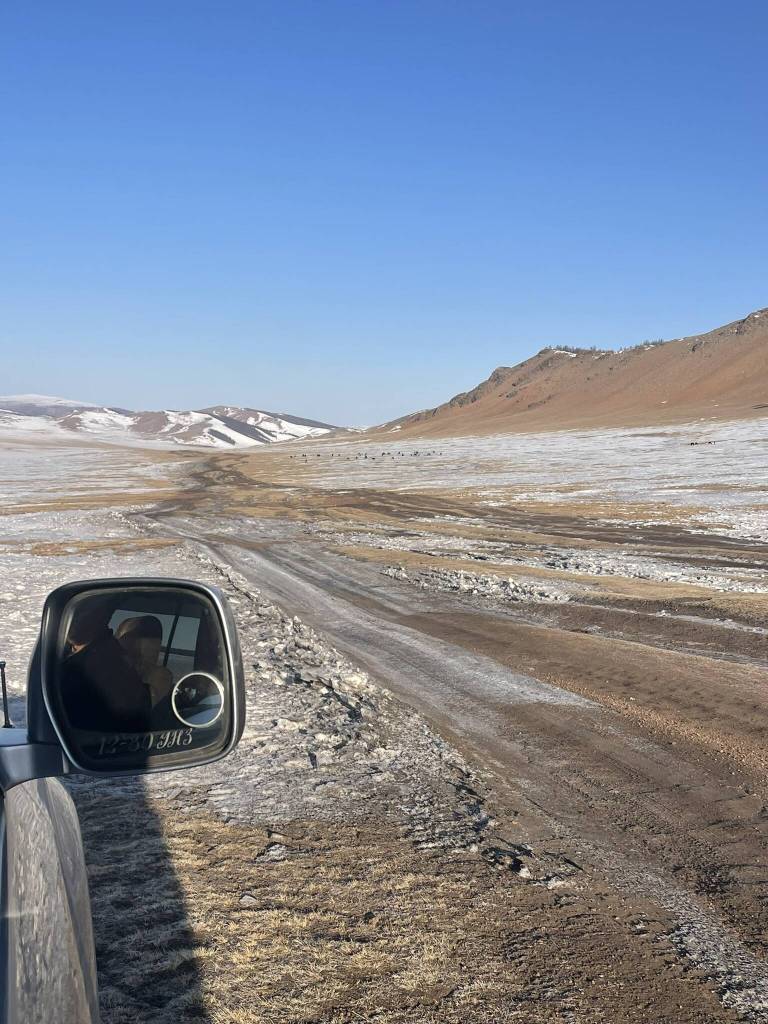
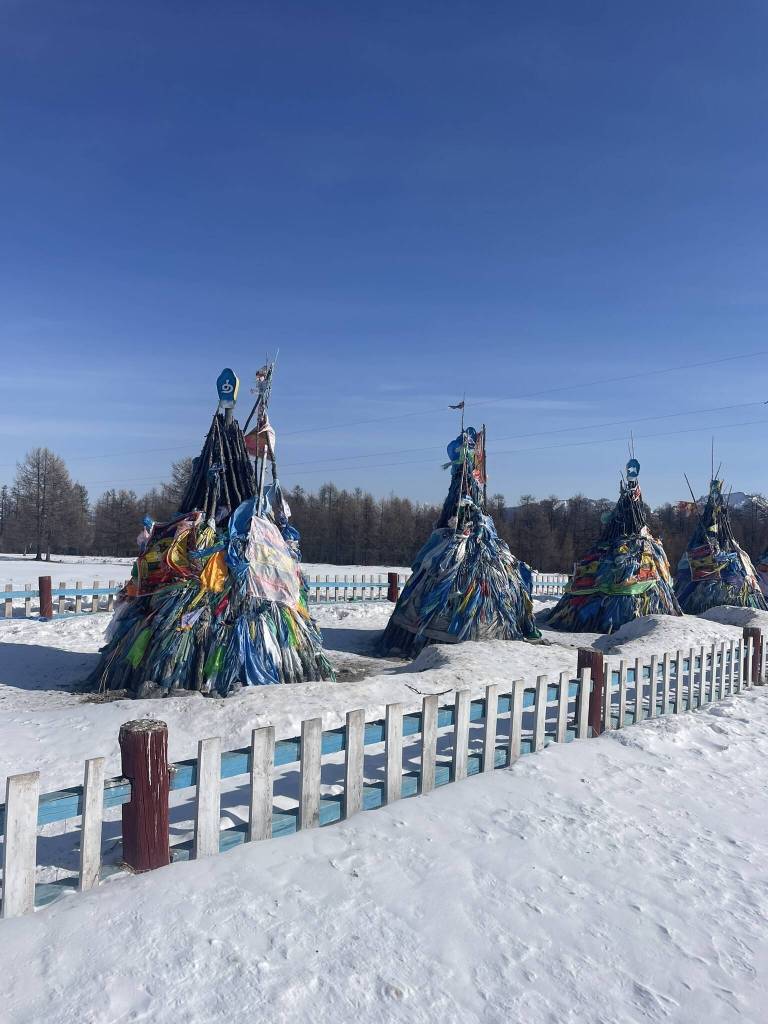
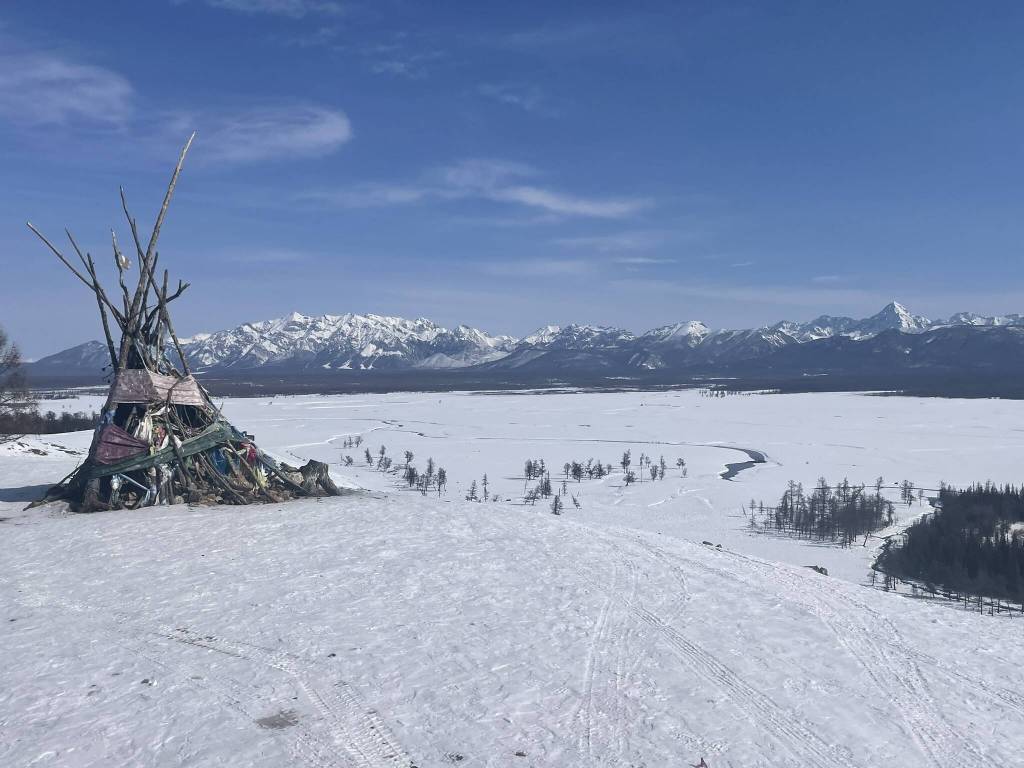
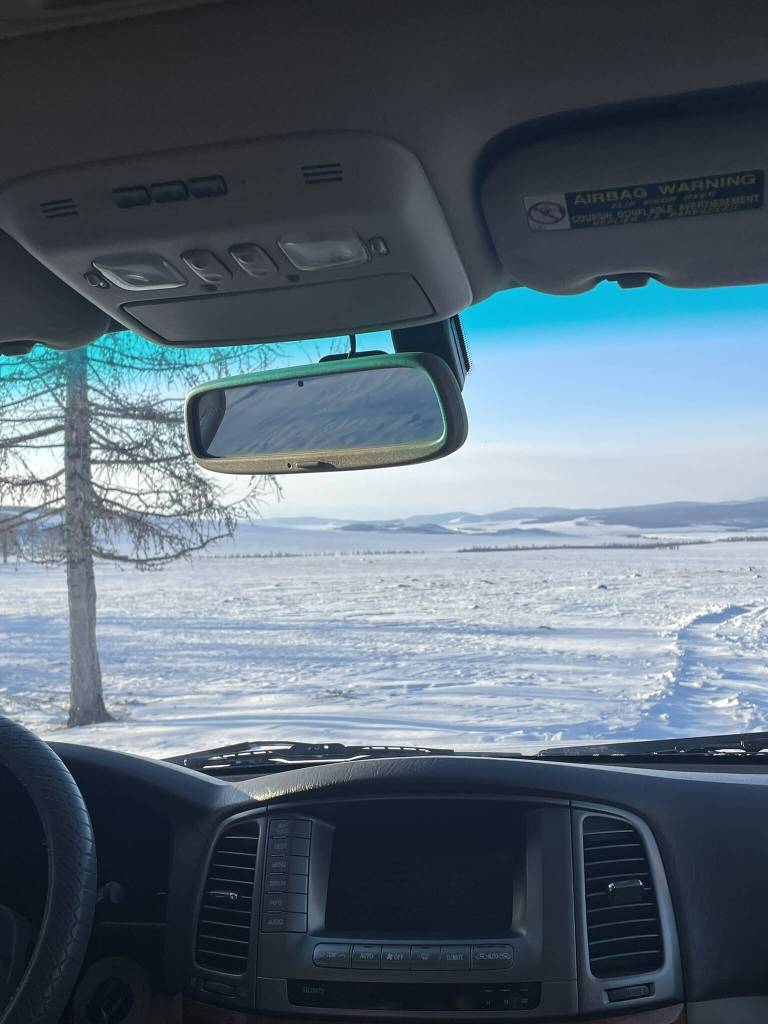
The tarmac ends after barely twenty minutes, and from that point on the road becomes a network of dirt tracks cutting through an increasingly empty landscape. We stop in the small settlement of Ulaan-Uul for lunch at a roadside restaurant serving Hoschor, Mongolia’s famous fried meat pies. After that the scenery becomes wilder and emptier with every kilometer. The dirt roads gradually disappear beneath fresh snow as we enter the national park area, and our driver carefully follows faint tracks across the steppe. Endless white fields stretch toward distant mountain ridges somewhere along the Russian border. Along the roadside we occasionally pass shamanic sites: small piles of stones decorated with blue ribbons where travelers traditionally stop to make offerings for a safe journey. Scattered across the plains are circular wooden fences marking former summer camps of nomadic herders. At one point we drive past a single unfrozen lake dotted with birds resting on the dark water.
Later our driver slows down to pick up a lone man standing beside the road in the middle of nowhere. Encounters like this are a reminder that in remote regions like northern Mongolia people simply help each other get where they need to go. After roughly nine and a half hours on the road we finally arrive in Tsagaannuur, the last village before the taiga. Tsagaannuur serves as the main hub for the Tsaatan community. Many families move here during the harshest winter months so their children can attend school, and the village also hosts the annual Reindeer Festival. With only a few small shops, it is the last place to buy supplies before heading deeper into the forest. From here it takes another short drive to reach the winter camps of the Tsaatan families. At the edge of the taiga we are welcomed by our host Zaya’s son and nephew. Children are playing in the snow as we carry our bags to a small wooden cabin where we will spend the night.
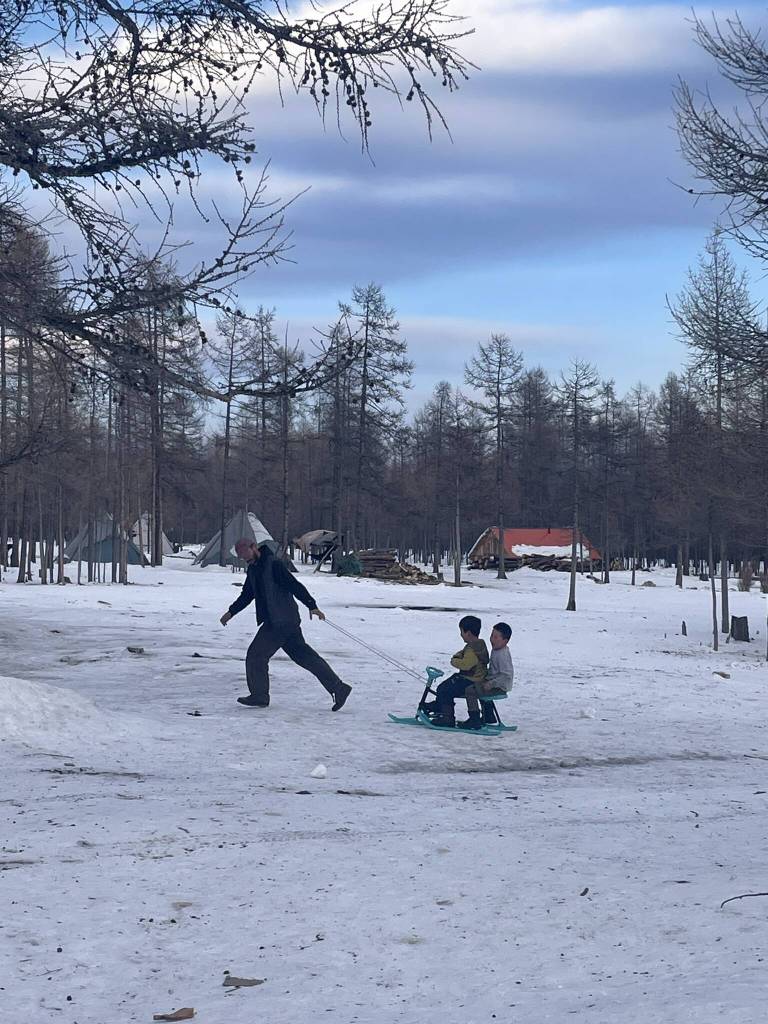
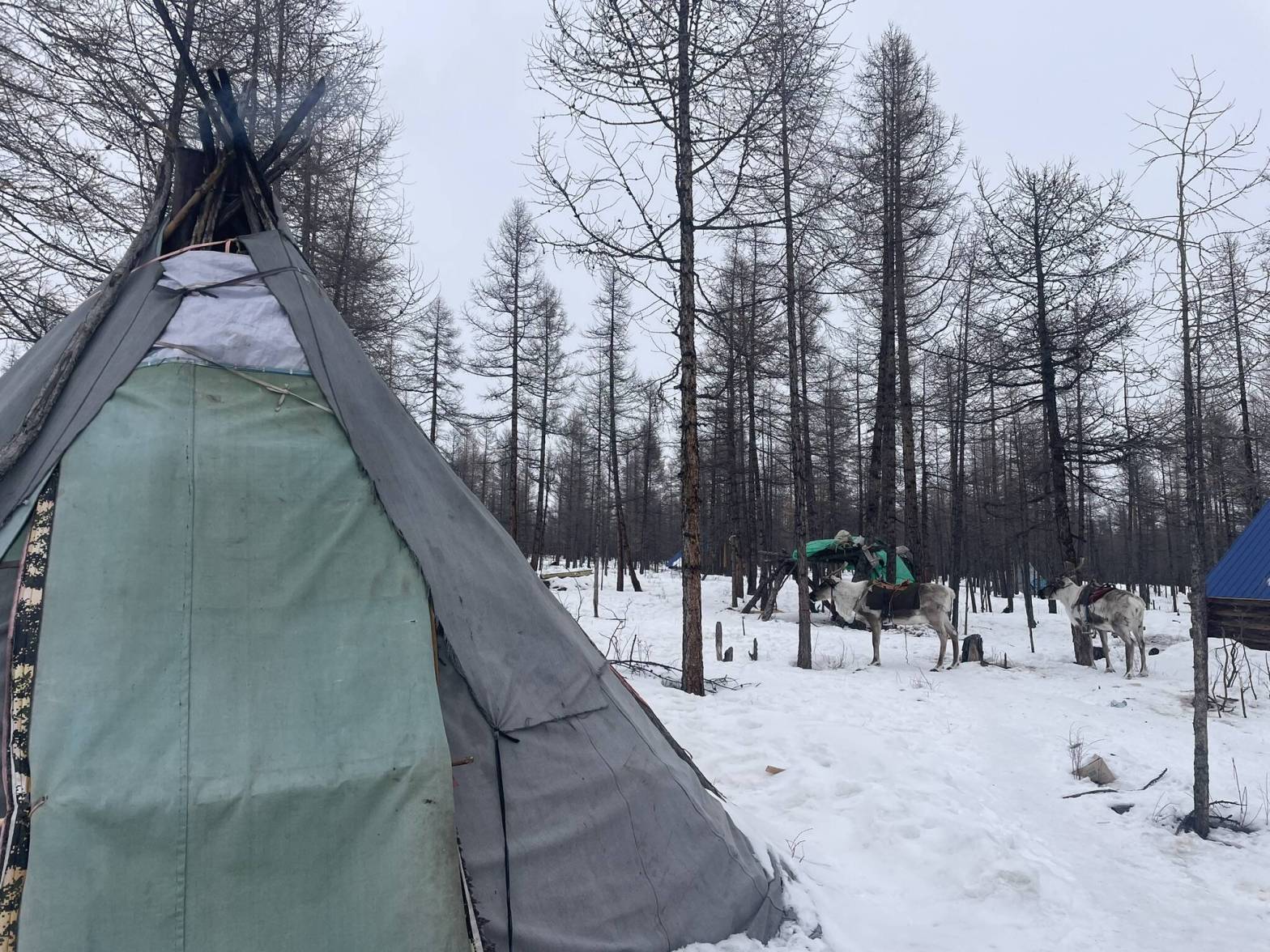
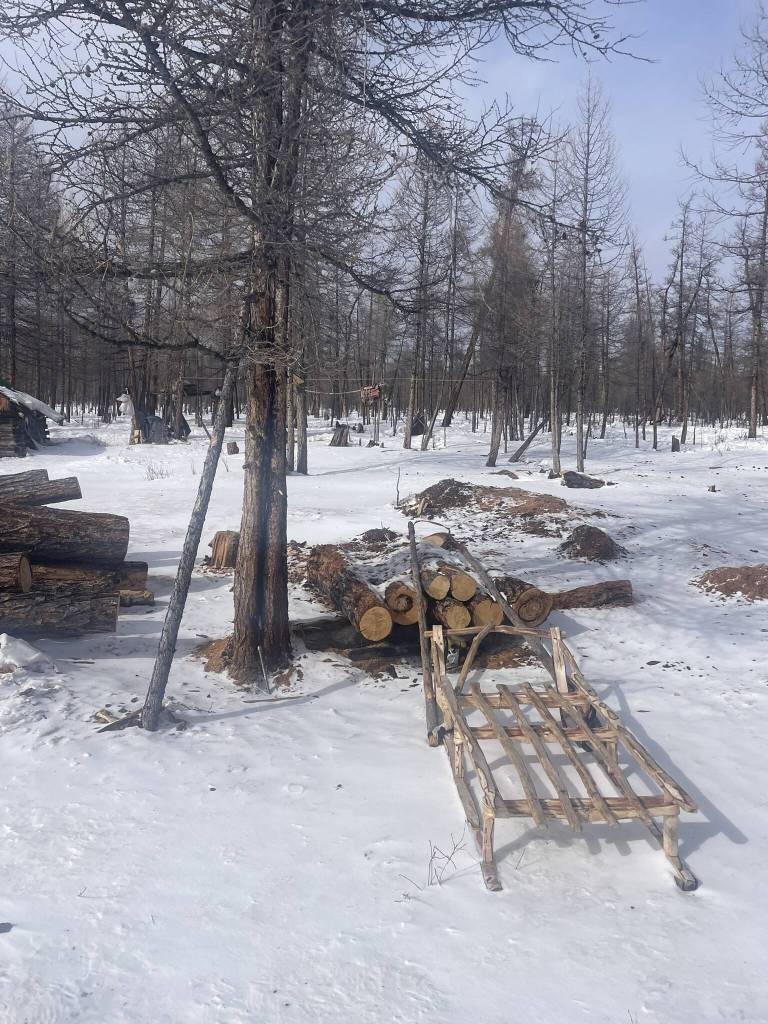
Smoke rises from nearby teepees and the smell of firewood fills the cold air. Soon we are invited into Zaya’s house for tea. Inside the warm room we drink bowls of salty milk tea while she tells us about her life. Born in Ulaanbaatar and partly raised in the United States, she returned to Mongolia at eighteen and eventually followed her husband into the taiga fifteen years ago. Life here revolves entirely around the reindeer. The Tsaatan are one of the last communities in Mongolia who still herd these animals, with roughly 700 reindeer shared between around 35 families. Unlike other Mongolian herders who live in gers on the open steppe, the Tsaatan move through the forest and live in teepees or simple wooden cabins. Their camps shift several times a year: a winter camp in the forest, a spring camp slightly further north for the birthing season, and a summer camp close to the Russian border where the reindeer can graze on fresh lichen and moss. During tea Zaya also explains one of the biggest dangers facing the herds: wolves.
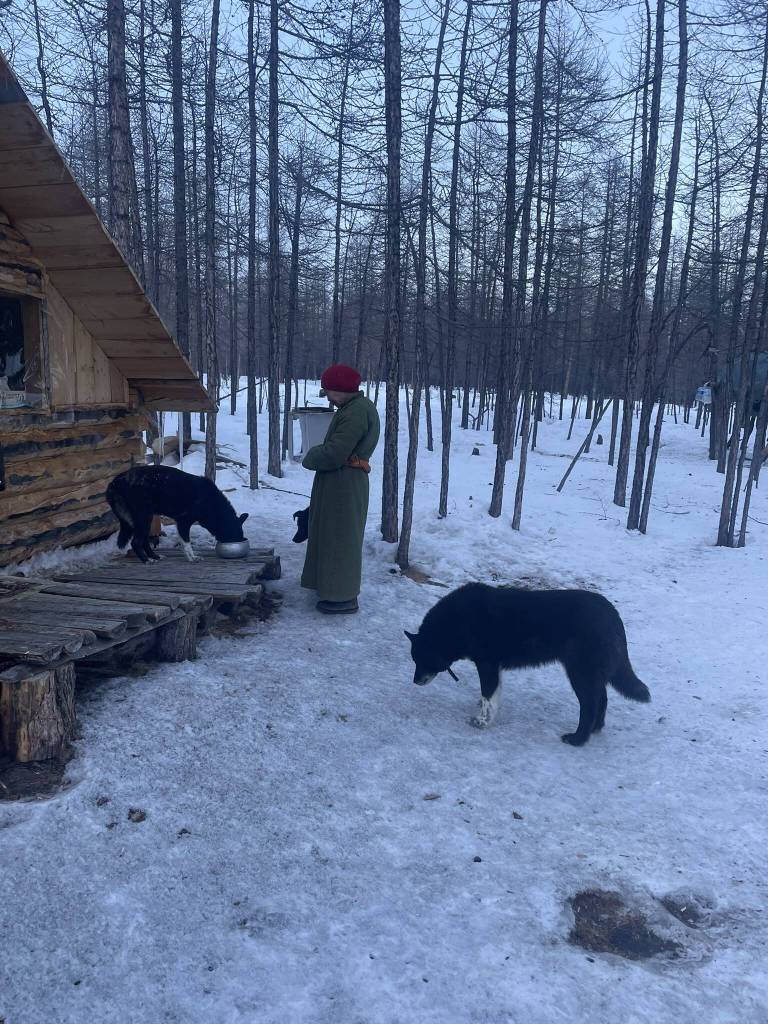
They hunt in packs and occasionally attack the reindeer, especially during winter when food becomes scarce. Because the animals are used to living alongside humans and dogs, their natural survival instincts are weaker than those of wild reindeer. Once a wolf’s poisonous teeth pierces the skin, infection spreads quickly and survival becomes unlikely. Protecting the herd means moving them to higher grounds and keeping watch throughout the night. Earlier that day two other visitors (a traveler from Brazil and another from the United States) had returned from helping move the entire herd high up onto a nearby mountain. Their tales of the exhausting rides make me reconsider riding a reindeer myself the next day. Also staying in the back of my mind as we walk back to our cabin through the darkness are the wolves. We pass several several large guard dogs that protect the community, which at first glance almost look like wolves themselves, but once they get to know us their friendly nature becomes clear.
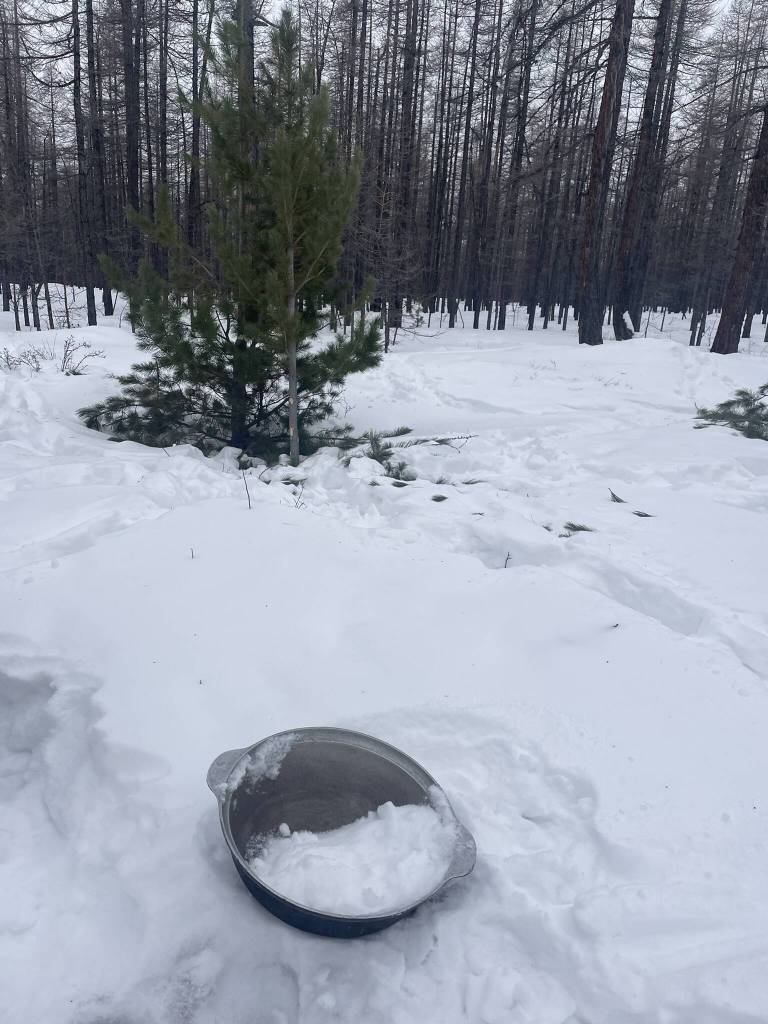
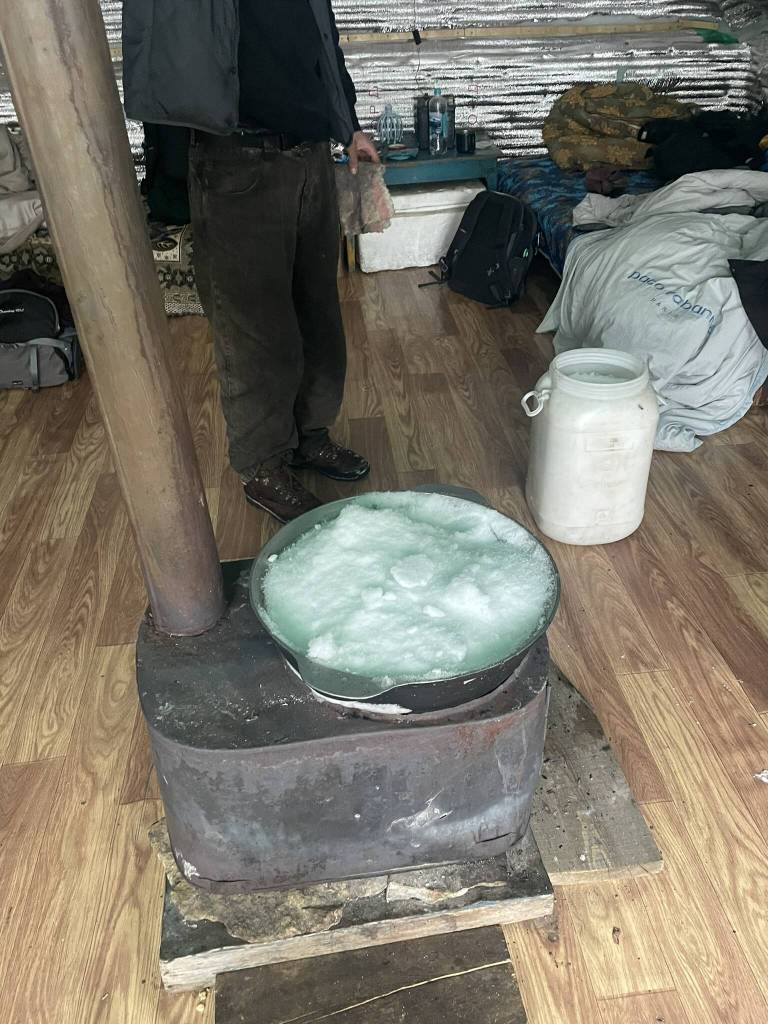
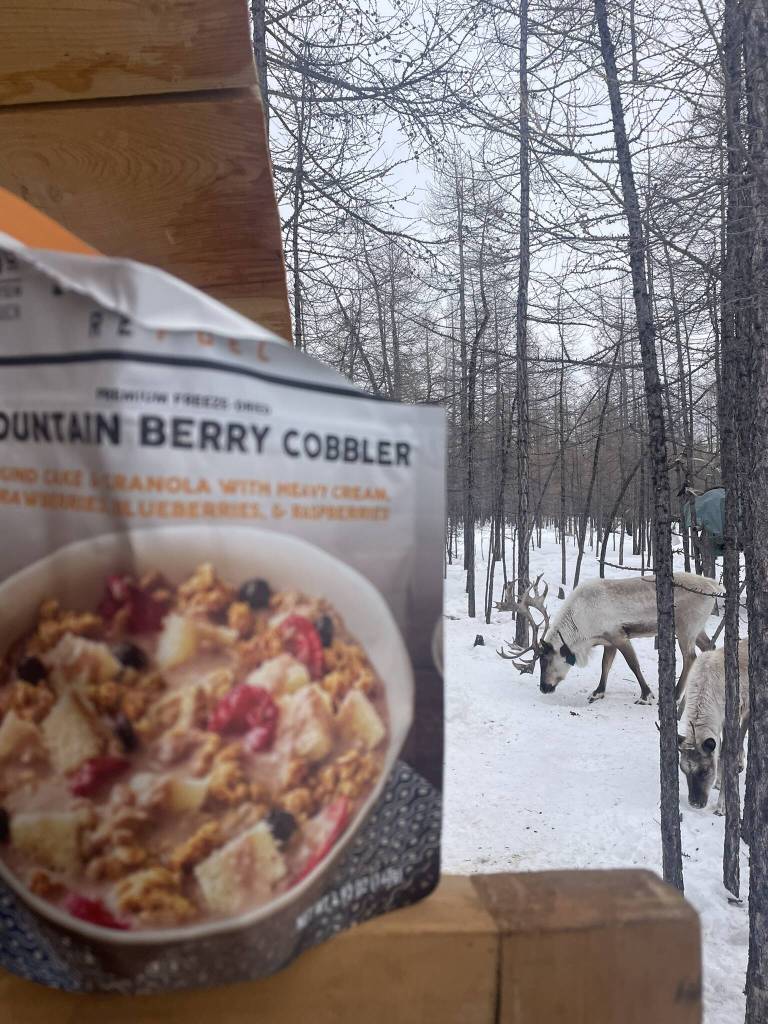
The taiga is silent except for the crunch of snow beneath our boots. Above us an incredibly clear night sky spreads across the forest.That night the cabin warms quickly thanks to the fire burning inside the small stove, and for once the cold feels manageable. Outside we occasionally hear the distant howling of dogs (or perhaps wolves) echoing somewhere through the forest. The sky above the taiga is filled with more stars than I have seen in a while. The next morning begins with a simple but necessary task: collecting snow to melt for drinking water. Breakfast consists of apple crumble and muesli from our camping supplies while a few curious reindeer wander around outside the cabin. Later we set out to find our driver. We are told to “follow the hard path and take the first cabin on the left,” but after reaching it we realize the directions were only partially accurate and continue walking another ten minutes before finally finding him. Nearby we encounter what might be the wildest toilet yet.
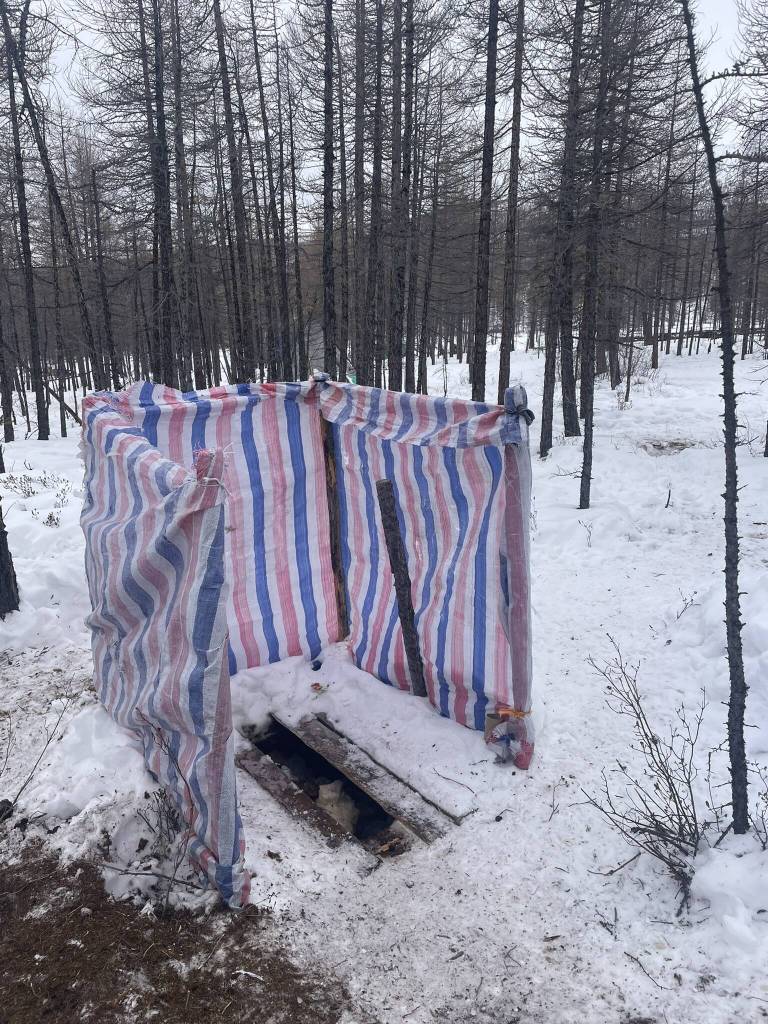
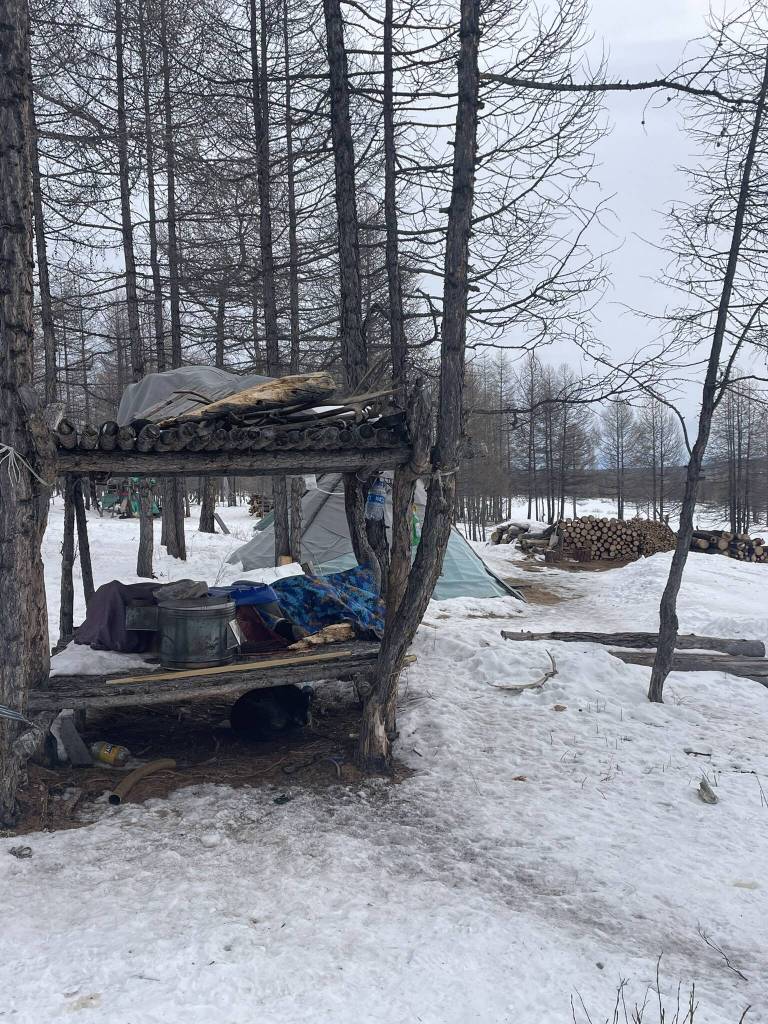
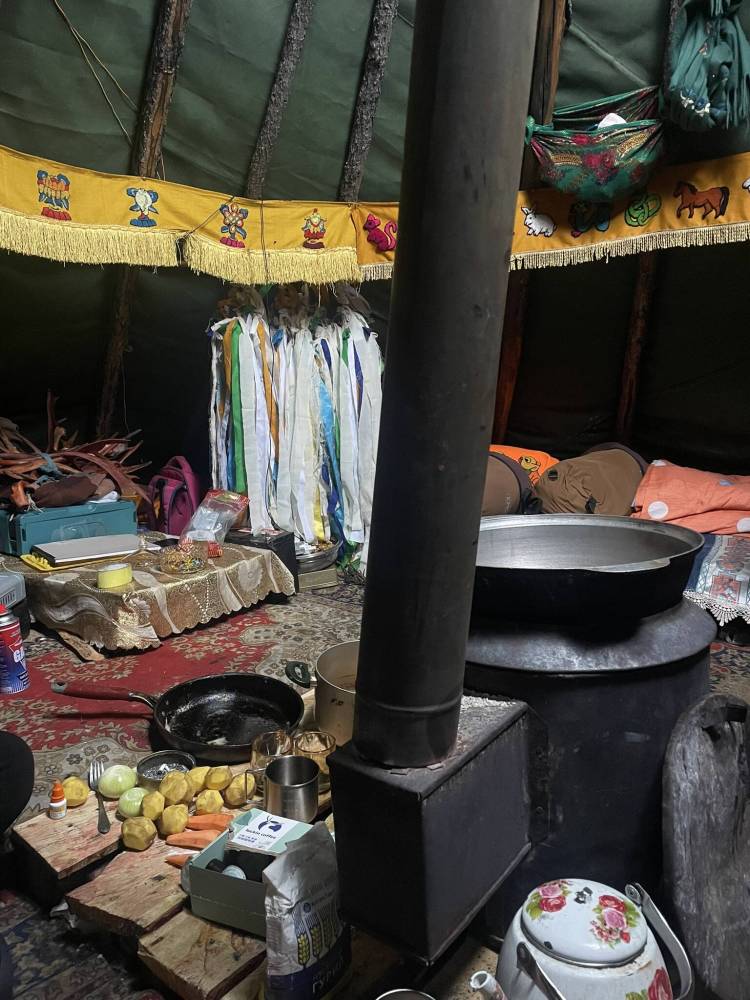
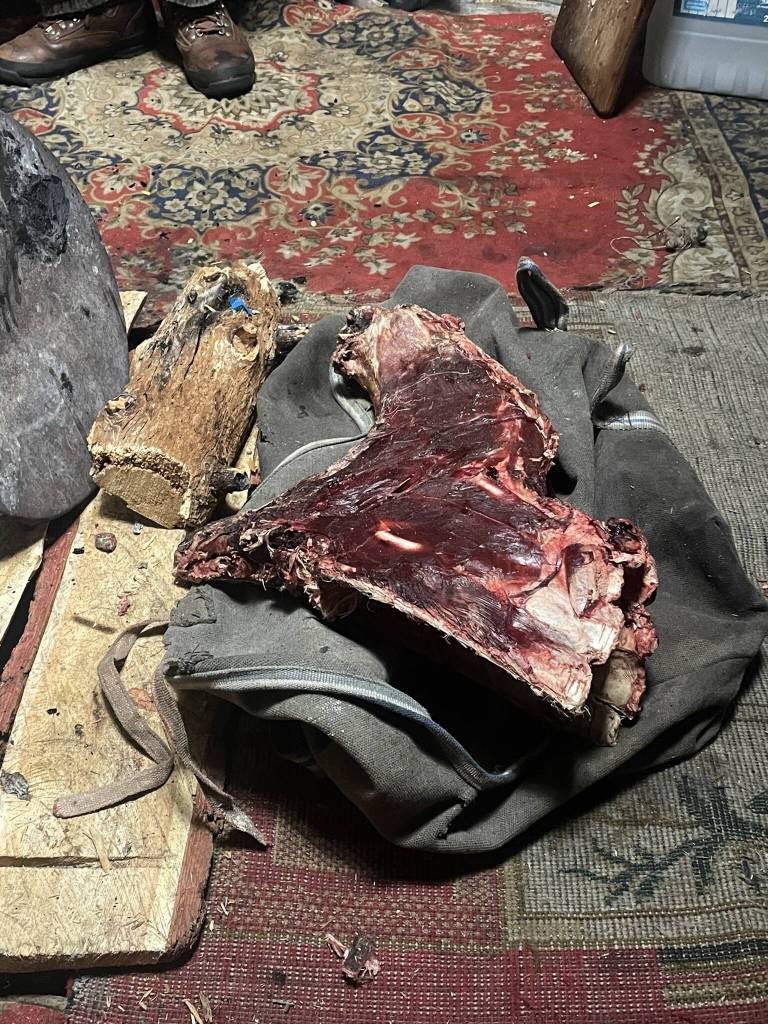
A literal hole in the ground hidden behind a three-sided curtain. In places this remote, even basic facilities become an adventure. Afterward we start asking around at the nearby teepees to see if any families still have reindeer in the area. Most of the animals have already returned to the mountains, but eventually we meet an English-speaking guide who is waiting for his tourist to come back from the forest. He offers to let us ride their remaining reindeer later. While waiting we are invited into the family’s teepee for more tea. The warmth of the fire fills the small space while the guide tells us about the spiritual traditions of the Tsaatan. Shamanism still plays an important role in their lives. When someone experiences mental or emotional struggles, a shaman may perform a ritual to communicate with ancestral spirits. Many ceremonies follow the lunar calendar, and the night before our arrival a new moon ritual had taken place. The shaman we hoped to meet had already returned to Tsagaannuur the following morning to buy supplies.
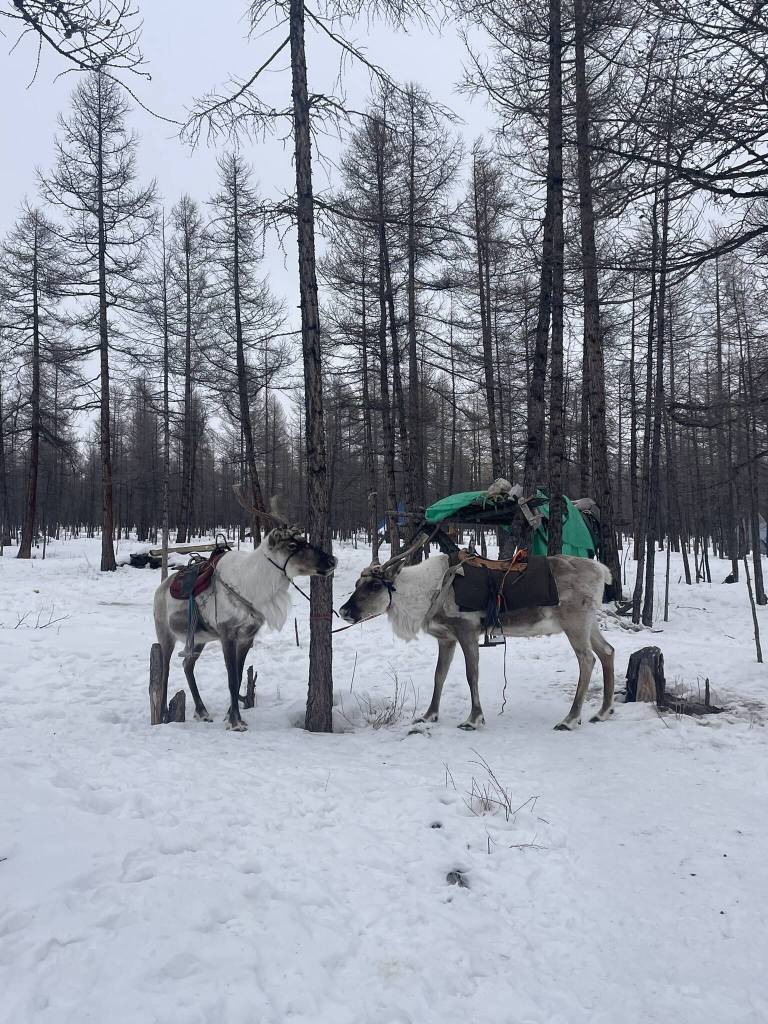
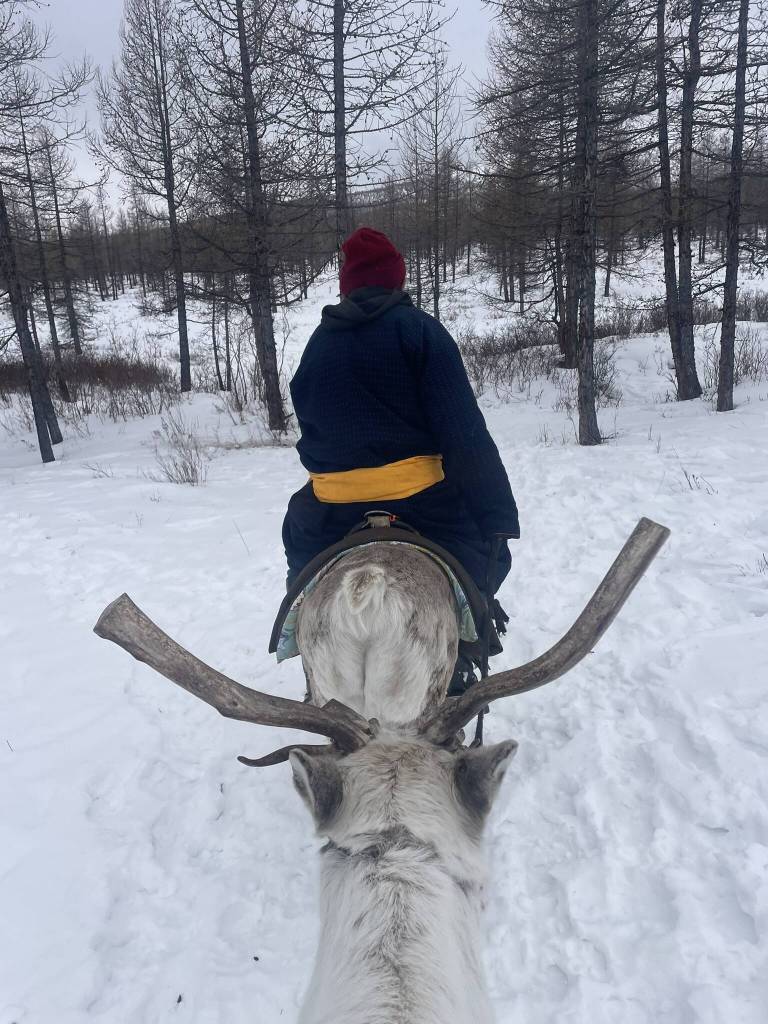
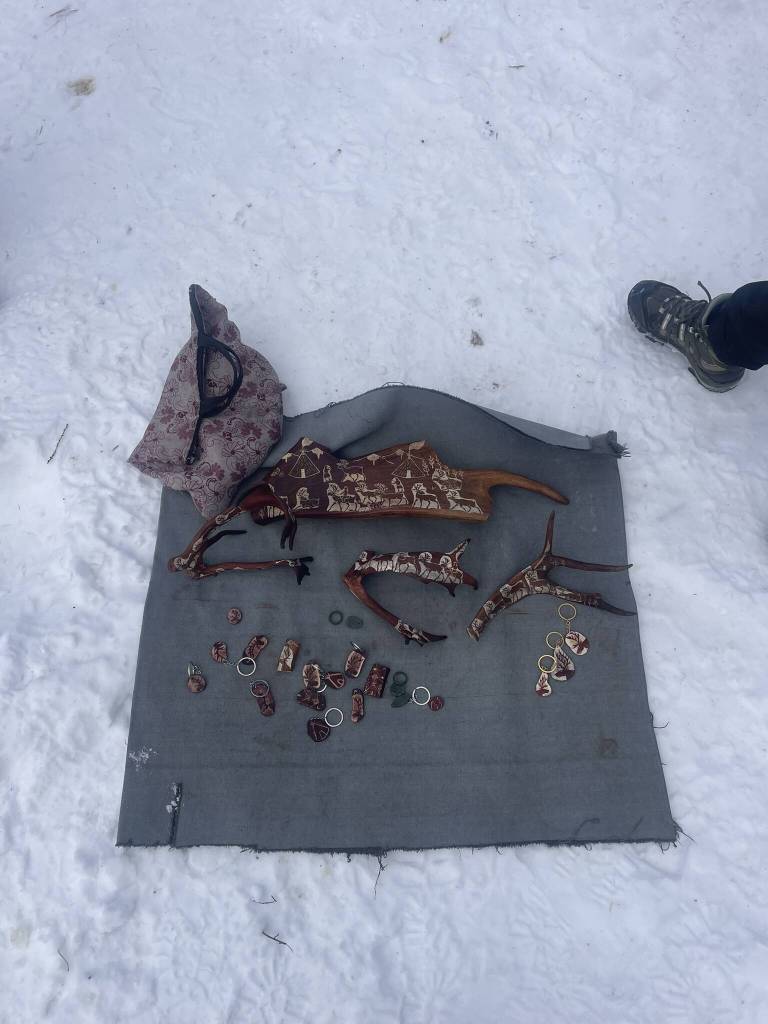
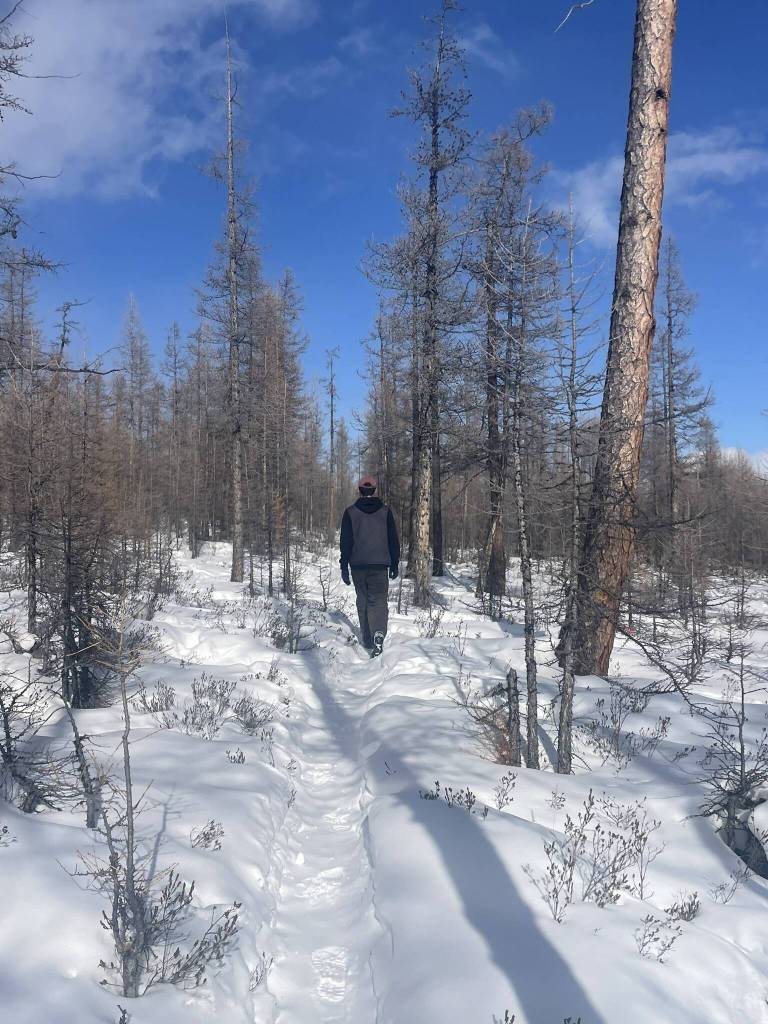
Later we finally take a short ride on the reindeer that remain near the camp. Afterward Benji, Irene, and I decide to go for a walk through the surrounding forest. Only after about twenty minutes do we suddenly realize how far we have wandered from the settlement. In a place this remote, where wolves and even bears roam the forests, it might not be the smartest idea to explore too far on our own. For a short moment we lose the path while navigating through the trees, but eventually we find our way back and pass several reindeer calmly resting between the trunks of the forest. Back at the camp we melt more snow for water and visit one of the neighboring teepees where we are offered another bowl of traditional milk tea made from bark and milk. Dinner that evening is simple but satisfying: dehydrated dal and rice followed by a surprisingly delicious chocolate pudding from our camping supplies. During the night a snowstorm sweeps across the taiga.
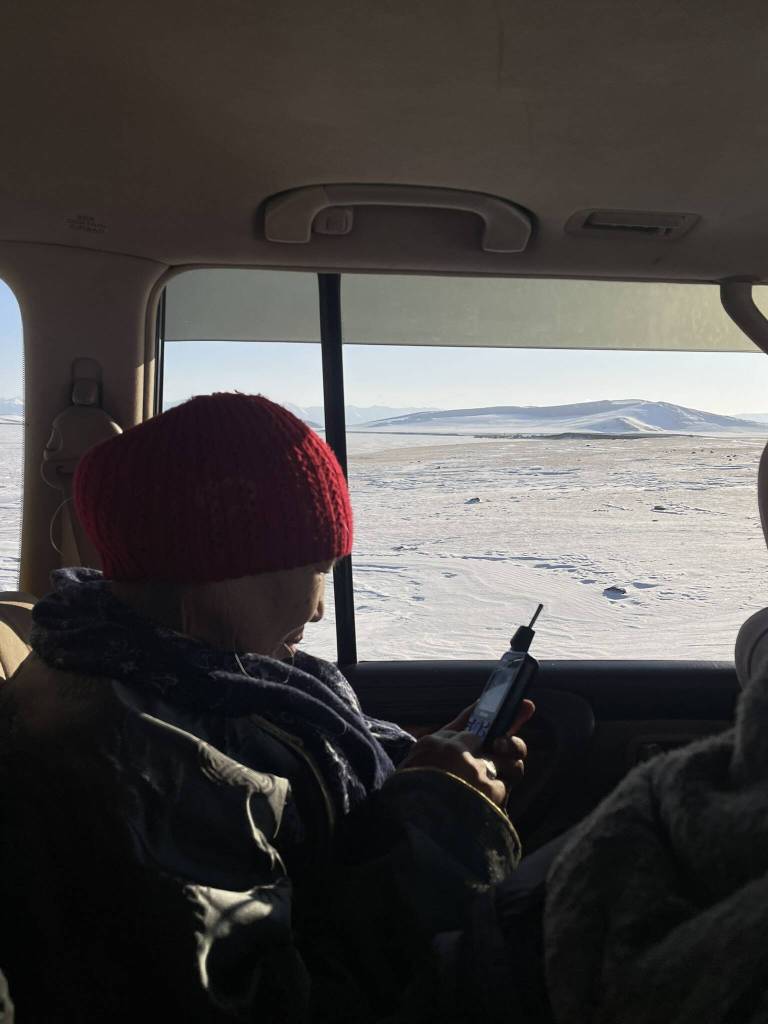
Once the fire dies down the cold slowly creeps back into the cabin, and outside the wind carries the distant sound of howling wolves. The next morning we leave at eight, giving one of our neighbors a ride back to town. The journey out proves challenging and our van gets stuck in the snow twice before we finally reach Tsagaannuur again. There we run into the guide and tourist from the previous day and share one last lunch together at the small Hoschor restaurant in the village. After another long drive we finally return to Mongol Ujin Camp in Hatgal in the evening. Arriving back at camp reminds me of another time I visited a local nomad family who owns horses and yaks. If you are curious what daily life with Mongolian herders looks like during summer, read about my experience here.
 thattravelstory