Mongolia – March 2026
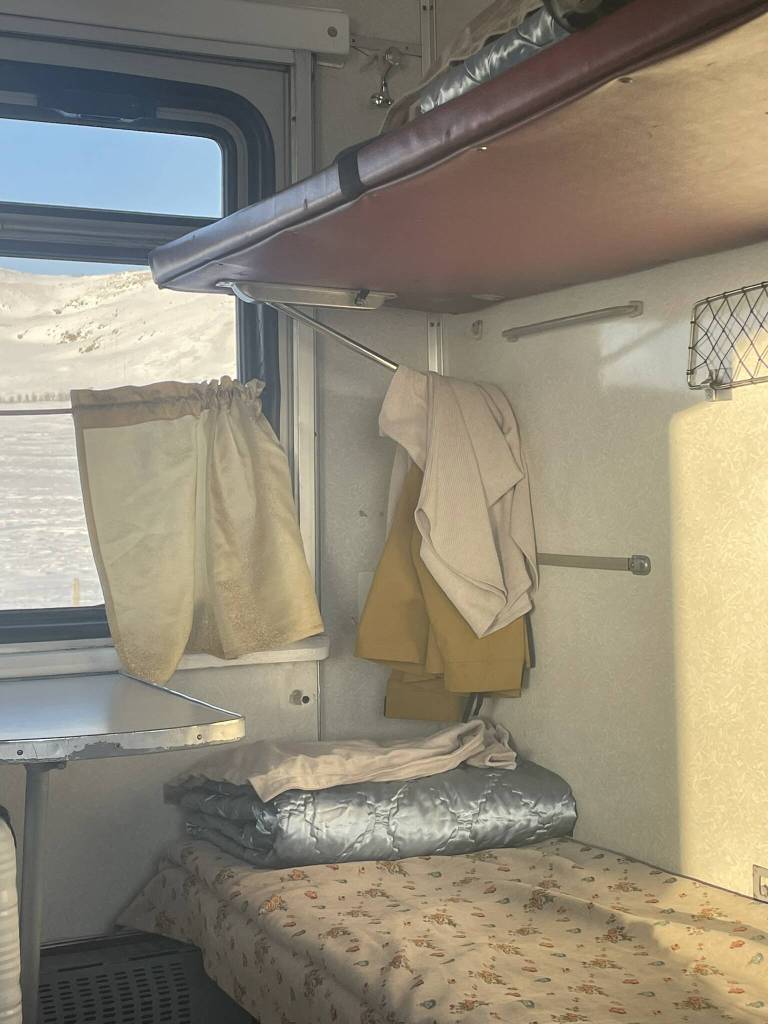
Let’s start with how I it comes that I end up at a frozen lake in northern Mongolia: I fell in love with Khatgal during my stay there last summer and decide to return for a winter adventure. I travel from Datong (China) to Ulaanbaatar via a chain of slow trains and improvised connections. After reaching Erlian at 6:50am, the cold hits instantly as I step into the winter morning. At the station, a Mongolian jeep driver offers to take me across the border for 50 RMB. I accept, and by 8:30am we’re already clearing immigration, quick and quiet. In Zamyn-Üüd, I buy a ticket for the evening sleeper to Ulaanbaatar and spend the day between the station (free Wi-Fi!) and CU, warming up whenever needed. The sleeper train is overheated to the point of discomfort, T-shirt weather in the middle of winter, a strange contrast to what waits outside. When I arrive in Ulaanbaatar, the cold hits again, sharper after a night in the heat. I walk to HostelOne, stopping once to defrost and grab a gimbap before continuing.
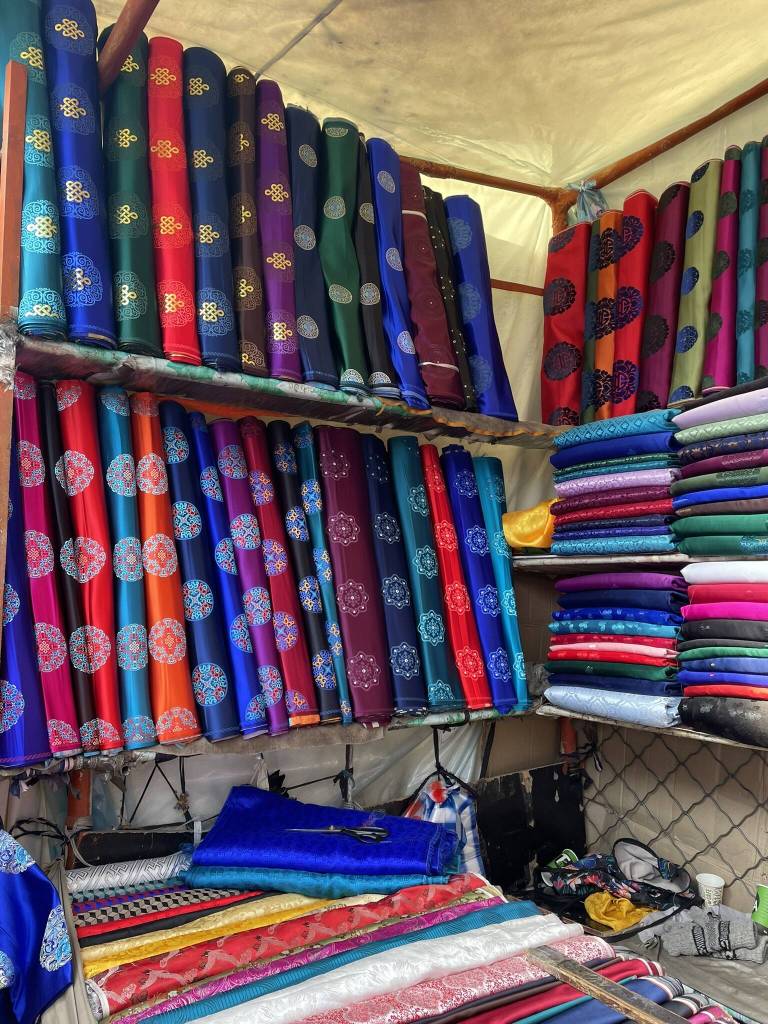
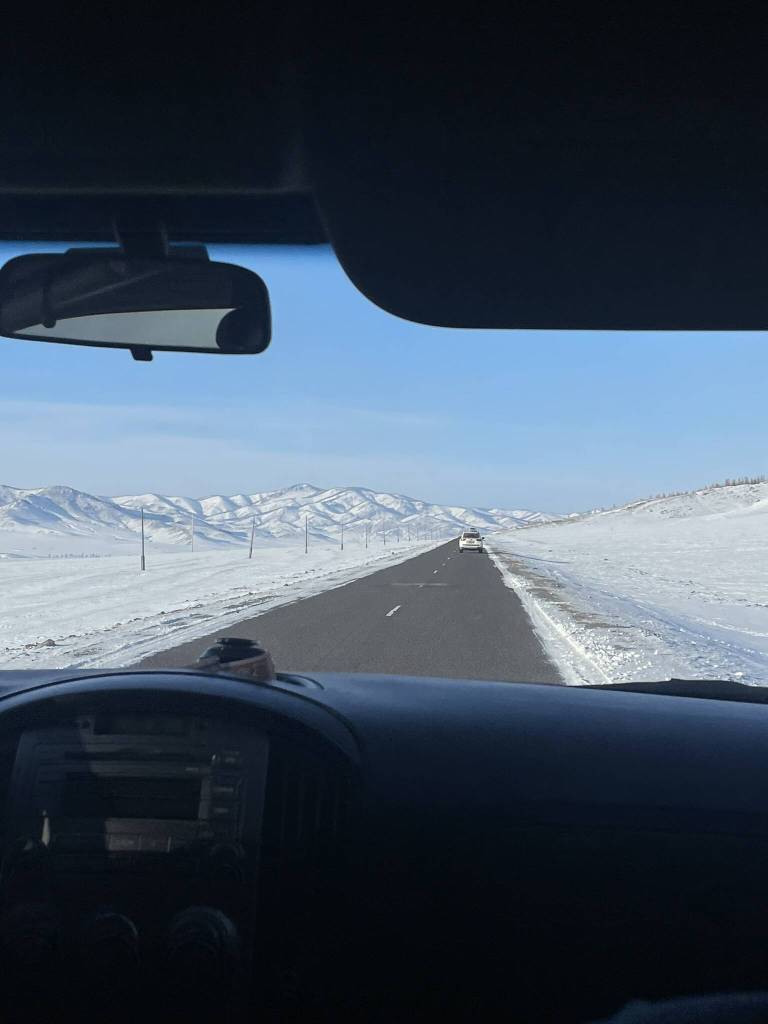
A long overdue shower, fresh clothes, and a chat with Sony, the owner, bring a sense of familiarity. He’s only mildly surprised I’m heading north again, this time to volunteer at the Mongol 100 Rat Race. His only comment: “It will be freezing.” The next day, I try to acclimatize. Layered up, I walk to Narantuul “Black Market,” where I quickly buy camel wool gloves after my fingers go numb. After two warm nights in Ulaanbaatar, it’s time to leave civilization behind. At 7am, I meet the crew and runners, mostly from the UK, buzzing with anticipation for four marathons across frozen Lake Khövsgöl. The 14-hour drive north passes in good company, sharing stories of endurance races and remote travel. By 11pm, we reach Mongol Ujin Camp in Khatgal, tired and wired at the edge of the adventure. I’m immediately summoned to the kitchen to help serve dinner, meeting the other “slaves” Benji, Irene, and Khangai (Daava’s oldest son). After finishing the dishes, Daava hands me a sleeping bag and points me to the main cabin, where I can grab any free sleeping spot.
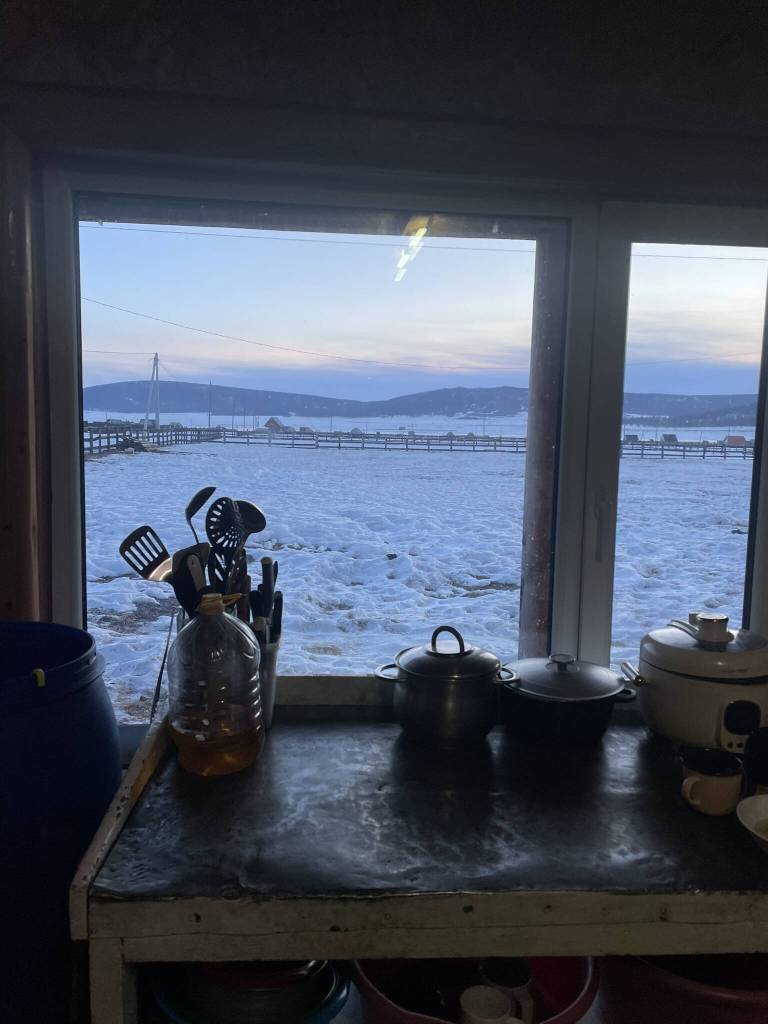
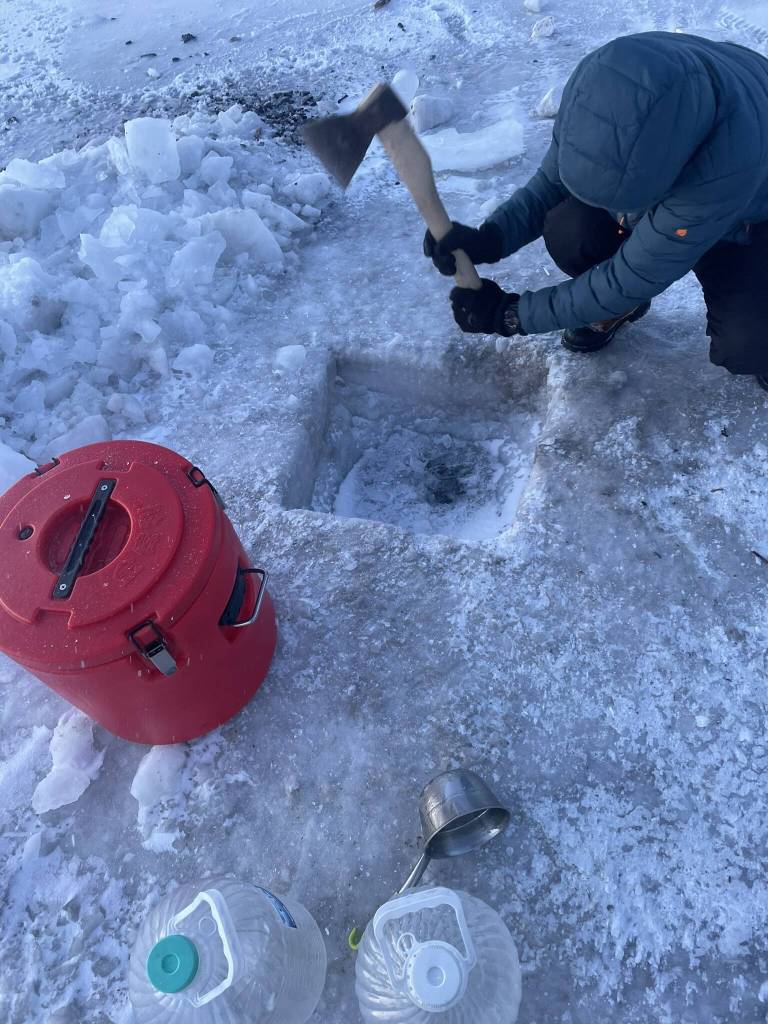
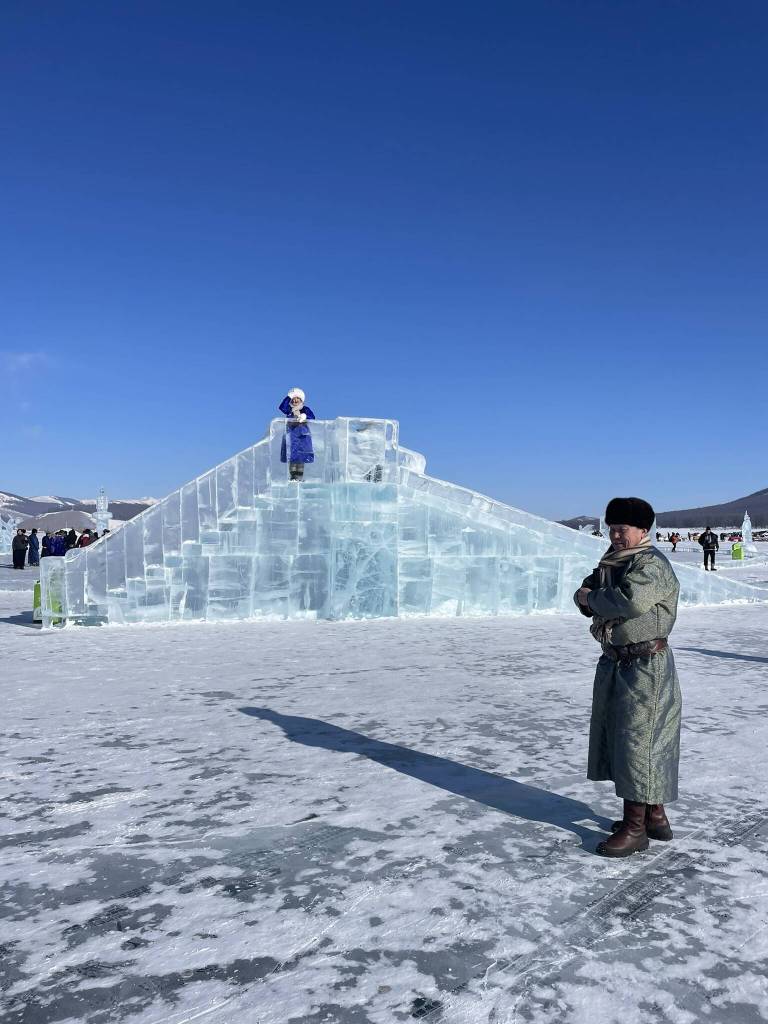
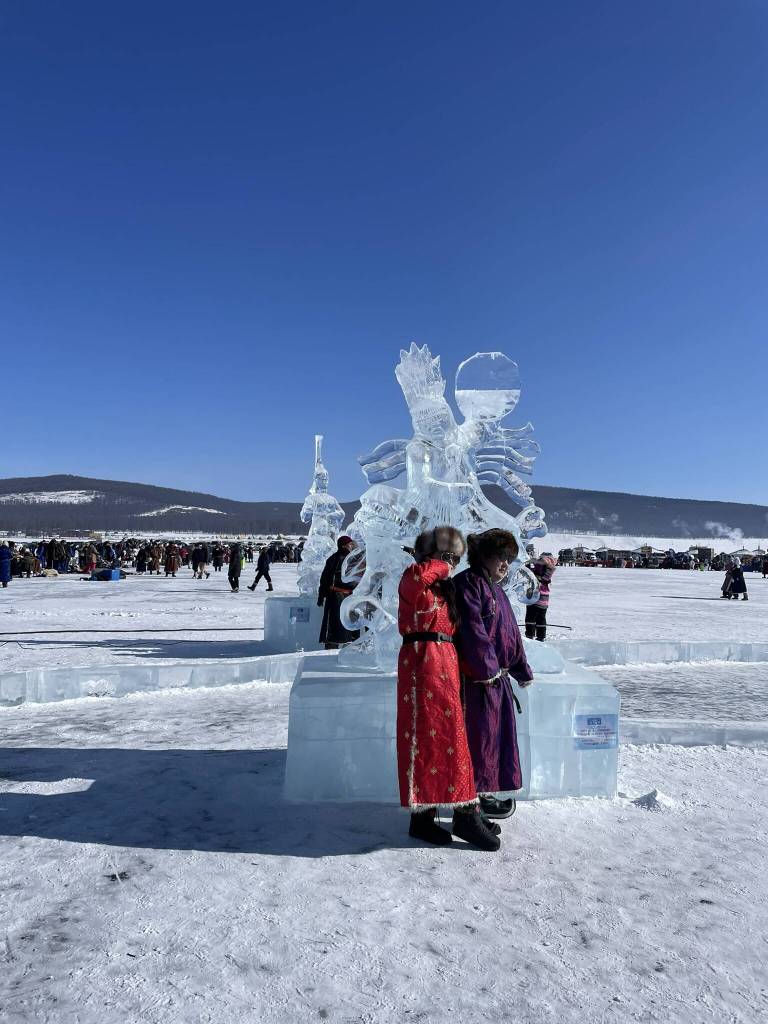
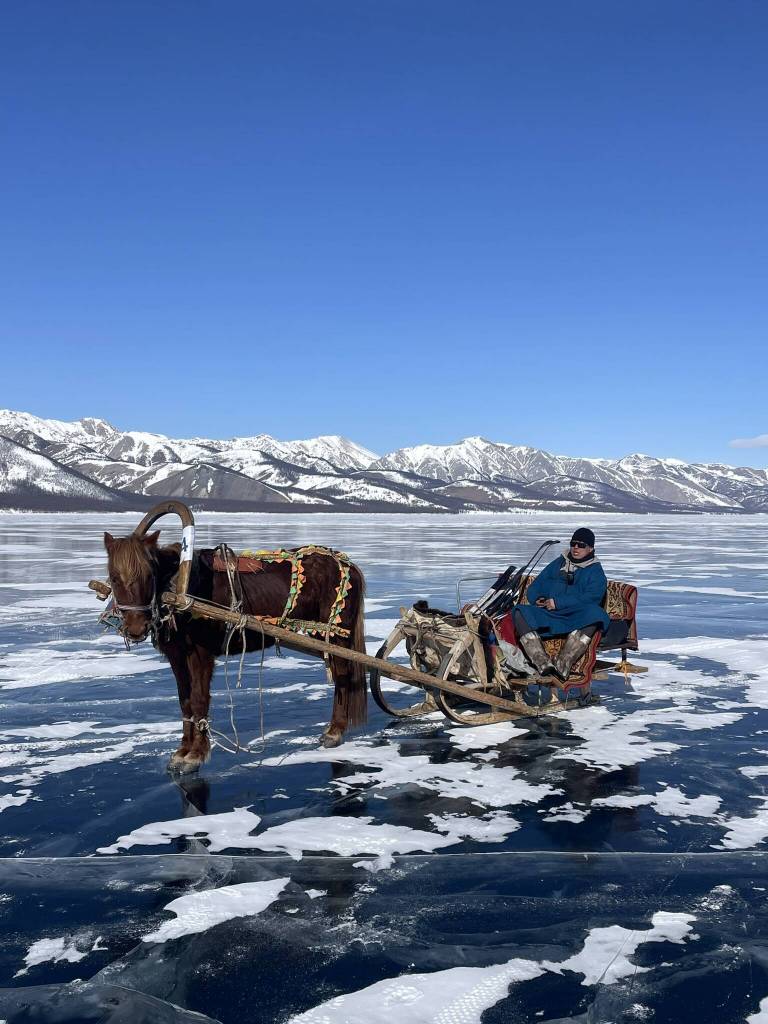
Exhausted, I make my bed on the carpet. Sometime later, I wake up to someone lying down next to me. The fire downstairs has gone out and the room is freezing. I pull my head deeper into the sleeping bag and don’t bother checking who it is. The next morning, I find out it was Khangai, and he confirms it really was that cold, basically the same temperature inside as outside. To warm up, we head straight to the kitchen to help with breakfast, and once everyone is fed and the dishes are done, we make our way to the Khatgal Ice Festival on the frozen lake. The main attraction is the large ice statues, while the food stalls, clothing, and even the crowd remind me of Naadam. We spend the afternoon trying the ice slide, riding a horse sledge, and testing our luck at a few games. At one of the gers, we stop for hoschor before heading back to camp. On the way, we detour to the communal shower near the supermarket, 5000 MNT, not something I expected to get for the next week. Back at camp, the evening fills with helping at dinner and a small music and dance performance.
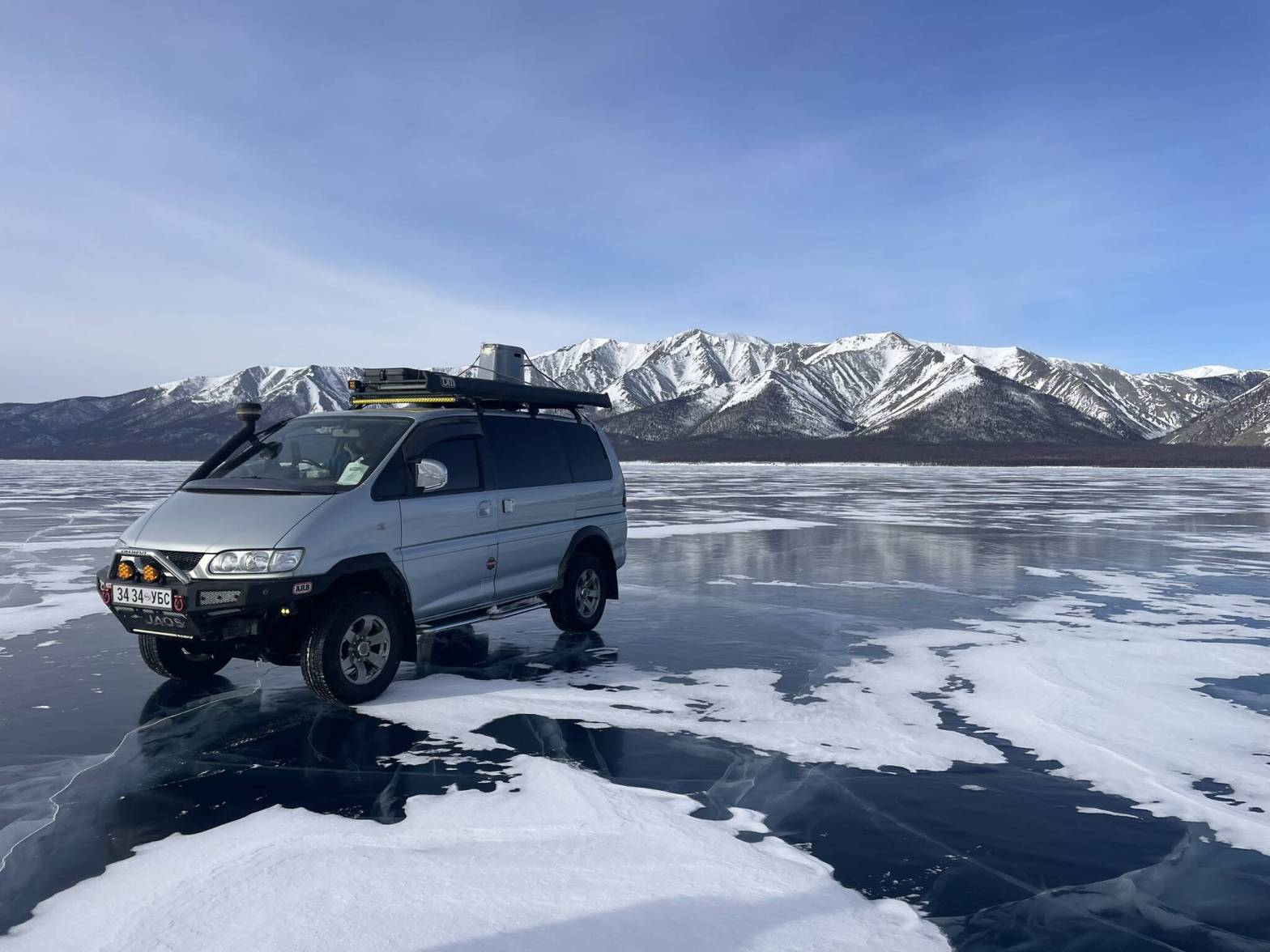
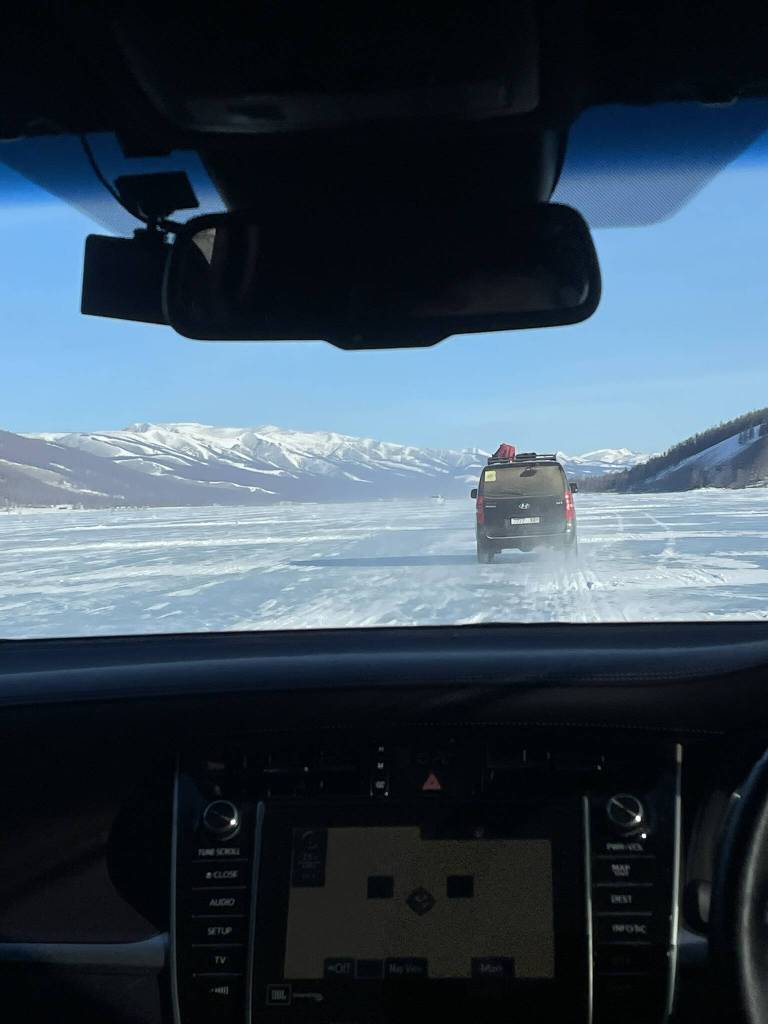
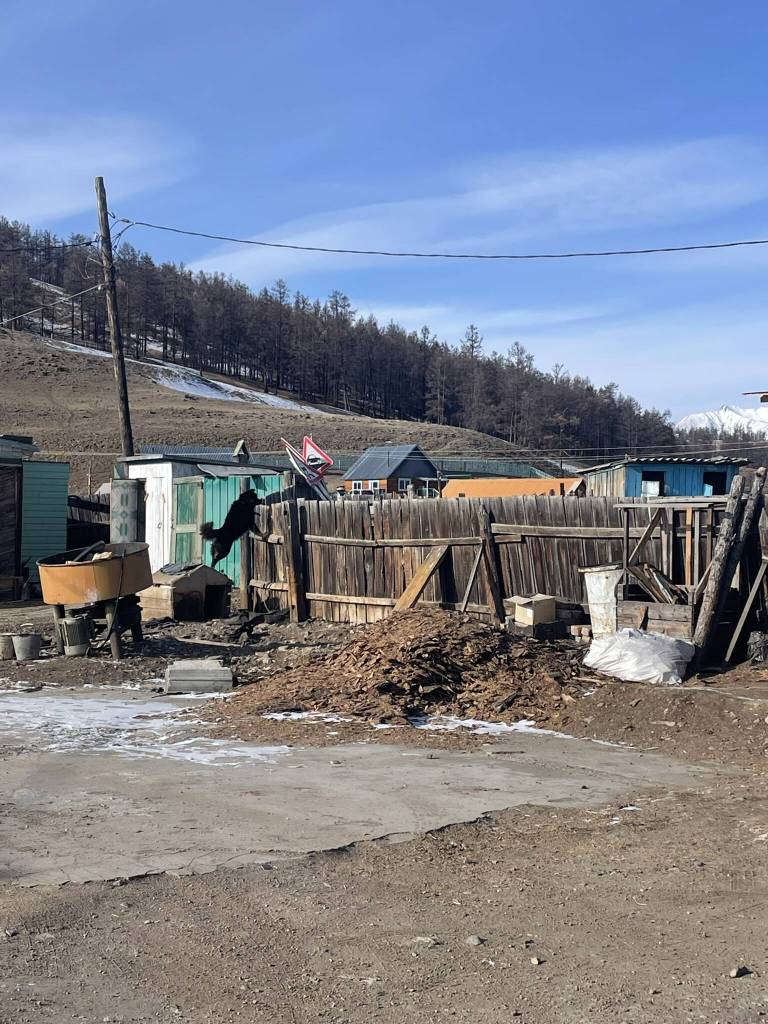
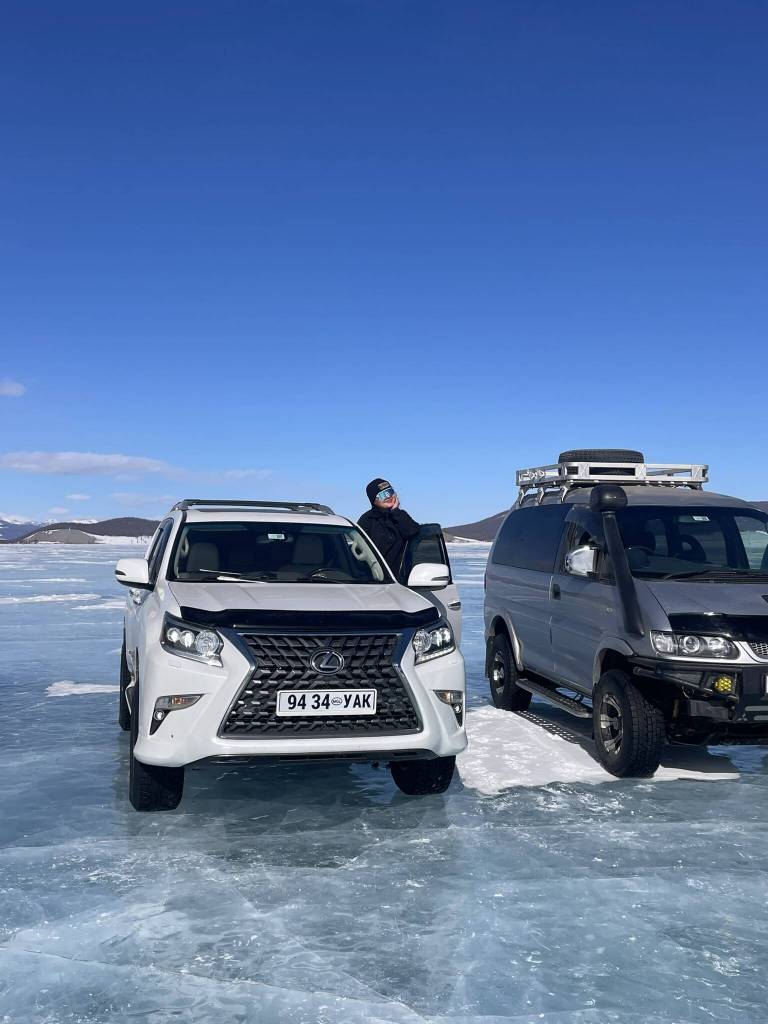
The next day, the real adventure begins. After breakfast, we pile into Khangai’s car and join a convoy of nine vans crossing frozen Lake Khövsgöl from south to north, all the way to Khankh near the Russian border. We listen to The HU as we follow the same route I took by speedboat last summer, but my brain still struggles to grasp that we’re driving on the lake until I step out for a snack break. That’s when the cold really hits. Fooled by the blue sky, I’ve left my gloves behind, and within minutes my fingers hurt more than on Thorung La. Even peeling a hard-boiled egg becomes impossible, so I give up, put on my gloves, and settle for a gimbap instead. The second half of the drive opens up to views of the Sayan Mountains, with Munku Sardyk towering in the distance. The ice stays smooth until the northern shore, and we make good progress toward Khankh. Given our early arrival, we have time to explore Khankh in the afternoon. Irene, Khangai, and I walk down to the lakeside and get lucky with a ride back up from Daava, stopping for hoschor and a bit of shopping at a Russian “magasin” along the way.
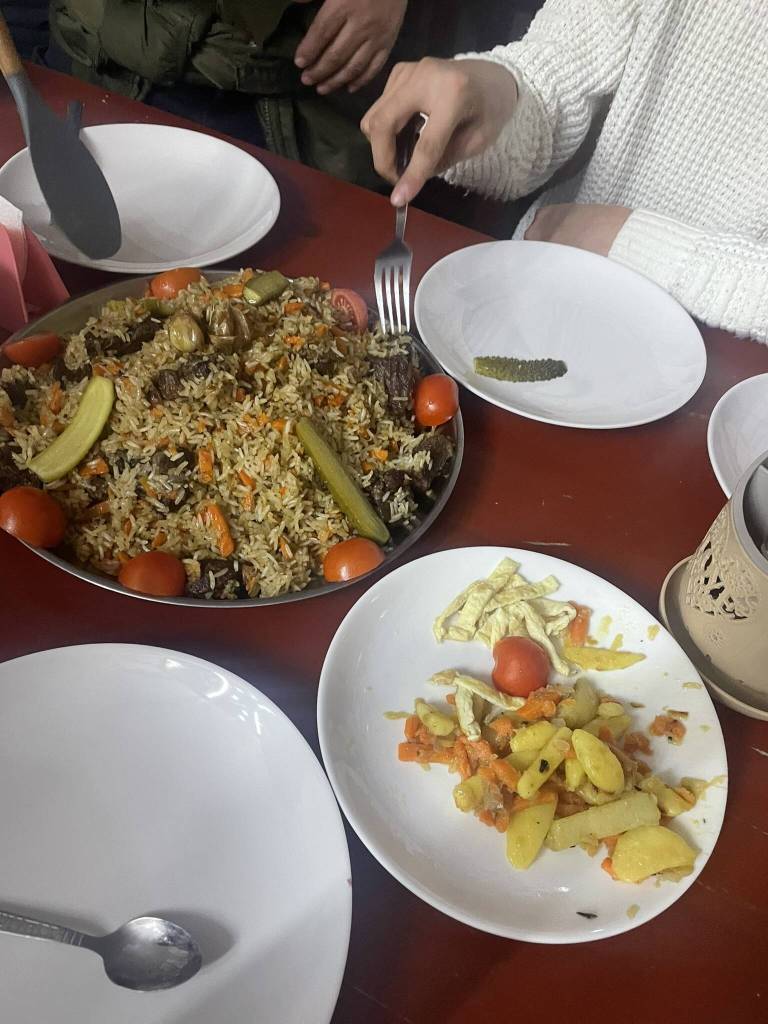
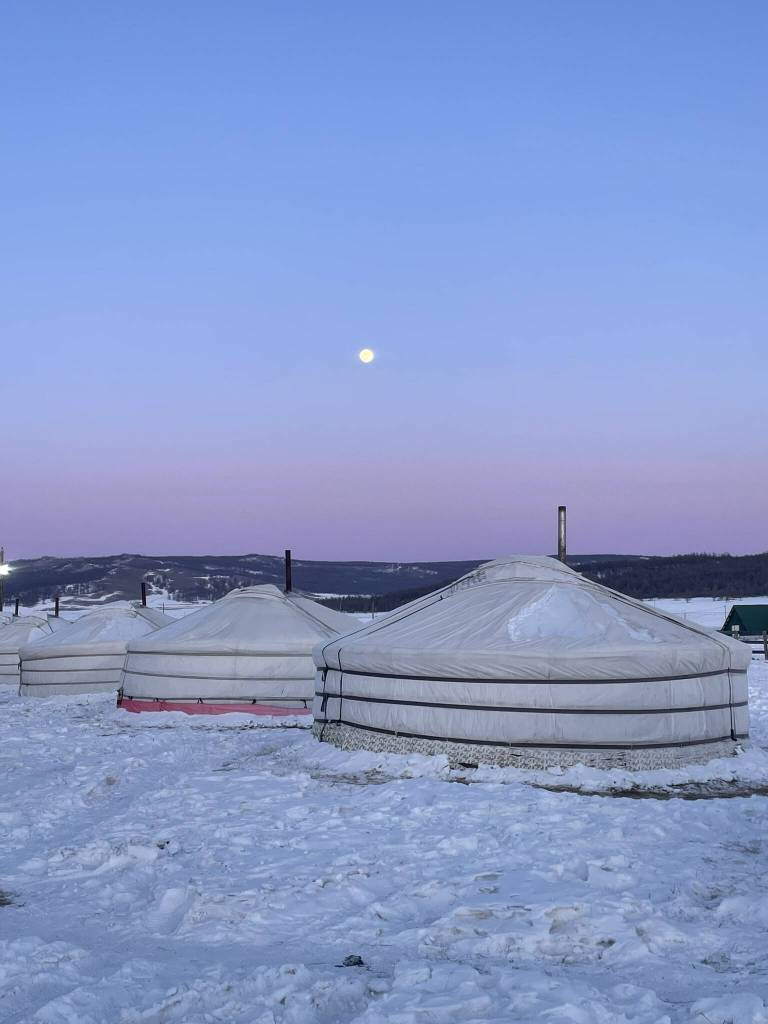
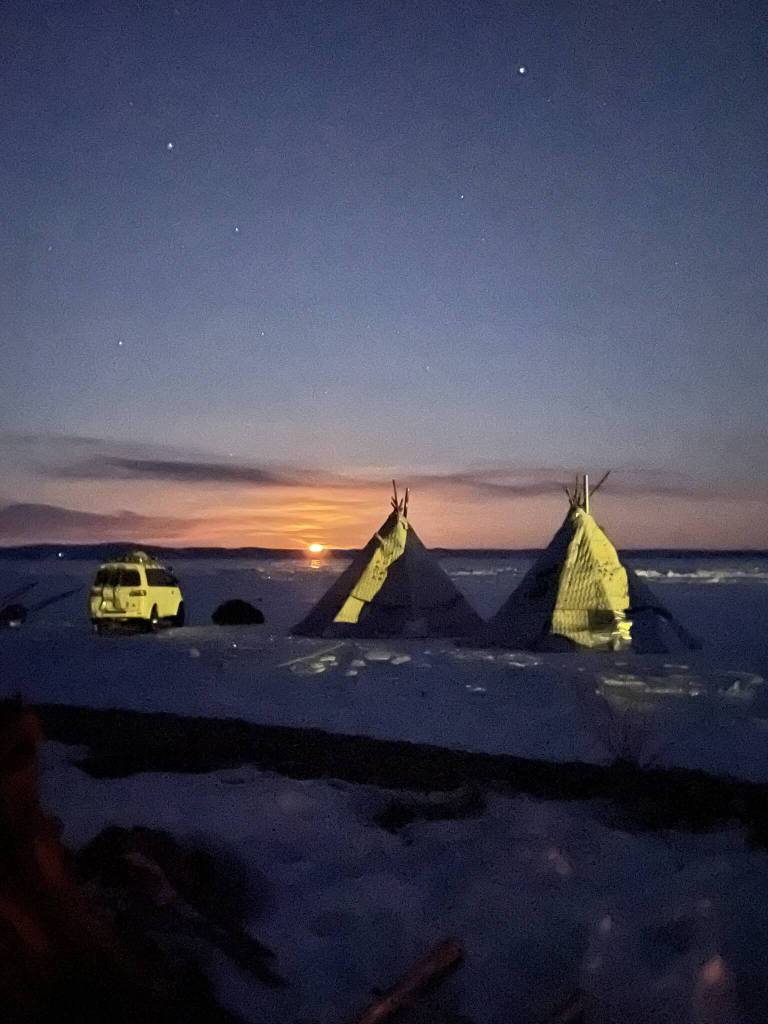
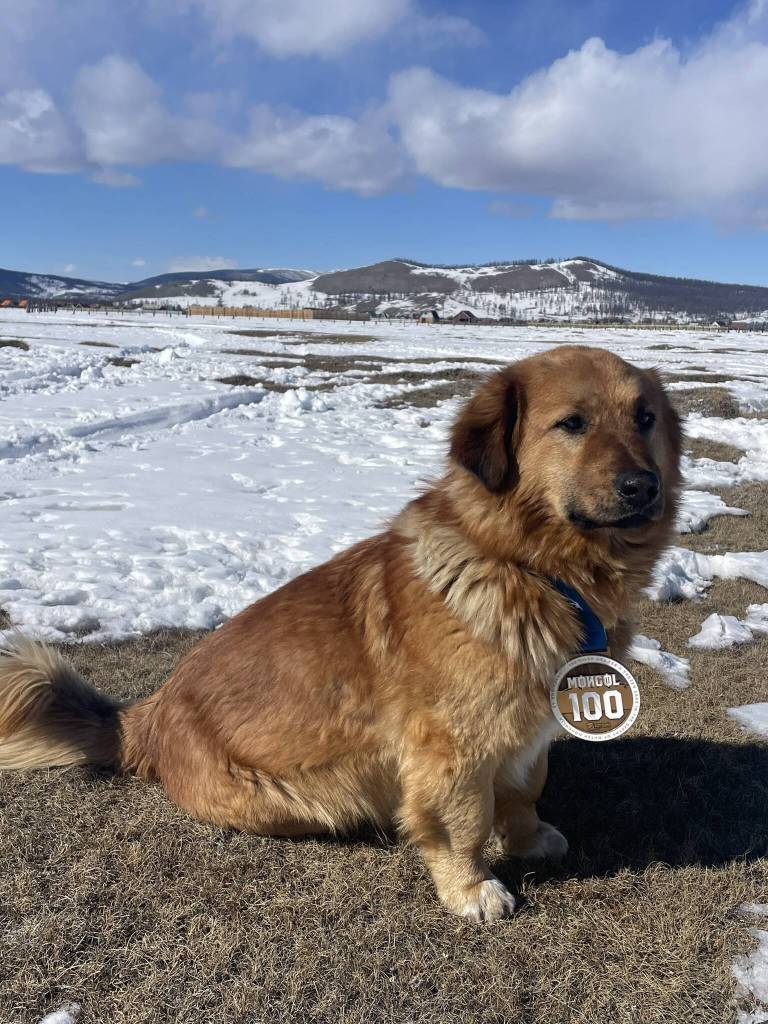
At 5:30pm, we join the Rat Race crew meeting, where Benji and I are assigned to car no. 6 with driver Baysa, feeding runners and managing the portable toilet at the 20 km pitstop. Before dinner, the participant briefing covers frostbite risks, what to do if you fall through the ice, and the importance of staying hydrated. It makes me wonder, once again, why we willingly put ourselves through this, but the thought fades at the call to dinner: Russian potato salad and pilaf. Afterwards, the four of us are summoned to wash vegetables, the Mongolian trinity of potatoes, carrots, and onions. By 10pm, we return to our cabin, where I settle onto the floor next to the sofa, grateful for the radiator. On the morning before the first race day, we wake to a magnificent view of the moon lingering behind the yurts. By sunrise, we’re already at the lakeshore, where the participants, including legendary four-time racer “Bolt,” a local stray dog, gather at the start line. As they set off south, we follow the lead vehicle marking the route with orange flags across the ice.
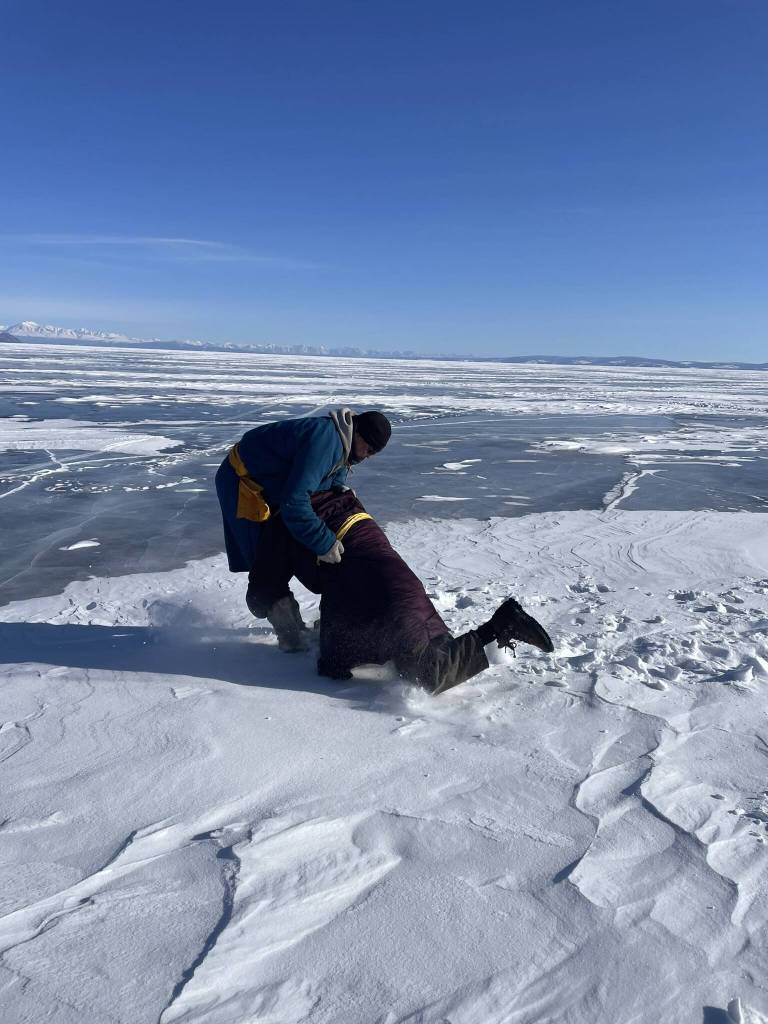
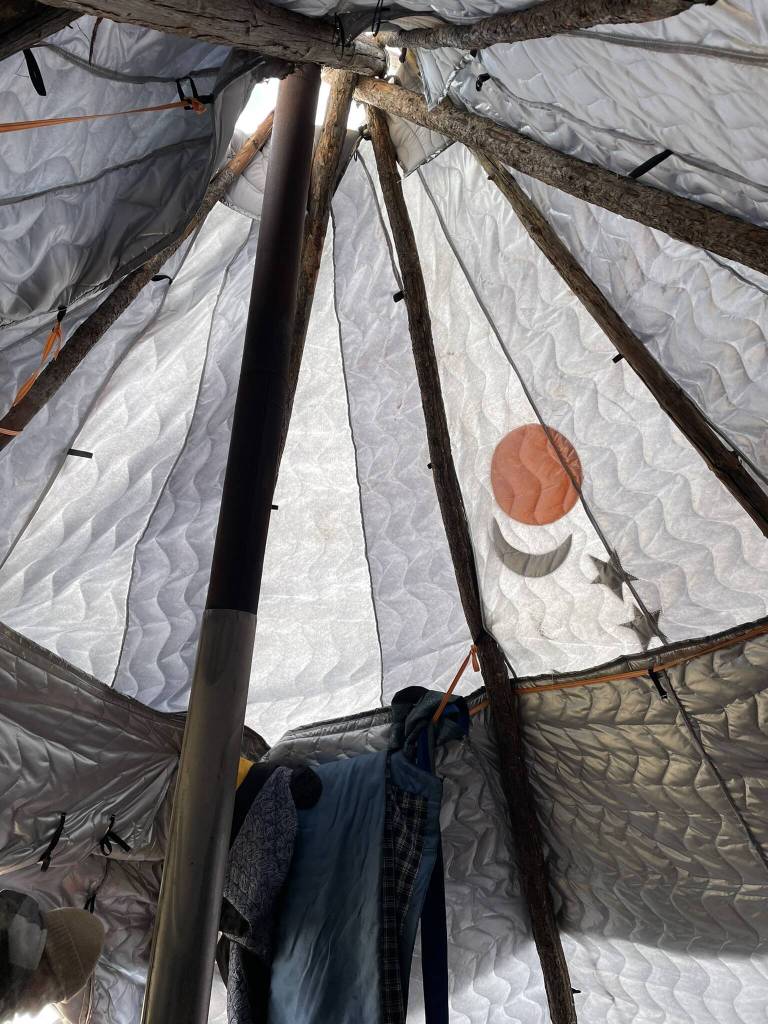
In the car, I get a first glimpse of Benji and Baysa’s dynamic, clearly well established after more than a week on the road. Between Benji picking up Mongolian phrases and Korean swearwords, there are playful wrestling matches and mock knife duels on the ice. As long as the participants tie their toilet bags properly, everything runs smoothly. Before long, we settle into a routine: packing hot water in the morning, checking snacks and blueberry tea at lunch, and setting up the portable toilet at camp in the afternoon. Camping on the ice is what sold me on this trip. A crew of local nomad men sets up teepees near each day’s finish line. On the first evening, after dinner packs are handed out, Daava leads Irene and me to a teepee between the pine trees along the lakeshore. Inside, the nomad crew is already celebrating with beer and vodka. Daava gives us two options: sleep in the tent with them or in an empty van. We choose the warm teepee without hesitation, and our decision is met with cheers and drinks.
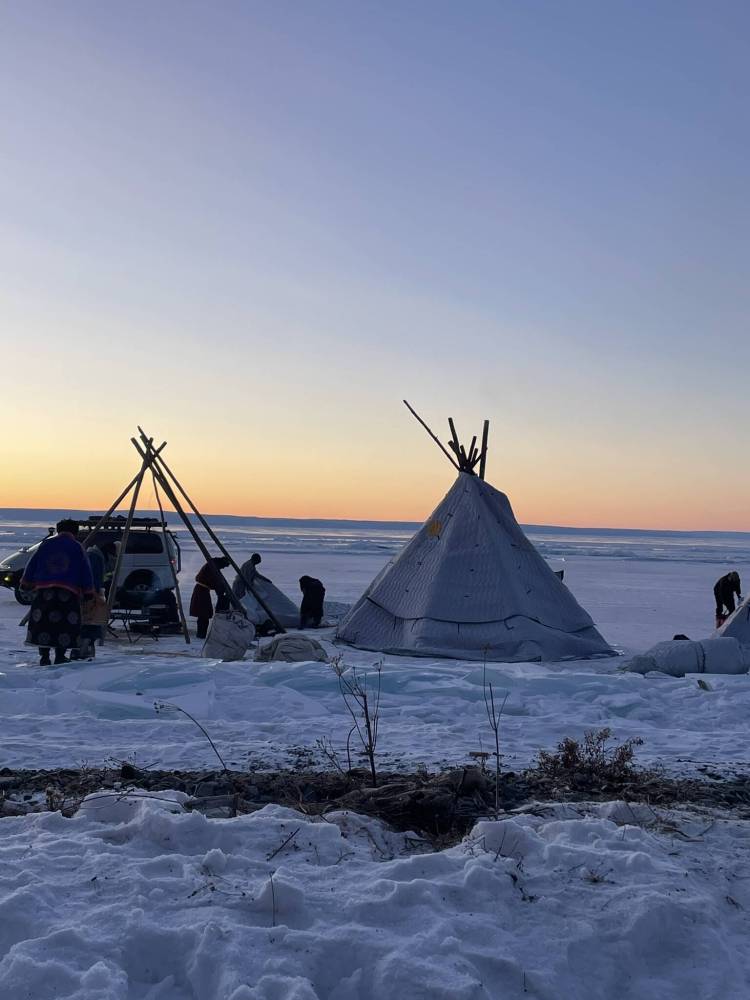
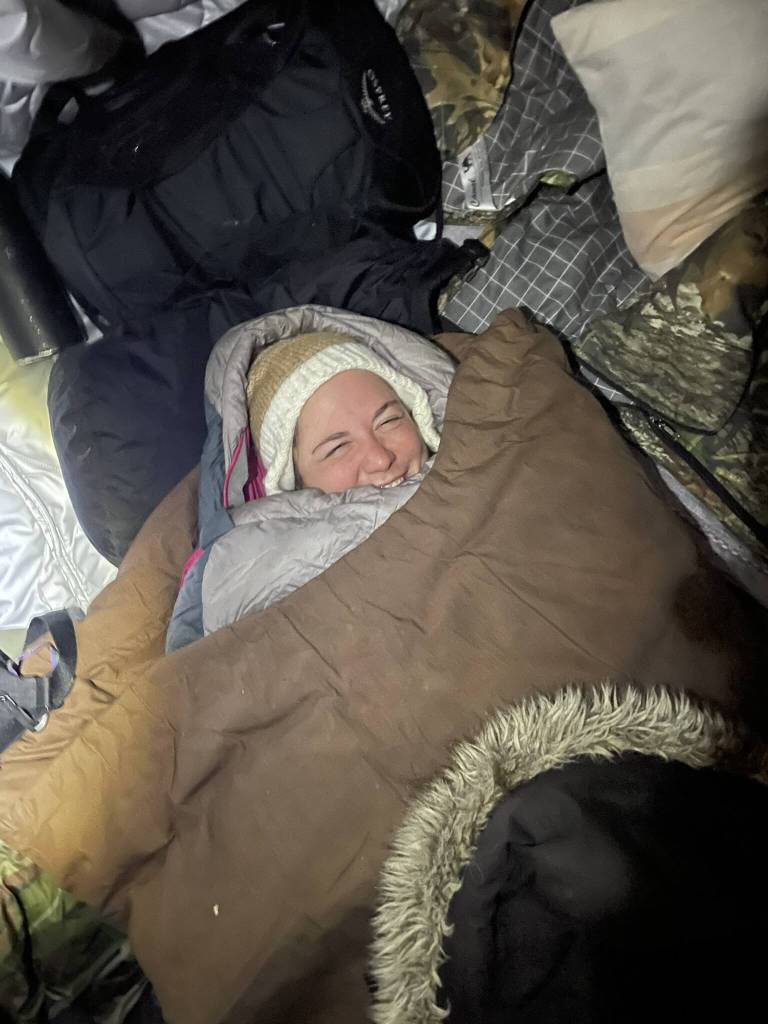
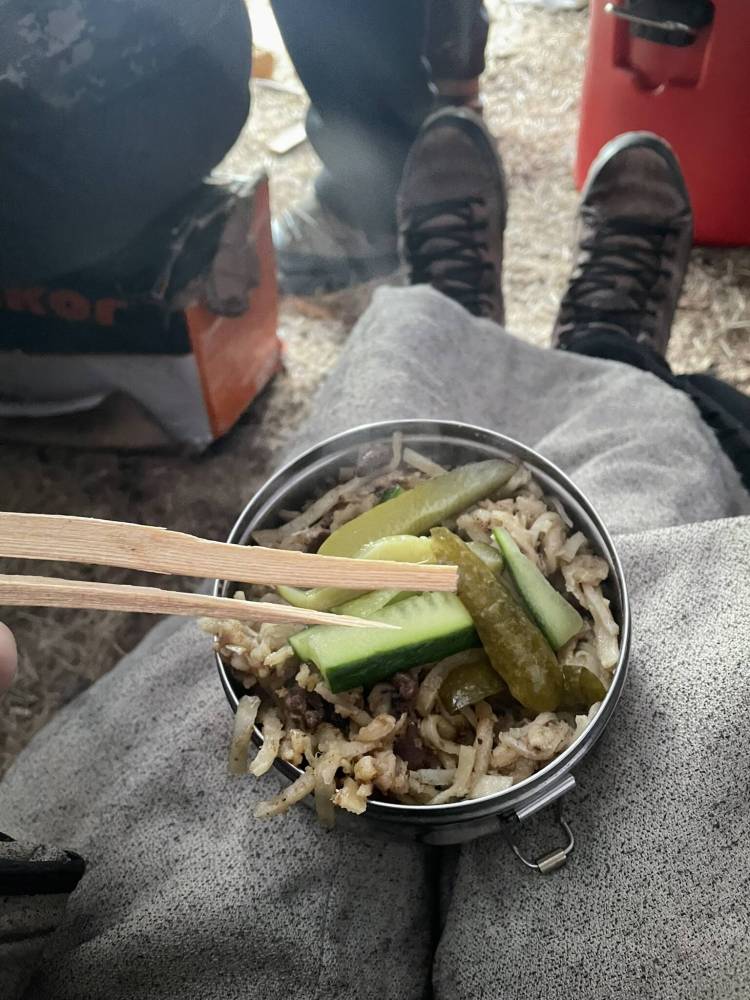
Stepping outside, I notice a red glow rising behind the mountains. What looks like a second sunset is actually the full moon. We watch in awe, trying to capture the moment on our phones, but they don’t do it justice. Around 11pm, we head back inside, where the nomads have saved us spots. We layer up in sleeping bags and deels, packed in like sardines before someone adds two more blankets. I haven’t felt that warm in a while. At 6:30am, Ene wakes us by shouting our names. We scramble to get ready, but my deel won’t close properly and Benji’s shoelaces are frozen. To my surprise, the participants are already up, waiting for hot water. The day unfolds much like the first, and once the last participant leaves our pitstop, we drive to the next campsite. The teepees are already set up, and after fixing the toilet, we devour lunch with makeshift chopsticks carved from firewood. That evening brings a reindeer BBQ, and photographer Leo has a surprise planned.
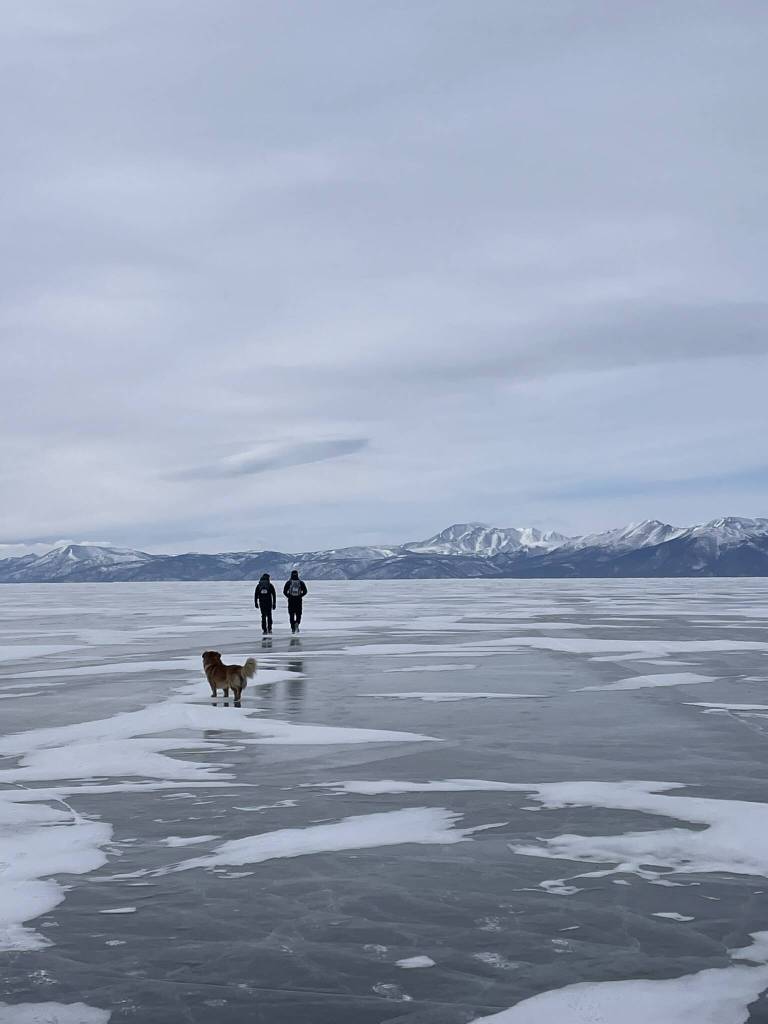
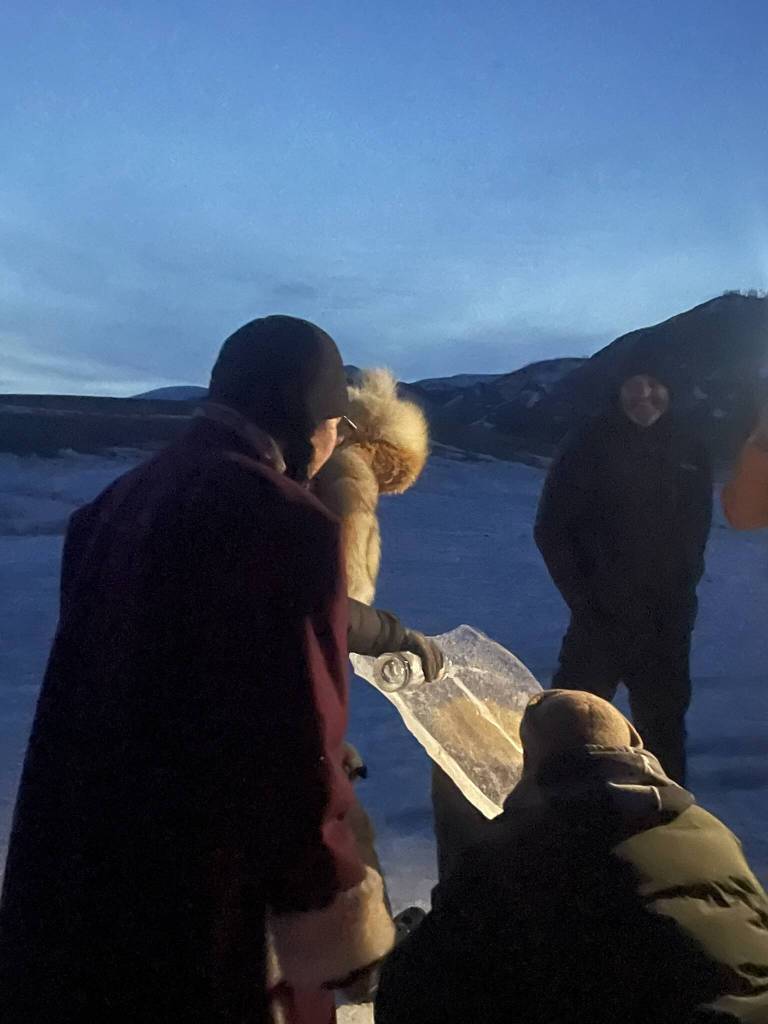
He wants to build a vodka luge from scratch and recruits Benji and me to help. We find a slab of ice, and a nomad shapes a wooden base with a chainsaw. The vodka shots are a hit. Meanwhile, we sort out sleeping arrangements. Khangai also prefers the tent, but space is tight, so he and Benji improvise a bed under the stars with leftover canvas. It must have worked, as they’re the last ones up the next morning. By the third race day, participants begin to struggle, with blisters, sleepless nights, and fatigue from 70 kilometers on the ice. Our pitstop slows as runners take longer breaks, some resting in the car, and for the first time, the horse sledges come into play. Meanwhile, I grow curious about walking alone across the lake. On the way to the final camp, I ask Baysa to drop me off and walk the last 5 km. Once the car disappears, there’s nothing but silence until a fast runner and Bolt pass in the distance. With the sun on my face, wind in my deel, and the sound of ice cracking beneath me, I feel completely at one with nature.
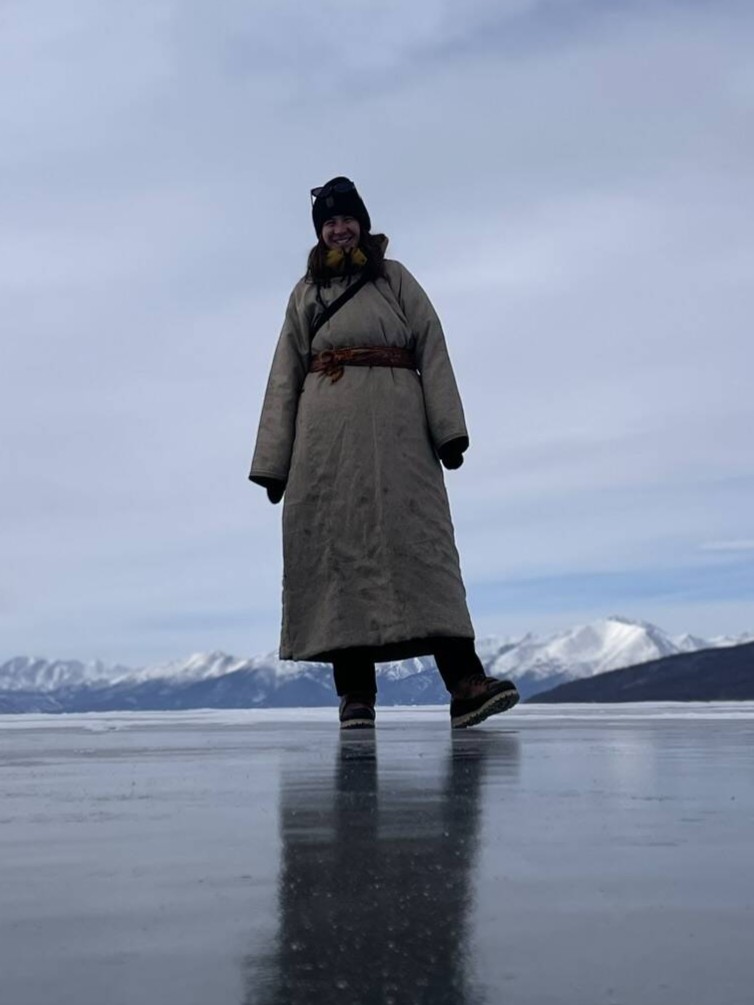
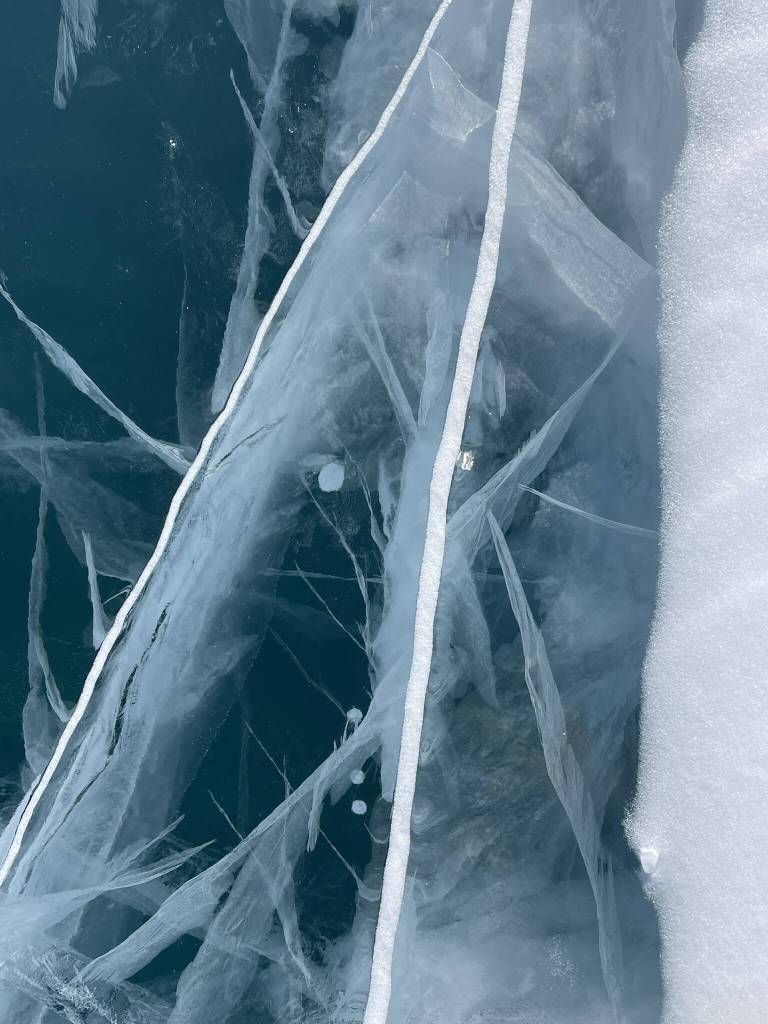
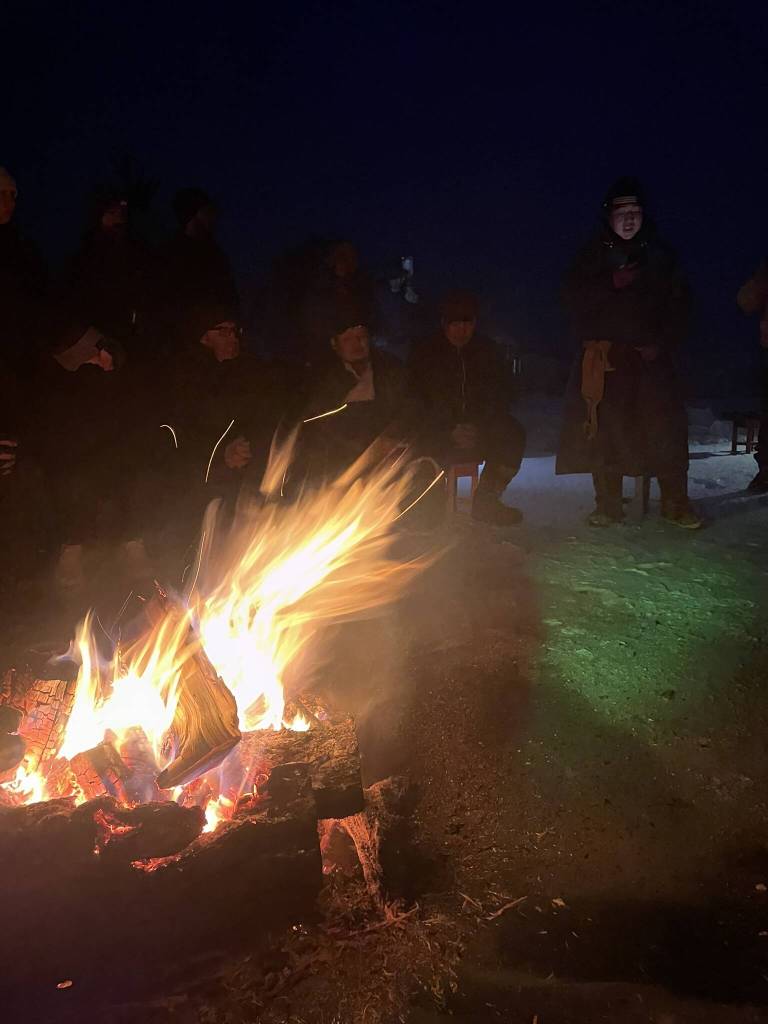
Walking keeps me warm, and I reach camp sooner than expected, though I wish it had taken longer. We’re sleeping directly on the lake tonight, with beds set up in the kitchen teepee. After lunch, I explore a nearby “white crack,” where ice plates push against each other. The more dangerous “black cracks” form where ice drifts apart and can be hard to spot. While I’m out on the ice taking a selfie, a sound like a gust of wind rushes beneath the surface. I freeze and notice people moving toward the trees at the lakeshore. Assuming something might be happening, I head toward the cars. Moments later, the camp settles and it becomes clear there’s no immediate danger, only small fissures near the bonfire. Later, we learn a black crack had formed near our earlier pitstop, possibly triggered by a small earthquake. Luckily, everyone returns safely, and the evening ends with singing around the bonfire before our final night on the ice.The next morning, Daava assigns me a new role, returning to Mongol Ujin Base Camp with Ene to help prepare the farewell dinner.
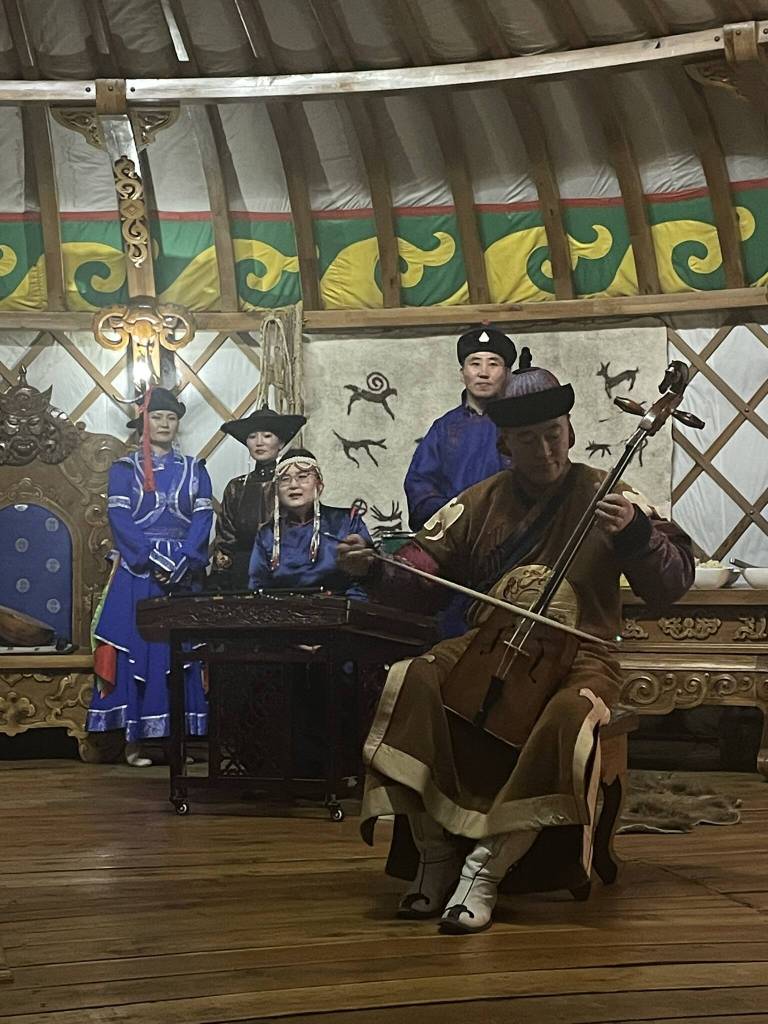
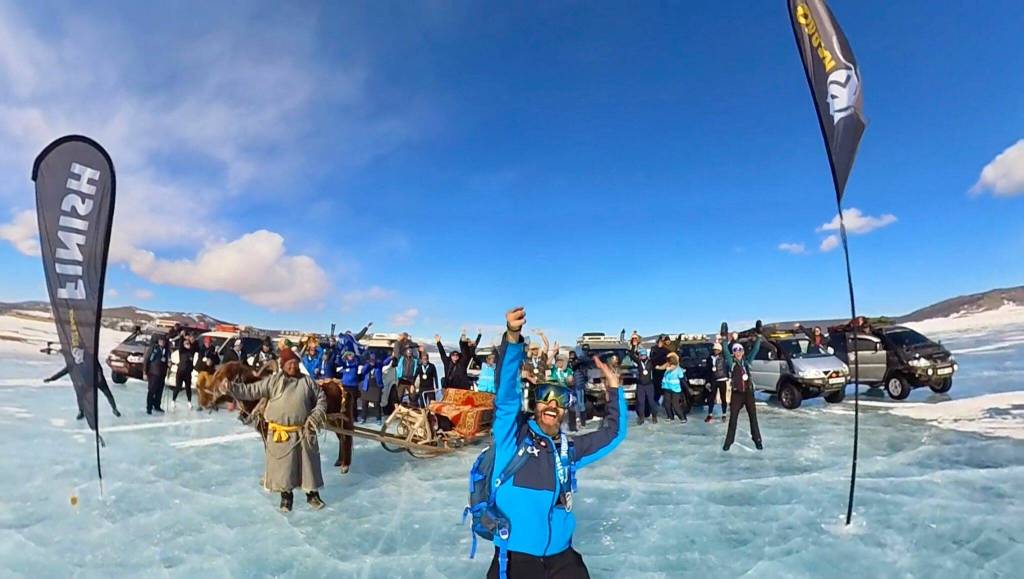
Most of the day is spent peeling vegetables before heading to the finish line to welcome the racers. We greet everyone, dogs included, with medals, beer, and snacks, then gather for a group photo. Afterwards, it’s back to warm gers for the runners and to the communal shower for us. Fresh and clean, we’re ready for the final evening, where guests help themselves to the buffet and we handle cleanup. The night continues with music, dancing, and throat singing, the teepee crew dressed in their finest deels. By the end, everyone is dancing to 90s music as if their blistered feet don’t exist. After a short but cozy night, we say goodbye to the participants and crew before returning to tidy up. Two days later, the winter adventure continues with a journey to visit the visit to the Tsaatan reindeer herders tribe in the East Taiga.
 thattravelstory